
Spend Smart in Japan: What’s Worth It (and What’s Not)
Let’s be honest, Japan’s on a budget destination, but you don’t need to spend more, you just need to spend smarter. Hi everyone, it’s Abby from Pctor and today I am here in Kyoto to show you what’s worth it and maybe what’s not. So today I’m starting out on the busy busy streets of Nin Zaka and Sanen Zaka in Kyoto. And these are the streets that lead up to Kio Temple. This is one of my favorite places in Kyoto. And it’s honestly one of the main places that you’re going to get got. And what I mean is you’re going to be sucked into an unbelievable amount of cute and interesting and funny souvenirs that you definitely think you need. So my first piece of advice to you is to consider experiences over souvenirs. So two points for this one. First point is you should still get some souvenirs. I actually have a whole video on souvenirs that you can check out here that gives you a lot of info on what I think is worth it. And these will be things that I think you will actually use again in the future and that won’t just go in a closet forgotten. Sad. So indeed you can actually buy a lot of those things around this area and that’s why this area is so fun. But you can also find a lot of other stuff in this area that you probably don’t need. So when you get souvenirs, stick to will I actually use this or will the person I’m giving this to actually use this? My point number two here is to consider experiences as much as possible. So when I talk to people about what they enjoyed or what was the most memorable part of their Japan trip, which I do quite frequently, uh what tends to stand out the most for people is often the experience that they’ve done. So even locals here will tell you that if you understand why people are drinking matcha or you understand what a Shinto shrine is or you understand what sake even is and do I even like it and what are the different types of it when you have the context for all of this stuff. this is what sticks in your mind and this is when you go home and you tell people, “Oh, well, I did this really cool sake tasting experience and I got to try all of these different sakees or I got to make this bowl when I was around Kio Temple because they’re famous for ceramics there or I went on a tour with Abby from Ptor.” These are the things that you will remember in my opinion the most. And that is not only what I’m telling you, but that’s what people have told me. So consider a balance of, yeah, I do want to get a knife so I can use it when I go home and yeah, I do want to get, you know, a skon jacket because they’re cool and I think I’ll wear it. But stay away from some of the kitsy stuff. Stay away from going into Doniote 25 times on your trip and just loading up the basket every single time with crap that you’re never going to use because you’re just getting stuck up in the moment and not really thinking about what matters most and that is the memories that you make along the way at places like this. All right, tip number two for not wasting your money in Japan is to spend smart on transportation. So, a lot of tourists I still see buy the JR pass, thinking that it’s automatically the best deal. And that was true years ago, but not now. prices went up and unless you’re doing like quite a few different long distance trips across the country, and I mean more than just like Tokyo to Kyoto to Osaka and back to Tokyo, it’s probably not going to be worth your time. So, I’ve said this in some of my videos before, but there is an online JR passath calculator you can use and you can check and put in your itinerary and see if your trip is going to be worth it or not. Plus, some people talk about, “Oh, well, with the JR pass, you can use it for local trains.” But the thing you have to understand is you can only use it for local JR trains. And JR is Japan Railways. And a lot of trains you’ll probably be taking in Japan will be owned by uh private railways, not JR. So, you can’t even use it for that. So, then what is worth getting? Well, first off, I recommend getting an IC card. I have two videos about icy cars because they just love to bamboozle you guys. Um, which is fine, but watch those and in complete summary of those, if you have an iPhone, just get the welcome Suika app. And if you don’t have an iPhone, just get whatever IC card is at the airport or the station that you arrive into. And you literally just tap in, you tap out. You don’t need to think about fairs or line changes or what railway, who owns this, whatever. Um, you could use it on buses, trains, vending machines, convenience stores. Super duper easy. Also, if you’re doing a sightseeing heavy day, so maybe you’re visiting quite a few different places in one day in like Kyoto or Osaka or whatever, you might want to consider looking at the one day subway or bus passes that some places have. But you’ll definitely want to check your itinerary beforehand to see if you’re even going to be using the train enough to warrant this. Lastly, a note about transportation is don’t be afraid of taxis, especially if you have a family or a bigger group. I think some people are surprised to find out that taxis here are not going to rip you off. Um, they’re actually quite affordable for the most part. um much more affordable than when I’ve like taken an Uber in the States, for example. When I I get out of the Uber, I’m like, “Wow.” Um was that worth it? It’s I’ve never had that experience here. Every time I’ve gotten out of a taxi here, I was like, “Ugh.” I just passed like six buses that I could still be sitting on and there’s a million people on them and I felt good. So, don’t be afraid of taxis. Um, and like I said, if you have like a bigger group or a family, you would be spending money on each person anyway to get on public transport and that can add up as well. So, sometimes taking a taxi is worth it. All right, the next thing I want to talk about here would be food. So, what’s worth it and what’s not? Japan has this really incredible balance where you can eat amazing food without spending a fortune. But there are quite a few places that look great, but maybe they’re not actually worth it. So, my recommendation number one is first and foremost to avoid eating at places that look like this. If you have a million people running around outside and there’s a really long line, honestly, it’s probably going to cost a lot more. And that is because they know that uh tourists are coming and tourists have lots of money and they don’t know what food should cost. So they’re just going to spend money. So what to do instead? Well, first point is to focus on lunch sets. So make your lunch affordable. Lunch here should be affordable. Honestly, you can eat a fabulous lunch for no more than 1500 yen per person. And if you go somewhere and it’s more than that and it’s not something that’s obviously like steak or oonie or whatever, um maybe that’s spending too much if you’re on a budget. If you’re not on a budget, maybe you Why Why’d you click on this video? I don’t know. Lunch is a great time to try fancy things that cost more money, but you can eat them at lunch and not spend as much as you would at dinner. So for things like kiaki or maybe fancy sushi or even like beef, if you eat it at lunch, there’s a big bird. If you eat it at lunch, you will spend honestly like half um of probably what you would be spending at dinner and maybe your portion would be a little bit smaller, but honestly, you’ll still get a fabulous experience. So if you really want to do something luxurious but you’re not sure about um being able to spend that much money on it because things like kiisekias they are fabulous. They are worth trying if you have that budget but if you don’t want to go over your budget try to keep it within the lunch period. Another thing that’s great if you want to go out and have a fun time at night go to local Iakaya. Go to where you see um Japanese people. Go to where there’s no menu outside in English. These are the places geared towards Japanese people who will not spend as much money as the average foreign tourist will on this kind of stuff. I’ve gone to some of the places that are popular with foreigners in the evening, like bars or whatever. And I get there and the drinks are like three or four times as expensive as they would be at somewhere that just doesn’t have an English menu. So, honestly, that’s a big telling point. If there’s a big sign outside in English, um yeah, it’s going to probably make your experience feel a little bit smoother. you’re going to have less like anxiety going inside. But either way, it’s you’re still going to have to order. A staff probably won’t even speak English at a place that has an English sign half the time. And regardless, if it’s about having a better experience, I would go Japanese only all the way. And that’s just me, but that’s my recommendation. And one more note is that even chain restaurants here can be really, really good. I go to chain restaurants quite frequently. I’ll be honest with you. Um, one of my favorites is matsunoya, which has katugon, which is a pork cutlet over rice with like kind of scrambled egg. This is one of my favorite foods in the set that comes with miso soup, which is more than enough food. Is literally like $4.50 US. And like I could eat that every day. Would that be healthy? Probably not. But don’t sleep on some of these chain restaurants because they’re actually quite good and they can be pretty affordable, especially cuz Japanese people often take their families there or this is where the average salary man goes for lunch and he doesn’t want to spend a lot of money on his food. And one more note about that is yes, convenience stores are awesome. I have videos about convenience stores. I love them. I get food from there um probably more than I should, but convenience stores actually add up. Um they are getting more and more expensive every year. We love inflation and honestly sometimes when I go to a convenience store and I get like, you know, a sandwich, a side salad, maybe like some chips or like some gummies or something, a tea, I get all of that and I get to the checkout and I’m like, I literally could have just gone to a restaurant and sat down. Like I now I have to stand outside with all the stuff. If you’re trying to literally like eat cheap, then maybe convenience stores actually aren’t even the cheapest option. It would be going to a local restaurant where Japanese people would be eating. That would save you the most money and give you a great experience. A few more things about what’s not worth it food-wise. Um overpriced sushi or Wagyu chain restaurants in touristy areas. Please, please, please avoid this. If you see a sign outside that’s like number one coobe beef in Japan, um, run away. It’s going to cost you so much. I highly recommend doing slightly more research if you want to eat these things and not just going to the first place you see in a very touristy area because you’ll spend more than you want and I can’t even guarantee you that it’ll be worth the money. If you’re in an area that looks like this, um, leave that area and then go find food somewhere that is much more peaceful and calm and that will also bring your prices down. Three more notes, food at themed cafes isn’t particularly delicious, just as a note. So, if you go to a theme cafe, enjoy it for the cafe, don’t expect the food to be good. Um, another one, dessert lines that exist just for social media. Please ignore those unless you really want to post that on social media. A lot of these like trendy Tik Tok desserts that you’ll see, um, some of them are good. Like I’m not a hater. Some of them are good, but a lot of them are really not so exciting and they cost more than they should and you just spent like an hour in line for it. The exception to the rule is if the place is actually like famous and reputable, like a few hundredyear-old wagashi shop. Um, I would wait in line for that because they’ve been around long enough to deserve me to spend my money there. Last note, hotel breakfast. Unless you’re at a really nice Yokoon, the add-on price sometimes with a hotel breakfast of like two to 3,000 yen per person sometimes is literally not worth it. Every time I go to a Japanese hotel here, and I’m about to talk about hotels in a minute, um, I have a wonderful experience, but I have literally never once paid for the hotel breakfast, and I never will. And the exception is, like I said, yans, which half of the point of being there is getting to enjoy the special food they make. I I don’t think spending two to three,000 yen on breakfast is worth it when you could go get a croissant at a local bakery next door for 300 yen. You can get a really quality selection of breakfast items outside the hotel as well. Even go to Danny’s. We got Danny’s here. All right, so I mentioned hotels and now it’s time for me to talk about this. So, number four, where to save on accommodations without going too cheap. So, I’m not about to tell you to sleep under a bridge. In fact, I’m here to tell you that hotels in Japan are super duper fabulous even at a very cheap price. Most normal like looks like to especially like Americans and Europeans, I’m sure, as like why is this so cheap? This is like cheaper than a like motel. Um, is this okay? Hey, can I stay here? Yeah, you can. It will be great and it’ll probably have better service and it will be cleaner than a much more expensive hotel back home. So, this is one of my favorite things about traveling around Japan is how affordable um all the accommodations are at what you get for it as well. So, basically every hotel I’ve been to, they have clean rooms, private bathrooms, good Wi-Fi. Um oftent times they even give you pajamas and slippers. Um, you got toiletries and I have really never been disappointed by a hotel in Japan um, for the most part and I’ve stayed at a very wide range of price range hotels as well. So, for singles or couples, I recommend business hotels if you want to save money. Business hotels are exactly what they sound like. They’re intended for um, usually like one or two people traveling on a trip and they don’t need a whole big fancy room. And some of the popular teams would be Dwa Royet, Dormian, Tokyo Stay, Hotel My Stays, APA Hotel, and Super Hotel. Um, I’m a big fan of Opa Hotel. I usually stay at APA hotels when I travel. Many of these even have convenience stores and public baths inside of them. So, you really have everything you could need like inside of your hotel location. You can really stay at these from anywhere from like 50 to$100 US a night. um sometimes even less than that if it’s outside of like a major city. And you literally will have everything you need. And the locations are generally pretty decent as well because they’re intended for people that are there for work. So usually they’ll be located about, you know, maybe a five minute walk from a major station. So it’s convenient. Is it going to be inside the station? No. Is it going to be close and walkable and conveniently located for people that know how to get around the city or need to get around the city quickly because they’re working? Yes. So, that will be super convenient for you. Capsule hotels are another thing. Um I have done two capsule hotels and they are um let’s just say fun, especially if you’re solo. Uh, would I say to um come all the way to Japan and spend all the money to come here and then just stay in a capsule hotel the whole time? No, I wouldn’t really recommend that. But if you really want to save money, these are some of the cheapest places you can find to stay that um will still give you a bed. Basically, capsule hotels nowadays are basically just like dorm pods. So, it’s almost like bunk beds, but you can usually have like a private little area that closes off with a curtain or something like that. Um, my only qualms with them is usually the mattresses are not super great and sometimes there’s not good air flow through there because you’re in like a pod, so I get hot at night. But I was able to stay at one one time near Haneda airport for literally like $35 for the night US which is insane and I was fine and I slept and I got to use the showers and wash my hair and be nice and get up and go and they kept my luggage and it was great and it’s so if you really need to save money maybe you should consider that. So now what’s not worth spending money on when it comes to accommodations? Well, in my opinion, it’s not worth paying extra just to stay in a fancy neighborhood. So, often times people hear a name that they recognize when they’re going on Booking.com or whatever. Um, not sponsored, by the way, to book their accommodation and they go into hotels and they’re like, “What do I know in Kyoto?” Well, I know I know Gon. So, Hotels Gu. And so you put in hotels Gon and you find these beautiful places. And yeah, they’re going to be beautiful, but what do I consider the most when I travel around Japan when it comes to accommodations? Location. Location and accessibility. Those are everything. So when you look at accommodations, you will see there’s going to be so many of these really, really beautiful, stunning hotels in places like Gon and Shibuya or Shinj Shinjuku, whatever. literally everywhere. They’re going to have these stunning, beautiful hotels, and you are welcome to stay there if you want to budget for that. But what I want you to know is that you don’t need to. You will still be able to stay at a very nice, enjoyable sleeping accommodation if you spend much less money than that. Don’t feel pressured to stay at places like this just because they’re beautiful. Um, and please remember that you’re not going to even be there that much. you are going to be leaving your hotel to do things. That is the point of your trip is I hope to leave your hotel. So, don’t blow all your budget on hotels in Japan. This is not somewhere like, you know, you’re going to Fiji and you want to stay at a beautiful tropical resort. Um, and so you need the resort to be nice. I would say get like one or two nights here if you want to spend money on somewhere really nice and go somewhere that’s worth it like a yokan maybe with a bath like a private bath or like a you know an outdoor bath area or somewhere that’s really traditional and they serve you food with like a breakfast and a dinner. That’s where you should put that money towards if you have it for your accommodations and not towards just staying at somewhere like overpriced every night in a touristy area when you could have just been by a central station in a normal hotel and had just as much of a nice time and a nice stay and probably an even more accessible convenient experience. All right, four more notes about hotels. Stay with me here. This is important people. So note number one is that prices fluctuate a lot by season. If you want to come here during a cherry blossom season, you’re going to spend a lot more money. You are like, it’s not it’s not even arguable. You will spend a lot more money than if you came here in the middle of January or something and that’s just how it is. So that’s the benefit of coming in the offseason like in summer. Yeah, it’s hot. You’ll save money on stuff, not only your travel fair, but your accommodations and a lot of other stuff as well, probably. So consider that. And also consider Japanese holidays. If you come here during Golden Week or Obong, um or the New Year’s holidays, Christmas as well, you will spend a lot more money because this is when Japanese people travel. And when Japanese people travel, the prices here are already going to be driven up so much. So I generally tell people to avoid these times unless this is the only time you can come. Especially the New Year’s holidays. really advise not coming if you can. And there’s always going to be people in the comments every time I say this, like, “Oh my god, I already booked my trip for New Year’s.” It’s okay. You’ll live. Um, but if you haven’t booked it yet, that’s the really peak time Japanese people like to go out and travel and go visit family and take the Shinkansen and stay in hotels and go to shrines and go to temples and everything’s going to be really busy. So, side note, um, maybe avoid that if you can. You guys know I just like to tell you things how they are. So, I’m just trying to help you out. But, um, note number two, um, for families or for longer stays, consider like apartment style hotels. So, maybe like a mimu. These often have a kitchenet or even like in room laundry, which can be really helpful as well. And maybe if you just want to go to the store and pick up something and bring it home and eat it in your kitchenette for dinner sometimes, you might can save money on that, too. And these will be more spacious. So hotels here are generally on the smaller side. So if you need more space for your kids to run around, you will need to consider that when you go to book because hotels here are quite small. Note number three, building off of that is that when you go to book your hotels here, you’ll need to pay attention to the bed size. So first off, rooms are booked by price per person, not by price per group. So, two people is often going to be maybe even double the price of one person in a room. And the other thing is the bed size here. This is not like when you go to an American hotel sometimes and you go in and there’s like two massive king-siz beds in every single room. That is not a thing here. Um, you typically have either like a double/ queen maybe for two people or you have two twin beds for two people. And generally, I advise a ladder because that feels more spacious in my opinion. But that can be even more expensive because that’s more desirable for most people because it’s better to have your own bed than sleep with your so in a um double, which that doesn’t work for me. I I’m on the floor when that happens. Last note here is to use Google Maps. So, when you’re booking your hotel, look at where it is on Google Maps. Look at where it is in reference to everything else. Are you going to be able to easily access other things from your hotel? Are you gonna have to like pay even more for transit to go everywhere if that’s a concern to you? Um, just think about where is this located and am I going to be happy that I booked this place. So, the fifth and final thing that I want to talk about when it comes to what to spend money on and what not to spend money on when you come to Japan is to kind of hop back over to experiences and that there’s a lot of experiences here that maybe look expensive or look luxurious or look very very interesting and they’re actually surprisingly not expensive. So, first example of this would be putting on kimonos. So, getting dressed in kimonos is usually maybe 3 to 5,000 yen per person. You usually get to wear it all day. And this is a really fun experience where you get to choose your kimono and they will dress you up and you’ll be so cute and you get to walk around Koto or whatever in your kimono and it’s something that you will remember forever, especially if you book a photo shoot with me. Yes, I have I’m obliged to say that. So, wearing kimonos regardless so much fun. Japanese people love when you wear it as long as you’re respectful when you wear it, which I know if you’re watching my videos, you’re probably going to be a respectful person. Um, another thing that’s really fun is to visit an onsen or a hotring. If you don’t want to spend too much money on this, you can literally just go for a day trip and you can go for maybe 10 or $20 and see a bunch of different hot springs in one day at one of these hotring towns. Another place I recommend if you want to try some food but maybe not spend too much money is to go to Depachicut. This is department store underground shopping mall food court areas and these are very popular with Japanese people and these are places where you can get generally pretty affordable food and a large variety of it. Two more things. One is collecting eki stamps and going when you go around. Um eky stamps are the train station stamps. You can get different places. You can put these in different notebooks. This is a really fun collecting activity. And the train station stamps, these cost nothing. All you need to do is bring a notebook and put stamps in it and you have a fun like Pokemon catching like experience as you go around Japan. And then the other thing is the gouin which are the temple or shrine stamps. And I call these stamps but they’re not. They’re calligraphy that’s done in a special notebook. This does cost money. You have to buy the notebook, which is usually like 1,000 to 2,000 yen, and then you go to different shrines and temples, and usually it’s 300 to 500 yen each. But this is a super super fun thing to do, and it gives you an incredibly unique souvenir to take back with you. The last thing I recommend experience-wise would be to try some of the fun trains that you can do here, such as the Hakone Tolzan Railway in Hakon, which is so beautiful, and I love all the switchbacks that you have on this, and it’s a beautiful view down into the valley. Another one is the Inodin near Kamakura, which is also really fun. And the last one is the Kyo Train Gaku, which is between Kyoto and Osaka. And this one runs primarily on the weekends and it is literally not any more than the normal fair. So with the normal cost of going between Kyoto and Osaka on this train, you can access this special train. So for all these things, you guys should check out my blog post because it’ll have more information about how do I do these things, how do I access these things, which things should I go to. Um I will have all the recommendations there in my blog post because I think I’ve blabbered enough. So, to wrap up this video, I appreciate you guys watching. I hope this gave you a little bit of information. If it did, let me know in the comments. And consider subscribing and liking this video. It really does help me out. I do have tours and photo shoots in Kyoto, so if you want to join me for one, I would absolutely love that. And lastly, hope you have a fabulous time in Japan. And I’ll see you guys in the next video. Bye. My arm is so tired.
Japan isn’t cheap — but it also doesn’t have to be expensive.
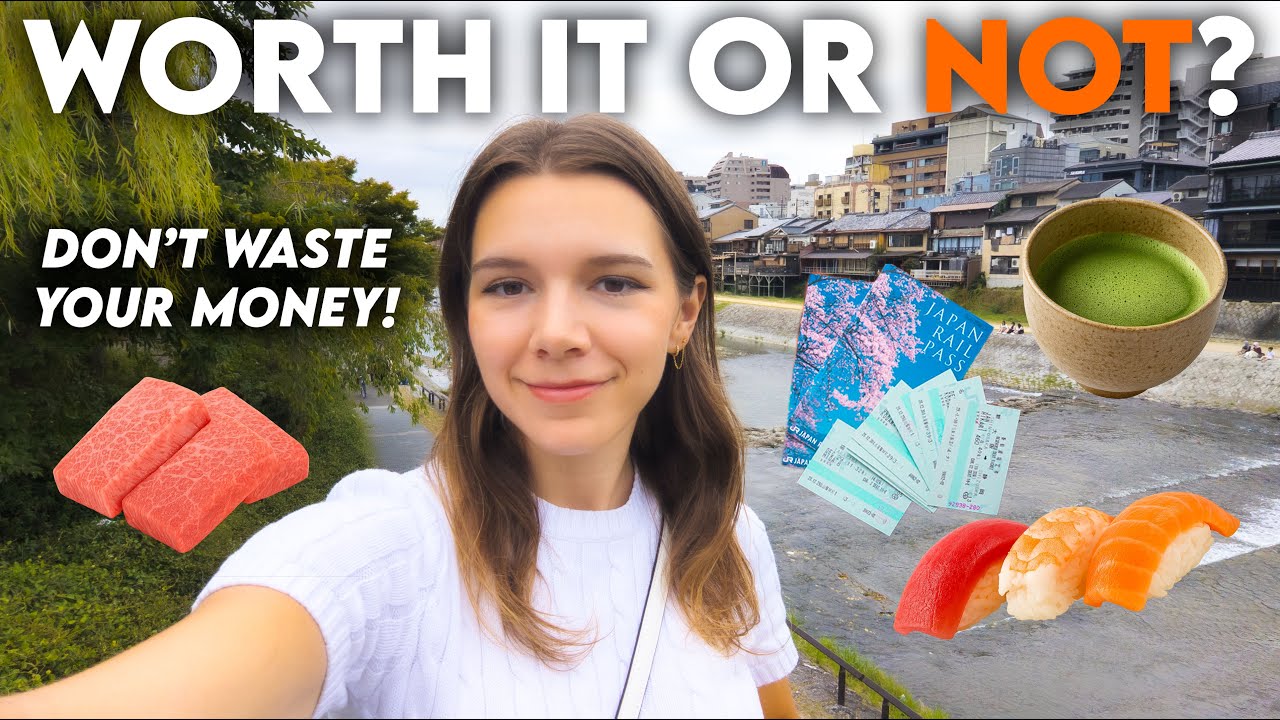
In this video, I’ll show you how to spend smarter during your Japan trip, from transportation and food to hotels and experiences that are actually worth your money.
More info: piqtour.com/japanworthit
And see the free Japan planning guide on our website! piqtour.com/timeline
It’ll answer almost any question you might have when planning your trip!
Whether you’re planning your first trip or coming back for round two, this guide will help you avoid common tourist traps, make the most of your budget, and enjoy Japan the way locals do.
📍Perfect for:
– Travelers planning a Japan trip in 2025
– Couples or families wanting authentic experiences
– Anyone wondering if the Japan Rail Pass is still worth it
I’m Abby from PiQtour Japan, a photographer and tour guide based in Kyoto.
I make practical videos that help you travel Japan smarter.
#JapanTravel #JapanTips #PiQtourJapan #TravelJapan2025 #KyotoTravel #JapanGuide #BudgetTravelJapan
23 Comments
Fabulous tips and advice, Abby. I always look forward to your content! I'm coming back to Japan in April-May next year. It will be my 4th trip there. I've found over the past 3 years, hotel prices have really jumped up a LOT. I used to be able to book APA for $60-70 CDN (I'm from Toronto), but now I can't find anything under $120. Doesn't matter where in Tokyo or what time.
I just got back from japan and yes taxis can be Very worth it for saving time and comfort. Pretty much for 3 or more people its so worth it. Just compare routes.
For food just stay away from the touristy areas and you'll find much better prices. Literally just walk 3 blocks away from the tourist traps and you'll find better food and prices.
Great tips, Abby! Many are actually relevant to travel anywhere.
2:54 I got called out 😂😂😂
Any thoughts on ikebana classes? I thought my wife would enjoy that but I don’t know if it would be worth it or not.
Thank you! You should do these videos every few months . You might think that you are repeating but it helps .
You haven’t mentioned local ferries around Tokyo or other port cities.
hmmm,… Japan is worthless … parts of Tokyo are literally built upon garbage ….
Great content. The ones that will actually help travelers
What are your thoughts on home stays on Air BnB?! Would you recommend them?! As an Australian, where the AUD is a lot more than the USD, these seem to be more affordable accommodation options for me than hotels. I usually stay in ryokans, which I absolutely love, but the prices have risen significantly, and I can’t afford to stay there anymore… Ive found some seemingly nice places on Air BnB, do you recommend them?!❤
Great tips! While in Tokyo I stayed at APA hotel, takes 5 minutes walk to the station (a smaller one) and life happens around the station. You see locals instead of tourists. The food prices are really reasonable.
I totally agree on the hotel breakfast. Not only are they crazy expensive, relatively speaking, it's also a missed opportunity for the wide variety of options. Bakeries are awesome for breakfast. Konbinis have great options to get the night before and try something new in your room in the morning. Many chains have great, cheap breakfast sets. Komeda's. 24 hour noodle shops offer udon breakfasts. Also, Komeda's.
Abby has become my favourite vlogger for Japan. She works very hard and makes sure her contents are relevant. For such a young lady, her comments are well-thought and mature. With much love from your subscriber in Singapore.
Thank you for your tips. I was still worrying if 40000 daily just for meals for 2 pax is enough.
Thank you for the tips in this and all of your videos! I’m planning a family vacation to Japan (and then also S. Korea) next summer and my head is spinning trying to figure out what to do, where to go, where to stay…. All of it. It’s starting to feel like crunch time! I’ve got our airfare so far and a loose idea of a general route across the country but accommodations, transportation, activities and meals are all just a cloud of information overload so far.
My partner and I saw you the other day in the gion/yasaka area, it looked like you were giving a tour so we didn't want to bother but it was one of the highlights of our trip! Before we got to kyoto we even joked that we might run into you lol.
Japan is 100000% a "budget" international travel destination especially for those from the west. Comparing room and board rates/airfare/daily food costs vs other places that westerners could visit ie London/Paris/Barcelona/Sydney , the costs are cheaper and quality can be exponentially higher especially depending on what you are into. With that being said, places in South East Asia offer even better bang for buck for an international trip for westerners but the average westerner is still intimidated by traveling to a place like Vietnam/Thailand/Philippines etc as well (even though those places are absolute gold mines for food and culture as well).
Thanks for all of your help. We’re heading to Japan in November, two adults and three kids (12,14,15). Regarding travel, particularly IC cards, is it best for all of us to have digital IC cards? My kids have old iPhones but they only use them to contact us in an emergency. So figured if they did bring them, they’d probably just use it for the camera. If we do use them for digital IC card, does that mean the will also need and eSIM and a credit card attached to them? Or should my husband and I have digital and the kids physical? Or just get 5 physical cards? Please help, I’ve been really confused about what’s best. That, and also I checked my itinerary and the train site reckons we’d benefit from an IC card and a Kyoto Hiroshima wide pass. Do I buy that in advance or just at a train station once I’m in Kyoto? Thanks so much!
Always the most thought out, well put contents. Always so happy to recommend your tips and guides to friends who are just about to visit Japan. Kudos. Stay awesome!
Just got back from Japan and I was not a fan. They say its easy to get around by trains and yes it is but its still a 15min walk to the station, and i found tokyo was just a big Brisbane (city in Australia). Hotels that would mostly have tourists, they actually don't cater to western tourists at all, i found, sorry I don't want prawns, sashimi or fried chicken for breakfast. Kyoto was much prettier and much more easy to get around. Prices, not very cheap at all, even outside the tourist trap areas. I think ill stick to Thailand, Vietnam and countries around there. Glad I experienced Japan probably won't be going back though.
I was hoping to spend a night or two in a ryokan for my trip in November, but everywhere I investigated felt like they didn’t really cater to solo travelers. So instead I extended my trip a little and added Fukuoka and the Grand Sumo Tournament to my itinerary.
Great advice! Am in Kyoto now and am enjoying spontaneous walks and new adventures. Thank you for creating fabulous and helpful videos.
Always check square ft of hotel rooms on the website you're booking through.. I've been caught out just looking at the photos, which make the rooms look bigger than they are.