
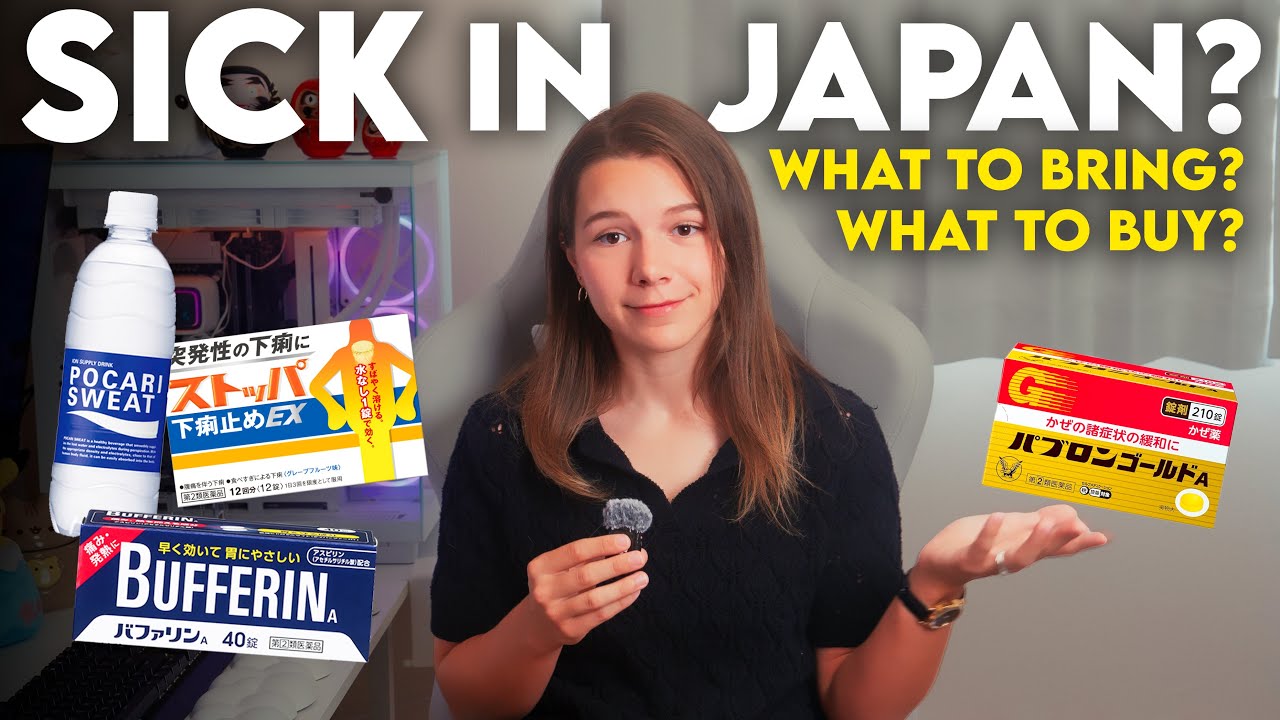
Sick in Japan? The Must-Know Survival Tricks & Items for Tourists
So, Japan’s clean, safe, and usually pretty comfortable. But truth is, getting sick while traveling can still happen, and I see it pretty often. This video isn’t about hospitals or scary emergencies. It’s about the most common issues tourists face, like feeling under the weather after a long travel day, and then what you can do to treat yourself safely using local drugstores and simple tools. Hi everyone, it’s Abby from Pctor. I’m a photographer and guide in Japan and I am not a doctor nor do I play one on TV. This is simply practical advice. Let’s get started. All right. So, part one, of course, is to listen to your body. Don’t ignore those early signs. And I see it often. You’re tired after finishing up work or school, and then you immediately hop on a long flight over to Japan. You don’t sleep well on the plane. You eat the weird plane food that they give you. And if when you arrive you feel unusually tired, your throat’s scratchy, your stomach’s acting weird, just pause. And this is why I usually advise doing nothing important on your first day or even your second day in Japan. Many people will have to deal with jet lag. And even outside of that, you’re going to be introduced to a whole lot of new germs all at one time. I remember the first time I came to Japan, um I seem to get every illness under the sun over and over again. And I’m not saying this to scare you or to imply that Japan isn’t clean because it’s incredibly clean. Um, but it’s as a personal recommendation to take it slow and not overdo it. I was so excited to go around and see as much as possible that I sacrificed my health to do so. So, don’t do that. You’ll be walking a lot, navigating trains and other unfamiliar environments, adjusting to new food, and if your body is waving a little red flag, just pay attention early. Some good things to enjoy before you start to feel too bad or even while you feel great so that you keep feeling great are things like CC lemon or other vitamin C products. Electrolytes or something like Aquarius or Pocari sweat if you’re sweating a lot. A hand sanitizer or little soaps to bring with you as some temples, shrines, old station bathrooms um don’t have soap sometimes. Healthy snacks from the convenience store. And of course, just getting enough rest. So, part two, what to buy at Japanesearmacies. You won’t be able to buy medicine at a 7-Eleven. Unfortunately, they don’t have a convenience stores. You’ll need to go to a drugstore. But don’t worry, because drugstores here are actually pretty great. You’ll see chains like Matsumoto, Kyoshi, Sundrug, and Welsia all over the place. Here’s what to look for and what it helps with. So, first we have Lulu. This is for cold and flu. helps with sore throat, congestion, general fatigue. Um, the go-to if you think you might have a cold or flu. Next is Eve. This is a painkiller. So, like ibuprofen. Most contain caffeine, by the way. So, if you don’t want caffeine in your painkillers here, you’re going to need to get the kids version. Next is Gastrain. This is acid reflux help. So, you’re going to be some exciting stuff over here, so you might need this. Next is Pabon Gold A. This is another classic for a cold and cough and fever. Seden, this is for diarrhea or upset stomach. It smells absolutely horrible, but it uh works pretty well. You have Cabagene. This is for acid reflux and bloating. Uh Bufferin, this is another pain and relief option which is known for being more gentle on your stomach. We we do have like Algra, Claritin, um Zerek is called Contact Z here uh for allergies. If you get bit by an insect, we have Muhi Baby, which is not just for babies. Um it’s for all ages. Next, they also have these really good little canker sore patches you can get here that um I’m a notorious user of. Of course, you have uh sadd uh salom pass. I don’t know how you would say this in like American English for muscle and joint pain. Uh these are good if you get sore from walking. And of course, there’s like renitis sprays. So, there’s a fair amount of fast acting relief for sinus congestion. Some important notes. Most packaging is not in English. Go figure. So, use the Google Translate camera mode. It works surprisingly well. Um, the staff at drugstores outside of like major tourist areas usually can’t speak English, but many of them are still used to helping tourists. As long as you’re polite, you’ll be fine. If you have a lot of symptoms maybe that you need some kind of over-the-counter medicine for, you might want to even use chat GBT to sort of write up a list of your symptoms so then you can show it to them and they can help you find something appropriate. Also note that the medications I mentioned are obviously intended for adults. So, please check with staff if you have children. Um, there’s usually a little children’s section in every drugstore and you’ll know it when you see it because they’ll have little like anime people and animals on every single one of the medications. All right, part three. What is the difference between a pharmacy, a drugstore, and a convenience store? So, a convenience store, a combini like 7-Eleven, Lawson, Family Mart. These are great for things like cold drinks, hydration powders, maybe a basic fever patch, and usually stomach, uh, upset medicine, but they’ll have nothing stronger than that. A drugstore like Matsumoto Kyoshi, um, these are best for over-the-counter meds, painkillers, cold medicine. By the way, sometimes when you find something OTC at a drugstore, it will end up being something that you’ll need to talk to staff about if it has maybe um certain ingredients in it. So, sometimes you’ll be at the checkout just trying to buy it and suddenly the staff will come up and you’ll start panicking. You’ll be like, “What are they talking to me about?” Um just again, Google Translate would be best for that. They just want to check that you understand the instructions of the medication before they send you on your way with it. And you have a yakyoku, which is a licensed pharmacy where you fill prescriptions. Um, and these are often located directly next to clinics for your convenience. So, I would stick to drugstores unless you need a prescription build. Number four is I recommend building a simple travel health kit first. So, if you pack a small kit of essentials when you come to Japan or literally anywhere else, you are already going to be um a step above everyone else. So, here’s what to bring in from home. Uh I always recommend bringing your preferred painkillers, whether that be ibuprofen, acetaminophen, whatever you have that you like and know works for you. Uh tummy medicine, maybe Pepto or Emodium. Um antacid tablets if that’s something you tend to need. Um, and you might need it surprisingly when you get here. Uh, one electrolyte packet or powdered drink mix. You can find them here, but if you have one you like already, that’s good. A few band-aids is always good. Alcohol wipes is always good. A small thermometer. Uh, some hand sanitizer. Um, a printed copy of your travel insurance if you have it. And all of these will save you time and confusion if you do start to feel off. So, real quick, some medicines that might be more common overseas are banned in Japan. Um, so no pseudafed or anything with pseudoeepadrine, no aderall or rolin, no narcotics, and no CBD oil. Um, so what you can bring, by the way, is up to a one month supply of most non-narcotic prescription medicines. So if you need a prescription medication that you take regularly, you can take up to a one month supply of it. Um, you can also bring up to a two-mon supply of over-the-counter drugs as long as they are not um, tudaf fed. Basically, you always want to bring your medications in the original packaging um, with a doctor’s note if needed. If you need to bring a greater supply of certain medications than I just said you could, um, you might need to get a yakan sh certificate. So, if you’re coming here for a longer period of time, maybe you’re studying abroad working, you’re going to need probably that Japanese import permission, and you apply in advance through Japan’s Ministry of Health, Labor, and Welfare. And they’ll get back to you fairly quickly, but they recommend doing it at least around 2 weeks in advance of your trip over. So, part five, when you actually need to see a doctor. So, of course, most things will pass with rest in medicine, but if you have a high fever for more than two to three days, uh you can’t keep food down, you’re clearly getting worse, um don’t wait. You can potentially ask your hotel concierge for help finding a nearby clinic. You can use the JNT English language 24hour hotline, which I will link in the description. Um you can also just um search English speakaking clinic city that you’re in. So uh big cities Tokyo, Kyoto, Osaka um all have pretty solid options of English-speaking uh doctors available. So when you go to a clinic, you’ll get treated and then usually you’ll pay there. Um and then you can submit a claim to your insurance if you have any. Um, regardless, expect around 5,000 to 10,000 yen for a simple clinic visit. Also, many clinics only take walk-ins, though more and more have a place where you can um make an appointment online in advance, usually like the morning of or something. And also, quite a few still only take cash. So, come prepared with more than enough cash than you think you might need. Same applies for when you go toarmacies. Oftentimes they only take cash as well for your for your medications. So getting sick on vacation is the worst, but if it happens here, you’ve got options. Japaneseies are accessible, the staff are kind, and most issues can be handled with a quick trip to the store and a little rest. So check out our blog post for a list of common medicines and useful phrases. And if you’re coming to Kyoto, we offer photography and tours, so you can check out the links below for more info on that. Safe travels and take care of yourself while you’re here. See you guys.
Getting sick in Japan isn’t just about emergencies—most tourists deal with jet lag, colds, or stomach troubles. In this video I’ll cover how to stay healthy before you get sick and what to actually do if you do: what to pack, what to buy at Japanese drugstores, and when it’s time to see a doctor.
📖 Read our full blog on Japanese medicine: piqtour.com/japanese-medicine
☎️ JNTO 24/7 English Support Hotline: japan.travel/en/plan/hotline/
🗓 Plan your Japan trip with our helpful travel timeline: piqtour.com/timeline
31 Comments
Tappei better appear mid video in a cast and head bandage…or at least a bandaid and a hot lemon drink…
What about insect repellent sprays got any recommendations?
I thought I couldn’t bring in ibuprofen because the mg is too high for Japan.
That mouth sores sticker, how does it work and why don' they exist everywhere?!
2yrs ago I Broke my leg in Nagoya the day I arrived. I was tired from the trip, wanted to get to the hotel and was rushing not paying attention to where I was stepping twisted my foot and fell breaking my leg.
When I get to the Hospital, the people there kept telling me it was going to be expensive for the X-ray cast meds and crutches as well as for the hospital. So I was a little scared but when I got the bill it was 11,000¥ $74 USD and when I returned the crutches 7 weeks later and received a 2,000¥ refund. That's $61 USD Total for the ER X-ray cast meds with the return of the crutches after I didn't need them anymore All without insurance
Oh and everywhere I went the Japanese people were so helpful making sure I was comfortable in the restaurants with crutches and a cast on my leg, same in the stores, getting on and off the trains. Total strangers would go out of their way to help me or asked if I needed help. I love Japan and the People so much
This is very useful. All I usually do is buy travel insurance but never think of the "small stuff". Thinking of the stomach meds now
im a big fan of Pocari Sweat!
that stuff kept me hydrated during my time in Japan and i swear by it
薬のレビュー待ってました。旅の途中お腹が痛くなったり頭が痛くなったり乗り物に酔ったり、花粉症になったり、ただ眠くなるので運転したりするのは危ないです。
Thank you, Abby for such an informative video. There are hardly any videos mentioning medications and those that are banned in Japan. I expect it’s because a lot of people are lucky enough to not have chronic illnesses! We’re visiting in late November and we both have several prescriptions. Fortunately all bar one are fine (just need a Drs note for that one!) Also useful to know the Kombinis are not a one stop med shop if we become unwell.
This is so helpful! Thank you so much! I saved all the ocd medicine you mentioned, just to be extra safe. Last year we went to Japan and unfortunately got the stomach flu. We had prepared a travel kit, but only for colds. 😔 Except for Pocari Sweat we couldn‘t find anything to help our GI system, not even chamomile tea. 😩 Gonna bring that one from home next time, for sure. 😮💨
Your videos and blog are the best! I’m coming to Japan next month and they have been so helpful.
This is very helpful!!
I got sick and i went through like 8 types of cough drops while I was there and they were all bad until a pharmacist that had spent time in the US pointed out the good stuff to me.
I'd include ORS-1 for folks hydrating their way through food poisoning or other severe dehydration. It's basically Japanese Pedialyte. You can find it at drug stores and even some convenience stores. Pocari Sweat and Aquarius are good but have a lot more sugar than you'd expect.
Bufferin..such a funny name but it works so well!!! If you are travelling with kids, keep an eye on them and their health too as they may not be able to tell you how they are feeling. But chances are if they get sick, you will get sick too. We all got sick last time.
We are heading back for 3 weeks in November/December. This time our itinerary has 2 activities or sights a day only. Thats it. A rest period at the hotel during the day is scheduled for each day. I've also planned a completely unplanned day every 5 days for rest and for going with the flow, washing/food or supplies shopping/planning ahead. You often forget that that stuff takes time. Also, the weather is cooler compared to what we are used to, especially as we are headed to the Kanazawa and Nagano areas. So we will be more gentle with ourselves. Last time we went in January and were spending 12 hours a day in the freezing cold and doing around 25 000 steps a day. Its no suprise we all got so sick. This time we are approaching it differently.
Ohhh, that a very useful video! Thank you so much ❤
Hello Abby! Stumbled upon your channel recently and subscribed right away. I was recently in Japan for a short time, but had a blast. Definitely coming back more prepared! Thank you for all the sensible, detailed and informative videos, I really enjoyed them. 🏯 🇯🇵👹
Benzablock (ベンザブロック) saved me during my trip. It has pseudoephedrine, the same ingredient as Sudafed in the US. I had a cold and it suppressed my symptoms and I could continue to enjoy my trip until I recovered. I had to answer some questions about how much I purchased for myself at the pharmacy, but it was available from behind the counter.
You read my mind. I was going to look into this just today. Now I just have to jot down a few notes.
Currently in Japan and sick! Bought nurofen equivalent and couldn't figure out why I was so awake last night – caffeine! 😳 Got some of the runny nose stuff, hope that sorts me out 😊
I asked about headache tablets at the chemist, and the young lady recommended menstrual pain relief tablets.. I didn't realise until I got back to the hotel and used my phone to translate the writing.
@ 7:02 As mentioned by Abby, Pepto Bismol (tablet form) is a good choice; bismuth subsalicylate products are not sold in Japan but I've never had issue bringing my own. Imodium should be carried by every international traveler; it's cheap insurance — and when you need it, you need it NOW. Fortunately, you can buy products with the active ingredient loperamide (ロペラミド) in Japan — including Stoppa (which was on the screen.) I also bring a portable ice bag with a large mouth. It can be used to treat pains and injuries, but also to cool down in the summer heat. BTW, Diphenhydramine (Benadryl) is not permitted in Japan and can be confiscated at customs. As usual Abby, a helpful video.
Really helpful video!
Are there any recommended brands of paracetamol?
I have to take blood pressure meds that don't always play well with aspirin and ibuprofen and I'm allergic to combined cold and flu meds (or at least the ones we have in the UK)
Loxanin S is dope. Abby is a TV doctor.
I have several chronic illnesses that require both shots and legit pain meds (I take them sparingly, but when your bones swell or you have meningitis or arthritis in your whole body or bleeding in your eyes, &c., you need something more than Tylenol!) – can you take these to Japan and if you stay, how do you go about getting these types of scripts (immunoglobulin, &c., through mail order in the US!) in Japan?
My plan: get drunk before getting on the plane, sleep for the whole flight, land fresh and refreshed. Eazy bizy
Been planning our trip to Japan from New Zealand for the last year. We finally made in and we actually saw you at Yasuka Shrine this morning. Your videos have been awesome over the last few months… so thank you 🙏🏼
Did you just make this video especially for me, Abi?! I am currently stuck on the sofa, sick with a heavy cold. I was just thinking “oh no, what if this happens on my trip to Japan next month…?” A few hours later, you released this video! Now I know, thank you 🥰💕
Thanks for the tour today. We all enjoyed it.
Masks are a good idea too. If you get sick, don’t spread it around.
I think the best advice is order the medicine by active ingredient specially if you need an inusual or specific one.