
Japan has changed / Things to Know Before Traveling to Japan / Travel tips
7 Things You Must Know Before Traveling to Japan Hi, I’m Samurai Junjiro! Hi, I’m Akanemaru! In this video, we’ll go over the key things every visitor
should know before traveling to Japan. Japan is a safe country, but there are also hidden traps
and scams that tourists often overlook. We’ll cover seven important topics from immigration procedures to the best
and worst times to visit, and even packing tips. Stick around until the end to make your trip to Japan
smoother and more enjoyable. First, let’s talk about ten things you should know
about Japan’s immigration process. Chapter 1: Mandatory Use of Visit Japan Web
and Its Benefits Since 2024, the Japanese government
has strongly encouraged all short-term visitors to use the
“Visit Japan Web” system before arrival. This online platform is designed to simplify entry procedures by allowing travelers to register their information in advance. Before your departure, you can log in to the website
and input key details such as your personal information, travel itinerary, and customs declaration. Once completed, the system will generate a QR code
that you’ll use during your arrival process in Japan. This small step can make a big difference, especially during peak travel seasons
when airports tend to get crowded. The QR code is integrated with Japan’s facial recognition
gates at many major airports. This means that instead of waiting in long lines
for manual checks, your identity can be verified quickly and automatically. Immigration and customs procedures
can be completed much faster, often in just a few minutes,
allowing you to start your adventure right away. It’s important to note that internet access at the airport
might be unstable, particularly if many travelers
are trying to connect to the same Wi-Fi network. For this reason, it’s highly recommended to take a screenshot
of your QR code and save it to your device before leaving your home country. That way, even without a Wi-Fi connection,
you’ll still be able to present the necessary code. Using Visit Japan Web not only improves
your travel experience, but also contributes to smoother airport operations
and better crowd management. It’s a win-win for both travelers and authorities. Chapter 2: Major Changes in Tax-Free Shopping Japan has long been a popular destination
for international shoppers. Offering a wide variety of products, from cosmetics
and electronics to snacks and souvenirs, tax-free shopping has enhanced its appeal. However, significant changes are being introduced in 2025
to ensure fairness and transparency in the system. As of April 2025, items purchased and sent overseas
will no longer be eligible for tax exemption. This applies to online orders and gift shipments,
which were previously common. The revised rule includes both postal and courier shipments. Starting in November 2026, Japan will fully transition
to a refund-based tax-free system. Under this system, travelers will pay the consumption tax
at purchase and claim a refund at designated counters upon departure. This aligns with systems already in place
in many countries worldwide. Other changes include eliminating special tax-free packaging and requiring travelers to take items out of Japan
within 30 days of purchase. Receipt retention will also be required
to prevent fraudulent use. While these changes may seem inconvenient,
they are crucial for maintaining system integrity. Be sure to confirm details with store staff
and allow time for refunds at the airport. Chapter 3: Reintroduction of Suica and PASMO Cards Suica and PASMO cards have long been essential tools
for getting around in Japan. However, from 2023 to 2024, their sales were suspended
due to a global chip shortage. As of March 2025, non-personalized Suica
and PASMO cards are once again available for purchase. These versions don’t require ID or registration,
making them ideal for short-term visitors. They are available at major airports and train stations. With just a tap at the gate, you can ride trains
or buses without buying individual tickets. They can be easily recharged with cash or credit card. These cards are also accepted at convenience stores,
vending machines, lockers, and cafés. They’re an effective solution for navigating Japan
even without speaking the language. You can return the card for a deposit refund
at the end of your trip. Chapter 4: Departure Tax May Increase Since January 2019, Japan has imposed a departure tax
of 1,000 yen on all travelers leaving the country. This fee, officially known as the “International Tourist Tax,” is automatically included in the price of airline
or cruise tickets. The revenue has been used to improve tourism infrastructure,
such as multilingual signage, airport Wi-Fi, and streamlined immigration procedures. However, discussions are now underway to increase
this departure tax to 5,000 yen in 2025. The proposed increase reflects Japan’s
growing need to support rising inbound tourism and expand services in rural areas. The additional funds would support airport expansion, crowd management in tourist hotspots,
and the enhancement of digital services. While the proposal is not yet finalized,
it has sparked mixed reactions. Some view it as a fair investment in better travel experiences, while others are concerned it may deter budget-conscious visitors. If approved, the increase would likely be implemented
in late 2025 or early 2026. It’s important for travelers to stay informed
and factor this potential change into their travel budgets. Ultimately, this move aims to create a more sustainable
and enjoyable travel environment in Japan. Chapter 5:
Eased Visa Rules for Chinese Tourists and Their Impact In 2024, Japan began issuing 10-year multiple-entry visas
to Chinese tourists. This policy has significantly increased the number
of inbound tourists from China. The visa allows stays of up to 90 days per visit. It also allows for multiple entries,
making it ideal for business travel, family visits, or frequent leisure trips. Popular destinations such as Tokyo, Kyoto, Osaka, and Hokkaido are seeing notable increases in crowding
due to this rise in Chinese tourism. While this is positive for the local economy
and international exchange, it also presents challenges for other travelers, such as difficulties booking accommodations
and transportation. This is especially true during peak travel seasons
like Japan’s Golden Week or China’s national holidays. Travelers are strongly advised to make hotel
and transportation reservations as early as possible. Considering lesser-known destinations
can also be a great way to avoid crowds and discover unique experiences. The visa relaxation is part of Japan’s broader goal
to attract 60 million foreign visitors annually by 2030. Similar policies are likely to expand to other countries, making travel to Japan even more accessible
in the near future. Chapter 6: Preclearance Pilot Program To improve traveler convenience
and reduce congestion at airports, Japan has launched a pilot program
introducing preclearance procedures. The pilot program began in 2025 at Taiwan Taoyuan
International Airport. Preclearance allows travelers to complete
Japanese immigration checks at their departure airport before boarding. As a result, travelers can bypass immigration lines
and enter Japan quickly upon arrival. This is especially advantageous during peak travel periods
or international events when airports are crowded. At the departure airport, travelers stop by a Japanese immigration booth to verify documents, fingerprints, and facial recognition. Once cleared, a confirmation mark
is added to the boarding pass. Upon arrival in Japan, travelers use a special lane
and skip the regular immigration process. Although still in its trial phase,
the program has received positive feedback from users. If successful, the system may expand to other major airports
such as Incheon, Hong Kong, or Singapore. Check with your airline or departure airport in advance
to confirm if preclearance is available. This program could become the new standard for smoother
and more efficient entry into Japan. Chapter 7: Baggage Inspection and Import Restrictions In recent years, Japan’s customs authorities
have strengthened baggage inspection procedures and tightened import restrictions. The goal is to prevent illegal imports
and ensure public safety. Travelers should be fully aware of prohibited
and restricted items before entering Japan. Typical prohibited items include fresh produce,
meat products, counterfeit goods, fur, and certain pharmaceutical drugs. Even items that are legal in your home country
may be restricted or banned in Japan. For example, some common cold or pain relief medications
may contain substances restricted under Japanese law. To detect such violations, advanced X-ray scanners
are now installed at Japanese airports. When suspicious items are detected,
customs officers may perform manual inspections. Travelers from high-risk regions or carrying bulky
or unusual items may be subject to stricter checks. If unsure, always declare questionable items
on your customs form and consult an officer. Failure to declare, even unintentionally, can result in fines,
confiscation, or denial of entry. Be cautious when carrying items for others, as you are legally responsible for all contents
in your possession. Before your trip, check Japan Customs’ official website
for the latest list of restricted goods. Following these rules is the first step toward a smooth
and hassle-free arrival in Japan. Chapter 8: Recommended Translation Apps One of the most common concerns among travelers
to Japan is the language barrier. While English signage is more common in cities,
communication in rural areas can still be quite difficult. This is where translation apps become incredibly useful. Two of the most popular options are
“VoiceTra” and “Google Translate.” Both are free, user-friendly, and support two-way translation
between Japanese and English. VoiceTra, developed by Japan’s National Institute
of Information and Communications Technology, is particularly reliable for transportation
and lodging-related phrases. Its offline functionality is a great advantage in areas
with poor internet access. Google Translate, on the other hand, offers features such as real-time translation
via your camera for signs and menus. It also includes conversation mode and the ability
to save useful phrases for quick reference. Whichever app you use, it’s wise to download
the Japanese language pack ahead of time. Learning simple phrases like “Sumimasen,” “Arigatou,”
and “Eigo o hanasemasu ka?” can also go a long way. Some newer AI-powered apps combine translation,
mapping, and restaurant search features for all-in-one convenience. Keep in mind that frequent use can drain your battery quickly,
so carrying a portable charger is advised. With a good translation app, confusion turns into confidence, and communication
becomes a more enjoyable part of your journey. Chapter 9: Emergency Contacts and How to Get Help Japan is one of the safest countries in the world,
but it’s still important to be prepared for emergencies. Quick response is essential in situations
such as accidents, illness, or natural disasters. Japan’s emergency numbers are simple
and easy to remember: Dial 110 to contact the police
and 119 for fire or ambulance services. Both numbers can be dialed for free from mobile phones
or public telephones. In urban areas, operators can often assist in English. Some municipalities also operate multilingual call centers
for foreign visitors. At major airports and train stations, tourist information counters often have staff
who can assist in English. Many hotels provide guests with emergency contact cards
at check-in. It’s a good idea to ask your hotel in advance
about their emergency protocols. Save the contact information of your country’s embassy
or consulate in your phone just in case. Being prepared means peace of mind and a safer,
more enjoyable journey. Chapter 10: Japan’s 2025 Holiday and Busy Periods Japan has several peak travel seasons during
which demand for transportation and accommodations surges. During these times, tickets can be difficult to obtain,
and prices often rise significantly. The most notable peak periods
are Golden Week (late April to early May) and New Year holidays (December 29 to January 3). Golden Week consists of several consecutive public holidays,
prompting many Japanese to travel. During New Year, people return to their hometowns
or visit shrines, causing heavy congestion in trains, flights, and highways. If you plan to travel during these periods,
it’s essential to book everything (flights, trains, and hotels) as early as possible. Shinkansen and domestic flights often sell out quickly
as soon as seat reservations open. Consider using early-bird discounts
or flexible reservation options to stay adaptable. On the other hand, off-peak seasons such as mid-May,
September, and early December are less crowded
and offer more affordable rates. If you prefer a smoother travel experience,
these quieter periods can be an excellent choice. Regardless of when you travel, a flexible schedule and a relaxed itinerary will help make your trip
more enjoyable and stress-free. Next, we’ll cover twenty common money-wasting habits
you should avoid in Japan. Chapter one: Choosing Only High-End Sushi Restaurants Of course, you want to try authentic sushi
when visiting Japan. But going straight to high-end sushi restaurants in Ginza
might not be the smartest choice. Some places cost over 20,000 yen per person
and are hard to book. And just because it’s expensive
doesn’t mean you’ll enjoy it more. In fact, there are plenty of affordable
and delicious sushi options in Japan. Even 100-yen conveyor belt sushi chains
offer surprisingly good quality. Local conveyor belt or stand-up sushi shops
are budget-friendly and often less touristy. Of course, high-end sushi is great for
special occasions—but not every meal. To use your travel budget wisely,
try sushi at different price points. You don’t have to spend a fortune to enjoy amazing sushi
in Japan. Chapter two: Overusing the Tokyo Metro Pass The Tokyo Metro Pass is a go-to item for many tourists
exploring the city. It feels like a good deal
unlimited rides for one or three days. But if you don’t ride that often,
you might end up spending more. Many Tokyo sights are walkable,
and you may not ride the train that often in a single day. Sometimes, just using a Suica card is cheaper. Plus, many places aren’t reachable by Metro alone
you’ll need JR trains, which cost extra. In the end, you may not get your money’s
worth out of the unlimited pass. It’s better to plan your route and see
how many rides you’ll actually take. Ask yourself—do you really need unlimited rides? Chapter three: Always Choosing Limited Express Trains Wanting to save time,
many travelers choose limited express trains. But Japanese trains are already punctual and efficient
you don’t always need express trains. For example, going from Narita Airport, you can either pay for a limited express
or take a slower local train. The difference can be 30 minutes and cost hundreds
or even thousands of yen more. If you’re not in a rush, local trains are perfectly comfortable. You also get to enjoy the view
and observe everyday local life. Just remember
express trains aren’t always the best choice. Use them strategically,
and you can save a lot on transportation. Chapter four: Spending Too Much on Wagashi Workshops One popular way to experience Japanese culture
is through wagashi-making workshops. Making traditional sweets with your own hands
sounds amazing. However, some workshops aimed at tourists
have started raising their prices. Some charge over 10,000 yen for a one-hour session
which many feel is overpriced. In some cases, the experience is basic
and far from authentic craftsmanship. Of course, meaningful memories matter
but so does value for money. You can often find the same type of experience
outside tourist hubs for half the price. Don’t forget you can buy high-quality wagashi
at supermarkets for just a few hundred yen. Experience doesn’t have to mean expensive
choose what fits your budget and interest. Chapter five: Believing Everything Is Made in Japan Do you assume that all souvenirs sold in Japan
are made in Japan? The truth is, that’s not always the case. Many souvenir shops, especially in tourist areas,
are full of mass-produced items made overseas. You might be fooled by Japanese labels or “JAPAN” prints,
but many are made in China or Southeast Asia. Of course, that’s not necessarily a bad thing. But it’s disappointing when you realize later
that it wasn’t made in Japan after all. Check the back or bottom of the package
manufacturing countries are often written in small print. If you’re visiting Japan, choosing genuine Japanese-made
goods makes for better souvenirs. Chapter six: Buying Duty-Free Souvenirs at the Airport Many people buy souvenirs at the airport before heading home. It seems easier—you’re short on time, and it’s duty-free. But in many cases, the same items are cheaper in city stores. For snacks or cosmetics, discount stores
or drugstores usually offer better prices and more variety. Some airport souvenirs have tourist-friendly packaging,
but less content at a higher price. Thinking “I’ll just buy everything at the airport”
can lead to overspending. It’s smarter to pick up your souvenirs in town
while you still have time. Chapter seven:
Shipping Luggage from the Airport Unnecessarily Many travelers think, “It’s too much to carry
I’ll just ship my luggage to the hotel.” Indeed, Japan’s delivery service is convenient and reliable. However, airport-based shipping
often comes with a premium you might pay thousands of yen even for short distances. In some cases, same-day delivery isn’t possible,
and you won’t get your bags right away. If your hotel is accessible by train or bus,
carrying one suitcase is often more economical. Weigh the cost and convenience, and choose the method
that works best for you. Chapter eight: Paying High Fees for Observation Decks Japan has many popular observation spots,
like Tokyo Skytree and Abeno Harukas. Enjoying the view can be a wonderful travel memory. However, some observation decks charge over 2,000 yen,
which adds up fast for families or groups. And on cloudy or rainy days,
poor visibility can ruin the experience. In fact, there are many free viewpoints across Japan. Places like the Tokyo Metropolitan Government Building
or department store rooftops offer great views for free. Before paying, try checking out the free options first. You might get the same view without spending a yen. Chapter nine: Collecting Too Many Goshuin Stamps Getting goshuin stamps at temples
and shrines is a uniquely Japanese experience. Each one is hand-drawn, beautiful like art,
and cherished as a travel memento. But some travelers end up visiting over 10 places a day,
spending thousands of yen without noticing. Each goshuin usually costs 300–500 yen,
and collecting too many adds up quickly. Sometimes collecting becomes the goal, and you miss the cultural meaning behind
each temple or shrine. It’s more meaningful to explore deeply and get one
memorable stamp than dozens without thought. Focus on quality, not quantity,
to make your goshuin experience truly special. Chapter ten: Spending on Hotel Breakfast Buffets Daily Hotel breakfast buffets are undeniably tempting. You get a wide variety of Japanese and Western dishes,
all you can eat. But eating it every day can cost around 2,000 yen per meal,
which adds up fast. Outside the hotel, you’ll find many breakfast options
for just a few hundred yen. Cafe chains offer great morning sets, and even convenience stores have tasty rice balls
and miso soup. You don’t need to eat the buffet daily—try it once or twice,
and explore local breakfast spots on other days. You’ll experience more of Japan’s food culture
and get more out of your trip. Chapter eleven:
Overspending at Concept Cafés Like Maid Cafés Unique to Japan, concept cafés like maid cafés
and ninja cafés are very popular among tourists. They offer a surreal, themed experience
and it’s totally understandable to want to try it once. But once inside, unexpected costs can pile up. There are table charges, photo fees, show charges
and they’re not always clearly listed. A single drink can cost over 1,000 yen,
and full sets can exceed 3,000 yen easily. Some places have time limits
or require extra orders to stay longer. Always check the pricing system before entering
and stick to your budget. These experiences can be great
but only when they don’t leave your wallet empty. Chapter twelve: Tipping in Japan One thing that often confuses tourists
is Japan’s tipping culture—or rather, the lack of it. Tipping is not customary in Japan,
and offering one can even make staff uncomfortable. Even at upscale restaurants and hotels,
service charges are already included in the bill. In taxis or cafés,
there’s no need to leave change behind as a tip. Many places even have a no-tipping policy
and will politely refuse it. If you want to show appreciation, a warm smile
and a simple “arigatou” is more than enough. In Japan, gratitude is shown through manners—not money. Chapter thirteen: Buying Shinkansen Tickets Last Minute The Shinkansen is fast and comfortable,
but tickets aren’t cheap. Many travelers just buy tickets at full price
from vending machines or counters on the day of travel. But there are many discounted options available
if you book online in advance. Sites like “Ekinet” or JR’s official page offer early-bird
discounts and foreigner-exclusive deals. The Japan Rail Pass can also save you a lot
if you’re taking multiple trips—use it wisely. If you’ve only thought about same-day tickets,
it’s worth researching online booking options. A little planning can lead to big savings on your trip. Chapter fourteen: Overloading Your Suica Card IC cards like Suica and PASMO are super convenient
for getting around Japan. They work for trains, buses, and even small purchases
tourists love them. However, many people end up loading more money
than they actually use. If you’re only visiting for a short stay, charging more than 5,000 yen often results
in leftover balance. Plus, some refunds come with fees,
and airport counters can be crowded or hard to find. You can recharge in small amounts
so it’s smarter to top up as needed. Avoid wasting money on last-minute purchases
just to use up your balance. Chapter fifteen: Buying Attraction Tickets on the Day of Visit Are you planning to buy attraction tickets
at the entrance on the day of your visit? That might be a costly mistake. Many attractions offer discounts
for online or advance bookings. And during busy seasons,
same-day tickets might be sold out. Places like teamLab or Ghibli Park
often require advance reservations. Booking through official sites or travel apps
sometimes includes perks or extra benefits. With a little planning, you can also avoid long ticket lines. Buying on the day should be a last resort
always try to book in advance. Chapter sixteen: Relying Too Much on Convenience Stores
and Vending Machines Japanese convenience stores and vending machines
are incredibly convenient. They’re everywhere, open 24/7,
and offer a wide range of items. But relying on them too often can gradually inflate
your spending. Buying rice balls and drinks daily
can cost several thousand yen in a week. Supermarkets often sell the same items for 10–20% less. Using supermarkets or drugstores near your hotel
can save you a lot more money. Of course, convenience stores are useful
but not ideal for every purchase. Use them occasionally—that’s the sweet spot. Chapter seventeen: Losing Money Exchanging Currency
at Airports or Hotels Many travelers exchange currency at the airport
or their hotel right after arriving in Japan. However, this often results in poor exchange rates
and extra fees. Because of the convenience, their rates are usually higher
what we call “tourist pricing.” Exchanging just 10,000 yen can cost you over 1,000 yen
more than doing it in the city. Using banks, licensed currency exchanges,
or favorable ATMs in town is a smarter option. Nowadays, debit cards and money apps
that support foreign currency are becoming more common. Don’t rush—compare rates first before exchanging. Chapter eighteen: Overusing Taxis in Japan Many tourists rely on taxis
because they’re tired or carrying heavy luggage. Of course, taxis are convenient and comfortable. However, in Japan,
even short rides can easily exceed 2,000 yen. For short distances,
subways or buses are far more economical. With apps like Google Maps, it’s easy to navigate
public transport in Japan. Use taxis only when truly necessary
otherwise, travel smart with your Suica card. Chapter nineteen: Ending Up with Too Many Coins In Japan, cash—especially coins—is still commonly used. Every time you get change,
your wallet gets heavier and heavier. It’s common to find yourself stuck with a handful
of coins at the end of your trip. You can’t exchange coins at airports,
and they’re useless once you leave Japan. The solution?
Make an effort to use your coins during your trip. Try paying the exact amount at stores or using machines
that accept coins—or recharge your IC card with them. Lighten your wallet before heading home
spend those coins wisely. Chapter twenty: Relying on Hotel Laundry Services If you’re staying long or traveling in summer,
doing laundry becomes necessary. However, hotel laundry services often charge
500–1,000 yen per item. A few shirts can cost as much as a night’s stay
if you’re not careful. Coin laundromats in town are a great alternative. They’re open 24 hours and some offer wash-and-dry services
for under 500 yen. Many business hotels also have guest laundry rooms
use them when available. Smart laundry choices can help you save a lot on your trip. Then, let’s go over ten smart packing tips
that’ll make your Japan trip easier. Chapter one: Passport, Visa, and Travel Insurance First and foremost, make sure you have all the documents
required to enter Japan. For most countries, no visa is required for tourist
visits under 90 days. However, visa requirements vary by country, so always check the latest info from the Japanese
embassy website before departure. Make sure your passport
is valid for the entire duration of your stay. Your passport must be valid until your departure date
from Japan. One thing many travelers forget is to get travel insurance. Japan has excellent medical care,
but it can be very expensive without insurance. Credit card insurance often has limited coverage,
so getting separate travel insurance is a smart move. It’s a good idea to save a digital copy of your insurance policy
and contact info, or print it out just in case. At immigration, you’ll only need your passport, but it’s helpful to have your hotel info
handy in case of questions or emergencies. You can also use the “Visit Japan Web” system
for smoother entry procedures. It’s easy to register on your phone and can speed up
immigration and customs checks. So to sum up: passport, visa status, travel insurance,
accommodation details, and Visit Japan Web having all of these ready will give you a worry-free start
to your adventure. Chapter two: Money Matters
Cash, Cards, and Mobile Payments Japan may be a modern country,
but cash is still surprisingly essential here. In rural areas or small family-run shops,
it’s not uncommon to find places that only accept cash. That’s why you should always carry some cash with you
while traveling in Japan. As a rule of thumb, having about 5,000 to 10,000 yen per day
is a safe bet. Currency exchange counters at airports
often offer unfavorable rates, so using ATMs in Japan is usually a better option. ATMs from Seven Bank or Japan Post Bank
are foreign-card friendly and allow you to withdraw Japanese yen with ease. As for credit cards, VISA and Mastercard
are widely accepted at hotels and large stores in major cities. However, many local restaurants and even some transport
systems still don’t accept cards, so don’t rely on them too much. Mobile payments are becoming more popular across Japan. Apps like PayPay or Rakuten Pay are common,
but they can be tricky for foreign visitors to set up. Instead, registering a Suica or PASMO card to Apple Pay
or Google Pay lets you make easy payments on trains, buses,
and even at convenience stores. With just your phone, you can get around
and shop seamlessly in Japan. Note: Charging Suica via app may require a Japanese credit card,
so check your balance in advance. Still, you’ll find plenty of situations
where having cash comes in handy. For example, buying charms at a shrine
or grabbing street food usually requires cash. Lastly, Japan doesn’t have a tipping culture,
so no need to pay extra at restaurants or in taxis. This makes payments straightforward and stress-free. To sum up, the best combo in Japan is:
cash + credit card + Suica. Balance all three wisely,
and your money management in Japan will be a breeze. Chapter three: Smartphone Essentials
Chargers, Adapters, and Connectivity These days,
your smartphone is your most essential travel companion. From maps and translation to payments, photos,
and transit apps your trip to Japan gets a whole lot easier with just one device. That’s why it’s crucial to prep your phone accessories
and internet setup before or right after arriving in Japan. First, don’t forget your charger and a backup mobile battery. When you’re out sightseeing, using maps and taking photos drains your battery
much faster than you think. Also, Japan uses 100V electricity and Type A plugs. If you’re from the US or Canada, you’re fine. But if you’re from Europe or Australia,
you’ll need a plug adapter. Appliances like hairdryers or curling irons
might not be compatible with Japan’s voltage, so check before you travel. Next, you’ll need solid internet access
to make the most of your smartphone in Japan. Renting pocket Wi-Fi at the airport is a reliable option,
especially if you’re traveling with others. If you’re traveling solo, eSIMs or prepaid SIM cards
for tourists are also great choices. Recently, eSIMs have become popular
because you can buy and activate them online in advance. They’re easy to set up, and you’ll have internet access
the moment you land in Japan. Just be aware that local Japanese SIM cards often require ID,
so make sure to choose tourist-friendly options. Free public Wi-Fi exists in Japan,
but it’s often slow or requires annoying sign-ups. For peace of mind,
it’s best to bring your own internet solution. Also, don’t forget to download key apps before your trip. Apps like Google Maps, Google Translate,
Japan Transit Planner, and Suica will make your life so much easier. With the right setup, your phone
can help you avoid confusion, solve problems, and even make payments on the go. Chapter four: Comfortable Travel Gear – Shoes, Day Bags,
and Folding Umbrellas When traveling in Japan,
you’ll likely walk much more than you expect. Whether you’re navigating train stations, sightseeing,
or shopping, walking all day is common. That’s why wearing comfortable walking shoes
is absolutely essential. Cushioned sneakers or low-cut shoes
that fit your feet well are the best choice. Sandals, dress shoes, or heels can quickly become painful
and are not suitable for uneven paths or staircases. Also, you’ll often need to take off your shoes in Japan,
so easy slip-on designs are very helpful. For example, you’ll be removing your shoes at temples,
ryokans, izakayas, or fitting rooms. The next essential item is a small day bag
for your daily outings. Carrying a large suitcase around is impractical,
so a compact bag for essentials is much more convenient. Backpacks or crossbody bags are fine
just try to pick one with good anti-theft features. In crowded areas like train stations or tourist spots,
pickpocketing can happen. Zippered closures and hidden pockets
offer extra peace of mind. Japan’s weather can change quickly,
and sudden rain showers are common. That’s why a lightweight folding umbrella
is a smart thing to keep in your bag. You can buy one at a 100-yen shop or convenience store,
but bringing your own saves you in a pinch. In summer, bring sun protection like hats or sunglasses;
in winter, pack gloves and a neck warmer to stay cozy. When traveling, you want to minimize your luggage
while still having quick access to the things you need. Just a few smart, lightweight, and functional choices
can make a huge difference in how comfortable your trip feels. Chapter five: Travel Comfort Essentials
– Neck Pillows, Eye Masks, and More Long flights and long-distance train rides
can take a bigger toll on your body than you might expect. Flights to Japan often take over 10 hours
from Western countries, and Flying economy can be quite uncomfortable. That’s why packing a few smart items to make
your travel time more comfortable is highly recommended. First up: the neck pillow. If you’ve ever struggled to sleep on a plane
because your neck kept flopping, you’re not alone. A simple U-shaped neck pillow helps keep your head stable
and improves your sleep quality dramatically. Inflatable types are especially handy since
they pack down small when not in use. Next must-have item: the eye mask. Even when the cabin lights are off, it can be hard to sleep due to ambient light
and passenger activity. An eye mask blocks out light
and helps create your own little restful zone. Additionally, earplugs or noise-canceling earbuds
can be game changers for long trips. They help reduce engine noise and chatter,
allowing you to relax more easily. When you want to take off your shoes and relax,
cabin slippers or thick socks come in handy. Your feet can get chilly, so bringing a light blanket
or shawl can add some warmth and comfort. If you’re prone to motion sickness,
pack some anti-nausea medicine or mint tablets just in case. Also bring a phone stand, charging cables, and make sure your phone is set up
to connect to in-flight Wi-Fi. It’s a good idea to download some movies, shows,
or music ahead of time in case the in-flight entertainment isn’t to your taste. With these small items, travel time becomes less
of a chore and more of an opportunity to rest and recharge. Arriving well-rested means you’ll be ready to enjoy your trip
to Japan from the moment you land. Chapter six:
Skincare, Hygiene, and Wellness Essentials for Travel To enjoy your trip to Japan comfortably,
staying healthy and clean is essential. Since you’re in a new environment, your skin
and body may be more sensitive than usual. First, it’s a good idea to bring your own basic skincare
and toiletries. Hotels might provide some items, but they may not
suit sensitive skin or personal preferences. Bring travel-size face wash, toner,
moisturizer, and lip balm with you. For women, don’t forget makeup remover. Toothbrushes, toothpaste,
and razors in Japan may feel too small for some travelers. For hygiene, hand sanitizing wipes, gel,
and pocket tissues are super useful. Since trash cans are rare in public places,
you need to manage your hygiene on your own. You can buy pads and deodorant in Japan,
but they may differ in scent or style so bring what you’re used to. Medications and wellness items are also important. Don’t forget your usual cold meds, stomach medicine,
painkillers, or allergy pills. You can buy these in Japan, but language barriers
and unfamiliar ingredients can cause confusion. Band-aids, eye drops, vitamins, and sleep aids
can also come in handy. If you visit during pollen season (spring),
masks and allergy meds are a must. Japanese masks are high-quality,
but having a few on hand is reassuring. If you get sick while traveling,
your experience can be ruined. That’s why you should pack items tailored to your body
and needs. Staying clean and healthy will make your time
in Japan more comfortable and enjoyable. Chapter seven: Essentials for Lost Baggage or Flight Delays One of the most stressful travel issues
is flight delays or lost baggage. No matter how careful you are,
missing luggage can happen unexpectedly. To prepare, always pack essentials in your carry-on bag. First, bring at least one full change of clothes just in case. A spare set of underwear, socks, and a T-shirt
will help you feel clean and refreshed the next day. A compact toiletry kit with a toothbrush, face wash,
and towel will also be helpful. Face wipes, deodorant,
and a mask can make you feel much better. Always keep your phone charger
and a portable battery with you. Having a dead phone during a delay only adds to the stress. Staying connected is key to staying calm. Packing a few snacks and a drink can help
during unexpected flight delays or cancellations. Even a small snack can go a long way
in keeping you calm and comfortable. It’s also important to understand your airline’s compensation
policies in advance. Some airlines may reimburse you for essentials
if your baggage is lost. Don’t forget to keep receipts
and follow their claims process properly. If you have travel insurance,
you may be eligible for additional support. It may cover lost baggage, extra hotel nights,
or alternative transportation. Always keep valuables with you in your carry-on. Never pack passports, cash, cards,
or electronics in checked luggage. This way, you’ll be ready to handle
any unexpected issues with ease. It’s during emergencies that good preparation truly matters. A few smart choices can save you a lot of trouble later on. Chapter eight: How to Pack Light
Making the Most of Hotel Amenities Have you ever found yourself struggling with heavy luggage
during your trip? In Japan’s cities, navigating train stations
or streets with lots of luggage isn’t always easy many places lack elevators or clear signs. That’s when you realize how much easier things
would be if you had packed lighter. One of the best ways to pack light is by taking full advantage
of your hotel’s amenities. Many hotels in Japan provide free amenities
like toothbrushes, razors, hairbrushes, shampoo, body wash, and cotton swabs. Using these means you can leave those items at home
making your bag much lighter. If you’re visiting several cities and changing hotels
every few nights, carrying less becomes even more important. By using hotel amenities, you can free up space
in your pouch and make room for souvenirs or other essentials. Hair dryers, pajamas,
and slippers are also commonly available if you’re staying in reliable hotels,
you can skip packing these altogether. However, budget accommodations
or guesthouses may not offer these, so always check the hotel’s website beforehand. Many places now let you pick only
what you need from the front desk, helping reduce waste and making things more efficient. Many hotels also have coin laundries,
so if you can do laundry, you can pack fewer clothes too. Less luggage means faster checkouts
and easier travel between cities. Most importantly, walking around town
without heavy bags makes your trip far more enjoyable. Smart travelers adjust to the local rhythm
and only carry what they need, when they need it. Instead of thinking you need to bring everything, trust in Japan’s hospitality and embrace a lighter,
freer journey. Chapter nine: Japan’s Carry-Your-Trash Culture
and the Plastic Bag System Many foreign visitors are surprised by how few public trash
cans there are in Japan. Even in popular tourist spots or near stations,
it can be hard to find a place to throw your trash. That’s because in Japan,
it’s common to take your trash home with you. This practice isn’t just about manners
it’s also tied to safety and sanitation. So it’s smart to carry small bags
or ziplocks to keep your trash while on the go. Empty bottles or snack wrappers
can’t always be disposed of immediately. You’ll find trash bins at hotels,
some stations, and convenience stores but options are limited elsewhere. Another thing to know:
plastic shopping bags in Japan are no longer free. Since 2020, plastic bags have come with a small charge
as part of Japan’s eco-friendly initiatives. At convenience stores or supermarkets, if you need a bag,
you must ask for one and pay a small fee. It usually costs between 3 to 10 yen
not much, but it adds up over time. And constantly being asked “Do you need a bag?”
can get a bit tiring too. That’s where a foldable eco-bag becomes super useful. They’re compact, lightweight,
and easy to carry in your day bag. If you plan to buy a lot of souvenirs,
eco-bags help keep things organized too. And if you can’t find a trash can for your plastic bag,
you can simply carry it home in your own bag. Japan’s clean streets are a result of people
being mindful and taking their trash with them. Understanding and respecting this custom is a great way
to show courtesy as a traveler. A little effort goes a long way in making your trip smoother
and more enjoyable. Chapter ten: Prohibited Imports and Souvenir Rules to Know
Before You Fly One of the best parts of traveling is choosing souvenirs
to bring back home. Japan offers everything from cute stationery
to high-end sweets and traditional crafts—perfect for gifting. But when it’s time to pack, you might wonder:
“Is it okay to take this home?” In fact, there are many items with restrictions
either when leaving Japan or entering your home country. For example, meat products, fruits, and raw plants
are often completely banned in many countries. You might want to bring back sausages or pickled foods
but customs might confiscate them. Countries like Australia, New Zealand, and the U.S.
have strict rules on animal and plant imports. There are also limits on cosmetics and medications
so check the allowed quantities and ingredients carefully. You also need to pay attention to duty-free rules at airports
and airlines. Alcohol and tobacco have duty-free limits
go over them, and you’ll have to declare and pay tax. Japan also restricts certain items
from being taken out of the country. For example, swords, antiques, or artwork may require official export approval
due to cultural preservation laws. Of course, drugs, counterfeit items, and fake branded products
are strictly prohibited in all countries. When choosing souvenirs, always ask yourself:
“Can I take this home legally and safely?” If in doubt, ask the staff before buying:
“Can I bring this overseas?” Nowadays, many shops offer tax-free shopping
and provide clear guidance for foreign customers. At the airport, be aware that security checks
may still flag certain items before departure. It’s great to enjoy shopping for souvenirs but following the rules is part of being a responsible traveler. To return home without trouble,
double-check and plan ahead with care. Bring back your memories
and your souvenirs—safely and legally. After that, we’ll look at ten travel pitfalls
you should know to avoid disappointment. Chapter one: Admission Fees at Tourist Attractions Japan’s tourist attractions and theme parks
are must-visit destinations for foreign travelers. But did you know that there’s a hidden
structure in admission pricing that often causes foreign visitors to lose money? For example, let’s take the brand-new theme park “Junglia,”
which opened in Okinawa in 2025. If you book through the official Japanese website,
the adult admission price is 6,930 yen. On the other hand, the exact same ticket costs 8,800 yen
when purchased through the official English website. This means that even though both groups
enjoy the exact same attractions and shows, foreign visitors end up paying nearly 1,800 yen
more simply because of which website they use. Similar cases can be seen at temples in Kyoto and Nara. Foreign tourists often purchase “combined
admission tickets” listed in guidebooks or English websites, while locals who know about regional discount tickets
in Japanese can sometimes enter for nearly half the price. The same goes for observation decks in Tokyo. While foreigners buy expensive same-day tickets, Japanese locals use reservation sites
or coupons to enjoy the experience at 20–30% off. The reason behind this is that most of the discount
information is only published in Japanese. In other words, foreign tourists end up paying under less
favorable conditions simply because of the language barrier. For travelers, a difference of 1,000 to nearly 2,000 yen
at a single attraction may not seem huge. But if you visit five or ten spots over a week,
the total difference easily exceeds 10,000 yen. That’s how much money you can lose simply
because you didn’t know. The way to avoid this is surprisingly simple. Foreigners can also use Japanese booking sites and apps, and these days Google Translate
is often enough to handle the process. It’s also effective to ask at the ticket counter,
“Do you have any discount tickets?” Sometimes local staff will share unexpected tips with you. As you can see, whether or not you have the right information
can dramatically change the cost of your trip to Japan. Chapter two: Price Differences at Restaurants and Buffets One of the greatest joys of traveling in Japan is,
of course, the food. Sushi, tempura, yakiniku, and all-you-can-eat buffets
are must-try experiences for most tourists. However, this is another area where foreign visitors
often end up paying more than they should. Let’s take a real-life example from the famous
seafood restaurant “Tamatebako” in Shibuya. Here, a 90-minute all-you-can-eat seafood buffet
costs 6,578 yen for domestic male residents. On the other hand, when foreign tourists book
the exact same plan, the price is 7,678 yen. This means that for the same meal
and the same time limit, foreigners end up paying 1,100 yen
more than Japanese customers. The price difference comes from the reservation site itself, where both “domestic resident” and “foreign visitor” rates
are listed side by side. The best way to avoid this
is to carefully check the listed prices before booking and see if a domestic plan is available. With a little effort, you can cut down on unnecessary spending and use the savings for other memorable experiences. Chapter three: Transportation Costs
Trains, Buses, and Flights One unavoidable part of traveling in Japan
is the cost of transportation. Trains, buses, and domestic flights are very convenient, but this is also an area where foreign tourists
often lose money without realizing it. Let’s start with trains. Japanese residents can take advantage of discounted tickets
such as advance-purchase fares and coupon books. For example, the Narita Express from Narita Airport
to Tokyo Station normally costs 3,070 yen one way. However, on Japanese reservation sites and apps, discounted tickets for around 2,500 yen
are sometimes available for residents. On the other hand, foreign visitors often buy tickets
on the day at the airport and end up paying the full 3,070 yen. The same goes for the Shinkansen for instance, a reserved seat on the Nozomi train from Tokyo
to Shin-Osaka costs around 14,720 yen one way. Japanese residents using JR’s online service
“Express Reservation” can book nearly the same train
for around the low 13,000 yen range. This means foreign travelers are paying over 1,000 yen
more for the same ride. Now let’s look at buses. Highway buses connecting cities can sometimes be reserved
online for just over 2,000 yen by Japanese residents. However, tourists often rely on English-friendly booking sites
or travel agencies, where the same ride can cost 3,500 yen or more. The difference may look small, but with round trips
or multiple rides, it quickly adds up. Finally, let’s talk about flights. Low-cost carriers (LCCs) in Japan often sell tickets
for just a few thousand yen on their Japanese websites. For example, a flight from Narita to Sapporo can sometimes
be bought for under 5,000 yen by Japanese residents. Meanwhile, when foreign visitors search the same flight
on the English version of the website, the price often shows as 7,000–8,000 yen. In other words, whether or not you reside in Japan
directly affects how much you pay for transportation. To avoid overpaying, travelers should book as early as
possible and research what discounts are available. It also helps to compare both Japanese
and English websites, since prices can differ between the two. With a little effort, you can save significantly on transportation and use that money for more enjoyable parts of your trip. Chapter four: Hotel and Accommodation Pricing Hotels and accommodations in Japan are another area
where foreign visitors may unknowingly lose money. The main points to watch out for are the differences
in pricing systems and the price gaps depending on the booking site. First, many Japanese accommodations offer
“one night with two meals included” as the standard plan, meaning dinner and breakfast are bundled into the price. This is common for Japanese travelers,
but for foreign visitors, it may not always be necessary. For example, even if you plan to dine out while sightseeing, the dinner portion of the hotel fee is usually non-refundable,
leaving you paying for a meal you never eat. Next, let’s talk about price differences depending
on the booking route. On Japanese-language websites or apps, the exact same room under the same conditions
might be listed for around 10,000 yen per night. However, on English-language booking sites,
the same stay can often be priced at 12,000 yen or more. In other words, the displayed price differs even though
the room and services are identical. This tendency is particularly noticeable in tourist hotspots
like Okinawa and Kyoto. For instance, at a resort hotel in Okinawa, the same room with breakfast might cost
around 12,000 yen on a Japanese site, but nearly 15,000 yen on an English site. The difference is about 3,000 yen per night. If you stay for three nights,
that adds up to almost 10,000 yen lost. In addition,
more and more hotels now offer “foreigner-only plans.” At first glance, these may seem like a good deal,
but in reality, early-bird or direct-sale plans for Japanese residents
are often cheaper. To avoid overpaying, tourists should first check whether meals are included
or if a room-only plan is available. Also, simply comparing prices on Japanese-language
official sites or local apps can result in significant savings. With a bit of effort, you can save thousands of yen
on accommodation and use that money for sightseeing
or unique experiences instead. Chapter five: Hands-on Activities and Cultural Experiences One of the most popular trends among visitors to Japan
is hands-on cultural activities. Tea ceremonies, kimono rentals, calligraphy workshops, and martial arts lessons are just a few of the unique
experiences that attract many travelers. However, these activities are also an area
where foreign tourists often end up paying more without realizing it. For example, in Tokyo or Kyoto,
a tea ceremony experience might cost about 3,000 yen per person if booked through a Japanese website,
while the same session can exceed 5,000 yen on an English booking site. This difference isn’t due to changes in the tea served
or the program itself it’s often just a higher price set for foreign visitors. Similarly, kimono rentals that cost around 4,000 yen a day
on Japanese sites can be listed for 6,000 yen or more
on English-language platforms. The gap can be more than 2,000 yen per person. For families or groups, the total difference
becomes even more significant. Ninja or samurai experiences are also popular among tourists, but while they can cost about 4,500 yen
if booked in Japanese, they sometimes go up to nearly 7,000 yen
on English-language sites. In short, tourists often end up paying more
for the exact same experience than locals or residents do. Behind this are factors such as extra charges
for English support or bundled “foreigner packages.” But these extra costs don’t always translate into benefits
for the participants. In fact, many places still provide English support
even if you book in Japanese, meaning the price gap often comes down to nothing
more than an “information gap.” There are two key points to avoid overpaying. First, check the Japanese official website
or local apps using a translation tool. Second, try booking directly through your hotel
or a local tourist information center. With just a little effort, you can enjoy the same cultural
activity for several thousand yen less. The true value of travel memories lies in the quality
of the experience. Don’t let unnecessary price differences reduce that value
be smart about how you book. Chapter six: Shopping and Souvenirs One of the greatest pleasures of visiting Japan is shopping. From anime merchandise and electronics to cosmetics,
sweets, and traditional crafts, the range of souvenirs available is endless. However, this is also an area where foreign visitors often find themselves at a disadvantage
compared to locals or residents. One typical example is the pricing at duty-free shops. Many tourists are drawn to duty-free stores at airports
or city centers, believing the “tax-free” label means a bargain,
but that’s not always true. For example, popular sake or cosmetics
can sometimes be 20–30% cheaper at local supermarkets or drugstores
than at duty-free counters. In addition, souvenir shops in tourist areas sometimes
sell the same items at higher prices than direct stores or official online shops for locals. For instance, a famous matcha cookie brand in Kyoto
sold for 2,160 yen at a tourist shop but only 1,728 yen at a local supermarket. That’s a difference of about 400 yen. When buying multiple boxes as gifts,
the total price gap becomes significant. Another issue is that many tourists assume all items
sold in Japan are made in Japan. In reality, some souvenirs like toys or trinkets in tourist shops are imported, and locals often evaluate them carefully by price and quality. Foreign visitors sometimes buy them under the impression
they are “Made in Japan,” ending up paying more than the actual value. Thus, even in shopping, this “information gap”
often leads to tourists overpaying. The country of origin is always printed on the packaging,
so don’t overlook it. A trip to Japan is a perfect chance
to bring home memorable items. But with a little caution and research, you can buy the same souvenirs at better prices
and ensure authentic Japanese quality. Chapter seven: Event and Festival Viewing Seats One of the biggest attractions of traveling in Japan
is experiencing seasonal events and traditional festivals. Events such as cherry blossom viewing, Kyoto’s Gion Festival,
Aomori’s Nebuta Festival, and Tokyo’s fireworks shows are especially popular
among international tourists. However, in many of these events, there are cases where viewing seat prices differ
depending on whether you are a local or a foreign visitor. For example, at a famous fireworks festival in Tokyo, the official Japanese website listed reserved seats
at 6,000 yen each, while the same seats were sold on English-language ticket
platforms for 8,500 yen. Despite being the exact same location and experience,
that’s a difference of 2,500 yen. If you attend with family or friends,
the total difference can easily exceed 10,000 yen. Sometimes this is explained
as a “special service for foreign visitors,” but in reality, the seats and experience are identical
the only difference is the sales channel. In some festivals and events, so-called “foreigner packages”
bundle unnecessary extras together at higher prices. For instance, the ticket may cost several thousand yen
more simply because it includes a small souvenir or a short guide service. Of course, for first-time visitors,
such services can sometimes be helpful. But for repeat visitors or those already familiar with Japan,
these extras can turn into unnecessary costs. There are three ways to avoid overpaying
for event viewing seats. First, check the Japanese official website and, if possible,
book directly from the Japanese page. Second, ask a trusted local friend
or service to help you purchase tickets. Third, always compare the official event information
with foreign-language ticket sites to check for differences. Japanese festivals and fireworks shows
are once-in-a-lifetime experiences. That’s why it’s such a shame to unknowingly overpay. With a little research, you can enjoy the exact same seats
at a fairer price—just like the locals. Chapter eight: Mobile Data and Internet Access One of the most overlooked costs when traveling
in Japan is mobile data and internet access. Many international travelers rent Wi-Fi routers
or buy prepaid SIM cards as soon as they arrive in Japan. However, airport counters often charge between 1,000
and 1,500 yen per day, which is relatively expensive. For example, a one-week stay can easily cost
between 7,000 and nearly 10,000 yen. Moreover, English-language websites often
advertise “unlimited plans,” but in reality, speed restrictions apply after 3GB or 5GB
per day. Additionally, rental Wi-Fi devices for tourists
often come with bulky batteries, which can be inconvenient to carry around. On top of that, if the device is lost or damaged,
you may face penalty charges of over 20,000 yen. There are several ways to avoid these hidden costs. First, purchase an eSIM service before your trip. For instance, eSIM providers like Nomad
or Airalo offer stable connections in Japan for around 300 to 500 yen per GB. This is often less than half the cost of renting Wi-Fi at the airport. Lastly, make good use of free Wi-Fi at hotels, cafes,
and public areas. These days, free Wi-Fi is widely available at major stations
and tourist spots, allowing you to save significantly
if you only need short sessions. Internet access is directly tied to peace of mind
while traveling. That’s why it’s a real shame to unknowingly pay
inflated prices. With smart preparation, you can enjoy fast
and affordable internet throughout your stay in Japan. Chapter nine: Taxis and Airport Transfers One of the most unexpectedly high expenses
when traveling in Japan is taxis and airport transfers. This is especially true for airports far from city centers,
such as Narita Airport or Kansai International Airport. For instance, a taxi from Narita Airport to Tokyo Station
can cost over 30,000 yen if late-night surcharges apply. In contrast, trains for the same route cost around 3,000 yen on the Narita Express or about 2,700 yen
on the Keisei Skyliner. This means that depending on your choice of transport,
the same route can cost nearly ten times more. There are also many websites that offer “airport transfer
services” specifically targeted at international tourists. Although these seem convenient, in reality they often cost
between 15,000 and 20,000 yen one way. On the other hand, Japanese residents using major taxi apps can sometimes book fixed-rate rides
from Narita to central Tokyo for under 20,000 yen. This means that tourists often end up paying more simply
because they are unaware of cheaper alternatives. Even when using taxis within the city, caution is necessary. In central Tokyo or Osaka, the base fare
is only around 500 to 700 yen, which seems cheap at first. However, traffic jams or longer distances can quickly
raise the fare to several thousand yen. At night, additional surcharges apply, often leading tourists
to spend far more than expected. To avoid unnecessary expenses,
prioritizing public transportation is the best option. If you must take a taxi, using ride-hailing apps
like Uber Japan or DiDi allows you to check fares in advance. Airport limousine buses are also a great option,
with fares such as 3,200 yen from Narita to Shinjuku or 1,600 yen
from Kansai Airport to Osaka Station. Thus, while taxis and airport transfers are convenient,
the cost differences can be huge. Being informed can save you over 10,000 yen on a single trip. For international travelers,
the key is finding the right balance between comfort and cost. Chapter ten:
Situations Where Foreign Tourists Actually Benefit So far, we’ve looked at examples where tourists
often lose money in Japan, but there are also cases where they actually benefit. One of the best-known examples is the Japan Rail Pass. This pass is available only to short-term visitors,
giving unlimited access to JR trains, including the Shinkansen and limited express services. For example, a round trip from Tokyo to Shin-Osaka
costs about 28,000 yen, while a 7-day Rail Pass can be purchased
for under 50,000 yen. If you also travel to places like Hiroshima
or Fukuoka within that week, you can save tens of thousands of yen
compared to buying regular tickets. However, there are important caveats. On the Shinkansen’s fastest services,
such as the Nozomi or Mizuho, an extra fee is required since the pass
does not fully cover them. And if you don’t travel long distances often
and mainly ride shorter routes, the pass may actually cost you
more than buying regular tickets. That’s why it’s essential to calculate your planned routes
before purchasing to see whether it truly saves you money. In addition, many major tourist attractions across Japan
offer “foreigner-only discount tickets.” For instance, in Kyoto, one-day passes for buses and subways are sometimes sold at a discounted rate to foreign visitors, making them cheaper than what locals pay. Some tourist sites even provide free guided tours
or interpretation services exclusively for foreign visitors. These are offered as part of international tourism promotion
and are not available to Japanese visitors. Another major benefit is tax-free shopping available
to international travelers. Japan has a 10% consumption tax, but in tax-free shops,
tourists can avoid this simply by showing their passport. For example, buying electronics or cosmetics in bulk can save you anywhere from several thousand
to tens of thousands of yen. In some regions, there are even campaigns where foreign tourists are exempt from hotel taxes
or hot spring fees. These benefits usually don’t apply to Japanese residents,
meaning that in such cases, tourists actually gain more. So, while travelers often face hidden costs, knowing the right information can help them maximize their benefits. Next, let’s go over seventeen common mistakes travelers
tend to make in Japan. Chapter one: Taking Large Suitcases onto Crowded Trains Japan’s rush hour trains, especially in the morning
and evening, are famously packed. If you board with a large suitcase during
that time, it can really bother other passengers. There’s barely room to move,
and your suitcase may not only get in the way it can also be a safety hazard. In major cities like Tokyo or Osaka, even just holding a suitcase during rush hour
can attract disapproving looks. Try to avoid peak hours or consider alternatives
like airport buses or luggage delivery services. Some Shinkansen routes now require reservations
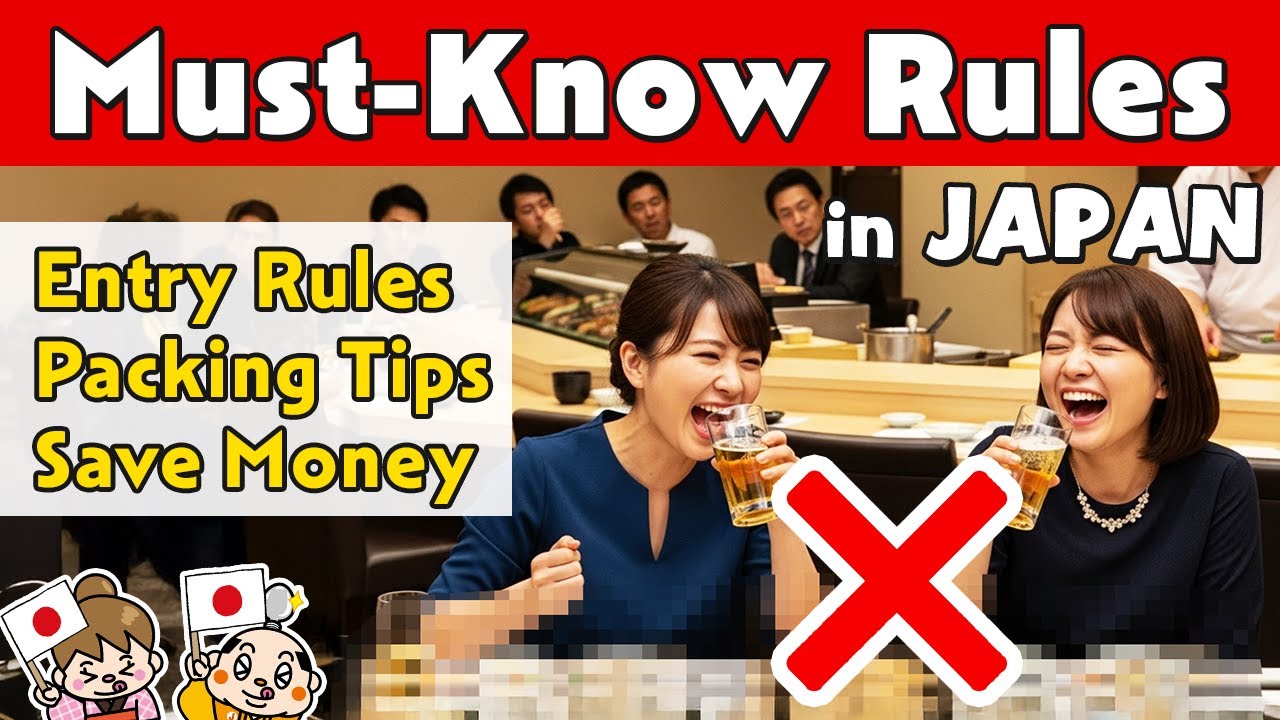
for oversized baggage. Make sure to check in advance. In Japan, being considerate of others is key especially when it comes to your luggage. Chapter two: Speaking Loudly in Quiet Restaurants Did you know that in Japan, “quietness”
is actually considered part of the dining experience? Especially in sushi bars, traditional restaurants, or cafes, background music is minimal, and voices carry easily. So when tourists speak at their normal volume,
locals might perceive it as disruptive or too loud. There are many online reviews complaining
about noisy foreign guests at nearby tables. Because Japan values quiet enjoyment of food, it’s important to be mindful not just of what you say,
but how loudly you say it. If the other guests are keeping their voices down like during dates or business meetings your loud conversation can stand out awkwardly. Of course, casual conversation is fine but in Japan,
being aware of the atmosphere around you is key. Chapter three:
Confused by Japan’s Complicated Garbage Sorting Rules Many foreign visitors are surprised by how complicated trash
disposal can be in Japan. There are many categories burnable, non-burnable, recyclables, plastics, glass bottles,
and cans—each requiring different handling. What’s more, the rules and collection days
vary depending on the city or even the district so rules in one part of Tokyo may not apply in another. For short-term travelers, it’s often unclear where
and how to dispose of trash whether in the hotel or out on the street. Even public bins near vending machines
are usually only for cans and bottles putting other trash there can be considered rude. Simply tossing everything in one bag doesn’t work here. And public trash bins are surprisingly rare in Japanese cities. If you can’t find a proper place to throw something away, it’s best to take it back to your hotel
and ask how to dispose of it. You might wonder, “Why is it so strict?” but it reflects Japan’s commitment to cleanliness
and recycling culture. Chapter four: Can’t Find the Shop
Because You Can’t Read the Name One common issue when traveling in Japan
is reaching the destination on Google Maps only to be unable to find the actual shop. A major reason for this is that the shop name
is often written in Japanese kanji, which many travelers can’t read. Even if your map app shows the name in Roman letters, the real-life signs or building directories often display
only Japanese. This is especially true for restaurants
or cafes inside multi-tenant buildings, or those located on upper floors. You might find yourself circling the same building repeatedly, thinking,
“It should be here, but I don’t see any matching sign!” To avoid this, take a screenshot of the shop’s name
in Japanese characters or check for pictures of the storefront in advance. Building directories often list tenants in kanji, so it helps to match the characters
from your reference with those on the directory. Getting a little lost can be part of the adventure but when you’re tired, being prepared makes a big difference. Chapter five: Accidentally Entering Restricted Areas One surprisingly common mistake among foreign visitors
in Japan is accidentally walking into areas that are off-limits. At shrines and temples, certain sacred areas
are meant only for worshippers, and stepping into them is considered highly disrespectful. If you’re ever unsure whether an area is accessible, check for signs, ropes,
or markings on the ground that indicate restrictions. Another common error is taking shortcuts through alleys
or private residential areas, thinking it’s a public path. In tourist spots, stepping into off-limits areas just to take a good photo can easily lead to conflict
with locals or staff. Because boundaries and social expectations in Japan
are often implied rather than clearly marked, being observant is key. If you’re unsure, the best approach is to stop and assess your surroundings rather than proceed
and risk causing offense. Chapter six: Shocked by the Price After Ordering “Omakase” At high-end sushi restaurants
or traditional Japanese eateries, it’s common to find a style called omakase, or “chef’s choice.” Many travelers order omakase without hesitation
only to be shocked by the bill afterward. Omakase allows the chef to serve seasonal specialties,
but the price is often not listed ahead of time. In popular tourist areas, an omakase meal
can easily exceed ¥20,000 per person, leading to unexpected expenses. If you mistake omakase for a casual set menu,
you might be in for an unpleasant financial surprise. Before ordering, it’s wise to ask whether the chef
can tailor the meal to your budget or provide a price estimate. Omakase meals often include premium ingredients,
so it’s normal for the price to reflect that level of quality. To enjoy Japanese cuisine without stress,
don’t hesitate to ask questions especially when there’s no written menu. Chapter seven:
Getting Totally Lost Inside Japanese Train Stations Japan’s train system is incredibly efficient, but for many tourists, the inside of a Japanese station
can feel like a confusing maze. In mega-stations like Shinjuku or Tokyo,
there can be over 20 exits, and it’s easy to get disoriented
and not know which one to take. Even with signs like “East Exit” or “West Exit,” first-time visitors often struggle to figure out
which side their destination is on. Even with a map on your phone,
GPS can be unreliable inside the station, and you might keep walking without finding the right way out. Transferring lines can mean going up
and down multiple sets of stairs and escalators, which eats up time and energy. If you’re in a rush, it only adds to the stress so it’s best to check exits and transfers using Google Maps
before you even arrive at the station. Some exits have confusingly similar names
like “South Exit,” “New South Exit,” or “South Gate,” so make sure to double-check the full name of the exit. Since many stations are connected
to large shopping complexes, they’re great for sightseeing but take your time navigating until you’re used to them. Chapter eight: Confusing Hotel Onsen and Public Baths When travelers hear the word “onsen,” many assume
it always refers to natural hot springs but not all hotels actually have real onsen. Even if a hotel promotes a “large public bath”, it might just be a spacious tub filled with regular
heated tap water, without any natural hot spring minerals. Onsen and public baths may look similar, but only when it says “natural hot spring”
can you be sure it’s a genuine onsen experience. In tourist spots, you might even see “onsen-style bath,”
which only mimics the look and feel it doesn’t carry the therapeutic minerals of a real onsen. Because hotel websites can be vague or misleading, look for phrases like “natural hot spring”
or “direct from the source” before you book. Even real hot springs may be diluted or heated
for hygiene reasons, so if authenticity matters to you, read the fine print. Without knowing these distinctions, you might show up expecting a traditional onsen
and leave feeling disappointed. Chapter nine: Ordering Randomly
Because You Can’t Read the Kanji Menu Many restaurants in Japan still don’t offer English menus. When faced with a menu written entirely in kanji,
many tourists resort to guessing and ordering at random. Some ingredients, like eel (unagi) and catfish (namazu),
look similar in writing but taste very different leading to unexpected surprises. Japanese cuisine includes many offal dishes and unique delicacies that might be challenging
for those unfamiliar with them. It can be disappointing when the dish you get turns out
to be nothing like what you expected. To avoid this, use translation apps on your phone
or look for menus with pictures. There are apps that let you scan and translate text instantly downloading one before your trip is a smart move. And if you’re still unsure, asking the staff
for their recommendation is always a safe bet. Chapter ten:
Stranded in the Countryside with No Transportation Many tourists visiting rural Japan are caught off guard
by unexpected transportation problems. Unlike in big cities, rural areas often have very limited train
and bus service and taxis can be hard to find. Many travelers book hotels that are a 30-minute walk
from the station, only to realize upon arrival
that there’s no transportation available. If it’s late at night or the weather is bad,
walking can become a serious challenge. In small tourist towns, there may be only one taxi company and calling one doesn’t guarantee immediate service. Even smartphone apps may not show accurate schedules
or have English information for rural transit systems. So it’s essential to check access to your accommodation, nearby transit options, and your return route before your trip. If possible, confirm if your hotel offers shuttle service
or save a screenshot of the walking route from the station. Chapter eleven:
Complaining at a Ryokan Because the Futon Isn’t Laid Out Many tourists are surprised to find no bedding laid out
when they arrive at a traditional Japanese inn, or “ryokan.” Unlike hotels, ryokans often follow a tradition where guests either lay out the futon themselves
or staff do it while guests are at dinner. In budget ryokans or no-meal stays, futons are usually left folded up until guests
lay them out themselves. Complaining about “no bed” without knowing the custom may confuse or frustrate staff
who are simply following tradition. Often, futons are stored in the closet (oshiire), and some visitors don’t realize they’re meant
to take them out and set them up. If you don’t know how to set it up, just ask the front desk
they’ll be happy to guide you. Laying out your own bedding is actually part of the cultural
charm of staying in a ryokan. By understanding the style of your accommodation
in advance, you’ll have a much smoother and more enjoyable stay. Chapter twelve: Confusing Shrines and Temples
And Breaking Rules Without Knowing Many foreign visitors to Japan
get confused by the difference between jinja (Shinto shrines) and tera (Buddhist temples). They often look similar
and are both seen as places of worship, so tourists may treat them the same way
without realizing the difference. Shrines are rooted in Shinto, Japan’s indigenous religion, and are marked by features like torii gates,
guardian lion-dogs, and halls dedicated to deities. Temples, on the other hand, are Buddhist
and often include statues of Buddha, pagodas, bells, and are home to monks in training. Some people unknowingly offer incense at shrines,
or walk into temple halls with shoes on, not realizing these are culturally inappropriate actions. Visitors sometimes even step into restricted areas,
unknowingly offending local beliefs and customs. Worship customs differ too
at shrines, it’s customary to bow twice, clap twice, then bow once. At temples, a silent prayer with hands together is typical. By learning even the basics before your trip, you’ll avoid cultural mistakes
and show genuine respect for Japanese traditions. Chapter thirteen: Wearing Shoes Where You Shouldn’t
A Common but Serious Mistake Japan has a strong “no shoes indoors” culture,
meaning many places don’t allow outdoor shoes inside. It’s not just homes, traditional inns (ryokan),
tatami-mat restaurants, temples, and some tourist spots
also require you to remove your shoes. Due to cultural differences, many foreign tourists accidentally walk onto tatami floors
with their shoes still on. Tatami mats are delicate and can easily be damaged
or dirtied by shoes, making this a major breach of etiquette. Even after removing your shoes,
you may be provided with slippers often separate pairs for toilets and living areas. If you return to the room wearing toilet slippers,
you might get some awkward stares from those around you. If you see signs saying “Please remove your shoes”
or “No shoes,” always follow them strictly. Respecting local customs
like proper shoe etiquette shows appreciation for Japanese culture
and leaves a good impression. Chapter fourteen: Overlooking the Quality of Food
Inside Train Stations Train stations in Japan aren’t just transit hubs
they’re gourmet hotspots. “Eki-naka” (in-station) dining
is something many travelers overlook. Beyond convenience stores and fast food, you’ll find sushi,
ramen, curry, and traditional sweets all made with quality that rivals standalone restaurants. For example, Tokyo Station’s “Gransta”
or Shin-Osaka’s “Ekimarche” offer famous local eateries and trendy food all in one place. Many travelers assume that food inside train stations
must be mediocre, but skipping these options is truly a missed opportunity. Ekiben (station bento boxes)
are also of surprisingly high quality and enjoying one during your train ride
is a classic Japanese travel experience. Even if you’re short on time,
eki-naka food lets you enjoy great meals quickly perfect for travel days packed with train rides. Don’t just walk past thinking “It’s just a station”
take time to explore. You might discover some of your favorite meals there. Chapter fifteen:
Sampling Without Buying at Department Store Food Halls Japan’s “depachika” (department store food halls) are like gourmet amusement parks
filled with high-end culinary delights. You’ll find free samples of cheese,
wagashi (traditional sweets), pickles, desserts, and more letting you taste before you buy. However, circling the floor repeatedly and only sampling without buying anything can be seen as poor etiquette
in Japan. Sales staff won’t say anything, but they may feel uncomfortable if you take samples
with no intent to purchase. Some tourists may think “It’s free anyway,” but in Japanese shopping culture,
it’s better to be modest and considerate. If you need time to compare shops, saying something
like “I’ll think about it and come back” is a polite gesture. Depachika are great places to discover delicious treats, so if you like something,
even a small purchase helps support the vendors. Chapter sixteen:
Getting Frustrated by the Lack of Smoking Areas In Japan, smoking regulations have become increasingly strict due to a growing health-conscious culture. Most restaurants, cafés, and indoor areas in hotels
are completely smoke-free, which can make smokers feel unwelcome. Even outdoors, smoking while walking or in public spaces
is usually banned, and in some areas, you could be fined. In cities and tourist spots,
you may find designated smoking areas, but they are limited and not always easy to locate. Many travelers get frustrated by the lack of smoking spots, but in Japan, smoking is considered a tightly regulated
behavior out of respect for others. Checking for nearby smoking areas in advance using apps
or maps can save you a lot of stress. Smokers should also consider carrying a portable ashtray showing good manners can make
your trip smoother and more respectful. Chapter seventeen:
Running Into Trouble Without Enough Cash Even though credit cards and mobile payments
are common in many countries, Japan still holds onto a cash-based culture in many places. You’ll often find that small restaurants, local souvenir shops, and rural transport systems don’t accept credit cards
or e-money. Many first-time visitors are shocked to discover
that their credit cards are not accepted in many situations. On top of that, many ATMs don’t accept foreign cards
or are unavailable late at night, which can leave travelers stuck. In rural areas, the nearest ATM might be over 30 minutes
away by car, making cash shortages a serious issue. It’s a good idea to withdraw a decent amount of yen
at the airport or in a major city before heading out. You can also top up a Suica or PASMO IC card with cash, which can be used for trains, buses,
and even at convenience stores. Next, we’ll explain when you shouldn’t visit Japan
and the best times to come instead. The First Period to Avoid Late March Late March may seem attractive
with spring break and cherry blossoms, but in reality, it’s one of the most crowded times in Japan. The main reason is that Japan’s new school
and fiscal year begins in April. During this period, students travel during their spring vacation, and many workers move due to job transfers and relocations. As a result, trains, buses,
and flights become extremely crowded, making it hard to secure seats. In addition, with the high demand for moving services, trucks and delivery bookings become limited,
and hotel prices rise significantly. For tourists, this period may still seem attractive
because cherry blossoms begin to bloom. However, since locals also enjoy cherry blossom viewing, famous spots like Ueno Park or Kiyomizu Temple in Kyoto
become packed with people. For example, in Tokyo, the usual commuter rush combined with tourist movement makes stations overcrowded, and even passing through the gates can take extra time. Airline tickets also become more expensive
due to spring break demand, and domestic flights from rural areas to Tokyo or Osaka
are often fully booked. Therefore, you should remember that late March
brings more stress from crowds and expenses than the enjoyment
of cherry blossoms. If you must travel during this time, you’ll need strategies like visiting tourist spots
early in the morning or focusing on regional cities. But if possible, avoiding late March and shifting
your trip to mid-April or later will allow for a more comfortable
and cost-effective journey. The Second Period to Avoid – Early April Early April may look like a very attractive period
for foreign travelers visiting Japan. The reason is, of course, cherry blossoms. In Tokyo and Kyoto, cherry blossoms are in full bloom, creating spectacular scenery and offering
that quintessential Japanese atmosphere. However, in reality,
this period is one of the worst times to visit Japan. The main reason is that it coincides with the beginning
of Japan’s new school and business year. During this time,
new employees and students all start commuting, making public transportation even more crowded than usual. What makes things worse is the massive increase in people
buying commuter passes. At ticket counters, especially JR’s “Midori no Madoguchi,” long lines form, and foreign travelers often
wait for over half an hour just to buy Shinkansen tickets. Stations are also packed with new commuters
and students, making it extremely difficult to move around with luggage. In addition, since it’s cherry blossom season, locals also gather in huge numbers at parks
and famous spots. Places like Ueno Park, Chidorigafuchi, and the Philosopher’s Path in Kyoto are packed
even on weekdays, making it difficult to simply take photos. Hotel rates also rise sharply during this period,
and popular hotels sell out quickly. As a result, even if visitors come for the cherry blossoms,
they often end up struggling with crowds and high costs. That said, if you really want to enjoy cherry blossoms
during this time, there are alternatives. For example, in the Tohoku region,
cherry blossoms bloom in mid-April or later, so shifting your trip there lets you enjoy
full bloom without the intense crowds. Visiting spots early in the morning or at night can also help you avoid crowds
and enjoy the blossoms in peace. Nevertheless, if you want a smoother experience, it’s better to avoid early April and plan your trip for mid-April
or later. The Third Period to Avoid –
Late April to Early May (Golden Week) Golden Week is Japan’s most famous
and also most crowded holiday period. This holiday spans from the last week of April to early May, when multiple national holidays align
and most Japanese people take vacations at the same time. As a result, tourist spots, transportation,
and accommodations across Japan all become crowded, making this one of the worst times for travelers. The Shinkansen becomes especially congested, with reserved seats often selling out
immediately after booking opens. In the past, you could still board by standing
in unreserved cars, but in recent years many lines have abolished
unreserved seating, meaning if you don’t have a ticket, you simply can’t get on. Flights and highway buses are also heavily booked, with prices sometimes doubling
or tripling compared to normal. Hotels face the same issue, with popular destinations
fully booked months in advance, and even business hotels
or guesthouses charging much higher rates. Crowds at tourist sites are overwhelming. Places like Kiyomizu-dera and Fushimi Inari Shrine in Kyoto or Senso-ji in Tokyo are so packed that walking becomes
difficult and you may have to wait just to take a photo. On top of that, roads suffer from traffic jams. Highways can see traffic jams
stretching for dozens of kilometers, adding hours of delay to reach your destination. Thus, during Golden Week,
when the entire country is on the move, tourists face stress in transportation, lodging,
and even dining. If you must travel during this period,
you’ll need strategies like booking six months in advance, focusing on regional cities, and traveling
early in the morning or late at night. But if possible, it’s far better to avoid this period
and visit in mid-May or later, when conditions are much more comfortable and affordable. The Fourth Period to Avoid –
June to July (Rainy Season and Summer Heat) From June to July,
Japan is far from an ideal time for tourists. First, June marks the rainy season,
when long and frequent rains cover much of Japan. Unlike the short showers in Southeast Asia, Japanese rain often continues steadily
throughout the entire day. You’ll constantly need an umbrella, and wet clothes
and shoes make sightseeing uncomfortable. On top of that, the high humidity makes it feel hotter
than the actual temperature. Once July begins, the rainy season ends,
and the full force of summer heat arrives. Summer in Japan not only exceeds 30°C (86°F)
but also combines with high humidity, pushing the heat index even higher. Just a short walk outside causes heavy sweating
and increases the risk of heatstroke. In cities like Tokyo and Osaka, heat radiating from buildings
and asphalt makes sightseeing exhausting and unpleasant. During this season, heavy rains and even typhoons
can disrupt transportation. Shinkansen and flights may be delayed or canceled,
forcing major changes to your travel plans. This mix of unstable weather and extreme heat
makes sightseeing far less enjoyable. Many travelers have said,
“I had to use my umbrella the whole trip in June and July,” or “It was too hot to even walk outside.” If you must travel during this time, limit your sightseeing to mornings or evenings
and spend midday indoors. Hokkaido is a good alternative,
as it has little to no rainy season and remains relatively cool compared to the rest of Japan. Still, overall, June to July is one of the least favorable times
to visit Japan, and traveler satisfaction tends to be lower
compared to other seasons. The Fifth Period to Avoid –
August (Summer Vacation and Obon) August in Japan is one of the toughest times of the year
for travelers. The biggest reasons are the combination of extreme heat
and heavy crowds. First, daily temperatures often exceed 30°C, and in cities,
it is not uncommon to reach over 35°C (95°F). With high humidity, the heat feels even worse, and just walking outside makes you drenched in sweat. Many people are hospitalized with heatstroke,
making it a serious risk for travelers as well. In addition, Japanese schools have their summer holidays,
and many families travel during this time. Tourist spots, theme parks,
and beaches all become crowded, with several times more visitors than usual. The biggest issue within August is “Obon.” Obon is a traditional Buddhist event in mid-August
when many Japanese return to their hometowns. During this period, Shinkansen trains, flights,
and highways are jam-packed, with reserved seats selling out right after booking opens. In fact, many travelers report that “I couldn’t get a reserved Shinkansen seat from Tokyo to Osaka even a week in advance.” Highways often see traffic jams stretching for tens of kilometers, turning a 3-hour drive into 6 hours or more. Hotel prices also skyrocket,
sometimes doubling or tripling in popular areas. Tourist spots are so packed that even taking a simple photo
becomes a struggle, leaving visitors more exhausted than satisfied. If you must travel in August, consider cooler destinations
like Hokkaido or mountain resorts. You can also avoid some heat and crowds by visiting spots
early in the morning or in the evening, and spending midday indoors. Still, if comfort is your priority, August is definitely a period you should avoid
whenever possible. The Sixth Period to Avoid – Late September (Silver Week) Late September is a period that requires special
caution when planning a trip to Japan. The reason is that every few years, Japan experiences
a long holiday known as “Silver Week.” It occurs when several public holidays align with weekends, creating around five consecutive days off,
and many people take vacations during this time. For example, 2026 is particularly notable,
with holidays from September 19th to 23rd, and some people will extend this into a nine-day vacation
from the 19th to the 27th by taking extra leave. During this time, reservations for flights, Shinkansen trains, and highway buses sell out
almost immediately after booking opens. Hotels face the same situation, with demand skyrocketing and prices doubling
compared to normal seasons. Tourist spots become as crowded as they are during Golden Week. Historical sites like Kyoto and Nara,
or tourist spots in Tokyo such as Asakusa and Odaiba, are packed with people,
making it difficult even to take photos. Highway traffic jams are also severe, with trips that usually take two hours stretching
into six hours or more. Since many families travel during this period, theme parks and amusement facilities are overcrowded,
with popular attractions requiring several hours of waiting. For travelers, the combination of transport inconvenience, higher hotel costs, and overwhelming crowds
often results in a less satisfying trip. If you must travel during this time,
it is better to focus on regional cities or less crowded areas. Still, the wisest choice is to avoid Silver Week
in late September if at all possible. The Seventh Period to Avoid – Late December
to Early January (New Year Holidays) Late December to early January
is the most important holiday season of the year in Japan. This period overlaps with Christmas festivities,
and cities are decorated with dazzling illuminations. At first glance, it may seem like a great time to travel,
but in reality, it is one of the worst periods for tourists. One reason is that New Year’s is traditionally
a time for Japanese families to gather. Millions of people return to their hometowns, causing Shinkansen trains, flights,
and highways to become overcrowded. Reserved Shinkansen seats often sell out immediately, and unreserved cars are packed with standing passengers. At airports, returning travelers and tourists overlap,
resulting in long waits at security and check-in counters. Another major issue is the sharp increase in hotel rates. In popular areas like Tokyo, Kyoto, and Osaka, prices can more than double, with rooms sold out months
in advance due to family trips and group bookings. Tourist spots are also crowded with New Year shrine visits. At places like Senso-ji, Meiji Shrine, and Fushimi Inari Taisha, hundreds of thousands of visitors arrive from New Year’s Eve
to New Year’s Day, making movement extremely difficult. In addition, many small shops and restaurants
close during this time. Even in regional towns,
visitors may struggle to find open restaurants or shops. On the other hand, large department stores
and chain restaurants remain open, but often with shorter hours. The cold weather also affects sightseeing. In northern Japan and mountainous regions,
heavy snow can disrupt transportation. Therefore, visiting Japan during New Year often means
facing a triple burden of crowds, high costs, and shop closures. If you must travel at this time, it is best to secure accommodations early in major cities and focus more on experiencing Japanese
New Year traditions than sightseeing. From here, we’ll cover the recommended times to visit, so pay close attention
and make the most of this information for your trip. The First Best Time to Visit: Mid-April Mid-April is one of the most highly recommended times
to visit Japan. One reason is that the hectic rush of late March
and early April settles down, and both transportation and city life return to a calmer state. By this time, the rush of new workers
and students buying commuter passes has passed, making ticket counters less crowded
and Shinkansen tickets easier to purchase. For travelers, the ability to move around
without stress is a major advantage. This is also an excellent time for those
who want to enjoy cherry blossoms. While cherry blossoms in Tokyo and Kyoto may be falling, Tohoku and Hokkaido
are just entering their full bloom season. For example, Hirosaki Park in Aomori reaches its peak
from mid to late April, offering breathtaking views of cherry blossoms
around the castle. Sendai’s Nishi Park and Fukushima’s Hanamiyama Park
are also excellent spots to visit during this time. Compared to major cities, these areas are less crowded,
allowing for a more relaxed cherry blossom experience. The climate is comfortable, with daytime temperatures
between 15°C and 20°C, making it perfect for sightseeing and walking. A light jacket or long sleeves are sufficient,
which also makes packing lighter and traveling easier. Another advantage is that this period comes right
before Golden Week. Hotel prices have not surged yet, and even popular accommodations
are still relatively easy to book. Crowds at tourist sites are moderate, giving travelers more space for photos
and relaxed exploration. Mid-April truly offers the ideal balance of cherry blossoms, pleasant weather, and manageable crowds,
making it one of the best seasons to travel in Japan. The Second Best Time to Visit: Mid to Late May Mid to late May is a highly recommended time
for travelers visiting Japan. The main reason is that Golden Week has ended,
and the massive domestic travel rush has settled down. After the holidays,
Japanese people return to their normal routines, and the crowds at tourist sites
and on transportation ease dramatically. As a result, even at popular spots, there are fewer crowds,
allowing visitors to enjoy a more relaxed atmosphere. The weather during this period is also very pleasant. In Tokyo and Osaka, daytime temperatures
are around 20°C, with low humidity, making it perfect for sightseeing and walking. Since it is before the rainy season in June,
there are many sunny days, making it an excellent time for photography
under clear skies. There are also advantages
in terms of accommodation costs. After Golden Week, demand decreases,
so hotel and inn prices stabilize, and reservations are easier to secure. For example, ryokan in Kyoto or business hotels in Tokyo drop from nearly double their holiday rates
back to normal prices. For travelers, this is an ideal time to stay comfortably
while keeping costs low. In addition, it is also a season of beautiful natural scenery. May is the season of fresh greenery,
with mountains and parks covered in vibrant green, offering a different charm from cherry blossoms. In rural areas, it is also rice-planting season, creating picturesque countryside landscapes
and a great opportunity for photography enthusiasts. Mid to late May offers the perfect combination
of fewer crowds, comfortable weather, and reasonable travel costs,
making it one of the best seasons to visit Japan. The Third Best Time to Visit: October to November October to November is one of the most popular
and beautiful seasons for traveling in Japan. The biggest attraction during this time is the autumn foliage. Mountains, gardens, and parks across Japan
are painted in shades of red and yellow, creating scenery that looks like a painting. Famous spots like Arashiyama and Eikando in Kyoto, Mount Yoshino in Nara, and Irohazaka in Nikko
are globally renowned for their autumn colors. The climate during this season is also very pleasant. Daytime temperatures are around 20°C with low humidity,
making it ideal for walking and sightseeing. There is none of the muggy heat of summer
and none of the harsh cold of winter, so most travelers find it very comfortable. In addition, many cultural events
and festivals take place across the country during this time. For example, Kyoto hosts illumination events where temples
and gardens are beautifully lit up at night. In Tokyo, events like the Kanda Festival and Asakusa’s traditional ceremonies
allow visitors to experience the autumn spirit. However, because of its popularity, places like Kyoto and Nikko become extremely
crowded during the foliage season. Hotel prices rise,
and reservations often sell out months in advance. Therefore, early booking is essential
when planning a trip during this period. On the other hand, by choosing less famous regional spots,
you can still enjoy autumn colors without the crowds. For example, Lake Towada and the Zao mountain
range in Tohoku offer spectacular autumn scenery in vast natural settings. October to November combines beautiful autumn colors,
pleasant weather, and cultural events,
making it truly one of the best seasons to visit Japan. The Fourth Best Time to Visit: Early December Early December is a surprisingly good hidden season
for travelers visiting Japan. At this time, winter has just begun,
but the severe cold has not yet arrived. In cities like Tokyo and Osaka, daytime temperatures
are around 10°C, and with a warm coat,
it feels comfortable enough to walk around. In northern Japan, such as Hokkaido and Tohoku,
snow begins to fall, but it is still before the heavy ski season crowds arrive. This allows those who want to enjoy snowy scenery
to do so in a calm and peaceful environment. Another major advantage is that hotel prices
remain relatively stable. As New Year approaches, hotel rates increase sharply, but in early December, prices are still normal,
even at popular hotels. Tourist spots are also less crowded,
allowing for a more relaxed experience. In Kyoto, some autumn leaves can still be enjoyed,
and combined with nighttime illumination events, it creates a magical atmosphere. In Tokyo and Osaka, illumination events begin,
filling the cities with dazzling lights. Visiting at this time also lets you experience
the special pre-Christmas atmosphere while sightseeing. It is also an excellent time for travelers who enjoy shopping. Winter sales and Christmas promotions begin, and department stores and malls in major cities
are filled with a wide variety of items. Yet, unlike the New Year rush,
it is still calm enough to shop without overwhelming crowds. Early December combines mild cold,
stable hotel prices, and fewer crowds, making it a highly cost-effective
and comfortable season to visit Japan. The Fifth Best Time to Visit: February to Early March February to early March is a surprisingly
overlooked yet excellent time to visit Japan. This period is the coldest time of the year in Japan. Even in cities like Tokyo and Osaka,
temperatures drop close to 0°C, while in Hokkaido and Tohoku, snow piles up deeply. For visitors from warm countries,
the cold can feel quite harsh. On the other hand, for those coming from colder countries
like Canada or Northern Europe, the climate may actually feel just right. One of the main attractions of this season
is that there are fewer Japanese tourists. Since it falls outside of busy periods like New Year’s
or spring break, tourist sites are calmer and far less crowded. As a result, hotel and ryokan rates drop significantly. In particular, hot spring inns often offer very reasonable rates, giving travelers the chance to stay at ryokan
that are usually too expensive. Another highlight is the unique winter experiences
available during this time. For example, you can enjoy the Sapporo Snow Festival
in Hokkaido or watch monkeys bathing in hot springs
at Jigokudani Monkey Park in Nagano. In addition, the crisp winter air makes Mount Fuji visible
on many days, offering spectacular views. With fewer tourists,
you can quietly stroll through famous temples, shrines, and UNESCO sites, and take photos without crowds. Of course, proper cold-weather gear is necessary,
but in exchange, you gain the opportunity to enjoy Japan peacefully
and at lower costs. February to early March truly combines cold, affordability,
and tranquility, making it a hidden gem season for visiting Japan. Finally, we’ll go over ten common scams
you should watch out for in Japan. Chapter one: Pickpocketing in Tourist Hotspots Pickpocketing is rare in Japan
but that’s exactly why many tourists let their guard down. In crowded tourist areas, there have been reports of groups
working together to steal from visitors. Busy trains, packed shopping streets, or crowded festivals
these are where pickpockets strike in seconds. People wearing backpacks on their backs
or distracted by their phones are easy targets. Being fully absorbed in sightseeing without noticing
your surroundings can be risky. Places like Asakusa, Shibuya, Harajuku, Ueno,
and Kyoto’s Gion area require extra caution. Scammers often work in pairs
one distracts you while the other grabs your wallet. Never keep your wallet in your back pocket
use your front pocket or inside jacket pocket instead. Zip your bag fully and wear it in front of your body,
keeping one hand on it at all times. Falling asleep on trains or buses is also risky. You might not even notice if someone slips
something out of your bag while you’re asleep. Be extra cautious on the first day of your trip
when you’re tired and more likely to doze off. If you do become a victim, report it to the nearest police
station or Koban immediately. Depending on what was stolen, you may need to cancel
your credit card or apply for a new passport. To stay safe, it’s important to reset the idea that
“Japan is completely safe.” As long as you follow basic precautions,
you can avoid most trouble before it even starts. Chapter two:
Fake “Visit Japan Web” Apps and Phishing Scams Since 2023, the “Visit Japan Web” system
has become essential for travelers entering Japan. It allows you to pre-register customs and immigration info
to make airport procedures faster upon arrival. While helpful, this system has also led to a surge in fake apps
and phishing websites pretending to be official. Here’s the key: “Visit Japan Web” is not an app
it exists only as an official website. If you see apps called “Visit Japan”
or “Japan Entry” in the app store—they are not official. Some of these fake apps ask for your personal data and steal things like your passport number
or credit card info. Even if you search “visit japan” online,
scam sites may appear in the top ad slots. Please note that only the URL listed here is the official website. If you’re sent to a different link,
there’s a high chance it’s a scam. Be careful with posts on social media or forums claiming,
“This app worked great for me!”—they could be fake. Stick to information from official sources like embassies,
consulates, or your airline’s website. If you accidentally download a fake app,
uninstall it right away and check your device’s security. Consider changing your passwords and contacting
your credit card company as a precaution. Many scam apps look exactly like the real website
they’re very convincing. That’s why assuming “Japanese services
are always safe” can be dangerous. Before your trip, visit the official site directly
and bookmark the correct URL yourself. Stay alert so you don’t run into
trouble before your trip even begins. Chapter three: Dual Pricing for Foreigners In Japan, many services don’t have visible price tags,
and in tourist areas, foreigners are sometimes charged more than locals. This is known as “dual pricing” for example, the English menu might have higher prices
than the Japanese one. Of course, most businesses are honest and fair,
but there are some that take advantage of tourists. Watch out for taxis, unofficial “tourist info” booths,
and cultural experiences with unclear pricing. Many travelers feel safe once someone speaks English and accept services without checking the price in advance. For example, in Kyoto, a rickshaw ride might be 3,000 yen
if asked in Japanese—but 5,000 yen in English. In areas like Asakusa or Osaka’s Tsutenkaku,
tourists may be charged hidden service fees or seat fees. There are also reports of sushi or ramen shops serving expensive courses when tourists simply
say “omakase” (chef’s choice). To avoid this,
always ask for the price before entering or ordering. Simple phrases like “How much is this?”
or “Is there a service charge?” can go a long way. An English menu doesn’t always mean a friendly shop
sometimes it’s adjusted for higher tourist pricing. On social media, hashtags like #TouristTrap
show real stories from travelers who were overcharged. Be cautious of “cash only” places
or shops that don’t provide receipts. These practices are more common
in small tourist-area shops and late-night restaurants. To avoid ruining your trip, don’t blindly accept the price
double-check it yourself. And remember—just walking a few blocks from a tourist spot
can lead you to fairer prices. Chapter four: Rip-Off Bars and Street Promoters Have you ever been approached while walking around
looking for a bar or izakaya to enjoy Japan’s nightlife? Phrases like “First drink is free!”
or “All-you-can-drink for just 2,000 yen!” can easily lure unsuspecting tourists. These street promoters—called “catch” in Japan
are often illegal and lead to many tourist scams. Areas like Shinjuku’s Kabukicho, Shibuya Center Street,
Roppongi, and Ikebukuro are hotspots for these scams. Once inside, you may be charged far more
than the original price you were told. For example, that “2,000 yen all-you-can-drink”
might turn into a 10,000 yen bill with hidden fees. Some tourists have even reported being locked inside
or threatened when refusing to pay. Others are told “we don’t take cards” and are escorted
to an ATM to withdraw cash under pressure. Some places call themselves “girls bars”
or “clubs” and add outrageous charges later. Some promoters specifically target foreigners,
knowing language barriers make it easier to deceive them. To stay safe at night, the most important rule is simple:
never follow street promoters. Legitimate bars and izakayas usually have clear pricing
at the entrance and don’t use aggressive tactics. Checking Google Maps or review sites
before entering a bar can help you avoid shady spots. If the bar is in a back alley, upper floor,
or has no sign, stop and think before walking in. Some reviews mention extremely watered-down drinks
or glasses filled mostly with ice. If something feels off, just walk away. You don’t need to argue—leaving quietly is the safest move. What should be a fun night out can quickly
turn into a nightmare with hidden charges and intimidation. Don’t assume nightlife in Japan is always safe
stay alert and cautious. Chapter five: Fake Street Monks and Donation Scams While walking through Japanese cities or tourist spots,
you might be approached by someone dressed like a monk. When they politely ask for “donations for peace,”
you might feel inclined to open your wallet. But chances are, they’re not real monks. This is actually a common scam
known as the “street monk scam.” Real monks in Japan rarely, if ever,
ask for donations on the street. If someone were truly a monk, they’d be able to clearly
explain their temple, activities, and contact information. Scammers often show a card claiming to be part of
an “international Buddhist organization.” They’ll hand you a clipboard in English saying things
like “Sign for world peace” and ask for your name. After you sign, they’ll say,
“Please give a donation,” and ask for money. They may act like small change is fine,
but they’re really after your 1,000 or 5,000 yen bills. In more aggressive cases, if you refuse,
their tone changes and they pressure you to give. You’ll often find these scammers near places like Ueno Park, Senso-ji Temple, Meiji Shrine, Kyoto’s Gion,
or Osaka Castle Park. Many tourists think, “Japanese monks must be trustworthy,”
and give money without thinking twice. But even in Japan, these scammers are a known issue,
and local governments have issued warnings. The best defense is simple: if someone asks for
donations on the street, politely decline. Even if it seems well-meaning, remember
legit organizations don’t ask for donations on the street. If you want to support a cause, use official temple websites
or verified charity platforms instead. Falling for a scam like this can ruin
what should’ve been a beautiful travel experience. Kindness is a wonderful trait but be aware that some people
will try to take advantage of it. Chapter six: Romance Scams via Dating Apps More and more foreign travelers in Japan
are using dating apps like Tinder, Bumble, or Pairs to meet new people. Meeting locals and spending time together
during your trip can lead to amazing memories. But unfortunately, some people take advantage
of these encounters to run romance scams. Someone who seems sweet and trustworthy at first
might actually be a professional scammer. Be cautious if someone who speaks fluent English
starts getting close to you very quickly. They might talk about the future right away, or say things like
“I want to be with you longer” to create emotional bonds. After a few dates, the money talk begins
this is the typical scam pattern. They may say, “My family is sick,”
“I need money to extend my visa,” or “I lost my wallet.” It’s easy to feel sympathetic and want to help,
especially if you’ve started developing feelings. But that one-time payment can turn into two, three, or more sometimes leading to losses of thousands of dollars. Romance scams are increasing in Japan,
and foreign tourists are not immune. Some victims feel so emotionally hurt by the betrayal
that it ruins their entire trip. So how can you spot a romance scam before it’s too late? If someone tries to move too fast emotionally,
be on your guard. If they bring up money within a few
meetings, it’s almost certainly a scam. If they truly care about you, they wouldn’t
ask a tourist like you for financial help. Also, if you’re chatting on LINE, Instagram, or WhatsApp,
check their profiles and posts carefully. If their posts are sparse, they only have one
or two heavily filtered photos, that’s a red flag. Romance scammers often exploit language
and cultural gaps making foreign tourists prime targets. What should be a fun connection can turn into regret
so trust your instincts and stay cautious. Chapter seven:
“Let Me Take Your Photo” Scam with Surprise Tip Requests Have you ever had someone kindly offer,
“Want me to take your picture?” at a tourist spot? At first, it may seem like a generous gesture
but sometimes, it’s the beginning of a scam. Scammers often approach foreign tourists, offer to take a picture with their own camera,
then ask for a tip afterward. They start off friendly, but after snapping the photo,
they might say “A tip, please” or “This is normal,” and turn aggressive if refused. Some even insist, “It’s polite to give at least 1,000 yen,”
pressuring you into paying. In some cases, scammers work in groups
one takes the photo, while others surround and pressure you. This scam is common at famous tourist sites
like Senso-ji Temple, Tokyo Tower, Osaka Castle, and Kyoto’s Kiyomizu-dera. Because strangers rarely approach people in Japan, tourists tend to lower their guard
when someone seems helpful. But someone truly kind wouldn’t ask you for money afterward. Japan is known for not having a tipping culture, so asking for money after taking a photo is highly unusual. If someone insists on a tip,
firmly say “No” and walk away confidently. Also, handing your phone or camera to a stranger
puts you at risk of theft—so be careful. When you need a photo, ask a fellow tourist nearby
or someone clearly working at the location. Some scammers even claim to be
“professional photographers” and charge outrageous fees after taking your picture. They may say “It’s free,” then suddenly demand payment
for digital files or print costs. To avoid this,
don’t immediately accept offers to take your photo pause and think it through. During travel, you’re often in a good mood
which makes it easy to let your guard down. Scammers take advantage of exactly
that vulnerability with photo scams like this. Chapter eight:
QR Code Scams Leading to Fake Payment Sites Cashless payments have become widespread in Japan, and many shops and facilities now accept
QR code payments. Apps like PayPay, LINE Pay, and Rakuten Pay
are now more accessible for foreign tourists as well. But did you know this convenience has also led
to a new type of scam? This scam is known as the “QR code scam.” In what seems like a normal restaurant or food stall, you may be asked to scan a QR code
at your table or the counter. However, that QR code may not belong to the store
it could be a fake one placed on top of the original. When you scan the fake code, it redirects you to a lookalike payment page
designed to mimic the real one. If you enter your credit card number or security code,
it goes straight to the scammer. Or, you may think the payment went through but you’ve actually sent money
directly to the scammer’s account. These scams are especially common at outdoor events,
night markets, and temporary stalls near tourist areas. Scammers may photograph a store’s real QR code,
recreate it, and replace the original without anyone noticing. Since the fake code often looks identical,
travelers are especially vulnerable. To protect yourself, always ask the staff,
“Is this the official QR code?” before scanning. A safer option is to search for the store manually
in your payment app and complete the transaction there. Never enter your personal or card information
on unknown links or browser-based forms. If the URL after scanning doesn’t start with
“https” or looks suspicious, stop immediately. Sometimes even the shop staff isn’t aware of the
fake code—so it’s up to you to stay alert. Japan may be known as a safe country,
but tech-based scams happen everywhere, including here. As we enjoy the convenience of a cashless society,
it’s important to stay aware of hidden risks like these. Chapter nine: Scams That Exploit the Tipping Culture Many foreign travelers are surprised to learn
that Japan has no tipping culture. At restaurants, in taxis, or even at hotels,
your tip may be politely refused. But did you know that this no-tip culture
has given rise to a new kind of scam? It’s called the “forced tipping scam.” For example, after finishing a meal at a restaurant
or food stall, a staff member might ask, “Where’s the tip?” This kind of behavior is extremely unusual in Japan. When tourists assume “It’s just like back home”
and hand over money, shady operators are encouraged to do it more. Some hotel staff may say in English, “Tips are required,”
when carrying your luggage during check-in. When someone is kind to you and then claims
it’s “cultural,” it’s hard to say no. But in Japan, this kind of behavior goes against
company policy and is not acceptable. In worse cases, people may demand a tip “because they let you take a photo”
or “because they showed you a seat.” These gestures might seem tip-worthy elsewhere,
but in Japan, they’re never grounds for extra payment. If someone says, “Not tipping is rude in Japan,”
that’s completely false. In some tourist areas, people may demand cash
after taking a photo with you, calling it a “souvenir fee.” Kimono performers, ninjas, or samurai cosplayers
sometimes target foreign tourists this way. When tourists don’t know what’s normal
and just pay anyway, the scam spreads. To avoid this scam, firmly understand:
tipping is not needed in Japan. If tipping is mentioned, just say, “No tipping in Japan,”
and most people will back off. Places that ask for tips often have poor online reviews
or are frequently reported for scamming tourists. Checking Google Maps or social media
before visiting can help you avoid these places. What makes Japanese service great
is its quality—without tipping. Believe in that culture, and enjoy your trip without tipping. Chapter ten: Fake Food Stalls and Menu Scams
What You See Isn’t What You Get Street food stalls and small outdoor eateries
are bustling in Japan’s tourist areas. Colorful menus with tempting photos
and mouthwatering smells are hard to resist. But after you order, have you ever thought,
“Wait… this looks nothing like the photo”? This is what’s known as a “menu bait-and-switch”
or “fake food photo” scam. You order something that looks delicious in the photo,
but what arrives is cold, tiny, or missing key ingredients. For example, a stall advertises
“shrimp yakisoba” with plump seafood, but all you get is noodles with one lonely shrimp. In most cases, refunds or exchanges are refused. Vendors often brush you off with “We’re too busy”
and won’t entertain complaints. In worse cases, the item you ordered
doesn’t match the name or description at all. A sign might say “Wagyu beef skewer,”
but you’re actually served cheap beef—or worse, pork. These scams are especially common in areas
crowded with foreign tourists. Be extra cautious in places like Asakusa, Dotonbori, Kyoto’s Gion area,
and Kamakura’s Komachi Street. Some vendors take advantage of the fact
that tourists won’t come back and serve subpar food. Others may show only Japanese menus to avoid explaining
what’s really inside the dish. Tourists often feel unsure but pressured to order anyway
when told, “No English menu.” To avoid this, checking reviews beforehand
is your best defense. If you see reviews saying, “Not like the photo”
or “Feels like a scam,” stay away. Avoid stalls without prices—or that just say “market price”
as these often aim to overcharge. It’s tempting to order based on a pretty photo,
but always double-check before you pay. Japanese street food is amazing
and should be something you can enjoy with confidence. That’s why it’s important to avoid shady vendors
and support honest ones. Japan is a wonderful and safe country, but there are still many things
that can catch visitors off guard. Be well-prepared, stay informed,
and make your trip truly unforgettable. We hope your trip to Japan becomes an amazing
and memorable experience.
What to know before traveling to Japan — essential Japan travel tips for first-time visitors.
This video explains the most important things travelers should understand before their Japan trip.
Make your visit smoother with practical advice and cultural etiquette.
【 Check out more videos here 】
◆Best Places to Stay and 9 Recommended Hotels
◆【Twice the Size of Shibuya】The Biggest Don Quijote in Japan
– – – – – – – – – – – – – – – – – – – – – – – – – –
Would love to have your support!!
【Patreon】https://www.patreon.com/samurai_junjiro
【YouTube Membership】https://www.youtube.com/c/SAMURAIJUNJIROChannel/join
Follow me! /
Instagram:https://www.instagram.com/samurai_junjiro
X:https://twitter.com/samurai_junjiro
★ For more info about Samurai Junjiro Channel
The ultimate channel for traveling in Japan!
Junjiro and Akanemaru, both Japanese locals, share helpful information for travelers visiting Japan.
– Popular tourist spots and things to do in Japan
– Recommended foods to try
– Things to know before traveling to Japan, etc
We are introducing these topics in detail, making them easy to understand and enjoyable 🙂
#japantravel #japan #tokyo
5 Comments
If you think this video will help you on your travel to Japan, hit the like button👍
【 Check out more videos here 】
◆Best Places to Stay and 9 Recommended Hotels
https://youtu.be/abUJZho7dsM
◆【Twice the Size of Shibuya】The Biggest Don Quijote in Japan
https://youtu.be/nE9h6ruBAd8
Would love to have your support!!
【Patreon】https://www.patreon.com/samurai_junjiro
【YouTube Membership】https://www.youtube.com/c/SAMURAIJUNJIROChannel/join
Follow me!
Instagram:https://www.instagram.com/samurai_junjiro
X:https://twitter.com/samurai_junjiro
Awesome guide …😄👍🏼🙋🏼♀️💯🎊🏆✅
Absolutely helpful! Thank you so much for making these videos.
Any advice on if a felon can travel to Japan for tourism?
@KirayCelisOfficial