
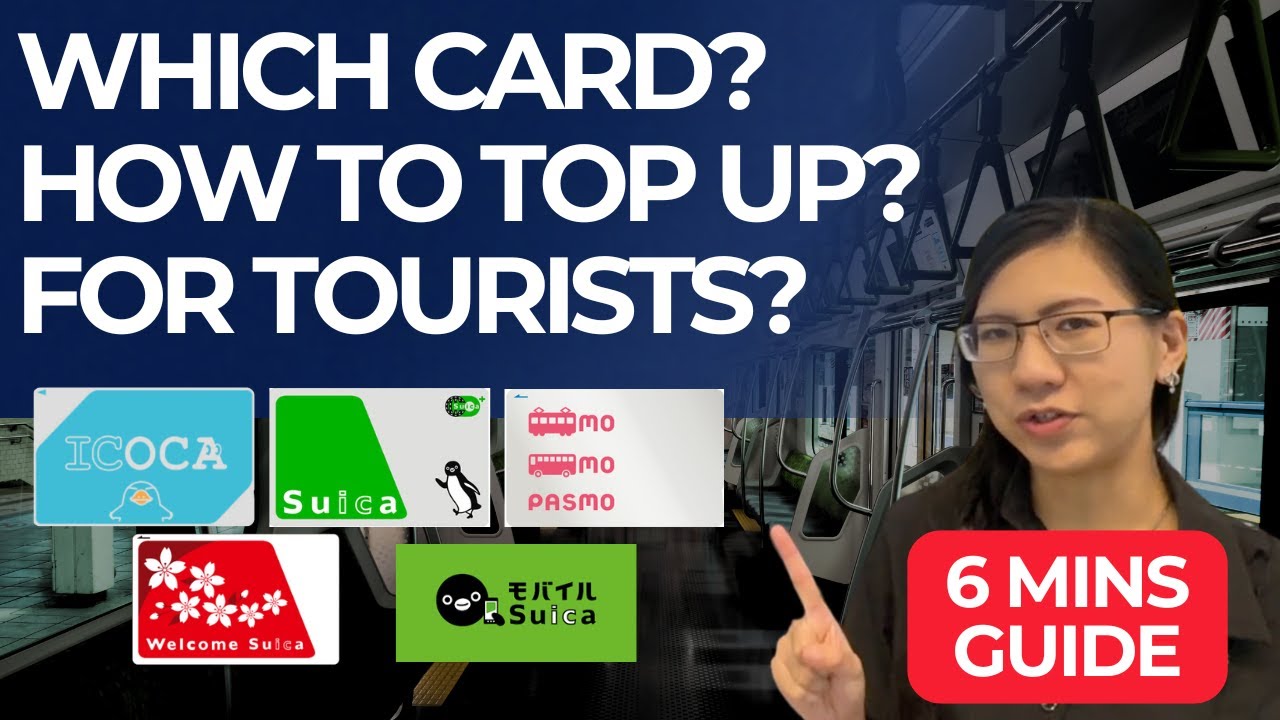
This video will SAVE YOUR TIME – Japan’s IC Cards EXPLAINED in 6 mins
Lost at the ticket machine, counting coins, people are waiting behind you in front of the vending machines. Stressful, right? So, lots of first- timers to Japan face the stressful moments. That’s why I see cards exist. This saves your time on many occasions. In the next 6 minutes, I’ll show you the smartest card choice, how to use it, and how to avoid the mistakes most travelers make when in Japan. One tap, one card, even your coffee are all accessible instantly. So what exactly is an IC card? It’s known by many different names like Sika, Pasmo, Eoka. But did you know they all serve the same purpose? Because an IC card is basically one card that can be used to pay for almost everything. And not just transportation. We’re talking trains, subways, most buses, vending machines, convenience stores, and even coin lockers. Sounds simple, right? But here’s the rule. One card per person. No sharing. Therefore, everyone in your group needs their own. And always tap in and tap out. If you forget, the gate will stop you in your tracks. There are so many IC cards. It can be confusing even for people living in Japan. So, how do you know which card is right for you from many different kinds? Let’s decide in 30 seconds. iPhone, mobile, or Pasmo is probably the easiest option. However, Android users, you’ll need a fiscal card. Staying under 28 days, Guam Sika is your go-to. Why is it convenient? You can buy it right after landing at Narita or Hayeda airport. Or you can get yours at Shinjuku JRE’s Travel Service Center. Be mindful the working hours though. You could also get it at Tokyo Station or at Shibuya Station. No paperwork. No Japanese address and perfect if you need a card just for your trip. No deposit is required, but remember the balance left over at the end of your trip is non-refundable. In Kyoto or Osaka, Eoka works the same way. For iPhone users, it’s quite easy. Add Sika to your Apple wallet, choose an amount to transfer, and done. For Android users, it’s not that tricky either. First, find a ticket machine. Then, pick your language. Tap new card, insert cash, and you’re ready. So, regular Sika requires a 500 yen deposit, which you’ll get back later. Just be careful not to overload it since you can get the leftover money back. You could get welcome Sika instead. So, you can buy this right away after landing at Haneda or Narita Airport. It’s really simple to use. Just tap and walk through. So, don’t stop at the gate. Especially in busier stations. Locals will just bump into you. On buses, depending on the bus, you might only need to tap on once or both times when you get on and off. Shops, cafes, restaurants, vending machines, lockers. Look for the IC logo. Tap and you’re good at lots of places. It’s literally beep and done. But how do you top up? If you’re using Mobile SEA, you can top up with your credit card anytime through Apple Wallet. Fiscal cards can only be recharged with cash. So, you need to go to the station and top up at the ticket machine or use a seven bank ATM at 7-Eleven. Insert your card, tap charge, and that’s it. Sika is powerful, but it’s not magic. Do you need a separate ticket for the bullet train? Yes, but with the Smart EX app, you’ll get a paperless ticket by linking your IC card to your Shinkansen ticket. But how about express trains? Do you have to buy a separate ticket, too? Again, the answer is yes. You still need an express ticket because seats are assigned. So in case you are taking the green car, you need to buy a ticket at the Disney ticket machine. Transfer gates or exits. Sometimes ticket gates are not necessarily exits such as at JR Hamasucho station or Shinagawa station. This is a transfer gate, not an exit. Giving kids your card. I wouldn’t suggest it. Kids need to get their own child card, which actually cuts the fears in half. So, go to the station staff with the passports of your kids. Don’t worry, this machine doesn’t have personal issues with you. It’s just balance issues, which means you ran out of money. So, make sure you have enough in your card before trying to tap in. So, let’s recap. Choose the right card. Tap in and tap out. Recharge smart. helps you enjoy Japan stress-free. Now that you know what IC cards are, what you can do with them, and which type is right for you, it’s time to get exploring. Because you’ve just saved yourself a lot of time and energy, which you can then use to go to even more places throughout Japan. Check out our other videos on Tokyo’s train system and how to get to Tokyo from Narita Airport to help you cut down even more time. Well, like this video if you found it helpful and make sure to subscribe for more smart travel tips.
Stressed about Japan’s train tickets, IC cards, or vending machines? 😩
This 6.5-minute guide will save you from confusion at the ticket gates — and help you travel Japan without wasting your time to count cash.
Timecode
0:00 – Intro
0:38 – Basics: What is an IC Cards? In a nutshell
1:41 – Which card is best for you? – Let’s break down in 30 secs
3:38 – User Guide: All you need to know to use, and to top up
4:37 – FAQs + α: Common mistakes you should avoid
Perfect for first-time visitors to Japan.
Tip: Stay until the end to see real examples of what not to do at Japanese ticket gates (you’ll laugh AND learn!).
More Japan travel tips:
Tokyo’s Train System EXPLAINED: https://youtu.be/uY-wUCkVEaI?si=IPCKqIICJHU876-n
Narita Airport to Tokyo EXPLAINED — This is how to pick up the best wayhttps://youtu.be/Pxxryph15fY?si=OUKG6jPUtd8Ezj9e
🔔 Subscribe for weekly Japan travel guides and insider advice:
👉 https://www.youtube.com/@TravelSmartJapanbySSJ
📱 Follow us for quick tips & reels:
Instagram: https://www.instagram.com/travelsmartjapan/
TikTok: https://www.tiktok.com/@travelsmartjapan?lang=en
🌏 Book our private tour: https://linktr.ee/Travelsmartjapan
#japantraveltips #suica #tokyotravel
5 Comments
Great tips. My wife and I took advantage of the favorable exchange rate when the USD to JPY was at 1:160. We maxed out all three of our mobile IC cards, loading each with the $20,000 yen, and used our Apple Card to earn points.
So I take my credit card with digital money, withdraw cash with fees then buy an ic card and charge it with digital money again with cash, is only valid in certain places and nonrefundable? Sounds like I'll buy single tickets with cash then 😅
Is pasmo card still valid for use?
Talking about kids 5:30, what age minimum?
If I add my credit card to a Google wallet, could I also use the functions of the Suica card with my credit card, or do I need a Suica card for the train if I don't want a paper ticket?
Have I understood correctly that I cannot pay for the Suica card with my card, but have to withdraw cash from an ATM beforehand?