
Researchers have published an open-access shotgun metagenomic dataset detailing the surface microbiomes found within a commuter train station in Shinagawa, Tokyo. Released as a Data Note in BMC Genomic Data, the publication describes microbial sequencing generated directly from high-traffic ground surfaces at the station. By conducting field sampling at a representative medium-scale urban commuter railway station that accommodates daily passenger volumes on the order of tens of thousands, the project provides baseline metagenomic data from transit spaces that city commuters navigate each day.
The study highlights that the broader urban microbiome remains a significantly underexplored ecosystem, even though it plays an important role in contributing to the overall health and resilience of human populations. In particular, scientific knowledge regarding the microbiomes of urban transportation systems remains limited, despite the fact that commuters come into daily physical contact with these shared public transit environments. To help fill this empirical gap, the investigators focused specifically on commuter rail infrastructure in Tokyo, Japan, gathering primary metagenomic information from built surfaces that experience continuous daily transit activity.
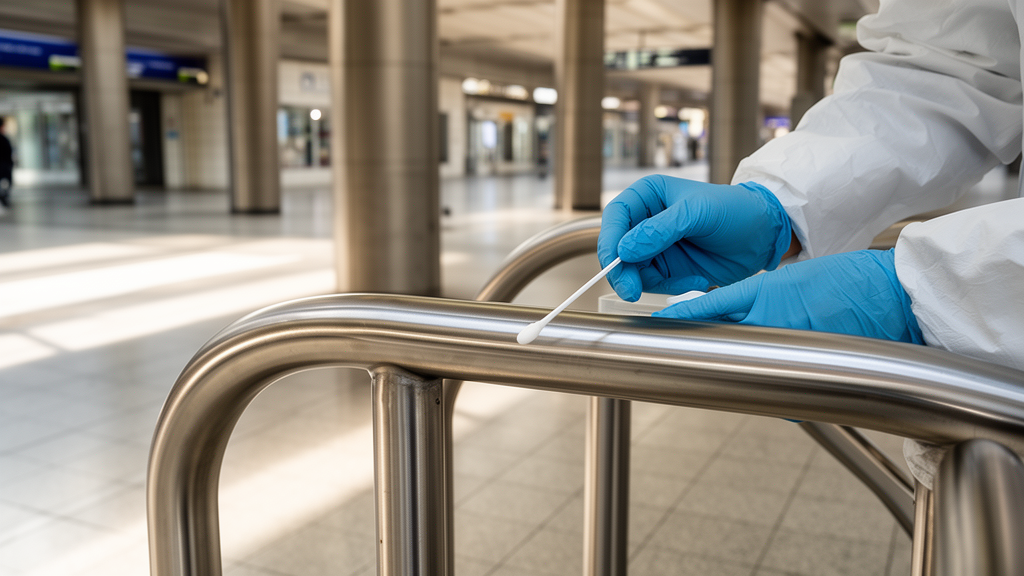
Field sampling for the project was carried out in October 2021 at the major urban railway station located in Shinagawa, Tokyo. The research team collected three distinct surface swab samples from concrete floor areas situated in close proximity to the passenger ticket gates. In accordance with the study sampling protocol, each of the three surface samples was acquired using Isohelix swabs to collect surface-associated microbial matter directly from the station floor.
To properly preserve the collected biological specimens during and after collection, the researchers applied DNA/RNA Shield stabilization solution directly to the Isohelix swabs. Following this preservation step, metagenomic DNA was extracted from the swabbed material for molecular analysis. The extracted genetic material was then subjected to high-throughput shotgun sequencing, which generated 2 × 150 base pair paired-end reads. This sequencing workflow produced detailed read datasets characterizing the microbial DNA present across the concrete floor surfaces near the ticket gates.
As presented in the Data Note, the resulting shotgun metagenomic dataset serves as a specialized public reference resource for the scientific community. The investigators report that the sequenced data are intended to facilitate future comparative analyses examining urban microbial diversity across diverse transit and urban settings.
Subject of Research: Shotgun metagenomic sequencing of surface microbiomes at an urban Tokyo railway station
Article Title: Shotgun metagenomic dataset of surface microbiomes at a train station in Shinagawa, Tokyo
Article References: Gao, X., Sanui, A., Rasmika Dewi, D. A. P., Lucaci, A. G., Mason, C. E., & Suzuki, H. (2026). Shotgun metagenomic dataset of surface microbiomes at a train station in Shinagawa, Tokyo. BMC Genomic Data, 27(1), Article 70. https://doi.org/10.1186/s12863-026-01451-5
Image Credits: AI Generated
DOI: 10.1186/s12863-026-01451-5
Keywords: urban microbiome, shotgun metagenomics, metagenomic sequencing, public transportation, railway stations, Tokyo, surface swabs, microbial diversity, Shotgun, metagenomic, dataset, surface
AloJapan.com