

Japan’s railway network makes travelling between it’s major cities easy, but the Nakasendo offers a reason to explore the country at a slower pace.
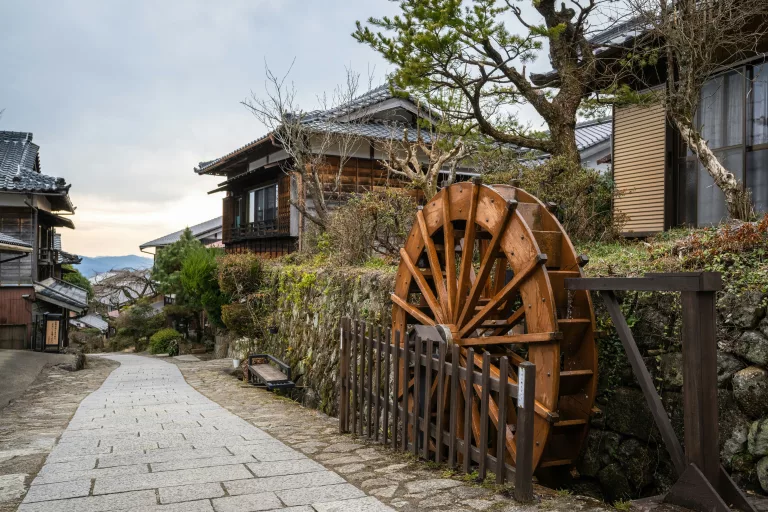
The Nakasendo Way / pen_ash / Unsplash
This historic mountain road once connected Kyoto and Edo, now Tokyo. Today, it’s surviving sections take walkers through traditional post towns and the Kiso Valley, where parts of the original route remain accessible.
Established during Japan’s Edo period (1603–1868), the Nakasendo stretched approximately 530km and formed part of the country’s five major highways. Although much of the original road has disappeared, it’s best-preserved sections offer travellers an opportunity to explore Japan’s rural history on foot.
Following an old highway
The Nakasendo, meaning ‘road through the mountains’, was used by samurai, merchants, pilgrims and government officials travelling between Kyoto and Edo.
It’s 69 post towns, known as shukuba, provided accommodation, food and supplies along the route. They were particularly important under the sankin-kotai system, which required feudal lords to travel to Edo every other year with their entourages.
Unlike the coastal Tokaido route, the Nakasendo crossed the mountainous interior of Honshu. Several historic sections survive in the Kiso Valley, including the former post towns of Magome, Tsumago and Narai.
Walking from Magome to Tsumago
The 8km trail between Magome-juku and Tsumago-juku is one of the most popular sections of the Nakasendo. The walk takes approximately three hours at a relaxed pace and is suitable for most reasonably fit walkers.
The route passes through woodland, farmland and small settlements, with the Otaki and Metaki waterfalls providing places to stop along the way. A traditional teahouse also offers a welcome break.
The trail is signposted in English and Japanese, although some sections briefly follow modern roads. Starting in Magome generally involves less uphill walking.
Visitors travelling with luggage can arrange forwarding between the villages through their tourist information centres. The service operates seasonally, so check availability before setting off.
For a more demanding walk, the 8.5km section between Yabuhara and Narai crosses Torii Pass. It takes approximately two and a half hours, with a steep climb from Yabuhara.
The post towns worth visiting
The former post towns are a major reason to explore the Kiso Valley. Each offers a different look at the communities that developed along the highway.
Magome-juku
Located in Gifu Prefecture, Magome is a popular starting point for the walk to Tsumago. It’s historic main street is lined with traditional buildings, shops, restaurants and museums.
The village was also the birthplace of Japanese novelist Shimazaki Toson. A museum dedicated to his life and work explores his connection to the region.
Tsumago-juku
In Nagano Prefecture, Tsumago is one of Japan’s best-preserved post towns. It’s preservation is largely thanks to residents who began protecting the historic settlement in 1968, resisting the modern development affecting many rural communities.
Measures included restricting vehicles along the main street during the day and concealing overhead power lines.
Visitors can explore traditional inns, shops and museums, including the restored honjin and wakihonjin, which once accommodated travellers according to their status.
Staying overnight is worth considering for those wanting more time to explore the village.
Narai-juku
Further along the Nakasendo, Narai was once one of the wealthiest post towns on the route. Known as ‘Narai of a Thousand Houses’, it’s historic main street stretches for approximately one kilometre.
The village is also known for Kiso lacquerware, a traditional craft that visitors can discover in local workshops and shops. Narai is accessible by train and marks the end of the Torii Pass walk from Yabuhara.
Kiso-Fukushima
Kiso-Fukushima offers another perspective on the highway’s history. It was home to one of four major checkpoints where officials monitored travellers and regulated movement during the Edo period.
The restored Fukushima Checkpoint now operates as a museum, offering insight into the controls placed on travel at the time.
When to visit and where to stay
April and May, as well as July to November, are generally suitable months for walking the Nakasendo. Spring and autumn are particularly popular, although autumn accommodation can book up quickly.
June and early July bring frequent rain, while winter conditions can make the trails slippery.
Accommodation includes traditional Japanese inns, known as ryokan, and smaller family-run guesthouses called minshuku. Tsumago and Narai are good options for those wanting to stay in historic post towns, while Kiso-Fukushima offers more accommodation choices.
Planning your visit
The Kiso Valley is accessible by public transport. From Tokyo or Kyoto, travel to Nagoya and connect to the JR Chuo Line.
For Magome, travel to Nakatsugawa Station and take a local bus. Tsumago is accessed through Nagiso Station, followed by a bus or taxi. Narai has it’s own railway station within walking distance of the historic town.
Allow around three hours for the Magome-to-Tsumago walk, excluding time spent exploring the villages. Bus services are limited, so check local timetables before travelling.
Pack comfortable walking shoes, drinking water and weather-appropriate clothing. There are limited shops along the forest sections, and parts of the trail pass through bear habitats. Follow local safety advice and use a bear bell where recommended.
A different side of Japan
The Nakasendo offers travellers a chance to explore beyond Japan’s major cities and experience the history of the communities along it’s old mountain highway.
From the popular Magome-to-Tsumago walk to the preserved streets of Narai, the Kiso Valley is worth more than a brief stop on a Japanese itinerary. For those interested in combining hiking and history, this is a route worth making time for.
Follow us on social media for more travel news, inspiration, and guides. You can also tag us to be featured.
Instagram | Facebook | Twitter | Spotify
ALSO READ:
Why flamingos thrive in lakes where few other birds can survive
AloJapan.com