

Japan’s tourism industry has entered a remarkable new era. In 2025, the country welcomed approximately 42.7 million international visitors who generated an estimated ¥9.7 trillion in tourism spending, and the national vision for 2030 is even more ambitious, targeting 60 million visitors and ¥15 trillion in travel expenditure. As Japan works to encourage international travelers to venture beyond the well-established Golden Route, regional destinations are becoming increasingly important to the country’s long term tourism strategy. Situated on opposite sides of the Tsugaru Strait, Hokkaido and Aomori possess an extraordinary combination of history, culture, nature, and maritime heritage that remains relatively undiscovered by many overseas visitors. From your perspective, what makes this region unlike anywhere else in Japan, and why should international travelers make it an essential part of their journey?
There are so many remarkable aspects of this region that it is difficult to know where to begin. If I had to summarize it, I would say that this is one of the most authentic and diverse parts of Japan, where nature, history, culture, spirituality, and everyday life have remained deeply connected over thousands of years.
Japan consists of approximately 14,000 islands, but the geography of this particular area is especially significant. The Tsugaru Strait separates Honshu, Japan’s largest island, from Hokkaido, the country’s second largest island. Although it appears to be only a stretch of water, it has played an extraordinary role in shaping both the natural world and human civilization.
From a biological perspective, the Tsugaru Strait represents one of Japan’s most important natural boundaries. The British naturalist Thomas Blakiston identified this area as the dividing line between the wildlife of northern and southern Japan. Species such as bears, deer, and many other animals developed differently on each side of the strait, making it an area of exceptional ecological significance.
Yet while nature created a boundary, people continuously crossed it. For thousands of years, communities have traveled across these waters, exchanging ideas, traditions, and ways of life. The sea never became a barrier to human connection. Instead, it became a route that linked cultures together.
This history is closely connected to the Jomon civilization, one of Japan’s oldest cultures. The Jomon people are often described as hunter gatherers, but that description alone does not fully capture the sophistication of their society. Unlike many other hunter gathering communities around the world, they established permanent settlements and developed an advanced culture that flourished over an exceptionally long period.
Today, archaeological discoveries continue to reveal how sophisticated that civilization was. Distinctive pottery, settlement remains, and other cultural artifacts have been unearthed on both sides of the Tsugaru Strait, in Hokkaido as well as Aomori. These discoveries demonstrate that the region was not simply inhabited temporarily. It was home to thriving communities that developed unique cultural traditions while maintaining connections across the sea.
The region also possesses an extraordinary spiritual heritage. One example is Mount Osore, or Osorezan, which is regarded as one of Japan’s most sacred places. It has long been associated with Japanese beliefs surrounding life, death, and the spiritual world. Unlike many famous tourist attractions, it has remained remarkably authentic. Although visitor numbers are still relatively modest compared with other destinations, people who travel there experience a place that has preserved its original atmosphere rather than becoming heavily commercialized.
Food culture represents another defining characteristic of the region. Very close to here is the town of Oma, which is internationally recognized among Japanese people as the home of the country’s finest tuna. Every year, the first tuna auction of the new year attracts national attention because the highest quality tuna from Oma commands extraordinary prices. Those auction results become headline news throughout Japan, reflecting just how highly the seafood from this region is regarded.
Cultural traditions are equally important. Aomori is home to the largest festival “Nebuta Festival” in the Tohoku region and one of the largest festivals anywhere north of Tokyo. What makes this festival so remarkable is not only its scale but also the dedication of the local people. Many residents devote an entire year of their lives preparing for it. They work throughout the year with the festival in mind, investing their time, energy, and creativity because it represents an essential part of their identity and their community. Similar festivals can also be found throughout the region, each reflecting the same deep connection between local culture and everyday life.
Nature provides yet another completely different attraction. During winter, snow accumulates on the trees until enormous white formations emerge, creating what many people call snow monsters. Walking through these forests produces an almost unreal landscape. Many of these areas remain largely untouched by mass tourism, allowing visitors to experience nature in a way that feels both peaceful and genuinely wild.
Winter conditions here can also be extremely severe. Heavy snowfalls and powerful ground blizzards often reduce visibility dramatically. Historically, these conditions made travel dangerous, and there were occasions when people became lost in the mountains. Today, however, carefully organized guided tours allow visitors to experience these extraordinary winter landscapes safely. I have personally participated in these tours, and they offer an unforgettable opportunity to appreciate the region’s natural beauty while understanding the power of its environment.
History adds another important dimension. Hakodate, located in southern Hokkaido, occupies a unique place in the story of modern Japan. During the transition from the Edo period to the Meiji era, when Japan began opening itself to the outside world, this region became the site of one of the final conflicts between the former shogunate and the new government.
What makes that history especially meaningful is not simply that a battle occurred here. Rather, it is how that conflict concluded. Instead of ending with the complete destruction of the losing side, some of the leading figures who had fought for the former government later became respected members of the new government and contributed to building modern Japan. The history preserved here therefore represents reconciliation rather than permanent division, demonstrating that even after conflict, people were able to move forward together.
When you combine ancient civilization, spiritual traditions, exceptional cuisine, spectacular natural scenery, important historical sites, and communities that continue to preserve their culture with great pride, you begin to understand what makes this region so special. One of Japan’s greatest strengths is that travelers can experience completely different landscapes, histories, and cultures within relatively short traveling distances. Hokkaido and Aomori represent that diversity perhaps better than anywhere else in the country.
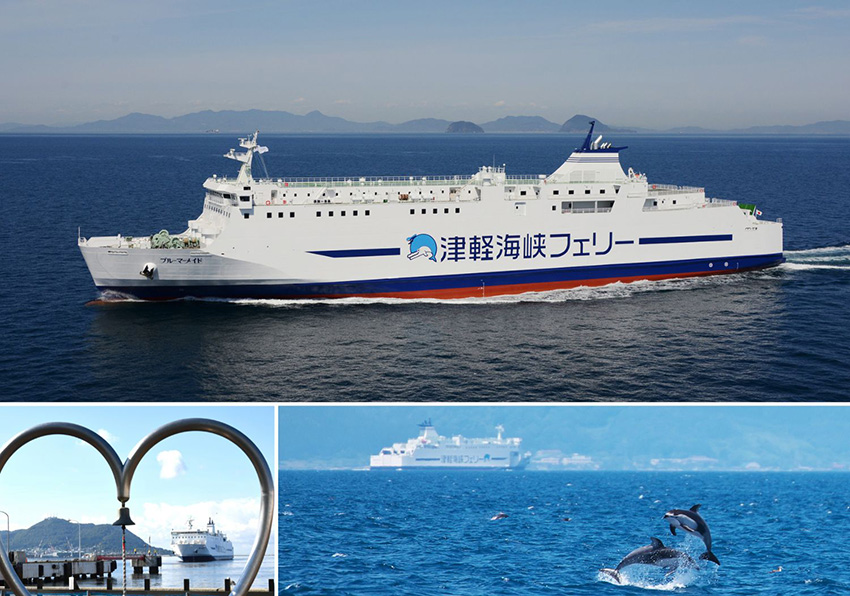
We operate large, 8,000-metric-ton ferries that offer a smooth ride. With a high operational rate, we provide safe and reliable voyages. If you’re lucky, you might even spot some dolphins.
Around the world, travel is increasingly being defined not only by the destination itself but also by the experience of the journey. Many international visitors are now deliberately choosing slower and more immersive forms of travel that allow them to appreciate landscapes, local culture, and the process of moving through a country rather than simply arriving as quickly as possible. Having observed this shift, what role do you believe ferry travel can play in Japan’s future tourism industry, and what makes crossing the Tsugaru Strait by sea an experience that cannot be replicated by rail or air travel?
I believe the greatest strength of ferry travel is that it allows people to enjoy the journey itself rather than viewing transportation simply as a means of reaching the next destination.
For centuries, people have crossed the Tsugaru Strait. Since the time of the Jomon civilization, this stretch of water has connected communities rather than separating them. When passengers board one of our ferries today, they are following a maritime route that has linked people, cultures, and ideas for thousands of years. That historical continuity is part of the experience itself.
I also believe we must continue improving our services for international visitors. As inbound tourism grows, multilingual information, clear guidance, and a welcoming environment become increasingly important. We appreciate that this is an area where we can continue to improve, and it is something we are actively considering.
The scenery itself is another important reason to travel by ferry. During your previous journey, you crossed the strait at night, but I would strongly encourage travelers to experience the daytime crossing as well. The views are completely different. During the day, passengers can fully appreciate the coastline, the open sea, and the surrounding mountains. The atmosphere is fresh, peaceful, and constantly changing as the vessel moves across the water.
There are also moments that cannot be planned but become unforgettable memories. Dolphins occasionally appear alongside the ship, and passengers have opportunities to observe other forms of marine life. These unexpected encounters with nature are experiences that cannot be recreated on an airplane or a high-speed train.
The ferry also provides a level of freedom that other forms of transportation cannot easily match. Travelers can bring their own vehicles, whether cars, motorcycles, or bicycles, allowing them to continue exploring independently once they arrive. They can travel comfortably with pets, carry larger amounts of luggage, and design their journey according to their own interests and schedules.
Ultimately, the ferry is not simply transporting people between Hokkaido and Aomori. It is allowing them to slow down, appreciate the surrounding environment, experience one of Japan’s historic maritime routes, and begin discovering the culture of northern Japan before they even reach their destination. That combination of history, scenery, flexibility, and relaxation is what makes ferry travel a unique experience.
As competition for international visitors becomes increasingly centered on authentic experiences rather than simply transportation or accommodation, travel operators are evolving into ambassadors for the destinations they serve. A ferry can become much more than a vessel connecting two ports. It can become the first place where visitors discover the culture, craftsmanship, cuisine, and traditions of a region before they even arrive. Looking ahead, how do you envision the onboard experience evolving so that the journey itself becomes an introduction to the unique identity of Hokkaido and Aomori?
That is exactly the direction we would like to pursue. We want the ferry to become more than simply a means of transportation. We would like it to become a place where passengers begin discovering the character of the region while they are still on board.
There are many wonderful products, traditions, and stories that originate from the communities connected by our ferry routes, and we believe travelers should be able to experience those during the voyage itself. One area we would like to strengthen is our selection of regional products that passengers can purchase or simply learn more about during the crossing.
A good example is Tsugaru Vidro, the beautiful handmade glassware produced in Aomori. It reflects the craftsmanship of the region and represents something that visitors can take home as a lasting reminder of their journey. Rather than offering generic souvenirs, we would like to introduce products that have genuine connections to the places our ferries serve.
More broadly, we want to create opportunities for discovery. We would like passengers to encounter local specialties they may never have heard of before boarding the ship. Whether those are regional crafts, local foods, traditional products, or stories connected to the communities surrounding the Tsugaru Strait, we want the ferry to become a place where curiosity naturally develops.
We believe that travel should continue throughout the journey, not only after arriving at the destination. If passengers step off the ferry already feeling connected to the region because they have learned something new, tasted a local specialty, or discovered a traditional craft, then we believe the voyage has already become a meaningful part of their overall travel experience.
This is still an area we intend to expand. We have only begun developing these initiatives, but we see significant potential to enrich the onboard experience by bringing more of the region’s culture onto the ferry itself.

The “Premium Box” is available for purchase on board. It’s a special souvenir set featuring “Tsugaru Vidro” glasses from Aomori, along with an original “GOSEN-IN” and cookies featuring prints of tourist attractions and local specialties from various ports.
Japan’s inbound tourism market continues to expand rapidly, yet northern Japan still represents an emerging destination for many overseas travelers. As awareness grows and more visitors begin looking beyond Japan’s major metropolitan areas, ferry travel also has an opportunity to become part of that broader tourism ecosystem. Based on your current observations, how many international passengers are using your services today, and what level of growth do you believe is realistically achievable over the coming years?
At the moment I cannot provide an exact figure, but based on the information available to us, we understand that approximately four thousand to five thousand international passengers are currently using our ferry services.
Although those numbers are encouraging, we also recognize that our efforts to attract inbound travelers have only recently begun. We are still at the early stages of introducing our services to many overseas markets, which means there is considerable room for future growth.
Our hope is that this number will at least double, and ideally even triple, as awareness continues to increase. We believe that many international visitors simply have not yet discovered that ferry travel is available or realized how much flexibility and enjoyment it can add to their journey through northern Japan.
As more travelers begin exploring destinations beyond Tokyo, Kyoto, and Osaka, we believe our routes will naturally become more attractive. Hokkaido and Aomori offer experiences that differ significantly from Japan’s larger cities, and ferry travel allows visitors to experience those regions in a slower and more immersive way.
Our objective is not simply to increase passenger numbers. We hope to become part of a broader travel experience that encourages visitors to spend more time in the region, travel independently, and discover places they might otherwise never have considered visiting.
Building awareness among international travelers requires more than simply operating transportation services. It also depends on partnerships that make regional experiences easier to discover, understand, and book from overseas. Your collaboration with travel platforms such as KKday reflects that broader approach. How important are these partnerships in expanding your international reach, and how do they help transform a ferry journey into a more complete travel experience?
These partnerships are extremely important because they allow international visitors to recognize ferry travel as a practical option while also making reservations much easier.
Many overseas travelers plan their itineraries online before arriving in Japan. If ferry travel is not visible through the platforms they already use, many visitors may never realize that these routes exist or understand how they fit into their travel plans. Working with companies such as KKday allows us to reach travelers much earlier in their planning process.
Beyond simple reservations, these partnerships also enable us to create integrated travel experiences that combine transportation with regional attractions. Rather than purchasing only a ferry ticket, travelers can enjoy carefully designed packages that introduce them to the local culture after they arrive.
This approach makes the journey much easier for international visitors because transportation, local experiences, and reservations are connected into a single itinerary. It reduces uncertainty while also encouraging travelers to explore destinations they might otherwise consider too difficult to reach.
For us, these partnerships are therefore not simply about sales. They are about helping international visitors discover northern Japan in a way that feels convenient, welcoming, and rewarding.
One of the most interesting examples of experiential tourism you have developed is the Hakodate Oma Tuna Ticket. Rather than simply transporting passengers across the Tsugaru Strait, the experience combines ferry travel with one of Japan’s most celebrated culinary destinations. Could you explain how this program was created and why you believe it represents the future of regional tourism?
The Hakodate Oma Tuna Ticket is a travel package created in collaboration with the Hakodate International Tourism and Convention Association, and it serves as an excellent example of the type of travel experience we would like to continue developing.
Earlier I mentioned the town of Oma, which is famous throughout Japan for producing what many people consider the country’s finest tuna. While Oma can be quite time consuming to reach by land from other parts of Aomori, it is actually very close to Hakodate by sea. Traveling by ferry makes it possible to visit Oma comfortably as a day trip, creating an itinerary that is both practical and enjoyable.
The ticket combines the ferry crossing with dining experiences in Oma, allowing visitors to enjoy the region’s most famous specialty immediately after arriving.
One particularly memorable aspect of the program is that some of the participating restaurants are operated directly by local fishermen. In one case, visitors have the opportunity to dine at the restaurant of the fisherman who landed the year’s highest valued tuna. That creates a direct connection between the traveler and the people whose work has made Oma internationally respected within Japan.
However, the experience extends beyond the meal itself. We have also designed the program so that visitors are welcomed by local people after arriving in Oma. On days when the Hakodate Oma Tuna Ticket is available, the Oma Town sightseeing van will be there to welcome you. The driver will guide you through the town’s tourist spots and attractions.
That kind of hospitality creates a much deeper travel experience than simply arriving independently. Visitors are not only seeing the destination. They are meeting the people who live there, hearing local stories, and experiencing the community from an insider’s perspective.
This is exactly the direction we hope regional tourism will continue moving toward. Transportation should become the beginning of an authentic local experience rather than the end of the journey. By connecting ferry travel with regional food, local communities, and meaningful personal interactions, we believe visitors leave with a much richer understanding of northern Japan than they would through conventional sightseeing alone.
Hakodate Oma Tuna Ticket
The launch of Blue Grace marked an important milestone for the company, introducing a vessel designed not only to transport passengers but also to elevate the overall travel experience. With accommodations ranging from suites and first-class cabins to observation baths and spacious public areas, the ship reflects a growing emphasis on comfort and experiential travel. As more international visitors seek journeys that are memorable from beginning to end, what kind of experience do you hope passengers will have while traveling aboard Blue Grace, and how does the voyage itself become part of the destination?
Our objective is for passengers to enjoy the time they spend on board rather than thinking only about when they will arrive.
The Muroran Aomori route operates on a schedule where departures from Aomori take place during the daytime, while departures from Muroran are generally in the night. Because the voyage lasts for more than seven hours, passengers have ample time to relax, explore the ship, and appreciate the changing scenery throughout the journey.
For those departing from Aomori during the day, the crossing offers magnificent views of the Tsugaru Strait and the surrounding coastline. The scenery changes constantly as the vessel moves across the water, allowing passengers to experience northern Japan from a perspective that simply cannot be enjoyed from land. We hope people will spend time on the deck, appreciate the landscape, and enjoy the peaceful rhythm of traveling by sea.
The ship also offers opportunities to relax in ways that are unique to ferry travel. Passengers can enjoy the observation bath while looking out toward the sea, creating a sense of calm that is very different from other forms of transportation. Instead of feeling rushed, the journey encourages people to slow down and enjoy their surroundings.
At the same time, we hope passengers will discover the regional character of the areas we serve through the food and products available on board. If they take the time to look carefully, they will find a variety of specialties connected to Hokkaido and Aomori. We would like visitors to begin experiencing the local culture before they even reach their destination.
The night voyage from Muroran provides a completely different atmosphere. Muroran occupies a special place in the history of Hokkaido because it was one of the birthplaces of the island’s industrial development. As a result, the city is known for its impressive industrial nightscape, where factories, steelworks, and port facilities create a dramatic panorama after sunset.
Normally, for safety reasons, passengers are often advised not to spend unnecessary time on the outside decks during nighttime sailing. However, when the ship passes through Muroran Bay, we make a special exception because the scenery is so distinctive and beautiful. We encourage passengers to go outside and experience the illuminated industrial landscape before continuing their journey across the sea.
In that sense, the daytime and nighttime voyages offer two entirely different experiences. One celebrates the natural beauty of northern Japan, while the other reveals an important chapter of Hokkaido’s industrial history. We hope passengers will appreciate both aspects because together they reflect the diversity of the region.
Ultimately, we do not see the ferry simply as transportation between two ports. We want the voyage itself to become one of the highlights of the trip, giving passengers time to relax, reflect, enjoy regional cuisine, admire the scenery, and begin connecting with northern Japan long before they arrive.

On board, you can enjoy views of the city’s industrial nightscape and the observation bath. The sight of the boat passing under the “Hakucho Bridge”—a symbol of Muroran and one of the largest suspension bridges in eastern Japan—is truly spectacular.
Today’s travelers increasingly look for experiences that extend beyond sightseeing, often searching for authentic local products that tell the story of the places they have visited. Whether through regional cuisine, traditional craftsmanship, or meaningful souvenirs, these small details often become lasting memories of a journey. How are you incorporating those elements into the onboard experience, and are there any particular products or keepsakes that you believe best represent your ferry services and the regions you connect?
We believe that souvenirs should be more than simple merchandise. Ideally, they should remind people of the experience they had while traveling and help preserve the memories they created during their journey.
One item that we are especially proud of is our commemorative boarding certificate “GOSEN-IN”. It serves as a record that a passenger has traveled aboard one of our ferries, but it is also designed with great care and attention to detail. Each “GOSEN-IN” certificate reflects the individual character of the vessel and the route, incorporating illustrations and stories connected to the areas we serve.
From time to time, we also produce special edition versions, allowing returning passengers to collect different designs and commemorate multiple journeys. We hope these items become meaningful keepsakes rather than objects that are quickly forgotten.
Beyond commemorative items, we continue expanding our selection of regional products available on board. As I mentioned earlier, we would like to introduce more locally produced crafts and specialties that genuinely reflect the culture of Hokkaido and Aomori. We want passengers to discover products they may not encounter elsewhere and to leave with something that represents the places they have visited.
In many ways, these small details help extend the travel experience beyond the voyage itself. When passengers return home and see these souvenirs again, we hope they will remember not only the ferry but also the people, landscapes, and communities they encountered throughout northern Japan.

“GOSEN-IN” Official Website: https://gosen-in.jp/eng.php
Popular culture has become an increasingly powerful gateway to tourism, with many international visitors choosing destinations after discovering them through films, television, or Japanese animation. During our visit we noticed collaborations featuring well-known characters, including Golden Kamuy, which has introduced many overseas audiences to the history and culture of Hokkaido. How important are these creative collaborations for your company, and can you share anything about future projects that visitors might look forward to?
Collaborations with popular cultural properties are certainly something we value because they allow new audiences to discover our services and the regions connected by our routes.
At the moment, we are already working on collaborations related to anime, and we intend to continue developing similar initiatives in the future. However, I hope you will understand that there are projects currently under discussion that I am not yet able to announce publicly.
What I can say is that interest in Japanese animation continues to grow throughout the world. Many international visitors first become interested in particular places because they encounter them through anime or other forms of entertainment. If those stories encourage people to visit northern Japan and experience the real locations for themselves, we believe that is a very positive development.
Whenever new collaborations are officially announced, we would be delighted to discuss them in greater detail. They represent another opportunity to introduce people to the culture, landscapes, and history of this region through a different kind of storytelling.
For us, these collaborations are not simply promotional campaigns. They create another point of connection between visitors and the destinations we serve, allowing people to engage with northern Japan in ways that are both entertaining and meaningful.
Throughout our conversation, one theme has emerged repeatedly. The travelers you hope to attract are not necessarily those making brief visits to Japan, but increasingly those who stay longer, travel independently, and seek deeper regional experiences beyond the country’s most familiar destinations. Despite the growing appeal of this market, what do you believe remains the greatest challenge in encouraging more long stay international visitors to choose ferry travel as part of their journey through Japan?
I believe the greatest challenge is communication.
Northern Japan already offers an extraordinary range of experiences. There are beautiful landscapes, fascinating history, remarkable local cuisine, authentic cultural traditions, and unique ways of traveling through the region. The difficulty is not that these experiences do not exist. The difficulty is that many people outside Japan simply do not know about them.
We need more communication that explains the attractiveness of this region from the perspective of international travelers rather than only from our own perspective. We need more stories, more articles, more opportunities for people overseas to discover what makes this part of Japan so special.
At the moment, many wonderful places remain relatively unknown. They are waiting to be discovered, but awareness has not yet caught up with their actual quality. That is why communication is so important.
In that sense, I am genuinely grateful for opportunities such as this interview. By sharing these stories with an international audience, we can help more people understand that there is another side of Japan beyond its most famous destinations.
If more travelers become aware of what northern Japan has to offer, I believe many of them will choose to include this region in their itineraries. Our role is to continue improving the travel experience while also communicating more effectively with the world about the extraordinary destinations connected by our ferry routes.
Looking toward the next several years, Japan’s tourism landscape is expected to evolve significantly as international travel continues to recover and visitors increasingly seek destinations beyond the country’s traditional tourism hubs. Your company is investing not only in new vessels and customer experiences but also in positioning northern Japan as a destination that deserves far greater international recognition. If we were fortunate enough to return and interview you again in 2029, what would you hope to have achieved by then, both for Tsugaru Kaikyo Ferry and for the wider Hokkaido and Aomori region?
I sincerely hope that, by then, the number of international visitors using our ferry services will have increased dramatically. If I could express that ambition simply, I would like to see inbound passenger numbers grow fivefold. If possible, I would like to see them increase tenfold.
Of course, those figures are aspirations rather than guarantees, but they reflect the level of ambition we have for the future. We believe there is tremendous untapped potential for international tourism in northern Japan, and we would like to play an important role in helping that potential become reality.
More importantly than the numbers themselves, I hope that by 2029 this region will have been truly discovered by international travelers. At present, many visitors who come to Japan remain concentrated in a relatively small number of destinations. My hope is that Hokkaido and Aomori will increasingly be recognized as places that offer experiences unavailable anywhere else in the country.
I would like travelers from around the world to think of northern Japan not simply as somewhere they pass through, but as a destination worth planning an entire journey around. I hope they will come because they want to experience our history, our landscapes, our culture, our cuisine, and the unique pace of travel that ferry journeys provide.
I also hope that the ferry itself will become recognized internationally as an essential part of exploring this region. Rather than viewing it simply as transportation, I would like visitors to think of the voyage as one of the highlights of their trip, something that allows them to experience the sea, the scenery, and the history that have connected Hokkaido and Aomori for thousands of years.
Achieving those goals will require continuous effort. We must continue improving our services, strengthening partnerships, introducing new experiences, and communicating more effectively with audiences overseas. None of these objectives can be accomplished overnight, but we are committed to working toward them step by step.
If you return in 2029, I hope I will be able to tell you that many more international travelers have discovered this part of Japan, that our ferry services have become an important part of their journeys, and that together we have helped introduce northern Japan to a much broader global audience.
Throughout this conversation, we have discussed ancient history, regional culture, spiritual heritage, remarkable cuisine, spectacular natural landscapes, experiential tourism, and the role your company hopes to play in introducing all of these elements to travelers from around the world. We always conclude our interviews with the same question because it often reveals how leaders view their organizations at the most fundamental level. If you had just one sentence to introduce Tsugaru Kaikyo Ferry to Newsweek International’s approximately 75 million readers worldwide, how would you describe the company?
We are a shining gateway to the northern part of Japan.
That single sentence reflects what we aspire to be. We do not simply connect two ports across the Tsugaru Strait. Our purpose is to connect people with places, cultures, history, and experiences that many international travelers have yet to discover.
Northern Japan possesses extraordinary authenticity. It is a region where ancient civilizations flourished, where spiritual traditions continue to be preserved, where communities remain deeply connected to their festivals and local culture, and where dramatic natural landscapes change with every season. Through our ferry services, we hope to become the gateway that introduces those experiences to people from around the world.
We want every passenger to feel that the journey begins the moment they step aboard. Whether they are watching dolphins from the deck, enjoying regional cuisine, discovering local craftsmanship, relaxing in the observation bath, traveling with their family, their pets, or their own vehicle, or simply admiring the scenery of the Tsugaru Strait, we hope the voyage becomes a memorable part of their visit to Japan.
Ultimately, our goal is to help travelers experience a side of Japan that remains authentic, welcoming, and deeply connected to its history. If we can inspire more people to discover Hokkaido and Aomori through the journey we provide, then we believe we have fulfilled our role as a gateway to northern Japan.
Thank you very much for taking the time to visit us and for giving us the opportunity to share our story. We sincerely hope that your readers will one day experience this journey for themselves.

Four terminals and onboard cabins. We offer a wide variety of accommodations, including hotel-style “suite cabins,” “view seats” at the front of the ship, and “private dog rooms” where you can stay with your dog.
For more information, visit their website at: https://www.tsugarukaikyo.co.jp/global/en/
AloJapan.com