
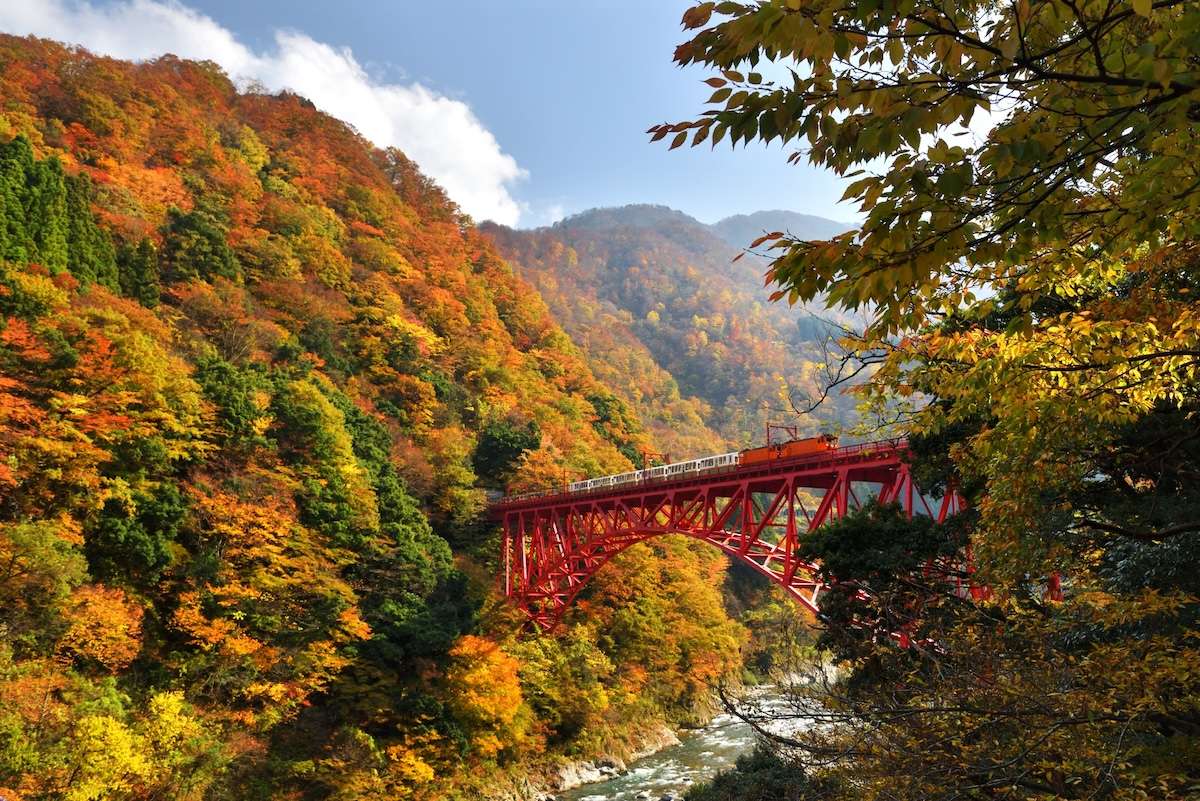
Autumn in Japan brings a change of pace as well as a change of colour. Mountain slopes turn crimson, maple leaves brighten temple grounds, and hot spring towns invite travellers to linger as the air grows cooler.
Known as momijigari, the tradition of seeking out autumn foliage connects these seasonal pleasures. Across Shizuoka, Ibaraki, Toyama, Saga and Tochigi, waterfalls, woodland trails and historic gardens offer compelling settings in which to experience it.
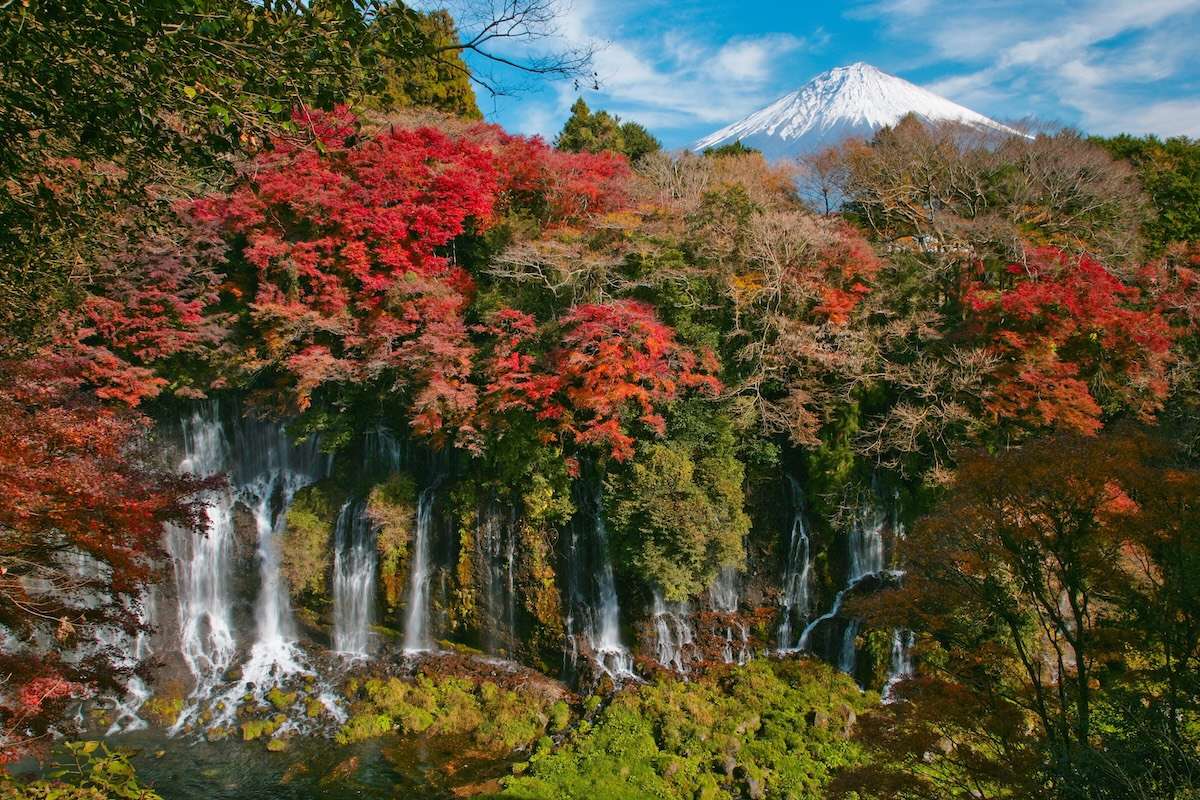 Shiraito Falls, Fujinomiya. Credit: Shizuoka Prefectural Tourism Association.Shizuoka: Autumn Leaves, Waterfalls and Hot Springs
In the shadow of Mount Fuji, Shizuoka’s autumn scenery combines cascading water with riverside walks and the warmth of traditional onsen towns.
See the Autumn Colours at Shiraito Falls
Fed by Mount Fuji’s snowmelt, which filters underground before emerging at the falls, Shiraito Falls spills down a curved, 20-metre cliff in hundreds of fine, white threads.
In mid-to-late November, the surrounding foliage adds crimson and gold to the scene. The contrast between delicate streams and richly coloured woodland gives travellers good reason to pause here.
Slow Down in Shuzenji Onsen
Further south, on the Izu Peninsula, Shuzenji Onsen brings together traditional ryokan inns, bamboo paths and bridges crossing the Katsura River.
Combine a riverside stroll with a visit to Shuzenji Temple, then explore the nearby Shuzenji Maple Forest, home to around 1,000 maple trees. Afterwards, a hot spring soak offers an inviting conclusion to a day outdoors.
 Oku-Oi Kojo Station, Kawanehon. Credit: Shizuoka Prefectural Tourism AssociationIbaraki: Explore the Hitachinokuni Long Trail
For travellers who prefer to experience autumn on foot, northern Ibaraki offers a landscape of countryside, waterfalls and rugged ridges.
The Hitachinokuni Long Trail stretches roughly 350km across six municipalities. Its appeal lies in its flexibility: visitors can choose manageable sections or out-and-back walks, shaping the experience around their time and fitness.
Fukuroda Falls, framed by autumn foliage, is among the highlights. Elsewhere, Mount Yamizo, Ibaraki’s highest peak at 1,022 metres, and the craggy ridge of Namase Fuji introduce a more dramatic mountain character.
Rather than trying to cover everything, choose a section that leaves time to appreciate the countryside along the way.
 Credit: Saga Prefectural Cultural Tourism FederationToyama: Gorge Railways and Autumn Seafood
Between the Sea of Japan and the Northern Alps, Toyama pairs mountain scenery with the pleasures of its fishing ports.
Ride the Kurobe Gorge Railway
The Kurobe Gorge Railway, affectionately known as the Trolley Train, carries passengers through a landscape of steep canyon walls, waterfalls and rugged cliffs.
Open-air carriages bring the scenery close, while high bridges reveal views over the Kurobe River. Autumn foliage adds another layer of colour to the journey. Consult the railway’s official website for timetables when planning your visit.
Taste Toyama’s Seasonal Seafood
Back by the water, Shinminato Fisherman’s Wharf offers a different seasonal attraction. September marks the start of red snow crab fishing, while white shrimp and nodoguro, or blackthroat seaperch, also feature among the region’s seafood specialities.
Visitors can watch midday crab auctions before settling down to a kaisendon, a seafood rice bowl. Auction viewing at nearby Shinminato Kittokito Market requires advance booking.
 Credit: Saga Prefectural Cultural Tourism FederationSaga: Maple Leaves and Moss Gardens
Around Kanzaki, in Kyushu’s Saga Prefecture, autumn takes on a quieter character.
At Niiyama Shrine, maple trees frame historic structures, while stone monkey carvings include the familiar three wise monkeys: “see no evil, hear no evil, speak no evil”.
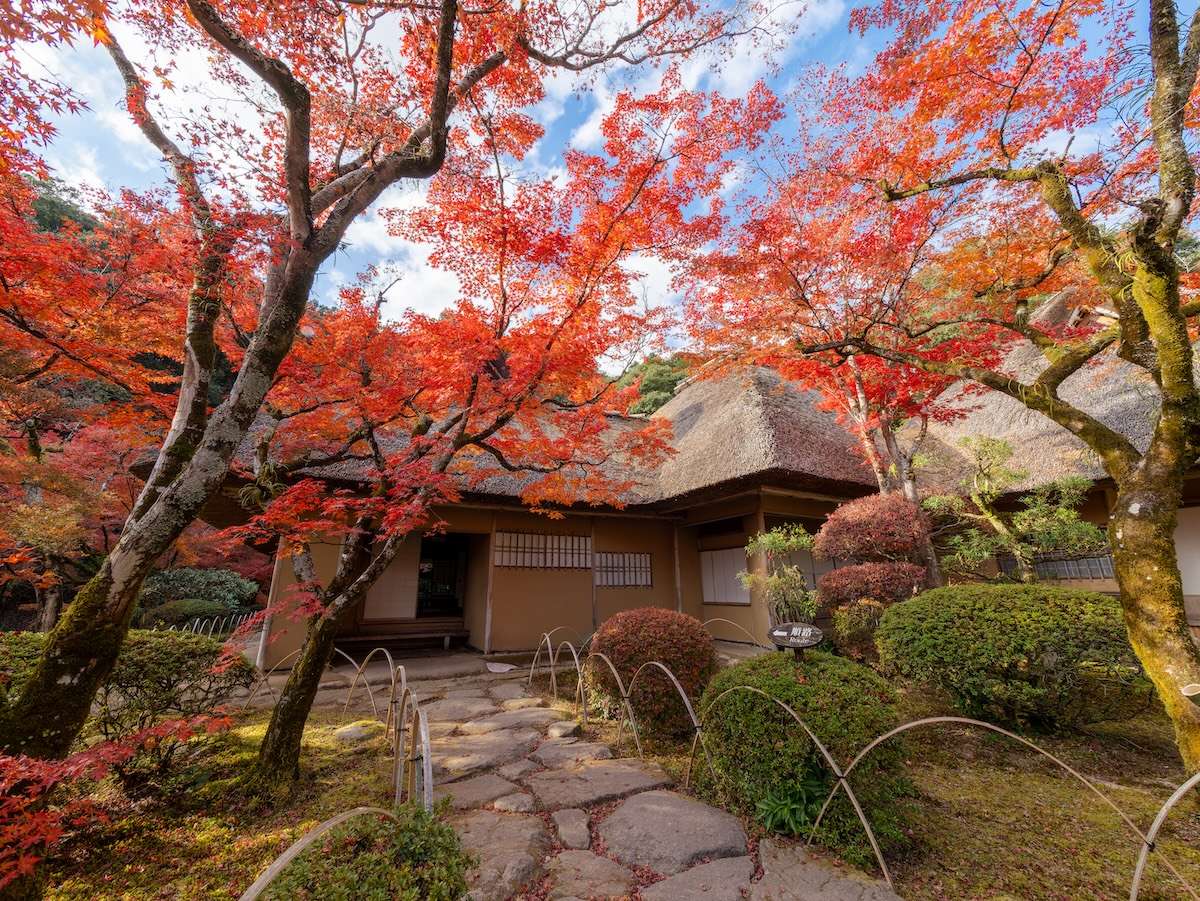
Adjacent to the shrine grounds, Kunenan Gardens brings brilliant red leaves into contrast with deep green moss and an elegant thatched-roof villa.
Designated a National Place of Scenic Beauty, the property opens for a limited autumn period, with 2026 dates listed as 14 to 29 November.
 Kurobe Gorge Railway in autumn. Credit: Toyama TourismTochigi: Mountain Views and Onsen in Nasu
In northern Tochigi, Nasu combines volcanic slopes with hot springs and some of Kanto’s earliest autumn colour.
The Nasu Ropeway ascends the slopes of Mount Chausu, revealing broad mountain views. From the upper station, hiking trails continue towards the summit, with views across the Kanto Plain on clear days.
Afterwards, Nasu Yumoto Onsen offers a warming finish. Its historic sulphur bathhouse, Shika-no-yu, or “Deer Bath”, takes its name from waters said to have been discovered in the seventh century.
Ready to experience autumn in Japan? Explore the Japan National Tourism Organisation’s official destination guides for more inspiration, from maple-filled gardens and mountain railways to historic hot spring retreats.
AloJapan.com