
Egypt’s Minister of Health and Population, Dr. Khaled Abdel Ghaffar, and Minister of Education and Technical Education, Mohamed Abdel Latif, toured the nursing school and institute at Nasser Institute Hospital on Wednesday, accompanied by Hidetaka Matsu, CEO of Japan’s Kyoto Ikueikan educational group.
The visit aimed to review the system of study and practical training, as part of Egyptian-Japanese cooperation to develop 20 specialized technical schools, including schools focused on nursing and elderly healthcare.
Health minister: nursing is a pillar of the health system
Dr. Abdel Ghaffar described nursing as a noble humanitarian profession and a basic pillar of the health system, stressing that developing education and training is the foundation for preparing qualified staff who can provide integrated healthcare.
He said the ministry is keen to develop how nursing staff are prepared so that it keeps pace with rapid developments and meets the needs of health facilities. He underlined the importance of technical education as a main track for preparing professional cadres, and the need to update curricula and practical training and to draw on successful international experiences. He also directed that digital transformation be expanded in nursing schools and institutes, and that coordination be strengthened to develop and raise the efficiency of practical training sites.
Education minister: learning from international expertise
Abdel Latif praised the integrated educational and training environment at the institute, saying it helps prepare qualified nursing staff. He said cooperation with the Japanese side aims to benefit from international expertise and apply best practices, in light of the agreement to develop technical schools and convert them into specialized schools in nursing and healthcare. He pointed to the particular importance of developing health-related technical education because it prepares staff for a vital sector directly linked to serving citizens.
Inside the classrooms and wards
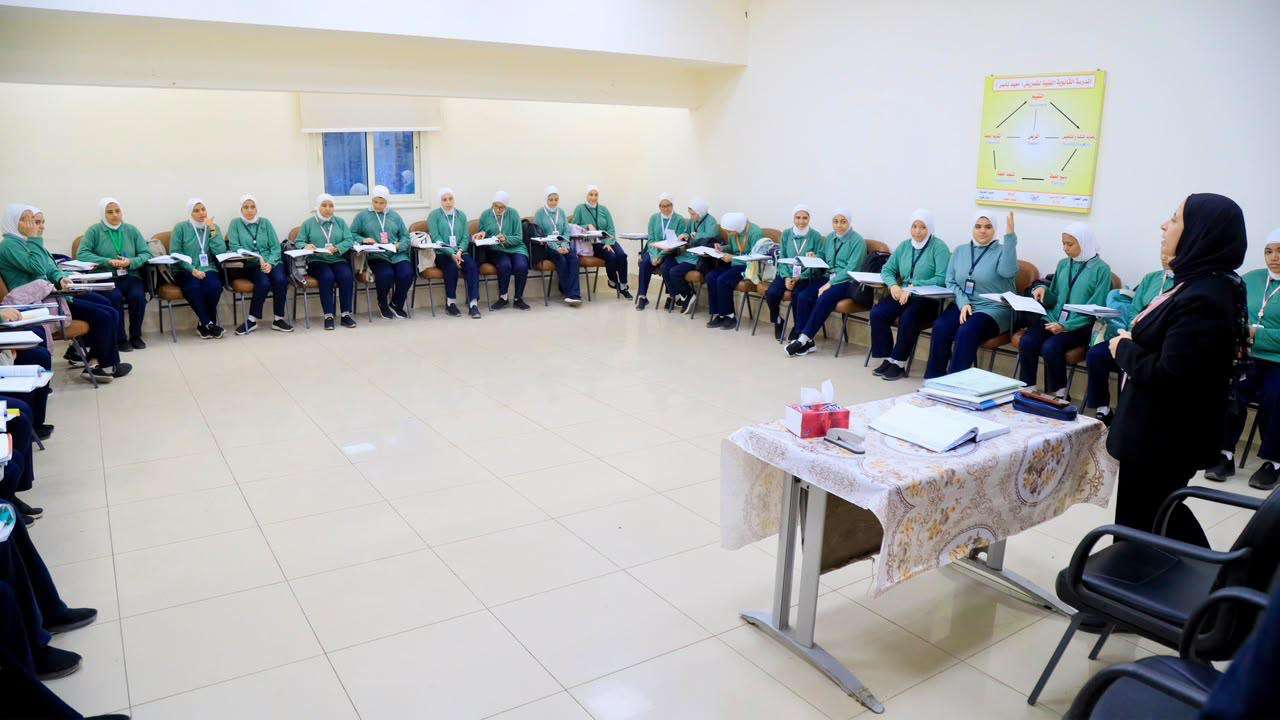
The tour included classrooms and laboratories, where the two ministers and the Japanese CEO reviewed the progress of studies for 240 female students across the three grades. The program combines academic qualification with practical training and runs for three years at the technical secondary nursing school, followed by two years at the institute.
They also visited the Nile Wing at Nasser Institute, including the intensive care units and patient rooms, with 50 beds in each, to review the level of medical services.
The agreement behind the visit
The visit comes under a cooperation agreement between the Ministry of Education and Technical Education and Japan’s Kyoto Ikueikan educational foundation. It aims to develop and establish 20 specialized schools: 10 for nursing, 5 for information technology and 5 for elderly healthcare. The goal is to transfer Japanese expertise and develop programs in line with modern professional standards and labor market needs.
AloJapan.com