

Osaka’s famous Glico Running Man is going to take a little run break: On November 30 its lights will turn off at midnight in preparation for its first major renovation in over 12 years.
Who Is the Glico Man?
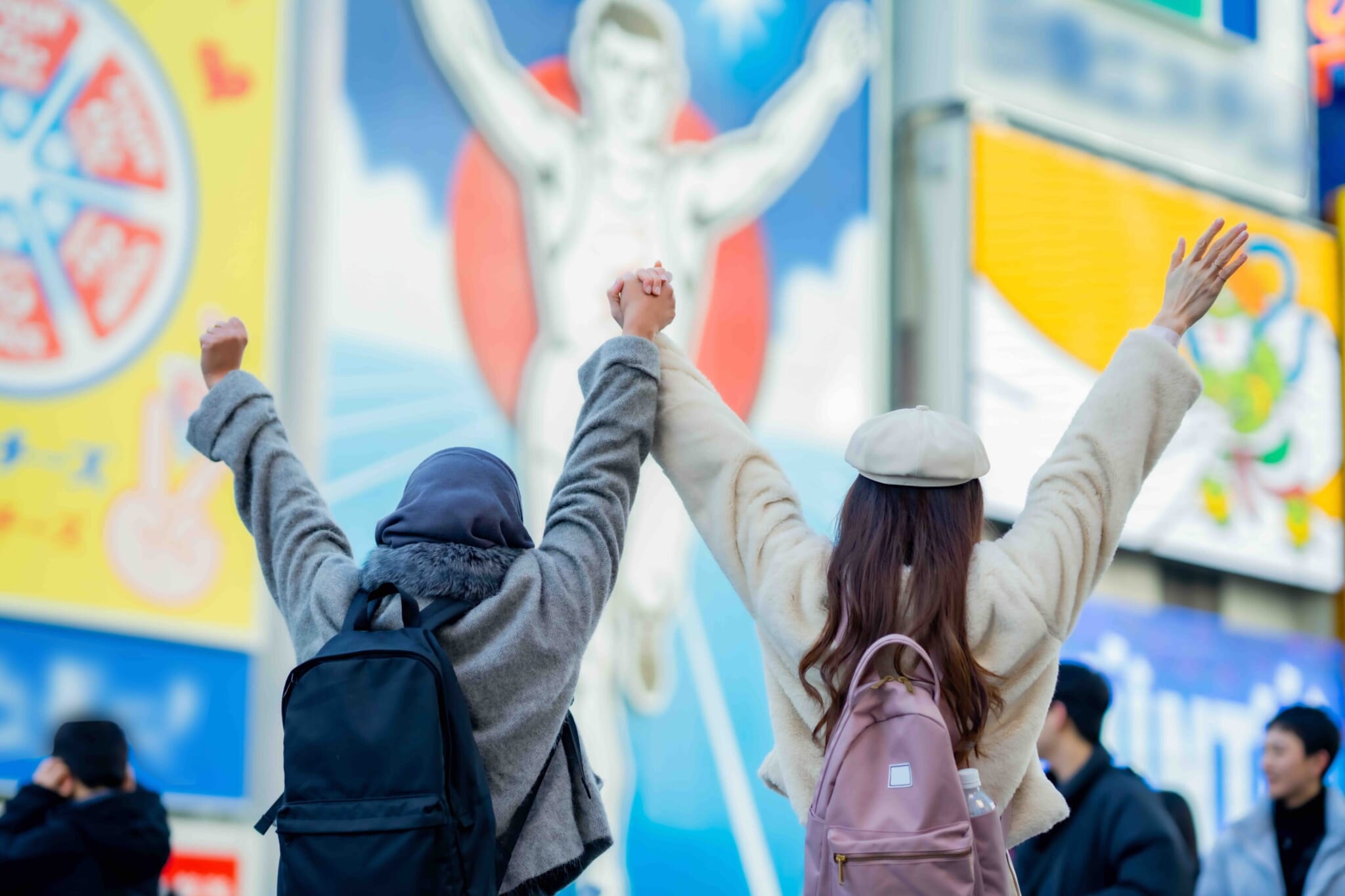
The Glico Man is the neon-lit heart of Osaka’s Dotonbori district; it’s welcomed millions of locals and visitors since its installation in 1935. The runner’s bright, victorious smile and outstretched arms have become iconic an iconic pose — one that countless visitors have replicated in photos over the years.
The current Glico Man is already the sixth-generation display, and the LED lights have deteriorated with age. Ezaki Glico Co., the confectionery manufacturer behind the iconic landmark (along with creating Pocky, Pretz, Papico and more), announced a temporary blackout, gearing up for a major overhaul that will stretch until spring 2027, when the latest signage will be unveiled.
The 2027 Renovation
While the exact design and visual layout of the upcoming signage is being kept tightly under wraps until its grand reveal next spring, Glico has confirmed several key details so far. Crucially, the Glico Man’s signature silhouette will remain entirely unchanged, so visitors will still be able to copy his famous pose.
The existing structure utilizes roughly 140,000 LED chips. The revamp will swap out older hardware for more up-to-date LED technology, boosting visual brilliance while significantly upgrading energy efficiency.
While construction is underway, the landmark will be hidden behind a protective banner, though company representatives are exploring more ways to keep visitors engaged during the shutdown. Perhaps a coverup with the Running Man on the banner — similar to the printed scenery in construction covers at Disneyland — will help keep tourists’ disappointment at bay.
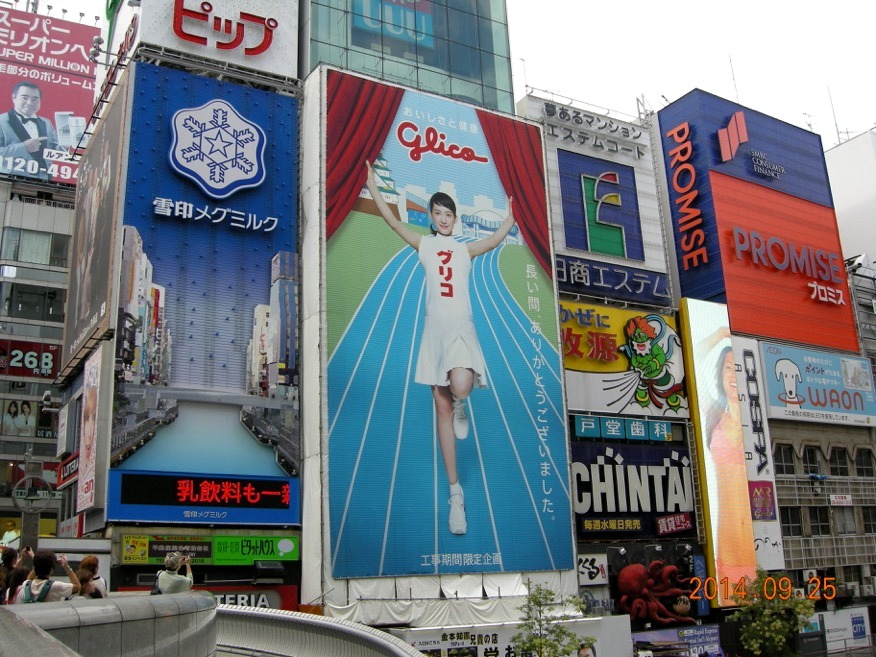
Actress Haruka Ayase stood as the “substitute runner” while the Glico Man was repaired in 2014 | Image courtesy of Wikimedia Commons
The last time the Glico Man disappeared for a 2014 renovation, a coverup featured actress Haruka Ayase as a daisou (代走), or “substitute runner.”
Beyond the physical upgrades, Glico is leveraging the project to shift its PR strategy. Corporate branding representatives noted that while the landmark enjoys universal fame as the face of Dotonbori, that recognition has not always translated into deep public awareness of Glico itself. As part of this refreshed corporate strategy, Glico is officially renaming its trademark logo from the “Goal-In Mark” to the “Glico Runner.”

The original Glico neon tower in 1935 | Image courtesy of Ezaki Glico Co.
The Legacy Behind The Man
The Glico Man has evolved dramatically over the past nine decades, mirroring Japan’s technological progress and changing urban design trends.
The first-ever display was a soaring 33-meter neon tower featuring the Glico name, a running man in six alternating colors and an intricate floral pattern that flashed at around 19 times per minute.
The first renovation came in 1955, when the sign was remade during the postwar reconstruction era. The Glico Man was installed in a bullet-shaped structure featuring a built-in balcony stage for live musical performances and puppet shows.
Glico Man’s third revival in 1963 came out with a new gimmick — a fountain display that pumped out 12 tons of water into the air, illuminated with 12-colored lights to create a vibrant rainbow geyser.

The fifth-generation Glico Man in 1998 | Image courtesy of Wikimedia Commons
In 1972, the fourth Glico Man incorporated the now iconic blue running track backdrop. Later in 1998, the fifth-generation sign integrated Osaka landmarks like Osaka Castle and Tsutenkaku Tower into its design.
The sixth and current edition of the Glico Man was unveiled in October 2014. It was the first version to utilize full-surface LED technology, allowing for more energy sufficiency compared to the neon lights. The LEDs also allowed for some fun occasional switches of scenery for the Glico Man’s run. Dynamic background displays would sometimes change to sunsets or Mount Fuji, or other famous global landmarks like the Eiffel Tower.

Dioramas of the five previous Glico displays at the Ezaki Memorial Museum | Image courtesy of Ezaki Glico Co.
If you happen to be in Osaka’s Nishiyodogawa Ward, it’s worth stopping by the Ezaki Memorial Museum, also known as the Glico Museum. There you can find dioramas of all iterations of the Glico Running Man.
As the sign transitions into its seventh generation, it continues to serve as more than just corporate advertising. We’ll be waiting to see where the Glico Man will run to next.
Related Posts
Updated On October 16, 2026
AloJapan.com