


Tokyo Photographic Art Museum (Photo by Takahiro Takiguchi/Stripes Okinawa)
Hidden in a corner of Ebisu’s high-end Yebisu Garden Place complex, is a museum dedicated to still images and the art of photography.
In a world where almost anyone with a cellphone considers themselves a photographer, it is refreshing to see the craft of photography is not forgotten among the many works displayed at the Tokyo Photographic Art Museum.
Founded in 1995, it is Japan’s first photography museum. It is also one of few photography and moving image museums in the world, according to its website.
The museum’s three galleries offer about 20 exhibitions a year, including thematic showcases from its vast collection of nearly 40,000 works. When my fellow writer from Korea and I visited, we purchased tickets to view the “Don’t think. Feel.” exhibit on the third floor.
The exhibit featured hundreds of photographs ranging from landscapes, still-life images and family photos, to processed works that had an almost oil painting finish, old views of Tokyo and regional town, some abstract pieces and videos. To appreciate the exhibition, we had to “feel” them rather than “think” about them.
Frankly speaking, I had never imagined that an exhibition of hundreds of mere photographs could be as fun as visiting a fine art museum. But the quiet gallery and variety of colorful and monochrome images transported me through different times and spaces.
Perhaps it was because photographs convey a stronger sense of realism than drawings, that helped me to immerse myself in each moment captured through the lens. So, when I went out of the galleries, I felt as if I had come back to this world after a short trip to another dimension.
I also saw the museum is unique, as it has a movie theater function. The first-floor video gallery is a movie theater and used as a venue for film festivals, making it a unique institution that serves as both an art museum and a hub for film culture.
After the exhibit, my coworker and I talked about the differences in museum culture between Japan and Korea. I learned from our conversation that while visitors in Japan are only looking at the displayed artworks from a distance in a quiet atmosphere, in Korea museums are more interactive and visitors can touch some works and admission is much cheaper.
After enjoying a photographic world, we exited back into the European feel of the surrounding Yebisu Garden Place, ready for more exploration.
– Takahiro Takiguchi
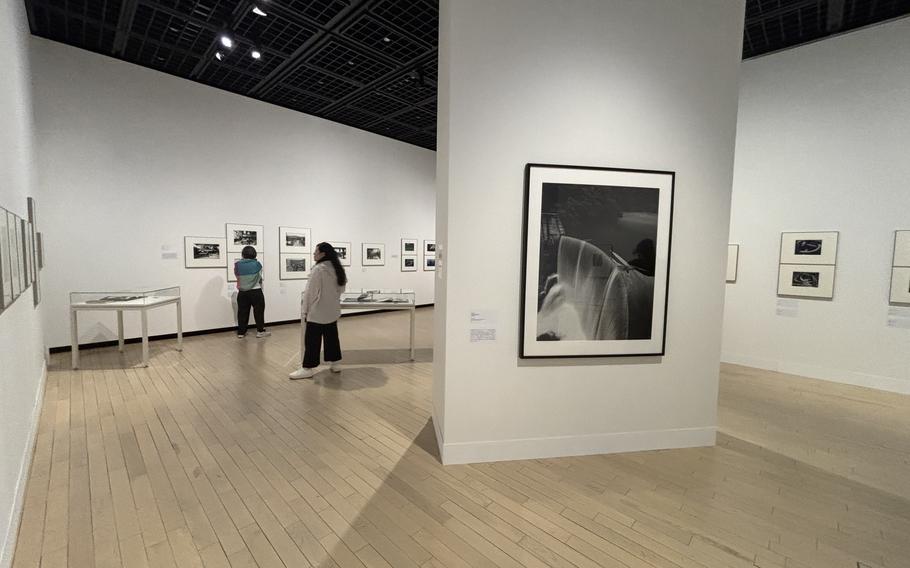
(Photo by Takahiro Takiguchi/Stripes Okinawa)
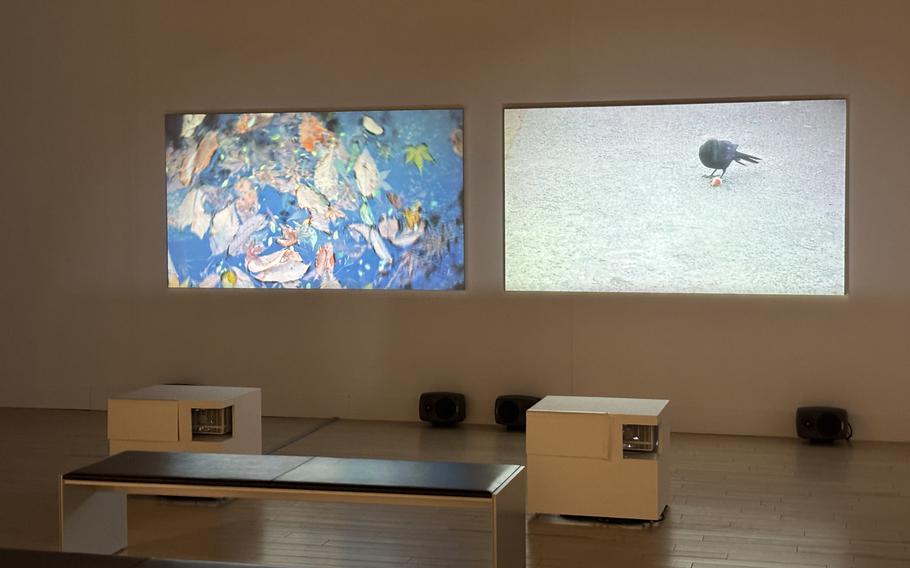
(Photo by Takahiro Takiguchi/Stripes Okinawa)
—–
What a 700-yen museum ticket showed me about Korea and Japan
The Tokyo Photographic Art Museum in Ebisu looks polished and modern, so when I heard the ticket was 700 yen, I expected something spectacular inside.
The exhibition was called “Don’t think. Feel,” a line from Bruce Lee, and the photographs were genuinely beautiful. They were old and tender, filled with ordinary faces and moments from everyday life. They were the kind of images that make you slow down and look closely.
And yet, moving through that small, quiet room, I caught myself searching for something else. Where was the immersive media installation, the dramatic lighting or the hands-on experiences? Was there a bold reinterpretation around the next corner or some unexpected moment that would finally make me gasp? A part of my mind kept muttering: “Where’s the payoff? Come on, show me something more.”
But the photographs simply hung on the walls while visitors moved slowly from one image to the next. The room was full, too. No one else seemed to be waiting for the exhibition to prove anything. That was when the difference hit me. It was not something about Japan. It was something about me.
Why was I waiting to be dazzled?
I grew up in Korea, where many of the great cultural spaces cost nothing. Many national museums in Korea are free and royal palaces cost only a few thousand won. Public museums, memorials and historic sites are free or cost very little. These are not modest places. They hold national treasures and thousands of years of history inside large, modern spaces that are clean, well maintained and open to everyone.
People do not always visit with a serious plan to study history. Parents bring their children because a museum is free and indoors. People stop to use the restroom, drink some water or rest between plans. Museums and historic sites are part of public life. That means the country has already decided that access to culture should not depend on the visitor’s wallet.
Korean museums also set a high standard for how culture is presented, whether admission is free or not. Visitors can touch, listen, play or step into the history through immersive media art, hands-on activities and interactive displays. Photo zones are common and museum shops increasingly sell trendy goods inspired by cultural artifacts that attract younger visitors. A museum in Korea is not simply a place where people stand quietly in front of old things. It can also be a place where you take part in and walk out seeing the old things differently.
When so much is already available for free, I had come to expect something extra when I did pay for an exhibition, such as a rare collection from overseas, a bold visual concept, a new interpretation or an experience I had not seen before. A paid exhibition had to show me what had been added. That was the standard I brought into the room in Ebisu without even noticing it.
A different idea of value
I had a similar reaction at the Japan Folk Crafts Museum where I paid 1,500 yen to see pottery and woodwork. Again, I found myself waiting for the collection to prove its value. Many of the pieces were ordinary objects made for everyday use. Soetsu Yanagi, who founded the museum, built his philosophy around finding beauty in ordinary crafts that others had overlooked.
Standing in front of the display cases, I realized how unfamiliar that idea felt to me. The museum was asking me to appreciate what had been kept. A collector’s eye, a room of chosen objects and the time to look at them were the whole experience.
Back home, I am used to walking through rooms of ancient ceramics and historic objects at national museums for free. That may be why paying 1,500 yen for a quiet, focused collection like this felt a little strange.
Japan, at least in the museums I visited, seemed comfortable letting antiques and art pieces stay as they are. At first, I thought this was simply a difference in exhibition style. But the more I thought about it, the more it seemed connected to how each country treats objects from the past.
What a country has the room to keep
Preservation requires more than appreciation. It requires the ability to keep something even when it does not serve a practical purpose. In many wealthy countries, 100 year-old houses can be treasured, a grandparent’s things from the attic can become family heirlooms, and an inherited coin collection can be a point of pride.
Korea passed through occupation, division, war, poverty and decades of rebuilding at extraordinary speed. For decades, the new was proof that life was improving. Traditional homes and old neighborhoods were lost during colonial rule and war, but many also disappeared as Korea developed. When a country is fighting to survive and to grow, the old things can look less like something to preserve and more like something standing in the way.
That does not mean Korea did not value its heritage. For a while, preserving the old was not the first priority. As the country became more stable, it had more room to keep and take care of old things.
Before Daereungwon in Gyeongju was developed into a historic park in 1973, local children grew up climbing and sliding down the ancient royal tombs as if they were neighborhood hills. When restoration of Gyeongbokgung Palace was underway in the 1990s, the Japanese Government-General Building, which stood directly in front of the palace, was finally torn down half a century after liberation. Ikseon-dong, the hanok neighborhood that attracts crowds today, came close to being cleared for redevelopment before those plans were eventually dropped.
Preservation might not be only a matter of taste. It takes stability, money, time and the power to defend your own ground. For much of modern history, Korea had more urgent things to do and once it had more room to preserve, the way people looked at old things began to change.
What the ticket was really for
The museums I visited in Japan made me notice a kind of value I rarely think about. A vintage photograph or an ordinary bowl does not always need a new interpretation or an impressive display around it. Sometimes the fact that it was kept is enough. It can sit quietly in a room and still connect us to the people and lives that came before us. Maybe the 700-yen ticket gave me something I was not looking for: a different way of seeing what was already there.
– Hyemin Lee

(Photo by Hyemin Lee/Stripes Okinawa)
Things to know
Location: Within Yebisu Garden Place (1-13-1 Mita, Meguro-ku, Tokyo)
Hours: Tue. – Sun. 10 a.m. – 6 p.m. (Thu. and Fri. – 9 p.m.) (closed Mondays)
Admission: Various exhibitions, check the website
Phone: 03-3280-0099
Website
AloJapan.com