
Net loss
Famous planners were even invited from the first year of Jeonglia, Okinawa, but
Traffic accessibility, expensive admission fees, and the number of visitors fell far short of expectations
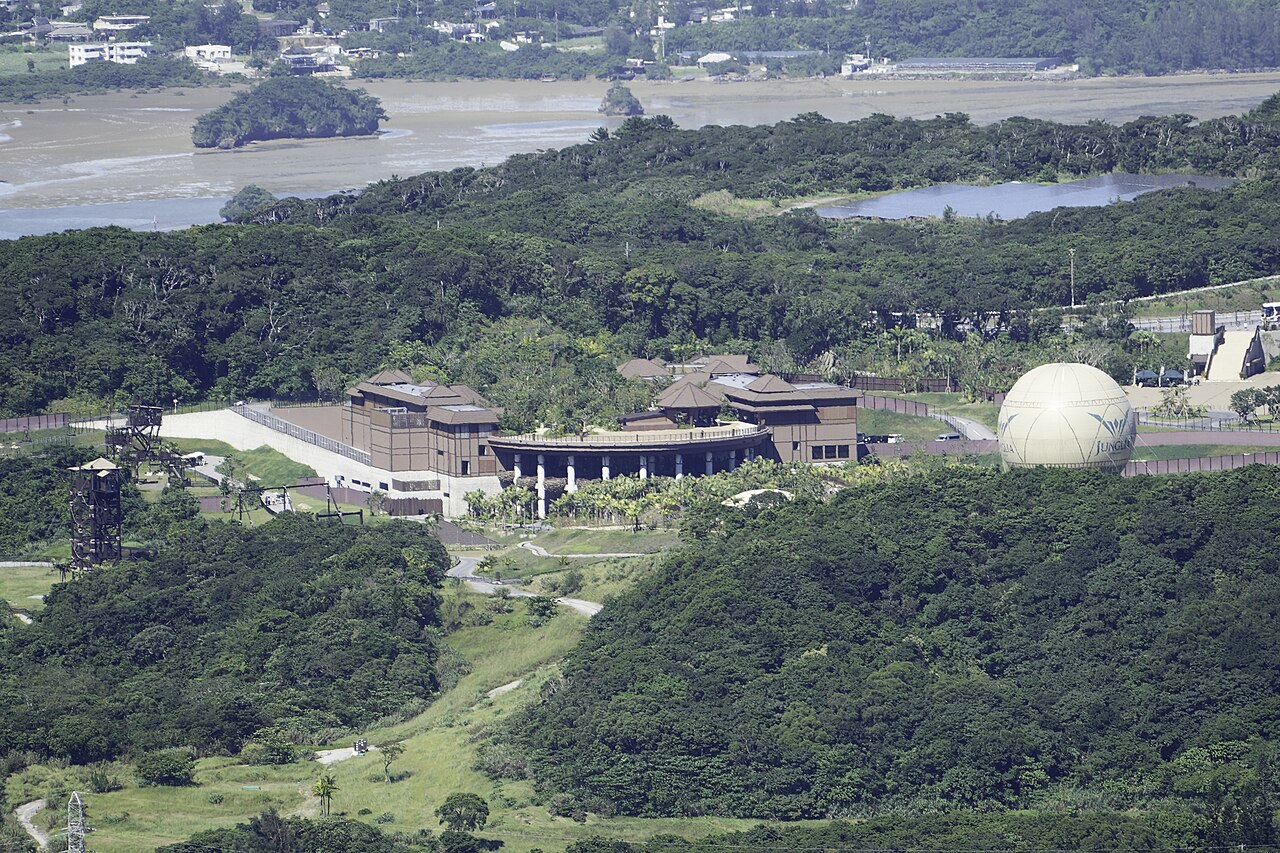
![Junglia Okinawa view. [Wiki Media Commons]](https://www.alojapan.com/wp-content/uploads/2026/09/news-p.v1.20260929.f9571d7edf9143f2a5a92a54c3d830d7_P1.png) 사진 확대 Junglia Okinawa view. [Wiki Media Commons]
사진 확대 Junglia Okinawa view. [Wiki Media Commons]
Junglia Okinawa, a large theme park in Okinawa, Japan, has suffered a large deficit since its first year. About 70 billion yen (KRW 605 billion) was invested as an expected stock to revive local tourism, but the number of visitors was far below expectations.
According to the Japan Times and Gigi News Agency on the 26th, Japan Entertainment Holdings, the parent company of the Junglia operator, recorded a net loss of 17.3 billion yen (about 149.5 billion) in its 2026 settlement. This is the first settlement since the theme park opened in July last year (2025.7~2026.6).
The theme park was built on a scale of about 60 hectares across Nakizin Village and Nago City in northern Okinawa. With existing Okinawa tourism concentrated in the southern city of Naha and beaches, high expectations were raised as facilities to extend tourists’ stay and revitalize the northern region’s economy.
However, the tickets did not sell as much as expected. Since its opening, the number of visitors has been only about 1 million until July this year. The parent company held a general shareholders’ meeting in Naha City on the 25th and explained its financial situation and future business plans. As the financial burden grows from the first year, it is evaluated that the management constitution needs to be fundamentally improved.
However, it may not be accurate to view 17.3 billion yen as a total deficit of theme parks. The amount is a net loss of Japan Entertainment Holdings, the parent company of the operator, and according to local reports, the net loss of Japan Entertainment, the subsidiary that actually operates the theme park, is about 8.9 billion yen (about 76.9 billion won). Of course, this amount is also large.
Junglia is a project organized by Katana, an Osaka-based marketing company led by Tsuyoshi Morioka, a renowned marketer in the Japanese theme park industry. CEO Morioka became famous for his participation in the management recovery process of Universal Studio Japan (USJ).
For this reason, expectations were high that the Okinawa tourism landscape would be changed even before the opening. The strategy was to differentiate it from existing marine tourism by using rides using jungle and nature, dinosaur experiences, and spas.
However, since the opening, evaluations over transportation accessibility, waiting time, and price competitiveness have been mixed, and they have not attracted the expected level of visitors. In fact, the admission fee is quite expensive, and the daily admission ticket for ordinary adults goes up to 8,800 yen (about 76,000 won) including taxes and 11,550 yen (about 100,000 won) including spas.
The company drew a line on the possibility of business interruption or service disruptions. CEO Takeshi Kato expressed his position to continue normal operations, saying, “It does not affect customer service or business relationships.”
AloJapan.com