
The rapid growth of inbound tourism in Japan is increasing greenhouse gas emissions and pressure on ecosystems, complicating the country’s efforts to achieve carbon neutrality by 2050. As The Japan Times reports, more than 40 million foreign tourists visited Japan over the year, while local communities and businesses are seeking ways to reduce the industry’s environmental impact.
In a 2020 study, researchers at Tokyo City University estimated the Japanese tourism industry’s annual emissions at 136 million tonnes. By comparison, the country’s total emissions in 2019 amounted to 1.1 billion tonnes. According to calculations by Yusuke Kitamura, a researcher at Waseda University, transport accounts for more than half of the tourism sector’s emissions.
Air travel and impact monitoring
Temsgen Assefa, chief consultant at JTB Tourism Research & Consulting, noted that reducing emissions from air travel is particularly difficult for island nation Japan, as nearly all foreign visitors arrive by plane. According to the U.S. Environmental Protection Agency, a direct round-trip economy-class flight from London or Chicago to Tokyo adds more than 3,000 kg of greenhouse gases to the atmosphere per passenger.
In 2020, the Japan Tourism Agency, with the participation of JTB Tourism Research & Consulting, developed the Japan Sustainable Tourism Standard for Destinations, JSTS-D. It contains guidelines for reducing emissions, water consumption and pollution, preserving cultural heritage, residents’ attitudes and managing tourist flows. Dozens of locations have joined the program, including Niseko and Otaru in Hokkaido, Tokyo’s Sumida district and the entire Okinawa Prefecture.
More current news is available on the UA.News Telegram channel Telegram.
In 2023, Gifu Prefecture established Japan’s first observatory of the UN Sustainable Tourism Network INSTO. It covers more than 10,000 square kilometres and 1,000 accommodation facilities. The first report found that more than 80% of tourists travel around the prefecture in private cars, after which authorities identified the development of electric transport and a charging-station network as one of their priorities.
Local initiatives
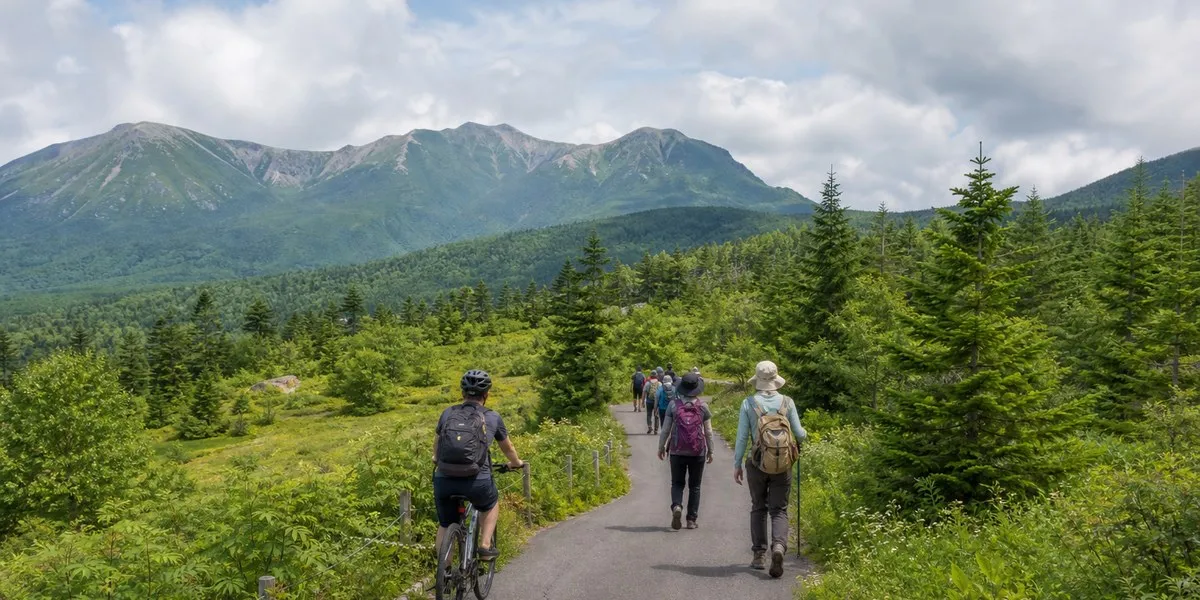
The mountainous Norikura Kogen area in Nagano Prefecture became the country’s first Zero Carbon Park in 2021. Its plan provides for the use of solar energy and local biomass, reducing plastic use and developing sustainable tourism. Niseko has a subsidy program for solar panels, energy storage systems, energy-efficient equipment and new buildings with high environmental standards. Since 2024, it has provided 42 subsidies worth approximately 24 million yen.
The number of Japanese hotels with international Green Key eco-certification has increased to 41, compared with seven in 2024. The Hoshinoya Karuizawa resort in Nagano generates most of its energy through hydropower and the reuse of hot-spring heat, and also composts food waste. In Okinawa, tourists are offered the opportunity to combine diving with the restoration of coral reefs, which are affected, among other things, by wastewater, sediment pollution and rising sea temperatures.
Read us on


Download our app


AloJapan.com