

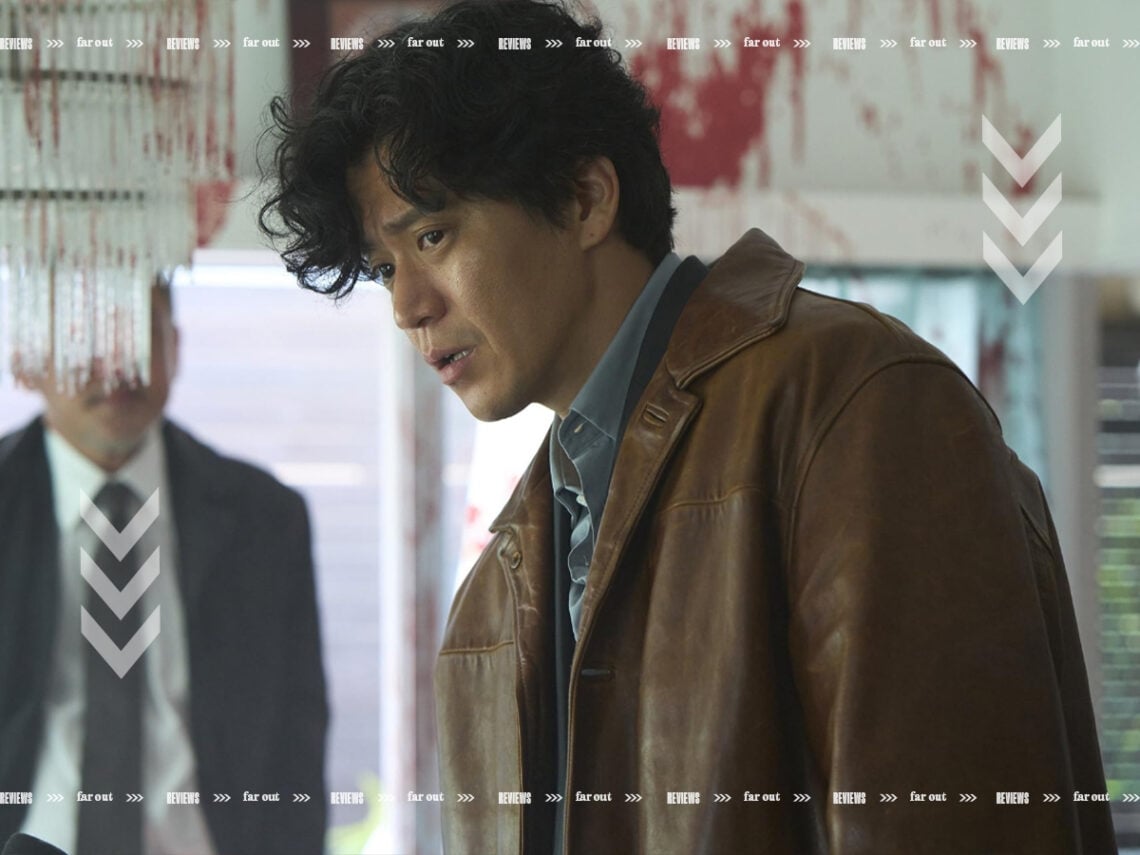
Credit: Far Out / Neon / Sony Pictures Entertainment Japan
Sat 26 September 2026 23:30, UK
Takashi Miike – ‘Bad Lieutenant: Tokyo’
Takashi Miike takes over the Bad Lieutenant franchise with a sequel that doesn’t live up to the work of Abel Ferrara and Werner Herzog.
There isn’t any cinematic saga more unusual than the semi-anthology series of Bad Lieutenant films, which has now allowed for three distinctive ‘vulgar auteurs’ to develop gritty, nasty crime thrillers with transgressive content. The original 1992 was a rare NC-17 release and earned significant blowback for its lurid violence, sexual content, and depictions of drug abuse, but the film had its champions who claimed it was a profound look at guilt and faith, Martin Scorsese and Roger Ebert chief among them.
While it was a definitively standalone story, the film was expanded by the completely independent 2009 spiritual successor Bad Lieutenant: Port of Call New Orleans, a Werner Herzog experiment that saw Nicolas Cage taking over for Harvey Keitel. Although it’s heavily featured in any YouTube mashups of ‘crazy Cage’ moments, Port of Call New Orleans is a thoughtful consideration of post-Katrina Louisiana that grounds a pulpy premise within a startlingly real world. While Ferrara decried it, it has become one of the most beloved cult classics of the early 21st century.
To hand over the franchise to a filmmaker like Takashi Miike made sense, given that he is a similarly polarising, ambitious director who makes non-mainstream choices and hasn’t been celebrated by any formal award ceremonies. Bad Lieutenant: Tokyo is just as disconnected from the other films, but it does introduce another self-destructive law enforcement officer in Lieutenant Yabuki, played by Shun Oguri, a drug-addicted hedonist who is tasked with rescuing the daughter, played by Liv Morgan, of a powerful political figure. He’s paired with the FBI agent Gwen Birgssen, played by Lily James, an unlikely ally who helps mount a defence when they are hunted down by a sadistic assassin.
The first two instalments presented an anomaly within the realm of genre filmmaking, as they took familiar anti-hero archetypes and set them within hostile, degrading stories that were cosmically connected to the cities they were set in. Both films are oddly beautiful thanks to the presence of an extracurricular presence: for Ferrara, it’s faith, and for Herzog, it’s American exceptionalism. While Miike can certainly make a neon-drenched underworld thriller that visually adheres to the franchise’s past, it’s all for the sake of a fairly straightforward anti-hero story that offers few surprises.
Miike conceives of a convoluted criminal conspiracy that rarely frames itself as a specifically Tokyo-set story. There are allusions to class and gender pressures, but they play second fiddle to a fair amount of brooding and monologues with none of the first two films’ sharp dialogue. He has always been a filmmaker more interested in visuals than character, but Tokyo feels more like an homage to neo-noir films than a totally unique one.
The biggest disappointment the main characters don’t work, which could be the result of miscasting, unclear direction from Miike, or a script that simply didn’t bring enough ideas to the table, but it once again feels like the film conceives of the type of characters who would be in a Bad Lieutenant film, rather than creating compelling anti-heroes in which to build the world around.
Oguri is a charismatic actor whose given a low-energy part that asks him to bum around and inhale any illicit substance in his presence, and it’s unfortunately going to be prepared to his predecessors in a way that does him no favours; details about his past aren’t compelling or gripping enough for him to be as rawly emotional as Keitel, and he doesn’t have Cage’s madcap energy. James seems to understand an assignment to be in a very different, much pulpier, glitzy work of exploitation, and her kineticism is at odds with the bland malaise within the narrative. Beyond the fact that her accent is shaky, she is let down by a script that executes the worst clichés about women in crime films.
There are a few memorable scenes of excessive violence that allow Miike to revel in the absurdity of the premise, but Bad Lieutenant: Tokyo is oddly lethargic, lacking the scene-to-scene anticipation needed to feel like a truly modern production. Even when looking beyond the stylised, post-ironic appeal of the previous two entries in the franchise, a film dealing with power and justice in the 2020s had ample room to say a lot. It might make for a fun late-night ‘midnight madness’ experience, but it’s not going to be held in the same regard as the other two films that share its title.
ADD AS A PREFERRED SOURCE ON GOOGLE 
AloJapan.com