
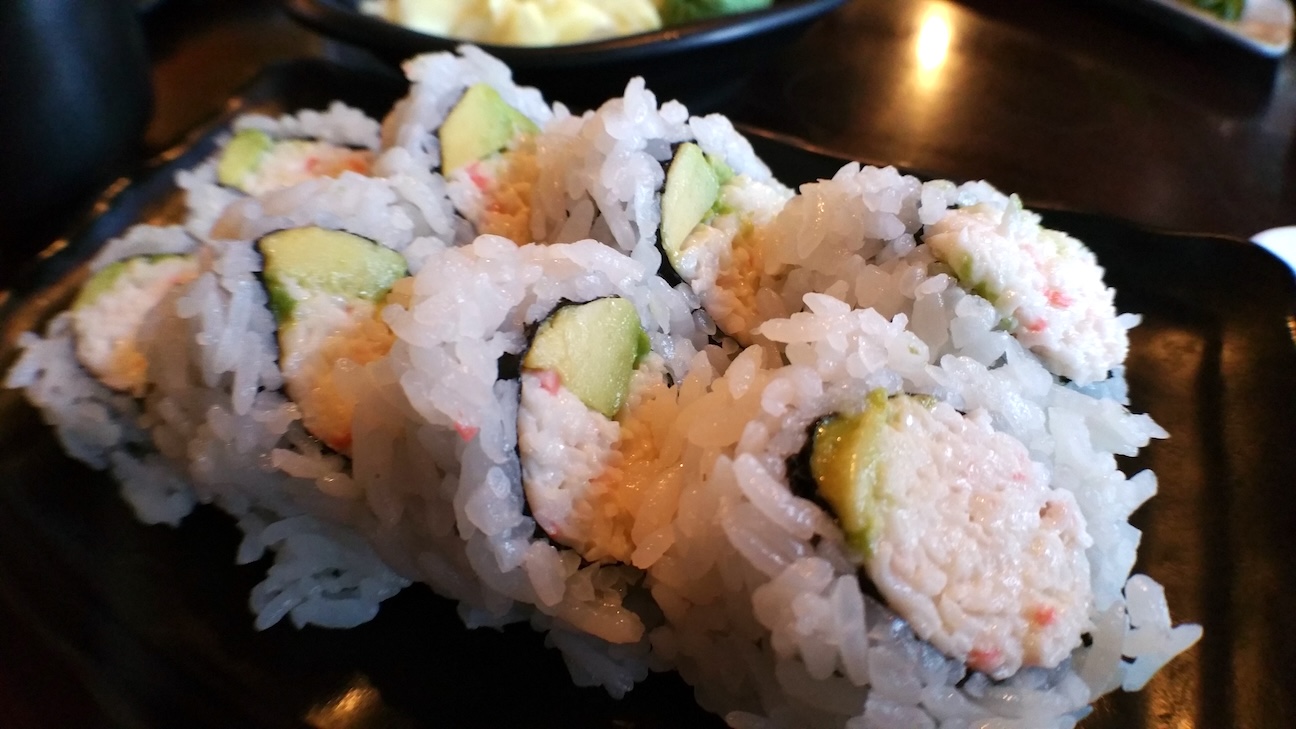
“California Roll: The Rise of American Sushi” from filmmakers Bill Sharp and Sam Epstein
documents how the North American variation of sushi made the cuisine popular outside Japan.
By Gil Asakawa, P.C. Contributor
There are conflicting origin stories for the iconic California roll, arguably the most popular, albeit arguably not authentic, type of sushi on the menu of every Japanese restaurant in the U.S.
The California roll is testament to the idea that food is the gateway to culture. Some historians say that the California roll, sometimes descriptively called the “inside-out roll,” was invented by a Japanese sushi chef in Vancouver who eventually received recognition from the Japanese government for his creation. But others give credit to a sushi chef in Los Angeles.
The chef in Canada reportedly came up with the roll in the early 1970s because he saw that many customers were put off by both the thought of eating raw fish and the sight of nori (seaweed) around a cylinder of sushi rice. By turning the roll inside out, he hid the nori and used crab meat and avocado instead of tuna.
But years earlier in the mid-1960s at Tokyo Kaikan, a now long-gone Japanese restaurant in Los Angeles’ Little Tokyo, chef Ichiro Mashita did a similar sleight of hand to deal with a shortage of otoro, or “fatty tuna.”
He sliced up strips of avocado — a very California ingredient — as a substitute that had a similar soft, melty mouth feel and accommodated his non-Japanese customers who had an ugly habit of peeling off the outside layer of nori because they thought it looked gross by simply rolling it under the rice layer so small-minded diners wouldn’t see it (or peel it).
The new documentary film “California Roll: The Rise of American Sushi” pays homage to the roll and focuses on the L.A. origin story, sharing vintage footage of Japanese restaurants of the day, as well as makes the case for the dish as the key element in popularizing sushi in America.

“California Roll” documents the history of how the titular dish became the “gateway drug” that turned America on to sushi.
The documentary is filmed by Bill Sharp and Sam Epstein, two co-producers of HBO’s Primetime Emmy-winning “100 Foot Wave,” a documentary series about a big-wave surfer. So, perhaps not surprisingly, “California Roll” opens with a long shot of surfers on the waves, then queues Danny Kwock, a pro surfer and SoCal scenemaker who says he was raised in Hawaii, so he knows about sushi.
“It’s not that cool, it’s kinda like that old-school stuff your grandma makes in Japan,” he says in the first 30 seconds of the film. Then, he recalls moving to Southern California and facing racism, being called “Jap, Nip, this, that, teasing me.”
That led to being embarrassed of his Okinawan/Dutch heritage, and Kwock says he wanted McDonald’s instead of sushi. By the time he was a teenager in the 1980s, when all of a sudden Americans discovered sushi as a fad, he said the popularity of sushi was “more insane to me” than his growing fame as a surfer.
The film segues into a 1980s montage of Hollywood celebs showing their appreciation of sushi, and notes in an archival news clip that more than 300 sushi bars have popped up in the area.
Chefs and representatives from the Japanese hospitality industry are also interviewed, waxing nostalgic about the explosion of popularity all across California. Kwock asks the question, “The thing that’s teased about in school and now everybody thinks it’s rad and cool? Whoa, man, how’d that happen?”
Next, the documentary focuses on a specific restaurant not in Little Tokyo or hotbed of the Japanese community, but a Newport Beach bar, California Beach Rock & Roll Sushi, where Kwock happily hung out.
The film interviews Japanese chefs there to emphasize the party atmosphere that was fostered that helped lubricate non-Japanese curiosity in sushi such as making California rolls (and other more traditional nigiri sushi) and serving sake bombs to the public, including celebrity diners and drinkers.
As punk rock, post-punk and MTV brought a new wave of rock culture to the surf community, the documentary captures the surf and sushi cross-pollination. Then, the focus shifts to the Japanese American National Museum and the history of pre-war Japanese in L.A. and the incarceration of Japanese Americans during WWII.
Emily Anderson, a Japanese American former curator at JANM, guides the filmmakers through the JA experience and puts sushi in its Little Tokyo context, before, during and after incarceration.
Halfway into the film, she explains the history of Kawafuku, considered the first restaurant in Los Angeles to install a sushi bar and the refrigerated cases for displaying fresh sashimi.
That’s where Tokyo Kaikan and the invention of the “Uramaki,” or inside-out roll, makes its first official appearance as the California roll.
Now that sushi is available everywhere in the U.S. (and other countries) at supermarkets, not just Japanese restaurants, Anderson, who is Japanese American, makes the point that the California roll was the gateway sushi that led people to more authentic Japanese fare.
“It takes some courage or curiosity to try something that you haven’t had before,” she says in the film. “Things like California roll — it’s wonderful that someone tries that first and likes it and they’re like, ‘OK, that wasn’t bad. Let me try a roll with some raw fish in it.’”
That process of trying foods like the California roll and teriyaki chicken — another dish that is more an American invention than Japanese — is what connects Americans and Japanese, Anderson notes.
“They’re the gateway foods to the more hardcore things, but they’re also gateways to people learning Japanese language or developing an interest in the histories of Japanese immigrants in the United States, and a lot of those people show up in Little Tokyo every day and have made this a very busy, popular place,” Anderson remarks.
“California Roll: The Rise of American Sushi” will be screening on the film festival circuit, beginning with the Newport Beach Film Festival in October.
AloJapan.com