

Americans have been warned of potential travel disruption in Guatemala as the Fuego volcano shows increased activity, while a powerful typhoon has also prompted alerts for U.S. travelers in Japan.
The U.S. State Department’s Consular Affairs arm issued a natural disaster alert for Guatemala on Wednesday, citing reports from the country’s volcanic monitoring agency, the National Institute of Seismology, Volcanology, Meteorology, and Hydrology (INSIVUMEH), of a significant increase in emissions from the Fuego volcano. Officials said the volcano is ejecting ash, rocks and hot gases, with activity expected to intensify.
Authorities warned that departments including Sacatepéquez, Escuintla and Chimaltenango could be affected. Operations at Guatemala City’s La Aurora International Airport may also face temporary disruptions due to ash and wind conditions.
Read More on News
Americans in the area have been advised to remain alert, monitor local updates and prepare for possible travel delays, as officials continue to track the developing situation.
Meanwhile, Americans in Okinawa have been advised to stock up and seek shelter as Typhoon Dolphin is expected to affect the region beginning August 6, with disruption lasting until Sunday.
The U.S. Embassy and Consulates in Japan advised people to stay indoors amid “extremely high winds, dangerous storm tides, heavy rainfall, possible flooding, and landslides” expected.
What Is Volcán de Fuego?
Volcán de Fuego, also known as the Fuego volcano, is one of Central America’s most active volcanoes and is located about 10 miles southwest of Antigua Guatemala, one of the country’s most popular tourist destinations.
The volcano erupts frequently, often producing ash plumes, lava flows and fast-moving currents of hot gas, ash and rock known as pyroclastic flows. Communities on the volcano’s slopes regularly experience ashfall during periods of elevated activity, while stronger eruptions can force road closures, evacuations and disruptions to air travel.
The latest alert comes after Guatemala’s volcanic monitoring agency reported a significant increase in emissions from Fuego. Officials have already suspended classes in several nearby municipalities and restricted access to areas around the volcano, and around 1,700 people have been evacuated to shelters.
Fuego’s activity has had deadly consequences in the past. In June 2018, a major eruption sent pyroclastic flows racing into nearby communities, killing hundreds of people and becoming one of Guatemala’s worst natural disasters in recent history. The disaster highlighted the danger the volcano can pose to residents living in surrounding valleys and towns.
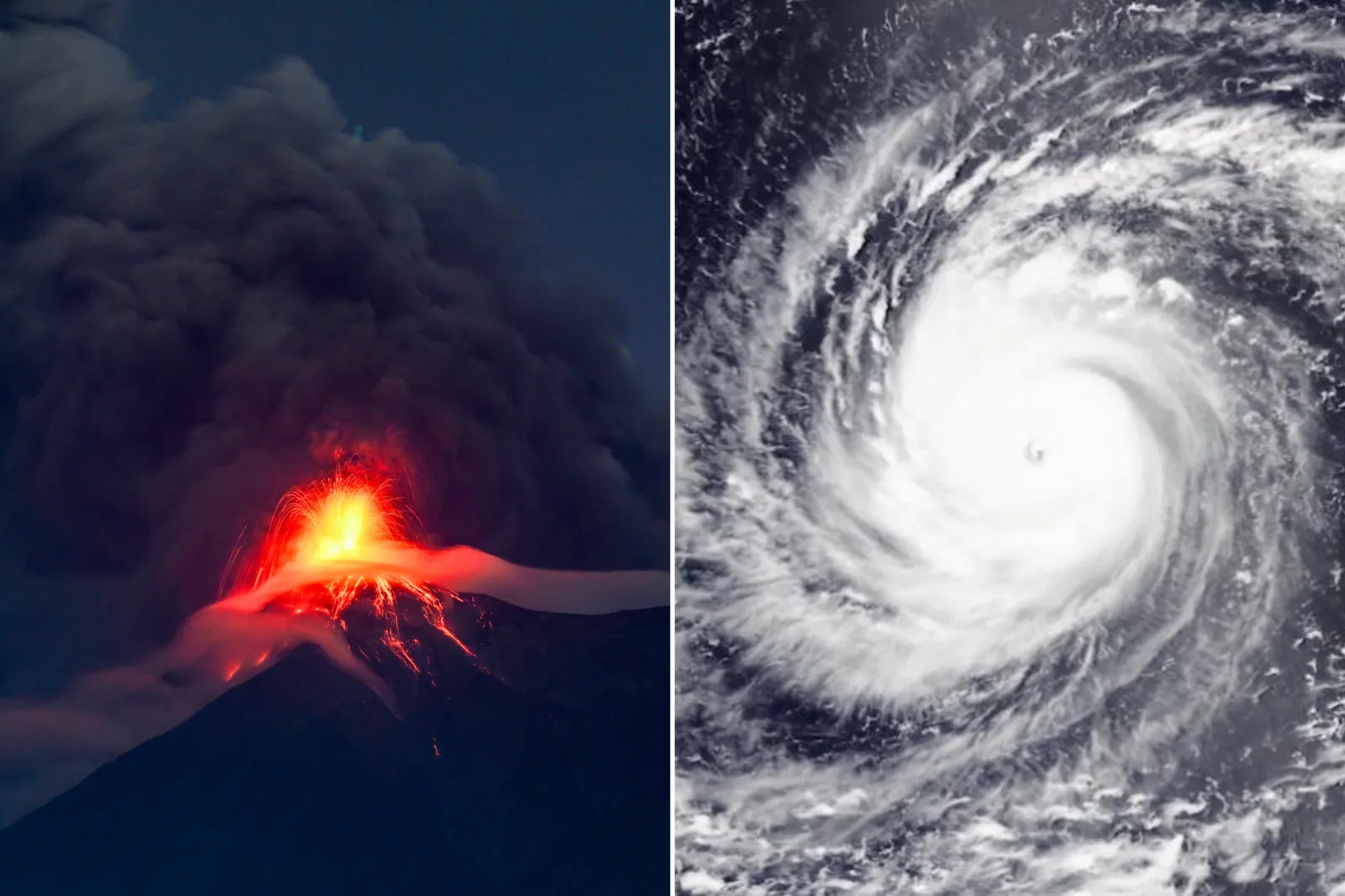
GETTY / JOHAN ORDONEZ / NOAA
What Is Typhoon Dolphin?
Typhoon Dolphin is a powerful tropical cyclone that has strengthened over the western Pacific and is tracking toward the main island of Okinawa, prompting weather alerts and travel warnings for parts of the country. On July 30, the typhoon reached category 5 strength, according to NASA’s Earth Data published on July 31, with maximum sustained winds of 165 miles per hour (mph). As of August 6, the typhoon has sustained winds of 90 mph, according to Zoom Earth, an interactive weather map and hurricane tracker.
Typhoons are the Pacific equivalent of hurricanes and can cause widespread disruption to transportation, power supplies and daily life, particularly in coastal areas. Even after a storm’s center passes, dangerous surf, flooding and strong winds can continue for days.
Which Areas of Guatemala Are Affected by the Fuego Volcano?
The U.S. Embassy in Guatemala said in an alert that the departments of Sacatepéquez, Escuintla and Chimaltenango could be affected by volcanic activity and ashfall. The Guatemalan Ministry of Education has suspended classes in several municipalities, including San Juan Alotenango, Escuintla and Yepocapa.
Authorities have also restricted access to Acatenango Volcano, Fuego’s crater, and an area known as El Camellón because of the ongoing eruption.
“Guatemala’s National Institute of Seismology, Volcanology, Meteorology, and Hydrology (INSIVUMEH) volcanic surveillance network is reporting a significant increase in emissions of the Fuego volcano,” the embassy said in its alert.
Could Flights and Travel Be Disrupted?
While Guatemala City’s La Aurora International Airport remained open as of Wednesday, U.S. officials warned that operations “could close temporarily due to ash and wind conditions.”
The embassy also noted that RN-14 between kilometer 83 and kilometer 103, a key route between Escuintla and Alotenango, has been closed because of the volcanic activity.
“American citizens are advised to stay alert, expect travel delays, and monitor local conditions,” the embassy said. U.S. travelers were urged to monitor local emergency agencies and airline updates as conditions evolve.
The embassy further advised travelers to avoid affected areas, verify flight schedules directly with airlines, and be aware that navigation apps may not reflect road closures or areas impacted by volcanic emissions.
In Japan, officials are also warning that Typhoon Dolphin could disrupt transportation networks, including flights, ferries and local transit services, as strong winds and heavy rain move across affected areas. Travelers have been urged to check with airlines and transport operators for cancellations or delays before setting out.
The U.S. Embassy and Consulates in Japan advised Americans to remain indoors where possible, keep electronic devices charged and maintain adequate supplies of food, water and medication in case hazardous weather conditions make travel difficult.
Contact Newsweek editors on this story: Rebecca Flood and Emma Lee-Sang
AloJapan.com