
23 July 2026, Philippine: I was a fresh university graduate in forestry in 2006 when I first heard the Kyoto Protocol being discussed in a real-world setting—not in a classroom, but in what we typically call a “workshop.” It would become a recurring topic throughout my career, although under different names and in different contexts. The Kyoto Protocol was a legally binding treaty among developed nations adopted during the third Conference of Parties or COP in 1997. The COP is the supreme decision-making body of the UN Framework Convention on Climate Change (UNFCCC), which was established in 1992 and will have its 31st meeting on November 9-20, 2026 in Antalya, Türkiye. The intent of the Kyoto Protocol, as well as other global climate agreements, is magnanimous: to reduce carbon emissions and limit global warming. Then came 2016, when a new agreement entered into force. By then, the collective understanding had shifted. We realized that climate change is a shared challenge, and unlike the Kyoto Protocol, the Paris Agreement carries the commitments of both developed and developing countries to limit emissions and keep global warming well below 2°C. Between Kyoto and Paris, however, equity remained a central issue: who emits more or less, and who suffers the most.
Fast forward to 2026, and the Philippines continues to be an active player in these global commitments. The country is among the 159 signatories to the non-binding Global Methane Pledge, which aims to contribute to a collective effort to reduce anthropogenic methane emissions by at least 30 percent from 2020 levels by 2030. Part of this endeavor is improving the measurement of methane emissions in the Philippines.
Methane is one of the short-lived climate pollutants. According to the Climate and Clean Air Coalition, although its atmospheric lifetime is only about 12 years, methane has a warming effect up to 86 times greater than carbon dioxide over a 20-year period. It accounts for roughly 30 percent of current global warming and also contributes to the formation of ground-level ozone.
The special interest in reducing methane stems from how quickly it breaks down in the atmosphere. Unlike carbon dioxide, which can remain for centuries, reducing methane emissions offers one of the fastest ways to slow the rate of global warming within our lifetime.
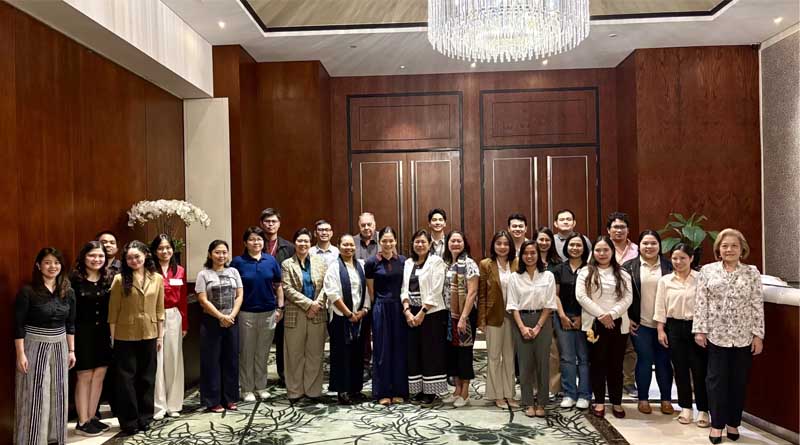
To facilitate dialogue among concerned agencies and stakeholders on measurement of methane emissions in the Philippines, the Global Methane Pledge Framework and Visioning for the Philippines’ Methane Emission Measurement, Reporting, and Verification (MRV) workshop was held on July 14–15, 2026. It was organized by the International Rice Research Institute (IRRI), the Global Green Growth Institute (GGGI), Clean Air Asia, and the University of the Philippines Los Baños College of Engineering and Agro-industrial Technology (CEAT), with support from the ASEAN-Korea Cooperation for Methane Mitigation. (AKCMM) is a three-year, $20 million regional initiative from 2024 to 2027 supported by the ASEAN-Korea Cooperation Fund (AKCF) and implemented by the GGGI.
The multifaceted discussions on methane reduction tools and systems were made possible by the participation of representatives mostly from the Expert Advisory Committee spanning the agriculture, forestry, energy, industry, and waste sectors under the leadership of the Methane Reduction Committee composed of the Climate Change Commission (CCC), Department of Environment and Natural Resources (DENR), Department of Agriculture (DA), Department of Energy (DOE), Department of Science and Technology (DOST), National Irrigation Administration (NIA), and GGGI. Climate change mitigation actions and frameworks in the Philippines are guided by Executive Order No. 174, which mainstreams national mitigation initiatives. The country’s Nationally Determined Contributions (NDCs), submitted in 2021, set a target of reducing greenhouse gas emissions by 75 percent relative to the business-as-usual scenario, a target that is currently being updated by the Climate Change Commission.
Methane emissions in the Philippines in 2020 are dominated by the agriculture (55–60%) and waste (35–40%) sectors, with rice cultivation representing the single largest source, followed by enteric fermentation, manure management, wastewater, and solid waste. In contrast, emissions from the energy, transport, and IPPU sectors are relatively minor, together accounting for less than 5% of national methane emissions. Methane is the second most important greenhouse gas after carbon dioxide, and rice has consistently ranked as the largest source of methane emissions within the agriculture sector in 2010, 2015, and 2020. Accordingly, the workshop discussions on MRV tools and systems focused primarily on rice and waste.
The tools demonstrated and reviewed included the Source-selective and Emission-adjusted Greenhouse Gas CalculaTOR (SECTOR) and the Low Emissions Analysis Platform (LEAP) for rice, as well as Carbon Mapper, the Solid Waste Emissions Estimation Tool (SWEET), and the Waste Methane Assessment Platform (Waste MAP) for waste. During the two-day exchange, representatives from 16 organizations discussed several challenges related to methane MRV. For the rice sector, the key issues included overlapping data collection processes among agencies, the appropriate emission factors and activity data to use, and the alignment of efforts with national targets. In the waste sector, the discussion highlighted the absence of a stronger policy and legal framework.
Among insights that emerged during the discussion and across the sectors are that capacity building stands as a common objective across the different MRV initiatives in the country. The Climate Change Commission, GIZ’s Transformative Actions for Climate and Ecological Protection and Development (TRANSCEND), the Manila Observatory’s Capacity-Building Initiative for Transparency Philippines (CBIT-PH), and the Climate and Clean Air Coalition’s (CCAC) work on short-lived climate pollutants all include strong capacity-building components. IRRI, through its Accelerating Scaling of Low-Emissions Rice (AcceLER) project and CGIAR’s Science Programs on Climate Action and Scaling for Impact, likewise aims to strengthen national capacity and support the country’s MRV Action Plan.
In his closing remarks, Dr. Reiner Wassmann, an IRRI scientist and one of the world’s pioneering authorities on reducing agricultural methane emissions, emphasized that methane mitigation offers climate benefits that people can witness within their own lifetimes. This is particularly significant considering that rice contributes approximately 28–32 percent and waste 22–26 percent of global anthropogenic methane emissions.
During a conversation after the workshop, Dr. Wassmann shared that he began measuring methane in the wetlands of the Amazon Basin in 1987 before pioneering research on reducing methane emissions from flooded rice paddies at IRRI in 1991. His work has helped countries track, calculate, and report agricultural methane emissions around the world.
Low-emission rice technologies have been documented to reduce greenhouse gas emissions—primarily methane—by as much as 65 percent, while also generating ecological and economic co-benefits. The growing number of initiatives supporting methane MRV in the Philippines presents both a challenge and an opportunity. Successfully aligning these efforts will create synergies, minimize duplication, promote more efficient use of resources, and ultimately generate greater impact. Inability to do so is prone to repeating mistakes, fragmentation of efforts, and can create confusion among actors.
As the team reflect on the two-day workshop and look back over the ongoing initiatives on MRV, it is remarkable how time and knowledge have shaped the different understanding of the climate crisis and what can be done about it through the many individuals and organizations who have worked in the climate change space for years. Environmental change unfolds over timelines far longer than a human lifetime. We have yet to see whether MRV tools and systems can harmonize national methane accounting, and more importantly, whether they will translate into meaningful economic incentives for governments and smallholder farmers and be adopted at scale. Nevertheless, we need to continue traversing this path and nurture the building blocks of knowledge and collaboration. Perhaps every meaningful shift begins the same way—with people from different disciplines gathering in a room, asking difficult questions, and trying to find common ground.
Also Read: Bayer Launches New Insecticide Trance for Cotton in India
Global Agriculture is an independent international media platform covering agri-business, policy, technology, and sustainability. For editorial collaborations, thought leadership, and strategic communications, write to pr@global-agriculture.com
AloJapan.com