

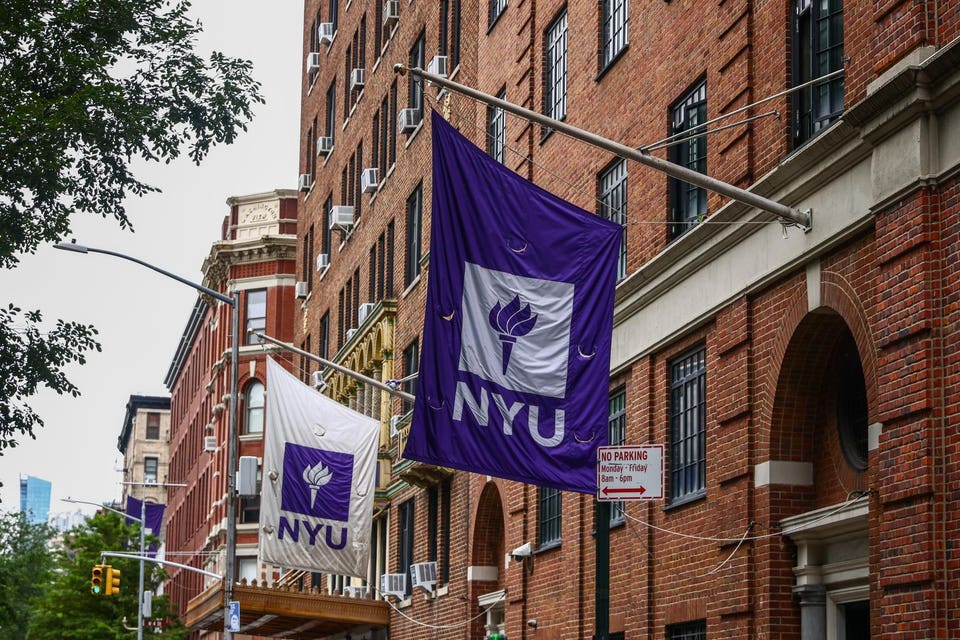
New York University has signed an MOU with the Tokyo government to explore academic collaborations, including a potential campus.
NurPhoto via Getty Images
New York University is exploring the possibility of establishing a campus in Tokyo, a move that could extend its international footprint as Japan attracts record numbers of students from overseas.
NYU and the Tokyo Metropolitan Government signed a memorandum of understanding on July 14 to examine potential academic initiatives in the Japanese capital. The agreement includes discussions about creating a hub for students participating in shorter study-abroad programs as well as the potential for an NYU campus.
“NYU may also consider establishing a more comprehensive campus in the city in the longer term,” the university’s announcement said.
More International Students Head to Japan
The timing of NYU’s move is notable. Japan drew 435,200 international students in 2025, exceeding the government’s target of 400,000 eight years ahead of schedule. Local universities have steadily expanded English-taught degree programs and international recruitment as demographic decline shrinks the domestic college-age population.
An NYU campus would build on that momentum, offering students the opportunity to earn an American degree while living in one of Asia’s most attractive destinations. Musashimurayama, a city in western Tokyo, is being considered as one possible location, according to media reports.
In addition to its base in New York, NYU operates degree-granting campuses in Abu Dhabi and Shanghai and has built its identity around a global network through which students can study in multiple countries. For Tokyo, attracting a prominent American university would support the metropolitan government’s efforts to strengthen the city as an international center for education and research.
The New Logic Of Overseas Campuses
The discussions also come as U.S. immigration policies create greater uncertainty for international students. New visa rules limiting students to an initial four-year stay, combined with heightened scrutiny of visa applications, have made studying in the U.S. less predictable than in previous years.
That uncertainty is prompting universities to think differently about globalization. Rather than relying exclusively on students crossing borders, institutions are increasingly exploring expanded international partnerships and overseas campuses.
Campuses abroad can diversify enrollment, reduce dependence on any one country’s visa policies and create new pathways for students who might otherwise choose to go to another country or remain at home.
Japanese Universities Offer Less-Expensive Options
Should NYU open a campus in Japan, there will be increased local competition. In an effort to mitigate the impact of an aging population that has resulted in fewer high school graduates, Japanese universities have stepped up efforts to offer degree programs taught in English that could draw international students. Tuition fees are often a fraction of what U.S. counterparts charge.
In addition, Temple University has been operating a campus in Tokyo since 1982.
Of course, building an overseas campus remains expensive and complex. Universities must navigate local regulations, accreditation, faculty recruitment and long-term enrollment demand. Even so, NYU’s exploratory talks suggest overseas campuses may be becoming strategic assets in a more competitive and fragmented global higher education market.
AloJapan.com