
In the north, Hokkaido offers a thrilling dual experience: Niseko’s legendary powder slopes for winter thrill-seekers and Furano’s vibrant, postcard-perfect hillsides of summer tulips and sunflowers. Beach lovers can retreat to the cerulean waters of Okinawa, where a subtropical climate and slower pace are a great way to end a multi-city trip.
As Japan’s sprawling capital, Tokyo is a city of endless layers. You can step back in time at Sensō-ji, Tokyo’s oldest temple, located just steps from the lively, shop-lined Nakamise street. Brave Shibuya Crossing, where up to 3,000 people cross at once, or watch the spectacle from a nearby coffee shop. Stroll through Shinjuku Gyoen National Garden to enjoy beautiful spring cherry blossoms. Be sure to visit Café de L’ambre, one of Japan’s legendary coffee-only institutions. I’m endlessly captivated by the baristas behind the tiny counter, painstakingly crafting rich brews using handmade tools. Another highlight is afternoon tea at the Four Seasons Hotel Tokyo at Otemachi, where delicate, cherry-blossom-inspired savory bites are served with views of the Imperial Palace Gardens.
It’s nearly impossible to share the best places to eat in Tokyo, a city with more than 150,000 eating establishments and the most (160) Michelin-starred restaurants in the world. Whether you’re craving sushi, ramen, teppanyaki or pub food, Tokyo’s dining scene is endless, and your hotel concierge can easily guide you. For an authentic, bustling experience, visit the Tsukiji Outer Market. Here, vibrant vendors process thousands of pounds of fresh seafood daily, where you can taste premium cuts of fatty tuna, seared wagyu and sizzling skewers. My mother and I had an exquisite sushi experience at Kappo Omakase SAKI at the J.W. Marriott Hotel Tokyo. Michelin-starred chefs Emmanuel Stroobant and Kazumine Nishida create an omakase — dishes solely selected by the chefs — that celebrates the seasonality of fresh produce and seafood. In the evening, enjoy dinner and a jazz show at New York Grill, perched on the 52nd floor of the newly renovated Park Hyatt Tokyo, which was immortalized in the Bill Murray film Lost in Translation.


At the Tsukiji Outer Market in Tokyo, vendors process fresh seafood daily, such as these fatty tuna sashimi slices.
Jina Ihm/Shutterstock
My mom and I started our trip at the Ritz-Carlton, Tokyo in Roppongi, where severe jet lag kept us happily rooted indoors. The hotel’s cultural activities — like a private Japanese calligraphy session and a champagne Bay Cruise — were the perfect way to ease into Tokyo. For a contrasting boutique escape, we also loved Trunk (Hotel) Yoyogi Park. This 25-room retreat sits steps away from the tranquil park and features a gorgeous rooftop infinity pool.

Author Kristin Braswell, right, with her mother at the Arashiyama Bamboo Grove in Kyoto.
Courtesy Kristin Braswell
Consider an overnight stop in Hakone, about an hour and a half away from Tokyo by train. The mountainous town, famous for its restorative hot springs and views of Mount Fiji, is home to authentic ryokans. These traditional inns feature tatami floors, sliding shoji paper doors and low tables.
The bustling city of Kyoto is about 2.5 hours from Tokyo by the bullet train and 2 hours from Hakone. It maintains its alluring charm, thanks in part to its dense bamboo forests and meandering rivers that border the city’s interior. Nestled along the Hozu River and away from the city center’s traffic, Suiran, a Luxury Collection Hotel, Kyoto, is my favorite property in the city. Here, time slows to a crawl. You can spend afternoons on the outdoor patio indulging in complimentary, free-flowing champagne and snacks, or start your mornings with restorative meditation in the resort’s tranquil Japanese garden three days a week. The property is near Arashiyama Bamboo Grove, a forest with towering bamboo stalks that left me in awe during my first visit. It’s best to arrive early to beat the afternoon crowds.

Kyoto’s Fushimi Inari Taisha shrine is famous for its seemingly endless path of torii gates that winds through a lush, wooded forest.
Sara Winter/Alamy Stock Photo
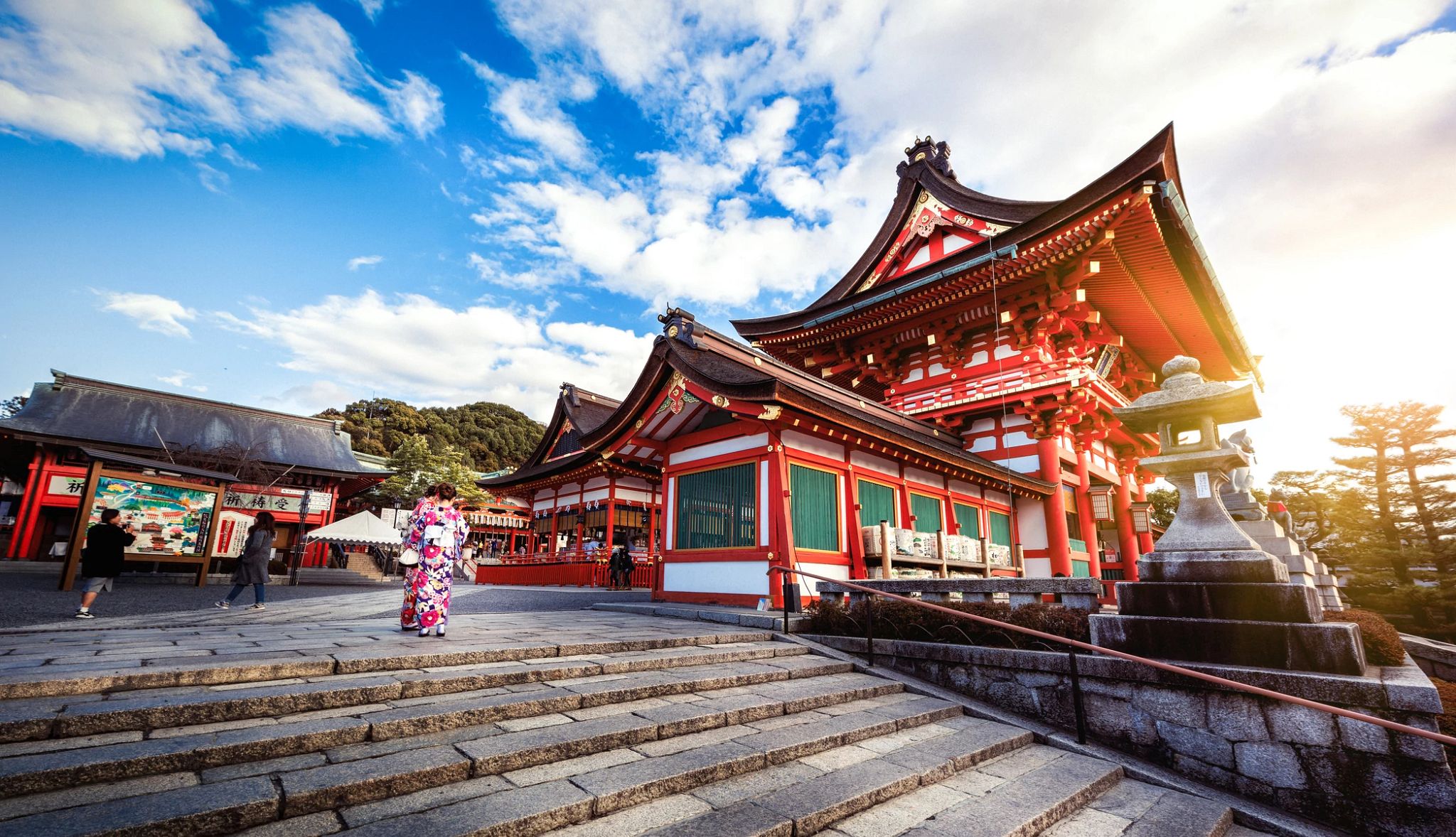
Grab lunch at Menya Inoichi, a ramen bar that has been recognized by Michelin’s Bib Gourmand guide, or make your way to Motoï Gyoza for the tender wagyu dumplings. Don’t miss Kyoto’s iconic Fushimi Inari Taisha shrine, famed for its mesmerizing, seemingly endless path of torii gates winding through a lush, wooded forest. After dark, stroll through lantern-lit Pontocho Alley or Gion, Kyoto’s geisha district. One of my top must-experience activities in Kyoto is Chef’s Table by Katsuhito Inoue at the Ritz-Carlton, Kyoto. This spectacular, zero-waste dining experience brings Japanese micro-seasons to life on a table decorated with moss and cherry blossoms.
For me, this meal captures the essence of Japan: a deep respect for food, people and the moment that extends from the kitchen to every street corner.
AloJapan.com