
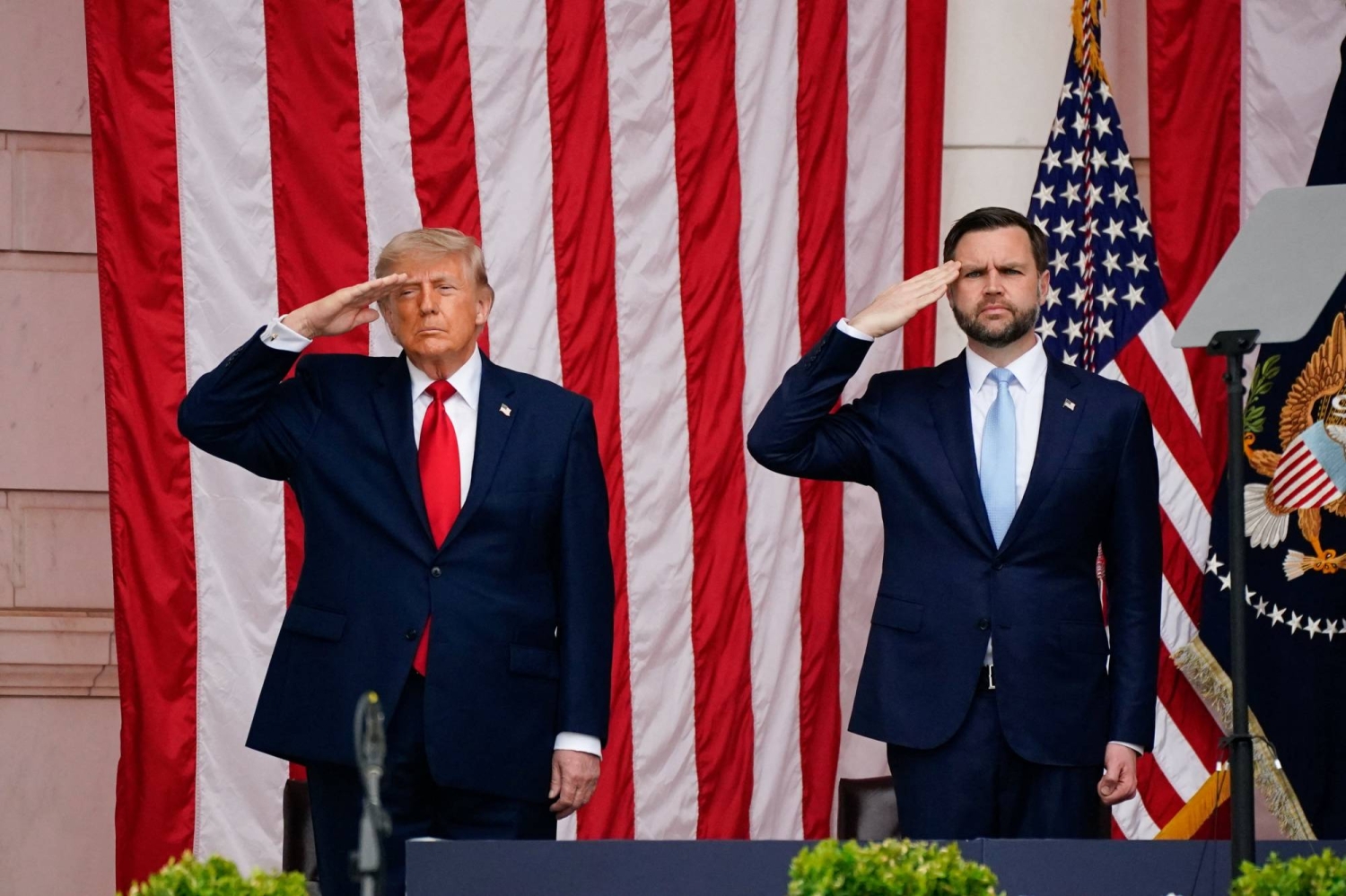
“You better be careful, JD.”
That was the warning last Wednesday from President Donald Trump, sort of in jest and sort of not, to his vice president, who last week basically soft-launched his 2028 presidential campaign. The idea was for JD Vance to adopt a more likeable, maybe less Trumpian approach as he promotes his new memoir.
But recent days have proved just how hard that will be — even for Vance, who has climbed to the No. 2 spot in the Republican Party by regularly shedding personalities and positions, always with the aim of amassing more power.
Vance warned against the Iran conflict in internal discussions and now the administration is trotting him out to defend it publicly, most recently from the White House briefing room on Thursday. The U.S.-Iran deal is “already bearing real fruits for the American people,” he told reporters.
The majority of Americans, among them some of the loudest MAGA voices, don’t appear to agree. Last week Vance had contentious exchanges with podcaster Megyn Kelly and hosts on “The View,” appearances that came as he promoted his memoir about his intellectualized conversion to Catholicism.
At a press conference on Wednesday about the agreement, Trump was asked whether it would be Vance’s fault “if it doesn’t work out.” Trump replied: “I like that idea. This way, if it works out I am going to take the credit,” he said as Secretary of State Marco Rubio stood beside him. “If it doesn’t work out, I’m blaming JD. You better be careful, JD.” (The comment echoed one Trump had made in April.)
For Vance, it is too late to “be careful.” He largely owes his political career to Trump, and his political future largely depends on his defense of him and his policies. That now includes the conflict with Iran, a geopolitical blunder of historic proportions. America lost a war that Trump didn’t need to start.
Vance has to sell it all to a fracturing GOP, including the conservative chattering classes, some of whom have singled him out for blame. “The vice president, the chief negotiator on this project, has not well-served the president,” said podcaster Ben Shapiro on Fox News. Commentator Marc Thiessen referred to the agreement on X as “the Vance peace deal.” And commentator Ben Domenech slammed the deal as something negotiated by “some kind of Hillbilly Obama,” a clear reference to Vance and about the worst insult a Fox News contributor can make.
Trump signed the deal — technically a “memorandum of understanding” — in Paris without any fanfare, an indication that he does not exactly view it as a moment of triumph. (Notably, Rubio, who hasn’t played a major role…
AloJapan.com