

The Athletic has live coverage of Spain vs Saudi Arabia at the 2026 FIFA World Cup.
Japan has one foot in the World Cup knockouts after a comfortable win against Tunisia in Monterrey that eliminates the north African side.
Before the game all eyes were on new Tunisia coach Herve Renard, and what defensive improvements he had been able to instil in the team in the space of four days following the sacking of Sabri Lamouchi.
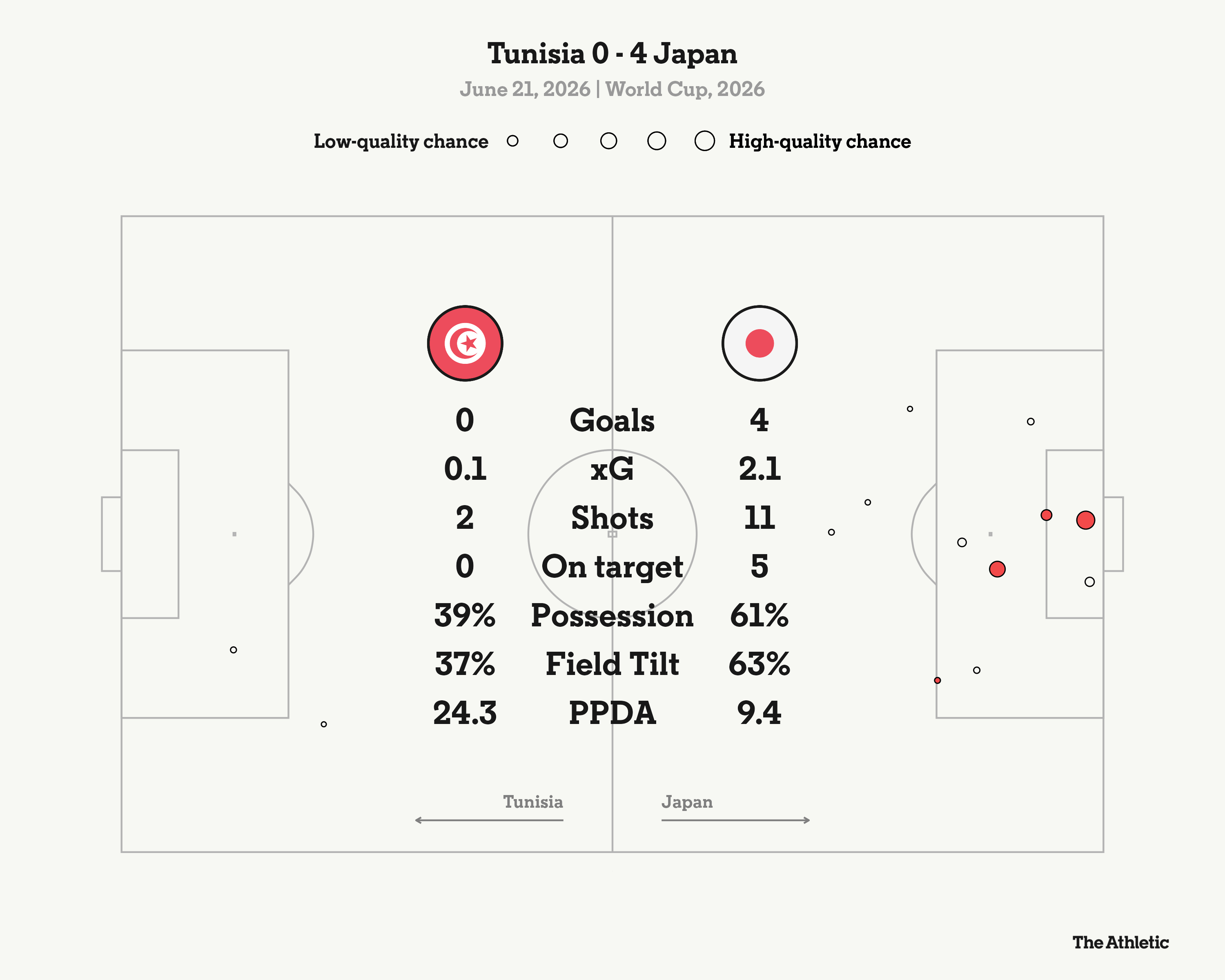
The immediate answer was: not many. Japan went ahead via Daichi Kamada after just four minutes, and proceeded to dominate the first half. An excellent finish from striker Ayase Ueda just after the half-hour mark gave Japan an advantage that their performance warranted.
Japan made it three in the 69th minute with another lovely goal, this time from Junya Ito and added a fourth in the closing stages when Ueda looped a header over two Tunisia defenders on the goal line. Four goals is the most an Asian side has ever scored in a World Cup game.
Per The Athletic’s projections, Japan can now start planning for a round of 32 game, although their most-likely opponents — Brazil, Morocco or France — suggest there may be a tough challenge in store.
A record-breaking goalkeeper and Germany’s redemption | World Cup Daily Briefing
Megan Feringa and Amitai Winehouse
Tomas Hill Lopez-Menchero breaks down the key talking points from the game.
Japan has one foot in the knockouts – how far can they go?
For all the talented players and sides they have produced over the years, it is a surprise Japan has never progressed beyond the round of 16 at a World Cup.
There seemed to be more hopes about this vintage breaking that duck. Hajime Moriyasu’s side won against Brazil in October, then became the first Asian nation to beat England at Wembley in March.
Injuries to three key players in Kaoru Mitoma, Takumi Minamino and Wataru Endo before this tournament did nothing to help their chances of achieving that World Cup landmark. Losing Takefusa Kubo for this game after an apparent knee injury in the first match deprived them of another of their stars.
But they have found a way to thrive without them. Keito Nakamura, who plays for Reims in France’s second division, has stepped up to be an unlikely hero, scoring against the Netherlands and assisting Kamada’s goal here. He seemed to revel in the limelight.
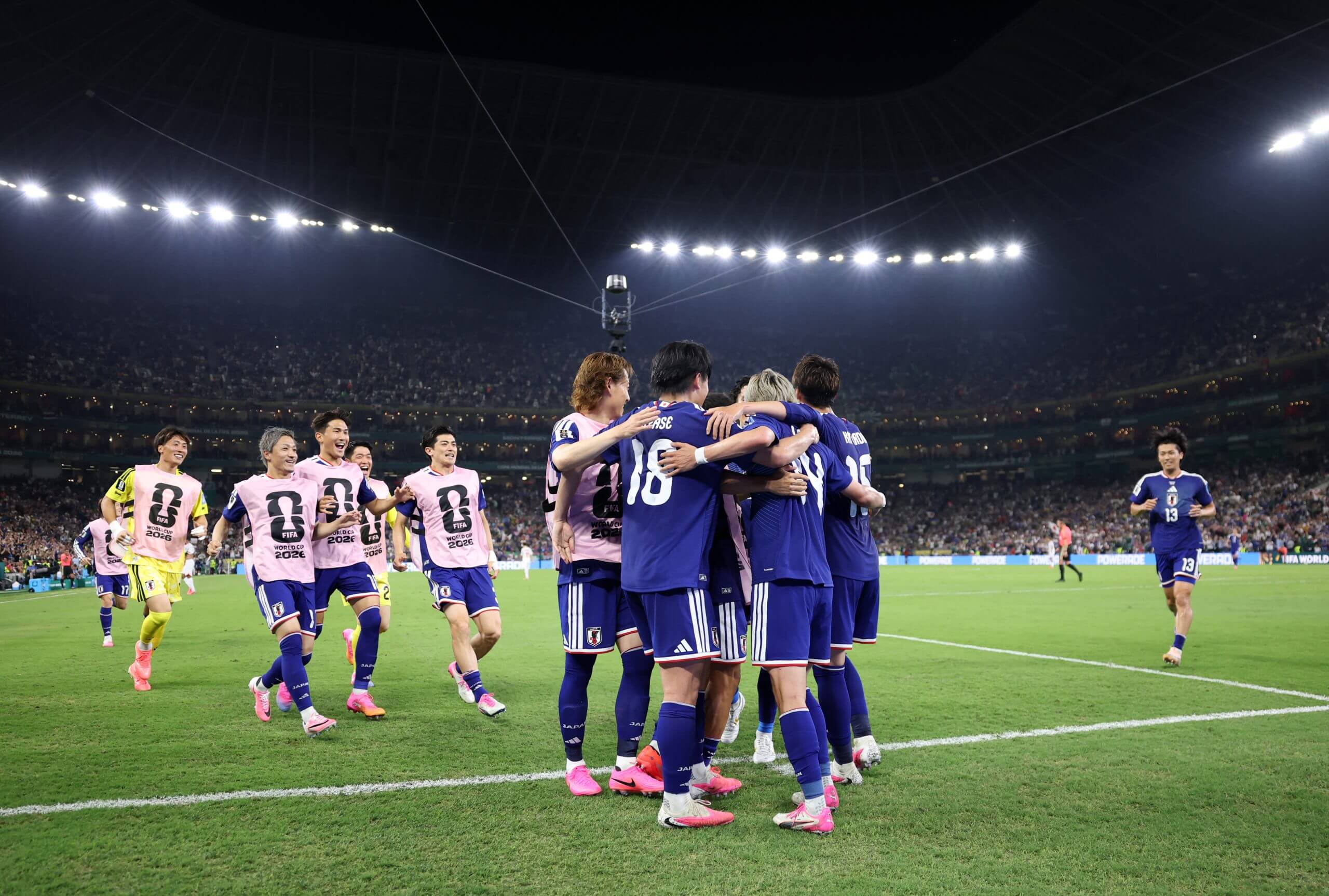
Four points from two games is an excellent start from Japan (Luke Hales/Getty Images)
They are a slick side with plenty of ways to hurt opponents and a constantly shifting attack — just witness the movement at play for Ito’s goal to make it 3-0. Or the two contrasting finishes from Ueda, one a drilled effort from the edge of the area, the other a satisfying looping header with Tunisia all at sea.
They are now level with the Netherlands on +4 goal difference at the top of the group, which would be the tiebreaker used if they finish level on points (having drawn against each other). You would expect this Japan side to beat Sweden, but much depends on which version of Graham Potter’s side show up.
The problem is Japan’s knockout hopes may be out of their hands. Whichever way you look at it, a likely round-of-32 tie against Brazil, Morocco or France — depending on if they finish first, second or third in Group F — looks tough.
One thing is certain though: this team would aim to go toe-to-toe with anyone. And any knockout tie involving Asia’s best will be a must-watch encounter.
The rapid failure of the Herve Renard experiment
When Herve Renard spoke to the media before this game on Saturday, he cut a steely figure — telling reporters his team would play with a “spirit of revenge” after their 5-1 drubbing by Sweden.
Instead, the only spirit was surrender.
There were so many gaps in their defence even before the ball arrived at the feet of Nakamura in the build-up to the opening goal. His cross was precise, and it wasn’t initially clear whether it had come off the heel of Kamada or Tunisia’s Montassar Talbi — in any case, it had Renard despairing on the touchline.

Renard, left, in his familiar white shirt (David Ramos/Getty Images)
The second goal owed more to Ueda’s stunning finish rather than poor defending — although their players didn’t make an attempt to challenge the striker — but their chances of progressing from their group looked over with little more than 30 minutes played.
The question was: would it have been any better with Lamouchi in charge? Possibly not, but the Tunisian Football Federation had banked on a transformation under Renard after becoming the first team to sack their coach one game in to a World Cup. They wanted the kind of inspiration that led his Saudi Arabia side to beat eventual champions Argentina in the group stage in Qatar (although Saudi Arabia then finished bottom of the section).
The most worrying thing for them is that Renard is not even certain to stay beyond this summer. If changing coach halfway through the tournament and getting the same result tells the federation anything, it is that perhaps the problems go further than the dugout.
Japan operating in the margins again
With Japan having made a lightning-fast start through Kamada’s back-heeled goal in the fourth minute, Moriyasu’s side thought things had got even better for them following a scramble from a corner six minutes later.
Tunisia goalkeeper Aymen Dahmen scrambled backwards as an effort deflected off Takehiro Tomiyasu, clawing the ball off the line. Although the fervent Japanese support inside Estadio Monterrey thought it was a goal, referee Istvan Kovacs’ watch seemingly did not buzz, and a long wait then followed as the official listened in to advice in his earpiece.
Some replays appeared to show Dahmen had failed to keep the ball from crossing the line — but Kovacs eventually signalled to play on. The crucial still was the one generated by the World Cup’s goal-line technology, which showed that a minuscule part of the ball was not over the line. The whole of the ball has to cross the goal line for a goal to be scored.
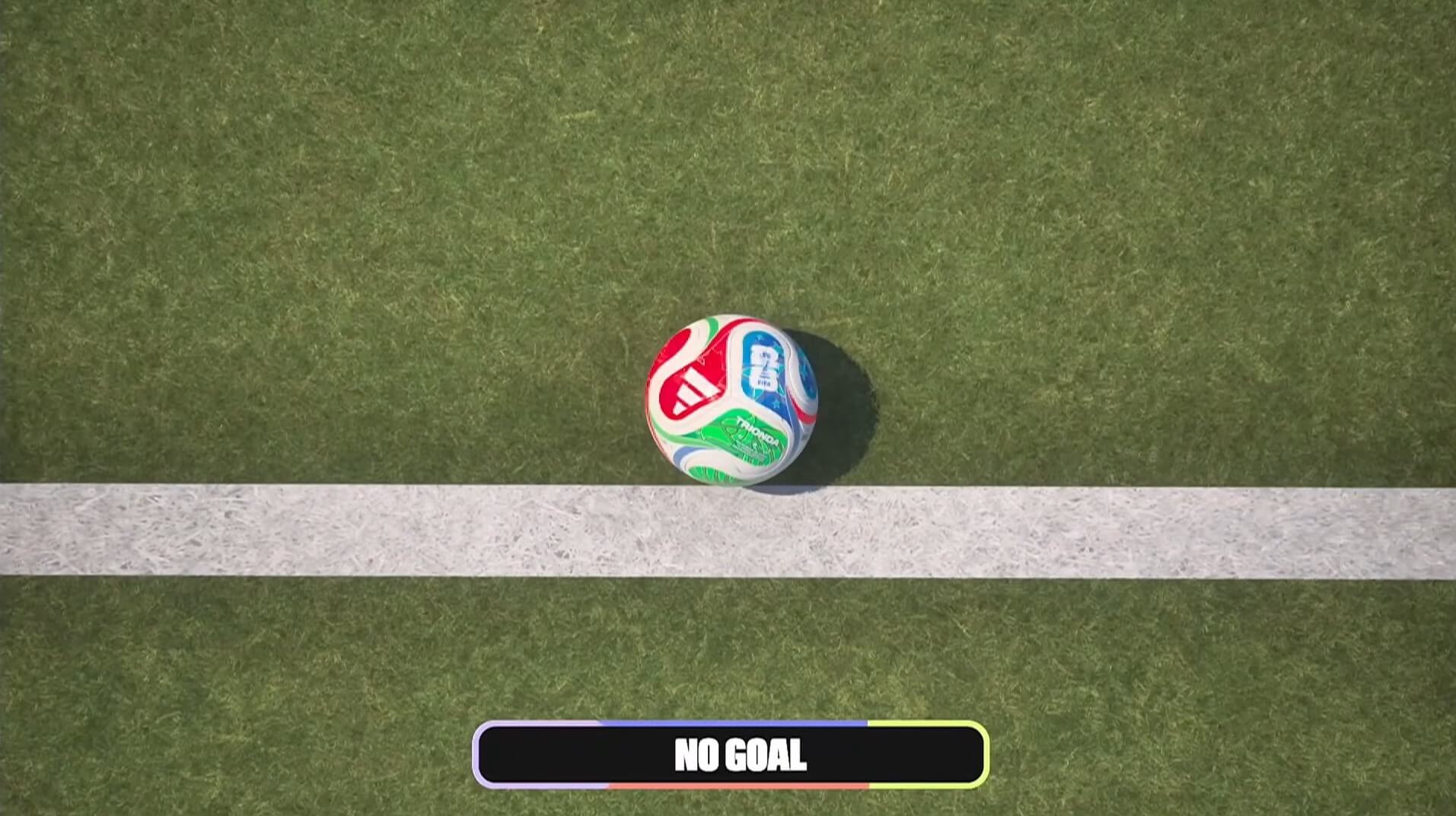
The goal-line technology image that denied Japan a goal (FIFA)
Japan are no strangers to controversy around that kind of narrow margin at a World Cup.
Four years ago in Qatar, they progressed as group winners after a goal against Spain which came from a Mitoma cutback on the sideline — which the assistant referee said had gone out, before referee Victor Gomes overturned that call after listening to VAR.
Goal-line technology did not extend to outside the posts, hence the confusion. New technology has now been introduced for this tournament to allow officials to check whether the ball has gone out of play anywhere along the touchline.
AloJapan.com