
Travelers across Japan faced unexpected disruption after more than a dozen domestic flights linked to Osaka were cancelled, with services on busy routes connecting Tokyo Haneda, Fukuoka, Nagasaki, Kumamoto and other cities abruptly withdrawn or heavily reduced.
Get the latest news straight to your inbox!
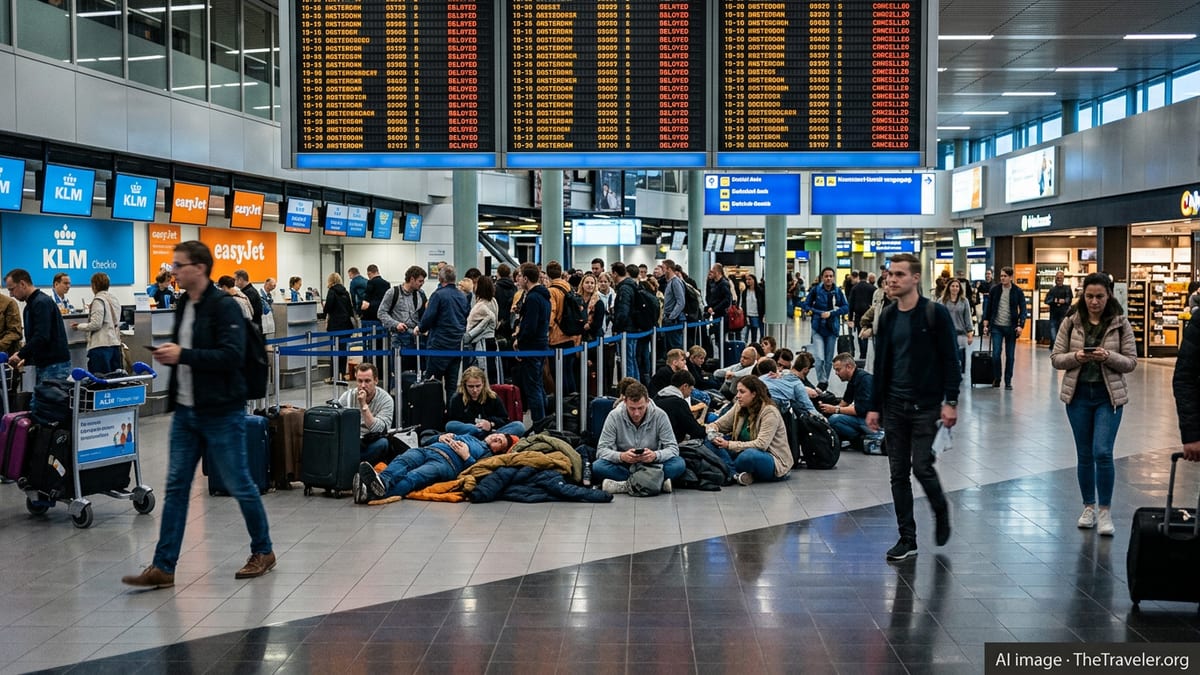 Major Carriers Cut Services on High-Demand Routes
Publicly available airline status pages and schedule summaries show that Japan Airlines (JAL), All Nippon Airways (ANA) and several partners have cancelled or suspended a series of flights touching Osaka and key regional hubs. Routes linking Osaka with Tokyo Haneda, Fukuoka, Nagasaki and Kumamoto feature prominently among the affected services, along with selected flights into and out of Kyushu airports.
Osaka functions as a central node in Japan’s domestic network, feeding traffic into Tokyo Haneda and on to regional centers such as Fukuoka and Kumamoto. Even a limited wave of cancellations therefore ripples outward, stranding some passengers mid-journey and forcing others onto slower rail or bus alternatives. The latest disruptions add strain to an already busy early-summer travel period within Japan.
Japan’s two largest full-service airlines dominate many of the corridors now experiencing temporary cuts. ANA and its group carriers hold a significant share of domestic capacity on routes such as Haneda to Fukuoka and Haneda to Nagasaki, while JAL maintains multiple daily frequencies on Haneda and Osaka links to Kyushu. This concentration means that when these operators trim flights, alternative options on the same timeframes can be limited.
While overall domestic connectivity remains robust thanks to Japan’s dense rail network and high-frequency air schedules, the current cancellations underline how localized operational issues can quickly affect travel across several prefectures. Passengers relying on tight connections or same-day returns are proving particularly vulnerable to sudden timetable changes.
Osaka’s Role in Japan’s Domestic Air Network
Osaka’s airports, particularly Itami, serve as major connectors between the Kansai region and the rest of the country. Traffic flows from Osaka to Tokyo Haneda, where passengers link to Fukuoka, Nagasaki and Kumamoto, as well as to secondary hubs such as Nagoya and Sapporo. Haneda itself is one of Japan’s busiest domestic airports by passenger numbers, with Fukuoka, Osaka Itami, Kumamoto and Nagasaki among its top city pairs in recent years.
This network design makes Osaka both a departure point and an intermediate step for travelers moving between Kyushu and eastern or northern Japan. When Osaka flights are cancelled, some passengers lose nonstop options, while others find that carefully planned multi-leg journeys no longer line up. Even where alternative flights exist, they may operate from different airports in the region, complicating ground transfers and adding to total journey time.
Low cost carriers based in or near Osaka, including brands aligned with major groups, also feed traffic into these domestic corridors. Their operations help absorb some displaced demand when full-service carriers cancel flights, but seat availability can be tight at short notice. In peak travel windows, last-minute changes tend to push fares higher for remaining seats, further frustrating disrupted passengers.
For international visitors using Osaka as a base to explore Kyushu and other regions, the disruption can be particularly confusing. Many travelers plan itineraries around fast domestic hops between Osaka and cities such as Fukuoka or Kumamoto, assuming multiple daily frequencies. Sudden schedule changes reduce that flexibility and may require a rapid switch to shinkansen or limited express trains.
How Travelers Are Being Affected on the Ground
Reports from flight-tracking and booking platforms indicate that many of the cancelled services were high-frequency domestic flights used heavily by business travelers and short-break leisure passengers. Cancellations on Haneda, Fukuoka, Nagasaki and Kumamoto links have left some travelers waiting several hours for the next available departure, while others have had to rebook entirely via different routes or modes of transport.
Same-day round trips, popular with business travelers moving between Osaka, Tokyo and Kyushu, are especially vulnerable. When an outbound morning flight is cancelled or heavily delayed, the planned evening return may no longer be practical. In some cases, passengers are choosing to revert to rail options in order to preserve meeting schedules, especially on city pairs where shinkansen timings are competitive with short-haul flights once airport transfers are factored in.
Leisure travelers also face challenges, particularly those with pre-booked tours or accommodations in regional cities. A missed afternoon arrival in Fukuoka or Kumamoto can mean forfeiting a night’s hotel stay or rearranging guided excursions. Travel insurance policies vary in how they treat such disruptions, leaving some visitors out of pocket when cancellations are classified under standard operational reasons.
Families and elderly travelers can find rebooking more complex, especially if they are navigating unfamiliar airport layouts or dealing with language barriers. The concentration of cancellations around busy hubs increases queues at ticket counters and call centers, slowing down assistance for those who most need in-person support.
What Airlines and Airports Are Advising Passengers
Published airline advisories and domestic route notices emphasize that passengers should check the latest status of their flights before traveling to the airport. Same-day flight status pages, which are updated regularly from airline operational feeds, show cancellation and delay information for individual flight numbers and are becoming a critical tool for travelers trying to understand whether their specific departure is affected.
Airports serving Osaka, Tokyo Haneda and key Kyushu destinations are encouraging travelers to allow extra time for check in and security. Even passengers whose flights remain scheduled can encounter longer lines as disrupted travelers seek assistance with rebooking, refunds or itinerary changes. Airport operators also recommend that passengers keep mobile contact details up to date in their bookings so that schedule changes can be communicated quickly.
Some airlines are offering limited flexibility for affected customers, including options to move to alternative flights on the same route or reroute via different domestic hubs where capacity allows. However, such arrangements typically depend on seat availability and may not always match original travel times, particularly around peak morning and evening banks of flights.
Travelers holding separate tickets on connecting flights or onward rail services are being advised to build in additional buffer time. Missing a nonrefundable onward segment because of an upstream cancellation can lead to significant added costs, especially for international visitors who are less familiar with Japan’s domestic rebooking practices.
Practical Tips for Anyone Flying Through Osaka Now
For travelers with upcoming flights touching Osaka, Tokyo Haneda, Fukuoka, Nagasaki or Kumamoto, the most important step is to monitor flight status closely in the 24 hours before departure. Checking both the airline’s official status page and independent trackers can help confirm whether an individual service is operating as planned or showing signs of delay or cancellation.
Building more flexibility into schedules is also advisable. Where possible, travelers may want to choose earlier departures, even on the same day, to preserve margin for rebooking if disruptions spread. For routes where rail provides a competitive alternative, securing a shinkansen reservation as a backup can be a practical option, especially for time-critical trips between Osaka, Tokyo and major Kyushu cities.
Travelers should also review the fare rules and change policies attached to their tickets. Flexible or semi-flexible tickets can be easier to adjust when flights are cancelled, while deeply discounted fares may come with more restrictions. Keeping digital copies of itineraries and receipts can streamline any subsequent insurance claims or refund requests related to disrupted segments.
Finally, those planning multi-city itineraries across Japan in the coming days may wish to prioritize less complex routing, minimizing same-day connections through multiple hubs and avoiding tight transfer windows. With Osaka currently at the center of overlapping schedule adjustments, simpler point to point journeys and slightly longer layovers can significantly reduce the risk of severe disruption to broader travel plans.
AloJapan.com