
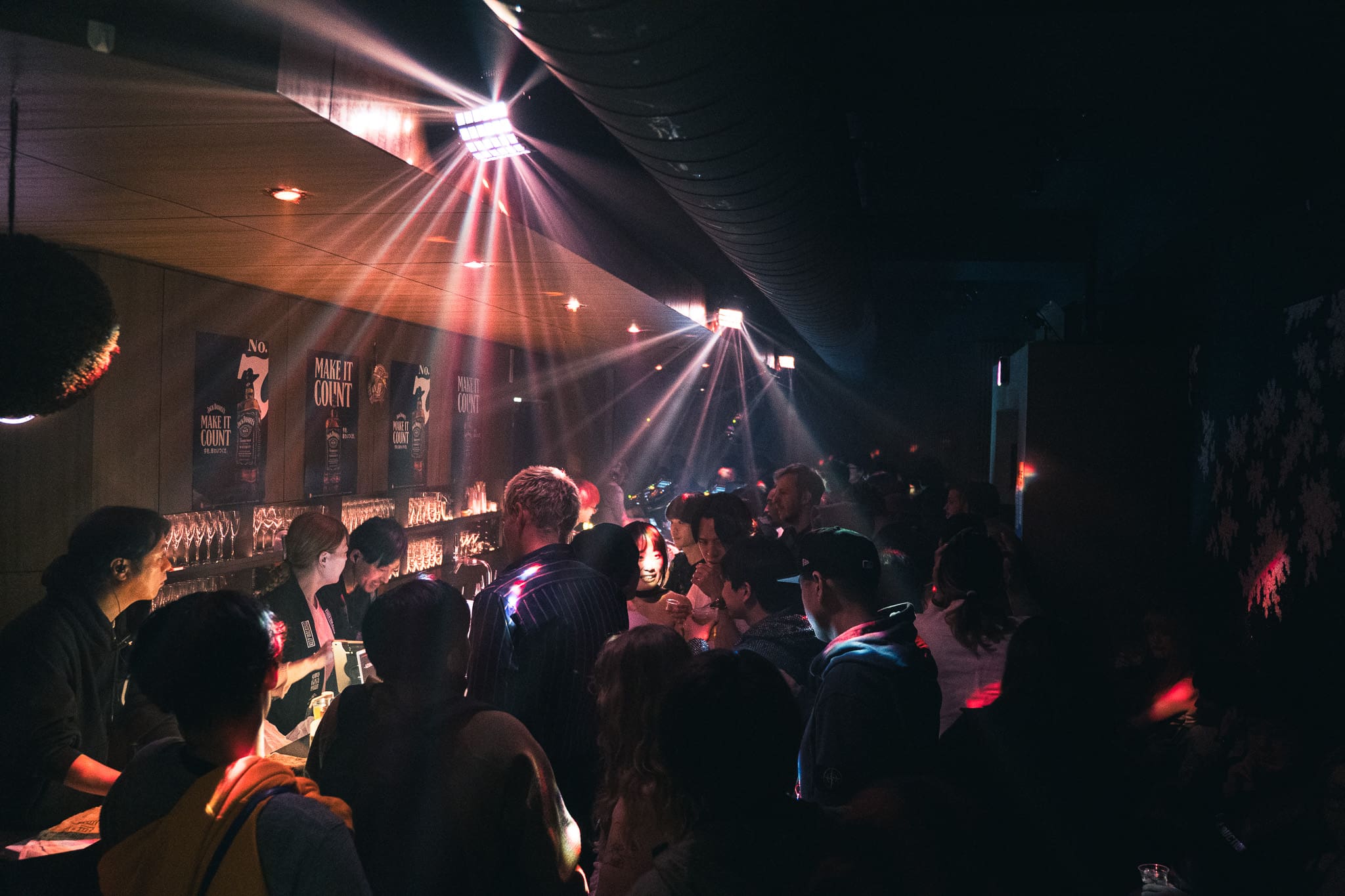
Before moving to Tokyo, YUI regularly travelled from Sendai to attend club nights in the capital, making the journey by seven-hour overnight bus. Among the memories from those trips that still stand out, one remains particularly vivid: a DVS1 set at UNIT in Daikanyama in 2013. “The intensity of the sound coming from the sound system, and the energy of the people on the floor, were truly incredible,” he recalls.
More than a decade later, that memory still feels like a useful way into approaching Tokyo’s electronic music scene. People travel long distances to experience it, yet often struggle to explain exactly what makes it special once they arrive. YUI, now based in the capital, runs the long-running DREAMESCAPE party series and remains deeply embedded in the city’s underground music community.
During a weekend spent moving between clubs, record stores, listening spaces and music venues across the city, CLASH quickly discovered that no single article could hope to capture the entirety of Tokyo’s musical ecosystem. In many ways, that’s the point. Every conversation seemed to reveal another scene, another community, another venue or record store worth seeking out.
Ask five DJs, or producers what Tokyo sounds like and you’ll likely receive five completely different answers. A city of more than 10 million people contains countless scenes operating simultaneously; techno, dubstep, ambient, footwork, house, noise, jazz, experimental electronics and sounds that exist somewhere between all of them. Unlike Berlin, where techno often dominates the conversation, Tokyo remains stubbornly resistant to categorisation.
“Tokyo has multiple different faces because it’s a mega-city,” says Seimei, co-founder and A&R head of influential label TREKKIE TRAX. “Everyone has different tastes and backgrounds. If you try to define Tokyo or Japanese music as one thing, you’re going to see a fake image.”
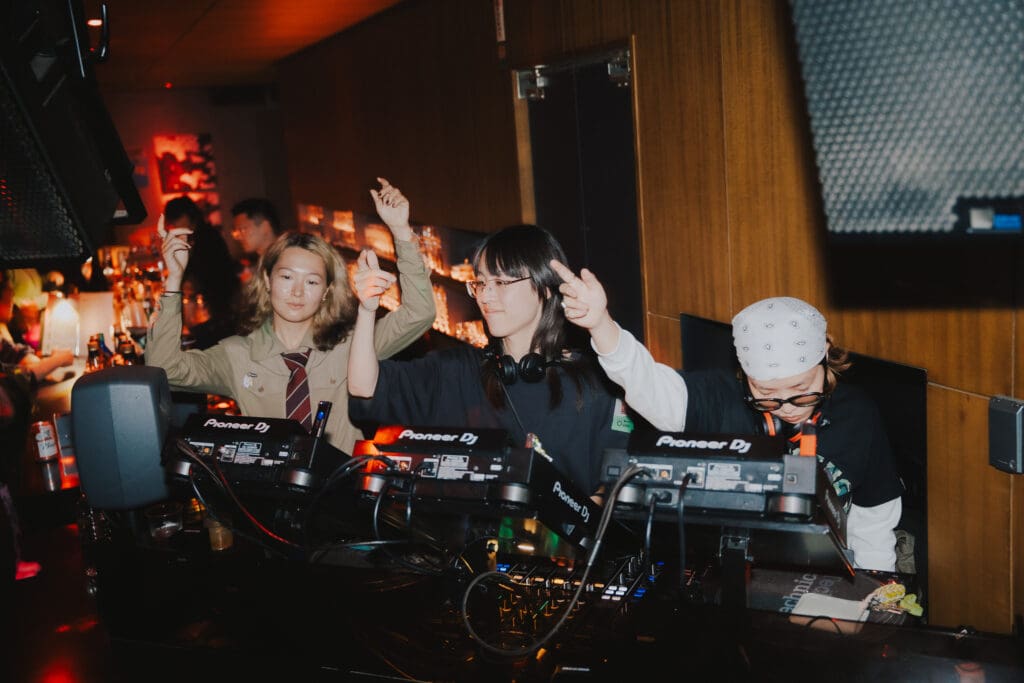
That idea was evident before a single interview had even taken place. The night that brought many of these conversations together was at MIDNIGHT EAST, the sprawling club concept spread across Spotify O-East and AZUMAYA in Shibuya. On paper alone, the line-up felt like a snapshot of modern Tokyo club culture. Brooklyn-based Nowadays resident Ayesha was making her Japan debut alongside Bangkok’s Sunju Hargun and Japanese institution Dr. Nishimura. Across multiple rooms, generations, cities and scenes overlapped naturally.
—
—
More revealing was what else was happening across the city at exactly the same time. Elsewhere in Shibuya, DJ Masda’s Cabaret Recordings was hosting one of its flagship showcases, pairing the label boss with French electro and techno pioneer The Hacker alongside Berlin-based ANCUT. Meanwhile, a short journey away at Circus Tokyo, a well respected underground venue, UK bass music was firmly on the agenda, with SHERELLE and Clipz representing a lineage stretching from jungle and drum & bass through to contemporary soundsystem culture.
Before heading to MIDNIGHT EAST, I spent the afternoon moving between Tower Records Shibuya, Disk Union and General Record Store in Shimokitazawa. What stood out wasn’t nostalgia. It was demand. While flicking through a records in a Shibuya record store, I got chatting to Rina, a local regular who spends as much time in the city’s clubs as she does its record shops.
“What I love about Tokyo is that nobody seems too worried about fitting into one genre,” she says. “You see that in the record stores, but you really hear it in the clubs. People are always playing with different sounds and seeing what happens.”
Inside Tower Records, I also met Archie, a visitor from London who had spent a few days moving between record stores, live venues and clubs across the city. “The devotion to music in Japan is on another level,” he told me. “People really dive deep into the history of artists. They create a world around them. I’ve never experienced anything like that in London.”
It was a sentiment that surfaced repeatedly throughout the weekend. Across genres, venues and generations, Tokyo’s music culture remains defined by participation rather than passive consumption. For Seimei, that openness has been central to the philosophy of TREKKIE TRAX since its inception. Founded in 2012 alongside his brother Carpainter and a close-knit group of friends, the label emerged from Japan’s underground internet culture rather than traditional club structures.
—

—
Long before TikTok algorithms and streaming playlists dictated discovery, Tokyo was nurturing a thriving network of DIY net-labels. Producers shared music freely online, building communities around curiosity rather than commercial ambition. “We decided not to have a specific genre for the label,” Seimei explains. “Everyone had different styles.”
TREKKIE TRAX has become an increasingly influential electronic institution precisely because it never settled on one sound. Techno sits alongside footwork; UK garage collides with juke, bass music and experimental electronics. The catalogue feels less like a genre statement than a reflection of the city itself.
That same openness can be felt across Tokyo’s wider club culture. Spend a weekend moving between dancefloors and you’ll encounter radically different worlds existing within a few train stops of one another. The boundaries separating scenes feel surprisingly porous. DJs move between genres. Audiences move between communities. Discovery remains part of the culture. Perhaps, more importantly, people still show up to listen.
For Thailand-based DJ and Siamese Twins Records co-founder Sunju Hargun, a longtime visitor to Japan, that quality remains one of the country’s defining characteristics. “When I first came here, it took me about two or three gigs to understand the Japanese crowd,” he says. “They very much want you to be you.” It sounds obvious, yet for touring artists accustomed to increasingly distracted audiences, the difference can be profound.
“They are generally just listening,” he continues. “They really appreciate music.” The comment is echoed repeatedly by local artists. Across Tokyo’s clubs there remains a sense of patience; an understanding that a set can unfold gradually, that tension matters, and that not every moment requires immediate gratification. Audiences allow DJs room to breathe.
In an era increasingly shaped by content culture and shortened attention spans, that willingness to engage deeply with music feels increasingly rare. You sense it not only inside clubs but throughout the broader ecosystem that surrounds them. Five minutes from Shibuya, Shimokitazawa remains one of the clearest examples. “My favourite place is Shimokitazawa,” says YUI. “It’s a very lively area where many different kinds of culture coexist, including restaurants, vintage clothing stores, live music venues, theatre and record shops.”
—

—
The neighbourhood has long served as one of Tokyo’s creative nerve centres. Independent venues sit beside tiny bars, theatre spaces share streets with record stores, and musicians, artists and DJs drift between them all. It’s also where YUI recently met Zurkin, founder of Vodkast Records in Tbilisi. The plan was simple: ramen and a catch-up. Instead, Zurkin spent most of the afternoon digging through records at Disk Union.
“He couldn’t stop digging,” YUI laughs. The anecdote captures something essential about Tokyo’s relationship with music. Record stores here remain more than retail spaces. They function as meeting points, places where scenes intersect, knowledge is exchanged and new obsessions are discovered.
That spirit extends into the newer generation of artists now reshaping Tokyo’s sound. Among them is Dayzero, a producer whose trajectory mirrors the increasingly fluid nature of contemporary electronic music. Initially emerging through dubstep, his work has gradually expanded into a broader sonic language drawing from dub, broken beat, techno and abstract electronics.
Releases on labels including Livity Sound, ZamZam Sounds, Deep Dark & Dangerous and TREKKIE TRAX, have earned support from figures such as Ben UFO, Peverelist, Om Unit, Al Wootton, Youngsta and Hatcha. Yet despite international recognition, his perspective remains rooted in Tokyo’s local culture.
Dayzero’s own path reflects a wider shift across the city. Artists move freely between scenes, borrowing from dubstep, techno, broken beat, footwork and beyond, without feeling particularly tied to any one tradition. The result isn’t a unified Tokyo sound so much as a culture built around experimentation.
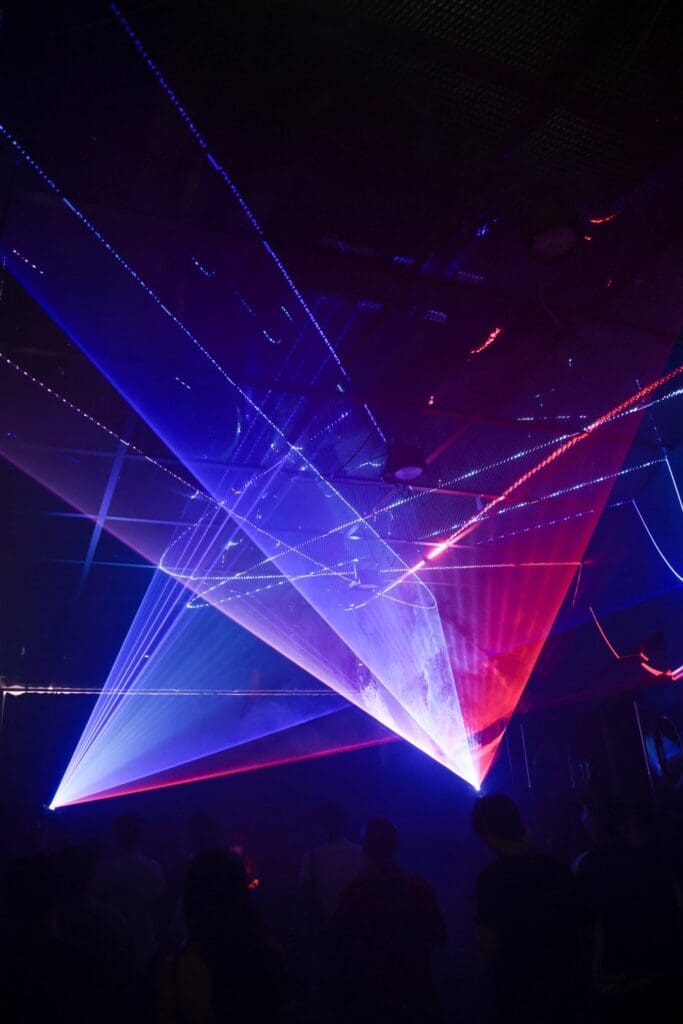
The venues supporting that process remain equally important. In recent years, Midnight East has established itself as one of the city’s most significant contemporary club institutions. Operating across Spotify O-East and the adjoining Azumaya space, the project has become a focal point for Tokyo’s evolving nightlife landscape. Its success stems partly from an unwillingness to define itself too narrowly. “We do everything,” explains co-founder Tomoko Naoshima. “From house and techno to hip-hop.”
—
—
The approach reflects Tokyo itself: eclectic, flexible and resistant to easy categorisation. It also reflects changing demographics within the city. Since the pandemic, Japan has experienced record tourism growth, transforming the makeup of many dancefloors. “We have more international crowds now,” she says. “And more younger generations.” Yet what stands out is the continued presence of older clubbers alongside newer audiences. “I have friends around fifty years old who still go to parties.”
Elsewhere, nightlife often becomes segmented by age. In Tokyo, there remains a stronger sense of continuity. Different generations occupy the same spaces, connected by a shared investment in music rather than demographics. Beyond the capital, that communal ethos finds another expression through festivals such as Rural Festival. Founded by Atsushi Maeda and held in Fukushima Prefecture’s Numajiri Onsenkyo, the gathering takes place beside Cafe & Activity Nowhere and Numajiri Kogen Lodge, surrounded by mountains, forests and an abundance of natural hot springs at the foot of Mount Adatara.
While the organising team is based in Tokyo, the festival itself sits around three and a half hours from the capital. “The venue is in the Tohoku region,” Maeda explains. “Beautiful nature, then very good hot spring, even inside of the venue.” Running across four days, Rural has quietly become one of Asia’s most respected underground gatherings. This year’s line-up spans international names including Jane Fitz, Al Wootton, APEPA and dj sniff alongside a carefully-curated selection of Japanese and wider Asian artists including Dr. Nishimura, Chhabb, DJ mew, Enantiomorphs and Herbalistek.
The festival’s appeal lies partly in its refusal to chase scale for its own sake. International artists share line-ups with domestic talent; discovery matters more than status; community matters more than spectacle. Discussing artists he’s particularly excited about, Maeda points towards emerging local talent, highlighting Emi as “a really good DJ” and noting a special back-to-back set with Jane Fitz born from connections made within the Rural community itself.
The result feels representative of Japan’s broader electronic ecosystem: globally connected yet deeply local. The country recently welcomed record-breaking tourism numbers, prompting wider conversations about sustainability, cultural preservation and the future of local scenes. Within electronic music circles, however, the prevailing mood appears notably optimistic.
—

—
YUI rejects the idea that Tokyo’s club culture has become oversaturated. “I don’t think the current club scene in Tokyo or Japan is oversaturated, nor do I think its quality is declining,” he says. Instead, he sees opportunity in exchange. “When people from outside come into contact with the local scene and new connections are created there, it can have many positive effects.”
A caveat arrives immediately afterwards. “Of course, I think it is important that this does not become simple consumption, but is accompanied by respect for the place and the local community.”
Because despite its growing international profile, Tokyo’s underground remains fundamentally community-driven. It isn’t sustained by hype cycles or cultural tourism; it survives through promoters building parties over decades, record stores cultivating audiences, artists supporting one another and listeners who continue to approach music with remarkable seriousness.
Not seriousness as exclusivity; seriousness as commitment. The kind that keeps people digging through record bins for entire afternoons, and the kind that encourages a crowd to keep heading to these incredible spaces. Tokyo has never belonged to one scene. It lives in the spaces between genres, generations and subcultures. After a weekend spent tracing those connections from record shops to basement clubs and sunrise dancefloors, one thing becomes impossible to ignore: The city’s ears are still wide open.
—
Words: Josh Crowe
Photo Credit: Koichiro Funatsu
AloJapan.com