
The Death of One-Size-Fits-All Luxury
The five-star hotel formula is dead. You know the one: polished marble lobbies, international cuisine, generic artwork on neutral walls, and a spa menu that looks identical whether you’re in Mumbai, Dubai, or Toronto.
Today’s luxury travellers are rejecting this museum-quality predictability. They’re demanding something radically different: stays that breathe local identity, taste like the region, and tell the story of where they actually are.
Reddit: “I stayed at a palace hotel in Rajasthan last year and a generic five-star in Mumbai the week after. The palace felt alive. The Mumbai hotel felt like it could be anywhere.” — r/travel
Across Canada, Saudi Arabia, Japan, Italy, the UAE, Bhutan, and Indonesia, hospitality operators are undergoing a profound transformation. The shift isn’t cosmetic. It’s fundamental. Hotels are moving from being interchangeable boxes of comfort to becoming gateways into destination culture.
Why Travellers Stopped Valuing Soft Beds Over Stories
Luxury used to mean softness, silence, and service. Comfort still matters—of course it does. But it’s no longer the differentiator.
Modern travellers want meaning embedded in every moment. They want to taste regional ingredients they’ve never encountered. They want rooms that reflect local craftsmanship, not global design trends. They want staff who can speak to the history of the land beneath their feet.
This represents a seismic shift in consumer psychology. The wealthy are no longer willing to pay premium prices for generic experiences. They’re paying for connection.
India’s Heritage Hotels Set the Template
India demonstrates this transformation most vividly. Across the country, hotels are abandoning imported luxury models in favour of place-based storytelling.
In Rajasthan, palace hotels use royal architecture, courtyard dining spaces, folk music performances, and regional cuisine to anchor guests in Rajasthani identity. The experience isn’t performed—it’s inherited. These properties sit inside genuine historical structures, giving authenticity that new construction cannot replicate.
Kerala’s resorts centre entirely on Ayurvedic wellness, backwater ecosystems, and local spice traditions. Guests don’t simply visit Kerala; they absorb its philosophy through water, plant, and ritual.
In the Himalayas, mountain lodges emphasize local produce, forest bathing, and traditional wellness practices. The room is secondary to the experience of being embedded in landscape and community.
Food has become India’s most powerful hospitality asset. Hotel menus now spotlight millet cultivation, regional thalis passed down through generations, coastal seafood traditions, tribal ingredients, and temple cuisine. Dining transforms from fuel into cultural education.
Japan’s Quiet Revolution: Simplicity as Luxury
Japanese hospitality proves that luxury doesn’t require spectacle. It requires precision, restraint, and deep cultural grounding.
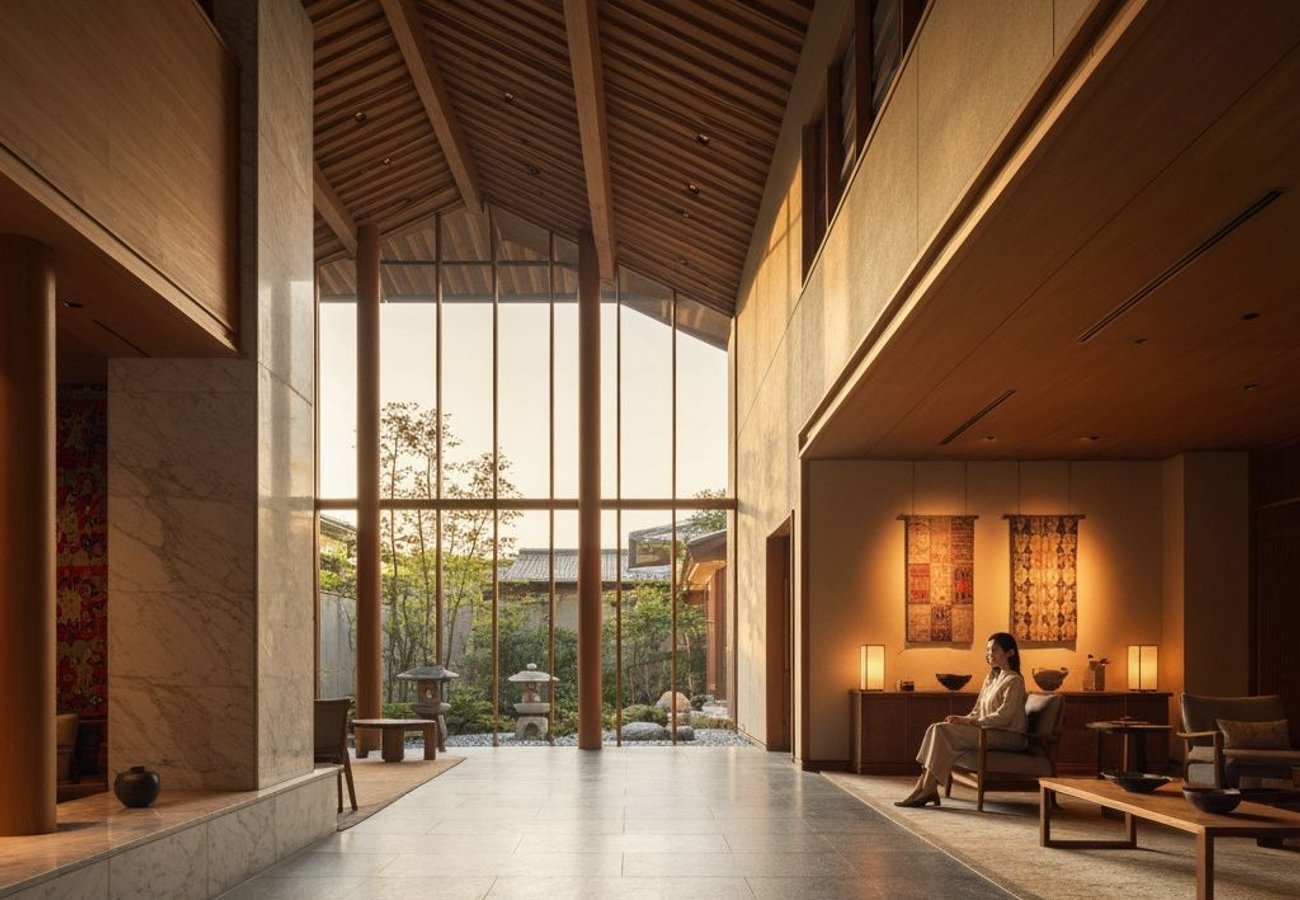
Many Japanese hotels now centre on tatami-inspired interiors, seasonal cuisine, hot spring bathing rituals, tea culture, and handcrafted ceramics. The aesthetic isn’t maximalist. It’s deliberately minimal—but that minimalism carries profound emotional weight.
A luxury stay in Kyoto might include neighborhood walks, temple visits, artisan craft workshops, and participation in seasonal festivals. These moments connect travellers to Japanese philosophical concepts: balance, respect, impermanence.
Tokyo, Hokkaido, and rural regions are all applying this model. The result is hospitality that feels personal rather than corporate, spiritual rather than transactional.
Saudi Arabia’s Ambitious Repositioning
Saudi Arabia is weaponizing hospitality as a tourism strategy. Rather than importing established global luxury models, the country is designing stays around its unique assets: desert landscapes, Red Sea coastlines, archaeological heritage, and cultural sites.
New desert resorts use natural materials, minimal intervention, and open sightlines that honor the landscape rather than dominate it. Heritage-focused properties centre on archaeology and traditional architecture. Coastal developments integrate marine conservation into the guest experience itself.
This strategy serves a dual purpose: it attracts experience-driven travellers while presenting Saudi Arabia as a destination with historical depth and cultural complexity. The hospitality sector becomes a vehicle for national positioning.
The UAE: From Glamour to Authenticity
The UAE has traditionally been synonymous with record-breaking towers and ultra-modern excess. That identity remains, but it’s being layered with cultural depth.
Dubai and Abu Dhabi now blend world-class comfort with Emirati food traditions, desert experiences, art institutions, wellness journeys, and heritage tours. Guests can enjoy premium service while learning about pearl diving history, desert life, and regional cuisine.
The shift reflects changing consumer priorities. Glamour alone no longer sells. Glamour plus authenticity becomes irresistible.
Bhutan’s Counter-Model: Happiness Over Grandeur
Bhutan offers an alternative luxury proposition entirely. Its hospitality economy is built around peace, nature, spiritual practice, and wellbeing rather than excess or status signaling.
Hotels emphasize mountain views, traditional architecture, local textiles, spiritual spaces, village immersion, and mindful travel. The luxury appeal derives from rarity and calm—from what’s absent rather than what’s present.
Guests are drawn to monasteries, forests, prayer flags, and slow travel rhythms. The experience feels reflective and deeply personal.
This model demonstrates that luxury can mean silence and space instead of abundance and stimulation.
Italy: Where Art, Food, and History Are the Product
Italy has always understood that location is the luxury. Hotels occupy old villas, palaces, monasteries, vineyards, and historic buildings—giving guests direct access to art, architecture, and local lifestyle.
In Rome, Florence, Venice, and Milan, design, museums, fashion, and cuisine shape the guest experience. In Tuscany, Sicily, and the Amalfi Coast, hospitality connects travellers with wine traditions, olive oil production, seafood culture, and village rhythms.
Italian luxury works because it feels lived-in—rooted in memory, flavour, and local rhythm rather than imported aesthetics.
Indonesia’s Wellness and Spirituality Blueprint
Bali has become the global symbol of culture-led hospitality. Properties use temple-inspired design, wellness rituals, local healing practices, rice field landscapes, traditional dance, and plant-based cuisine.
Beyond Bali, destinations across the Indonesian archipelago are building nature-led and community-based luxury. Resorts focus on beaches, forests, marine ecosystems, village integration, and traditional design.
The strength lies in combining relaxation, spirituality, and natural beauty in a single immersive journey. According to recent hospitality trend reports, experience-driven destinations like Indonesia are seeing higher guest satisfaction and repeat visitation rates than properties focused solely on amenities.
Canada’s Wilderness and Indigenous Leadership
Canada is demonstrating how luxury connects to vast landscapes and local communities. Across British Columbia, Alberta, Quebec, and Atlantic provinces, properties use forests, lakes, mountains, wildlife, and Indigenous culture to create transformative experiences.
Indigenous-led tourism is becoming central to this strategy. It allows guests to engage with land, storytelling, traditional food, craftsmanship, and cultural practices in respectful, community-benefiting ways.
This model shows that luxury hospitality can simultaneously serve traveller desires and support local economic empowerment.
How Hotel Operations Are Actually Changing
This isn’t surface-level rebranding. The shift is operational and structural.
Design teams now collaborate closely with local artisans, historians, and community leaders rather than importing global design firms. Culinary programs source from local farms, traditional food systems, and regional producers. Staff training emphasizes cultural knowledge alongside service protocols.
Revenue models are shifting too. Properties can command premium rates for authentic experiences—often higher than generic five-star pricing. According to hospitality industry analysis, destination-led luxury properties report 15-25% higher occupancy rates and stronger direct booking volumes than standardized competitors.
Guest acquisition is increasingly word-of-mouth and editorial rather than dependent on brand recognition. A heritage palace hotel in Rajasthan generates travel media coverage that a corporate chain cannot replicate.
The Competitive Advantage of Place-Based Design
Properties that nail this transformation gain structural advantages. They cannot be replicated. A hotel built inside a 300-year-old palace is a palace hotel. A competitor cannot build an identical experience elsewhere.
This creates genuine scarcity value—the most powerful luxury positioning available.
Generic five-star hotels compete on price, amenities, and brand recognition. Those competitions are endless and marginal. A cultural immersion property competes on uniqueness and emotional resonance. Those competitions are won decisively.
What This Means for Travellers Now
If you’re booking luxury accommodation in 2026, the questions have changed entirely.
Ask whether the property is connected to its location or isolated from it. Ask what the staff can teach you about the region. Ask where the food comes from. Ask whether the design reflects local craft traditions or imported aesthetics.
Properties that answer these questions confidently are the ones delivering genuine luxury. The ones that can’t are selling comfort under a luxury price tag—and that gap is becoming increasingly visible to discerning travellers.
The future belongs to hotels that understand one simple truth: the destination itself is the luxury. Everything else is just supporting that experience.
The five-star hotel industry just learned that comfort without story is just an expensive place to sleep.
Related Travel Guides
Disclaimer: This article reflects global hospitality trends as of June 2026. Hotel policies, pricing, and availability vary by property and region. Always verify current conditions, cultural protocols, and booking terms directly with properties before confirming reservations. Some destinations require advance permits or respect specific cultural practices during visits—check with local tourism boards for current requirements.
AloJapan.com