

Miyazaki is one of those Japanese destinations that seasoned travelers seem to discover twice. First, when they hear that Japan’s most consistent surf breaks line its Pacific shore. Then again, somewhere between a cup of mango juice and the entrance to Takachiho Gorge, when they realize the prefecture is also home to one of the country’s most powerful creation myths — the cave where, depending on which version you trust, the sun goddess Amaterasu hid the world into darkness.
Miyazaki Prefecture sits on the southeast coast of Kyushu, the southwesternmost of Japan’s four main islands. That position — far from the high-speed rail corridor that defines so much of how visitors plan their trips to Japan — is what makes getting there interesting. Unlike Osaka, Hiroshima, or Kanazawa, Miyazaki has no bullet train line that runs directly into the prefecture. The map that shapes so much of Japan’s travel planning simply ends elsewhere.
So the planning question for a Tokyo-based traveler is not just “how much” — it is also “how long, how many transfers, and how much of my trip do I keep when I arrive?”
We compared the three realistic options — air, rail, and bus — on the metrics that actually decide whether a Miyazaki trip feels like a holiday or a logistics exercise.
The Three Options at a Glance
Tokyo to Miyazaki Travel Options
In short, flying from Haneda to Miyazaki takes about an hour and forty-five minutes and is the fastest of the three options by a wide margin. The rail is dramatically longer for a single Tokyo round trip; the overnight bus is the cheapest and most demanding.
Two things about this table are worth pausing on before we go deeper.
First, the Travel Time column is wall-clock door-to-door, not just the headline figure airlines or rail operators advertise. Second, the Arrival Condition matters more than first-time visitors expect. A trip to Miyazaki is rarely just about Miyazaki city — it is about Aoshima beach, Takachiho Gorge, two and a half hours inland, the Kirishima caldera to the west, and a chicken-nanban dinner that is best eaten before you fall asleep on the table.
By Air — The Direct Line into Southern Kyushu

Haneda to Miyazaki at a glance
The Tokyo–Miyazaki route is a well-established domestic connection between Tokyo and southern Kyushu. Solaseed Air operates the route between Haneda Airport (HND) and Miyazaki Bougainvillea Airport (KMI) with multiple daily departures spread across the morning, midday, and evening.
A typical scheduled block time is around 1 hour and 50 minutes. With a 90-minute recommended check-in and arrival buffer for a domestic flight, the realistic terminal-to-terminal figure for an international visitor is closer to 3.5 hours. That is still less than half of any rail option, and less than one-fifth of the total bus journey.
Why Solaseed Air Is Worth Knowing
Solaseed Air is the carrier most international visitors do not know — and the reason worth knowing on this route. It is not a low-cost carrier in the European sense. Solaseed operates a Boeing 737-800 fleet on a focused set of domestic routes linking Haneda with destinations across southern Japan, and is best understood as a comfort-oriented domestic airline with a strong regional focus. Three things matter for visitors:
Comfort-focused domestic travel. Solaseed flies a single-class economy product, but the cabin layout offers comparatively comfortable legroom for a domestic Japanese route. For travellers carrying surf gear, larger suitcases or travelling with family, that extra comfort becomes noticeable on a nearly two-hour flight.
Convenient schedule options. Solaseed Air operates multiple daily departures between Haneda and Miyazaki across the morning, midday and evening, giving travellers flexibility when planning short Kyushu trips or multi-city itineraries.
A calmer travel experience. Compared to the complexity of long-distance rail transfers or overnight bus connections, the flight experience is straightforward: depart Tokyo in the morning and arrive in Miyazaki with most of the day still ahead of you.
For travellers prioritising time, comfort and simplicity, the route offers one of the most efficient ways to reach southern Kyushu from Tokyo.
The Miyazaki Airport Advantage
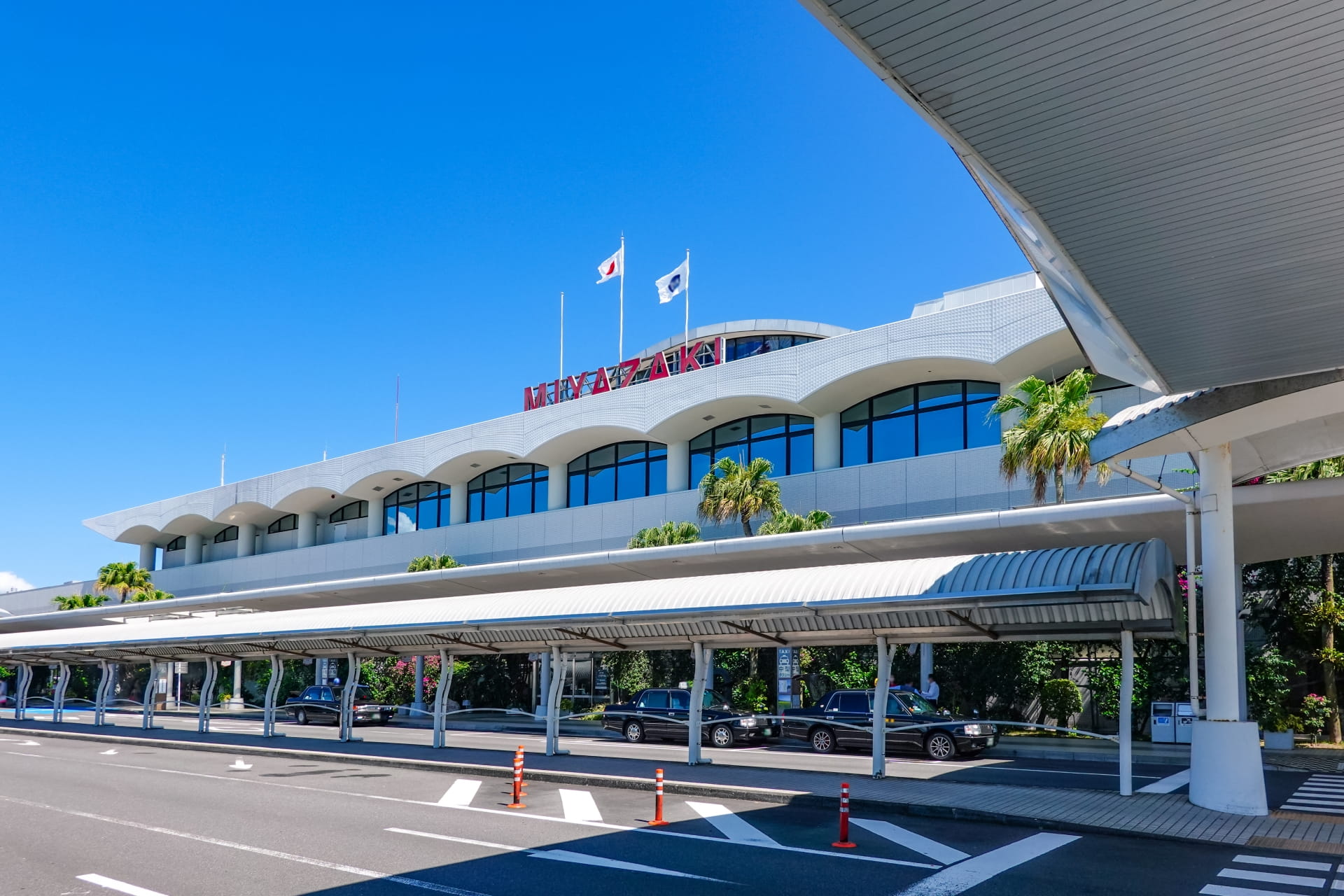
This is the part of the comparison that most travel guides bury in a single sentence. They should not.
Miyazaki Bougainvillea Airport sits on the southern edge of Miyazaki city, and Miyazaki Airport Station is integrated into the terminal complex. From the arrivals floor, you walk through the connecting concourse, and you are at the platform. From there, the airport rail line connects you to Miyazaki Station in roughly 10 minutes, with onward through-running trains continuing along the Nichinan and Nippō lines.
For travelers arriving from European or North American gateways, this matters enormously. Many regional Japanese airports require a longer limousine bus or rail transfer to the city center. Miyazaki is the rare exception: its airport-to-city transfer is shorter than the time you would spend waiting for an airport bus at many other regional airports in the country.
The practical effect is that a morning flight from Haneda has you at a hotel in central Miyazaki, or out to Aoshima beach, well before lunch.
Find flights to Miyazaki
Fly from Tokyo to Miyazaki and arrive just minutes from the city center — one of Kyushu’s most convenient airport-to-downtown journeys, with easy access to beaches, mythology sites, and local food culture.
Search flights to Miyazaki
By Rail — Long Detours, No Direct Bullet Train

Why There Is No Bullet Train to Miyazaki
The Kyushu high-speed rail line runs from Hakata in the north to Kagoshima-Chuo in the south, on the western side of the island. Miyazaki Prefecture is on the eastern coast and is served primarily by conventional rail. Plans for a high-speed line through eastern Kyushu have been discussed for decades, but no such line is currently in service.
That means a rail journey from Tokyo to Miyazaki is, by definition, a bullet-train leg followed by a long limited-express ride on conventional rail.
Route A — Tokyo to Hakata, then south down the east coast
The classic rail itinerary is:
Bullet train from Tokyo to Hakata — around 5 hours.
Limited express from Hakata to Oita — roughly 2 hours 10 minutes.
Limited express from Oita to Miyazaki — roughly 3 hours 10 minutes.
Add waiting time at each transfer, plus station navigation in Tokyo, and a realistic total comes to around 11 hours. Some travelers split the trip — sleeping in Hakata or Kokura and continuing in the morning, which softens the day but adds a hotel night.
Route B — Tokyo to Kagoshima-Chuo, then east
The more scenic option for many rail travelers is to ride the full Tokyo-to-Kagoshima high-speed corridor before crossing east into Miyazaki:
Bullet train from Tokyo toward Kagoshima-Chuo with transfers along the way.
Limited express from Kagoshima-Chuo to Miyazaki — roughly 2 hours.
Total elapsed time is similar to Route A: around 10-11 hours, including transfers and waiting time. The advantage is that the journey passes through cities such as Hiroshima and Kagoshima, which can become worthwhile stopovers on a longer Kyushu itinerary.
When Long-Distance Train Travel Makes Sense
A common assumption among overseas visitors is that a regional transportation pass automatically makes Miyazaki an obvious rail destination. The reality is more nuanced.
Yes, broad-area travel passes can reduce transportation costs significantly on longer multi-city itineraries. But three honest caveats apply:
You still pay in time. A Tokyo–Miyazaki round trip by rail consumes a large portion of a short Japan itinerary.
Reservations matter. Several Kyushu limited-express services can become crowded during peak travel periods.
Luggage requires planning. Oversized luggage policies on Japan’s high-speed rail network often require advance reservation for larger suitcases and sports equipment.
For a rail enthusiast on a slower loop through Japan, the train is a memorable way to reach Miyazaki. For most other visitors, it is a very long day in exchange for a single continuous overland journey.
By Bus — The Longest Route by Far

The Multi-Leg Overnight Bus Route
Unlike air or rail, there is currently no direct overnight highway bus connecting Tokyo and Miyazaki. Most bus itineraries require at least one transfer — typically in Osaka or Fukuoka — turning the journey into a multi-leg route that generally takes between 18 and 20 hours or more, depending on schedules and waiting times.
A typical itinerary involves departing Tokyo from a major terminal such as Busta Shinjuku in the evening, traveling overnight toward Kansai or northern Kyushu, then continuing south on a second long-distance coach the following day. Arrival in Miyazaki usually falls sometime between the afternoon and evening of the next day.
The main appeal is cost. Depending on season and seat class, combined fares can sometimes undercut air travel significantly, especially for travelers booking late or during peak holiday periods.
Comfort levels, however, vary considerably depending on the operators and transfer combinations involved. Some overnight segments offer 3-row independent reclining seats designed for long-distance travel, while others use more standard seating layouts. Transfer logistics also differ by route, with some requiring terminal changes or extended waiting periods between buses.
When the Bus Makes Sense
The bus only makes sense for a very specific traveler: someone who prioritizes the lowest possible transportation cost and is comfortable navigating long, multi-leg journeys in Japan. For budget-conscious domestic travelers, students, or experienced backpackers already familiar with Japan’s highway bus network, it remains a workable option.
It also removes one hotel night from the equation, which partially offsets the long travel time.
When It Does Not Work for International Visitors
For most overseas travelers, however, the friction points multiply quickly:
Transfers. Most routes require changing buses in major transport hubs such as Osaka or Fukuoka, often after an overnight segment with limited sleep.
Language. Announcements, terminal guidance, and transfer instructions are frequently available primarily in Japanese.
Luggage. Storage space varies by operator, and large items such as surfboards are often difficult or impossible to accommodate.
Arrival condition. Even under ideal conditions, travelers usually arrive in Miyazaki after nearly a full day of transit, often needing significant recovery time before sightseeing.
It is a realistic option for travelers with time, flexibility, and experience using Japan’s long-distance bus network. For most short Tokyo-to-Kyushu trips, however, the sheer length and complexity of the journey make flying the far more practical choice.
The Real Cost — Time, Fatigue, and the Days You Keep
This is where the comparison stops being about ticket prices.
Look at a typical 5-day Tokyo–Kyushu trip. Most travelers can spare one transit day at the start and one at the end. That leaves three full days on the ground.
Fly. You leave Tokyo in the morning, arrive in Aoshima before lunch, and have a full first day. On day five, you can fly back in the afternoon. Three-and-a-half full days on the ground.
Rail. You leave Tokyo early in the morning, arrive in Miyazaki in the evening, and most travelers are too tired to do more than have dinner. On the return journey, much of the final morning disappears into transit. Roughly two-and-a-half usable days remain.
Bus. Bus travelers often spend nearly an entire calendar day in transit, including transfers and waiting times.
In other words: rail and bus often look cheaper on paper, but they reliably spend a day of your trip — and depending on your itinerary, sometimes an additional hotel night as well. By the time you add the accommodation you would not otherwise have needed, plus the activities you skip because you arrived exhausted, the cost gap narrows more than many travelers expect.
For travelers whose primary constraint is time on the ground in Miyazaki, air is the rational default. For travelers whose primary constraint is total budget and who genuinely value the journey itself, rail or bus can still be the right choice. The honest answer depends on what you are optimizing for.
Who Should Choose What
The surf traveler. Fly. Many domestic airlines accept surfboards as oversized baggage, subject to advance notice and size restrictions, and Aoshima and Kisakihama sit within easy reach of Miyazaki Airport. Rail means long transfers with heavy luggage. Overnight buses are rarely practical for surf gear.
The mythology and the onsen couple. Fly. Takachiho Gorge is roughly two and a half hours by car or bus from central Miyazaki, and Kirishima onsen lies toward the Kagoshima side of the prefecture. Both are more enjoyable when you are not already exhausted from transit.
The family with kids. Fly. A shorter total journey makes an enormous difference for families traveling with young children. The comfortable cabin layout and short airport-to-city transfer help simplify the entire trip.
The rail enthusiast on a longer Kyushu itinerary. Rail can make sense if Miyazaki is only one stop in a broader southern Japan journey. Travelers exploring parts of Kyushu beyond Miyazaki may also want to consult our Ultimate Kyushu Onsen Guide when planning a broader regional route.
The budget backpacker. Bus remains possible for travelers with a very flexible schedule and a strong tolerance for long-distance transit, but the absence of a direct route makes it a niche option rather than a practical default.
Beyond the Airport — What Awaits in Miyazaki
Once you are on the ground, the destination itself quickly justifies the journey.
Aoshima and the Devil’s Washboard

Twenty minutes south of Miyazaki Station by rail, Aoshima is a small subtropical island fringed by oni no sentakuita — the “Devil’s Washboard” — a vast natural rock formation of corrugated wave-cut platforms exposed at low tide. The island holds Aoshima Shrine, dedicated to a marriage and prosperity deity, and the surrounding beaches are popular for surfing year-round.
Takachiho Gorge — Where the Sun Goddess Hid

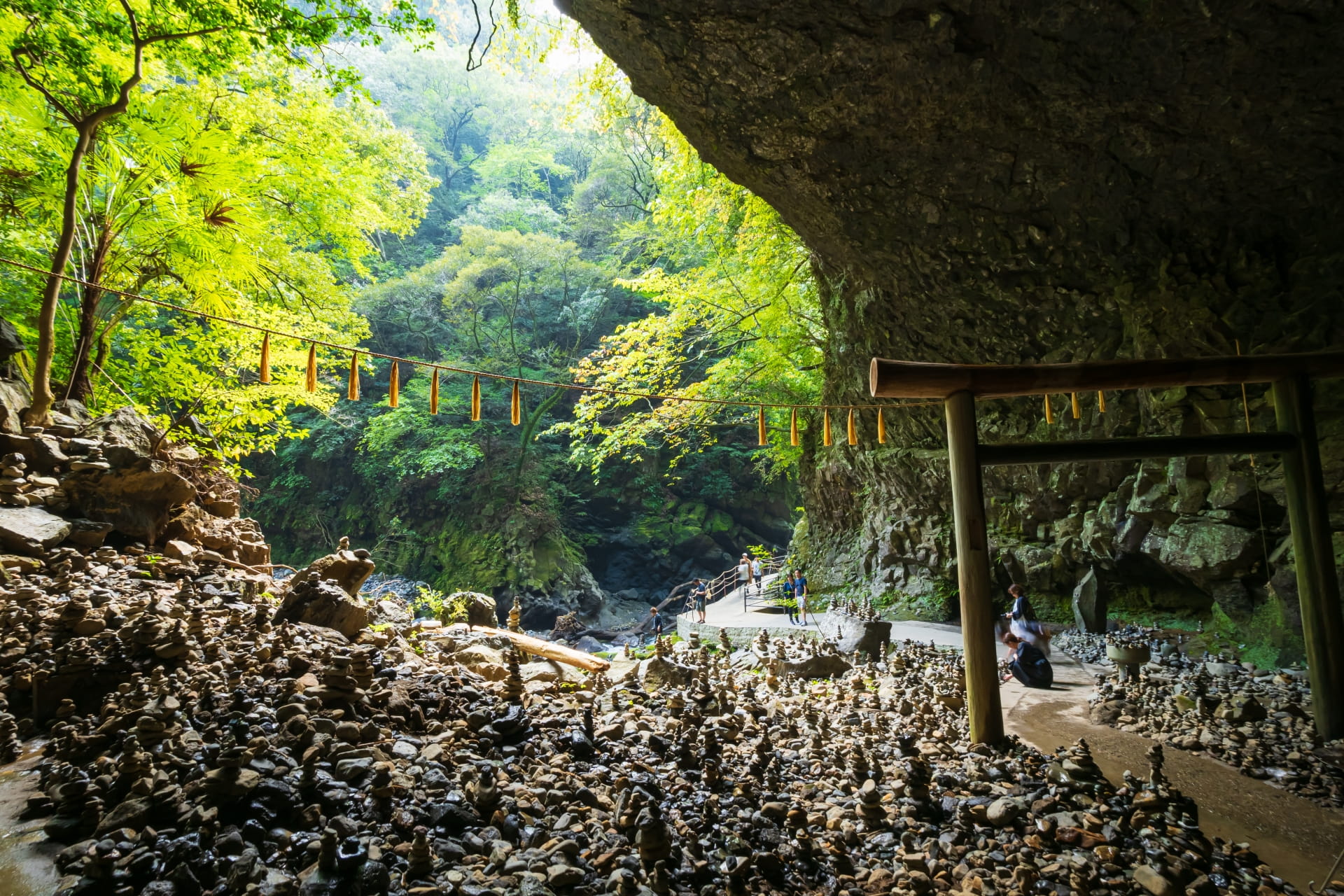
Roughly two and a half hours inland by car or bus, Takachiho Gorge is one of Kyushu’s most photographed landscapes — a narrow chasm of basalt columns formed by ancient volcanic activity, with a rental rowboat experience beneath the Manai Falls. The town is also home to Amano Iwato Shrine, associated in Japanese mythology with the story of the sun goddess Amaterasu’s retreat into a cave, plunging the world into darkness.
Kirishima — Onsen, Volcanoes and Shrines
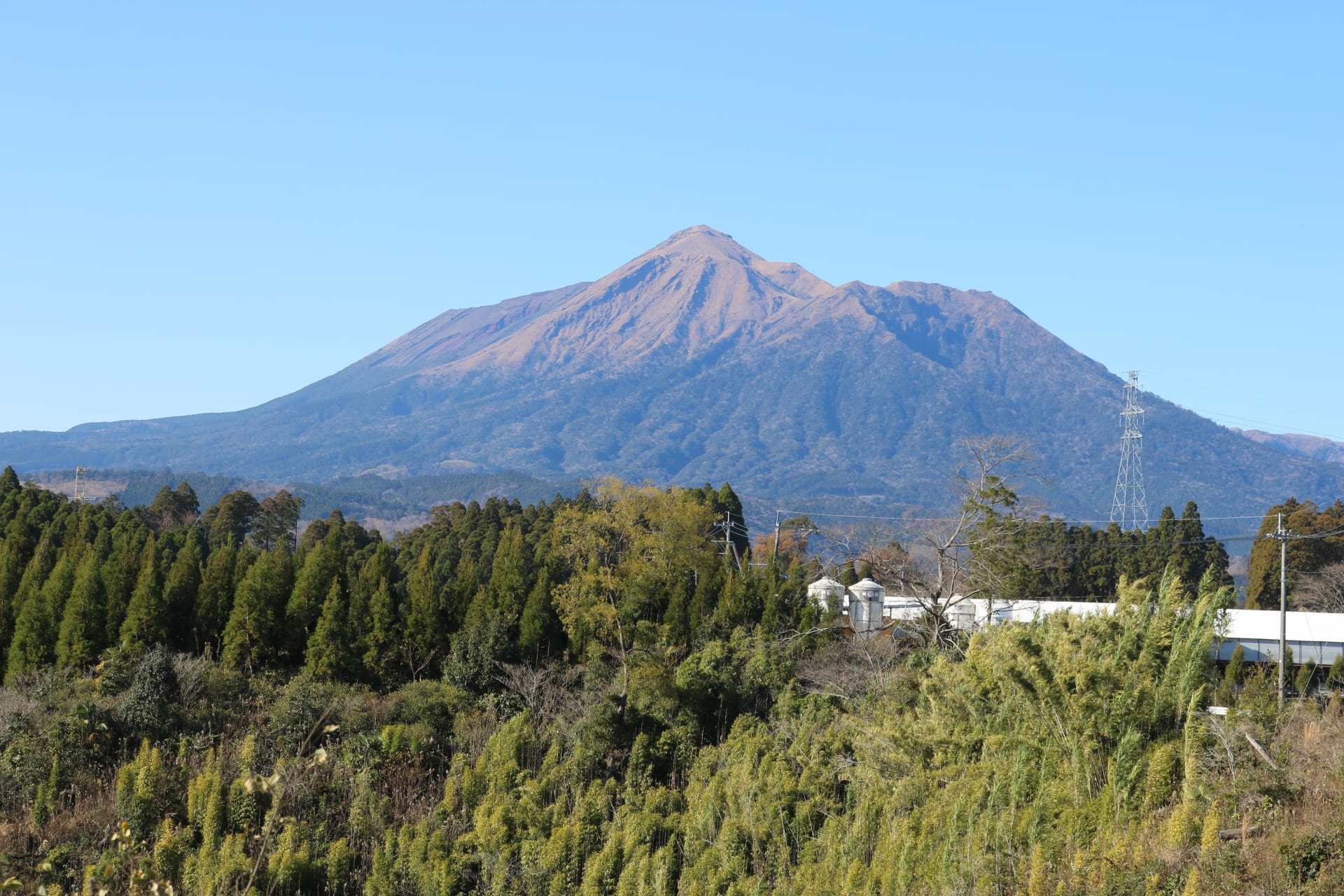
To the west, straddling the Miyazaki–Kagoshima border, the Kirishima range offers active volcanoes, atmospheric shrines, hiking trails, and a collection of onsen towns. It pairs naturally with flights to or from either Miyazaki or Kagoshima airport.
What to Eat — Mango, Miyazaki Beef, Chicken Nanban

Miyazaki’s food culture has three pillars. Miyazaki beef has earned major recognition at national wagyu competitions. Chicken nanban — fried chicken dipped in a vinegared sauce and topped with tartar sauce — originated in the prefecture in the 1960s. And Miyazaki mango, peaking from late spring into summer, has become famous across Japan for its sweetness and fragrance.
Surf, Sun, and Beyond
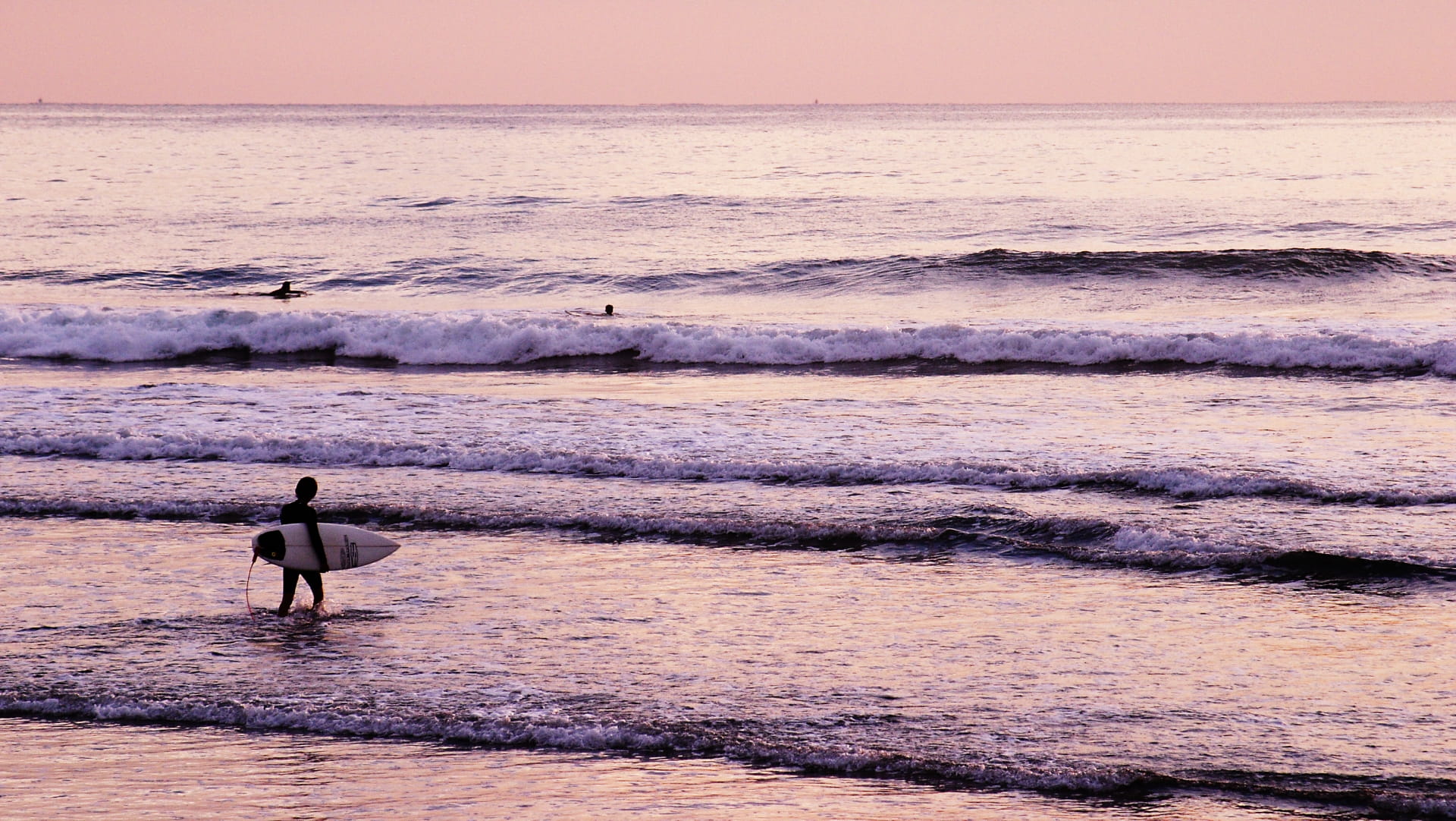
Miyazaki’s coastline consistently catches Pacific swells from spring through autumn, and the city has hosted international surfing competitions. Inland, the southern foothills of Mount Aso and the dramatic Hyuga coastline reward travelers willing to rent a car and explore beyond the city.
Frequently Asked Questions (FAQ)
Q. How long does it take to get from Tokyo to Miyazaki by plane?
A. A direct Haneda–Miyazaki flight takes around 1 hour and 50 minutes. Including airport procedures and the short rail connection into the city, most travelers should plan on roughly 3.5 hours door-to-door.
Q. Is there a bullet train to Miyazaki?
A. No. Reaching Miyazaki by rail requires transferring from the high-speed rail network to limited-express services on conventional lines.
Q. Is the rail a good option for reaching Miyazaki?
A. Rail can work well for travelers already planning a multi-city Kyushu itinerary, especially those who enjoy overland travel. For shorter Tokyo-based trips focused mainly on Miyazaki, flying is usually more time-efficient.
Q. Is there a direct overnight bus from Tokyo to Miyazaki?
A. No. Current bus routes generally require transfers in cities such as Osaka or Fukuoka, with total travel time often exceeding 18 hours, depending on schedules and waiting times.
Q. How far is Miyazaki Airport from Miyazaki city?
A. Miyazaki Airport Station is directly connected to the airport terminal, and trains to Miyazaki Station take roughly 10 minutes.
Q. Which airline flies direct from Tokyo (Haneda) to Miyazaki?
A. Solaseed Air operates multiple daily direct flights between Haneda and Miyazaki throughout the day.
Q. Is Miyazaki good for a short trip from Tokyo?
A. Yes — especially by air. The airport sits close to the city, the transfer into town is short, and many of Miyazaki’s main attractions can be reached relatively quickly after arrival.
Plan Your Miyazaki Trip
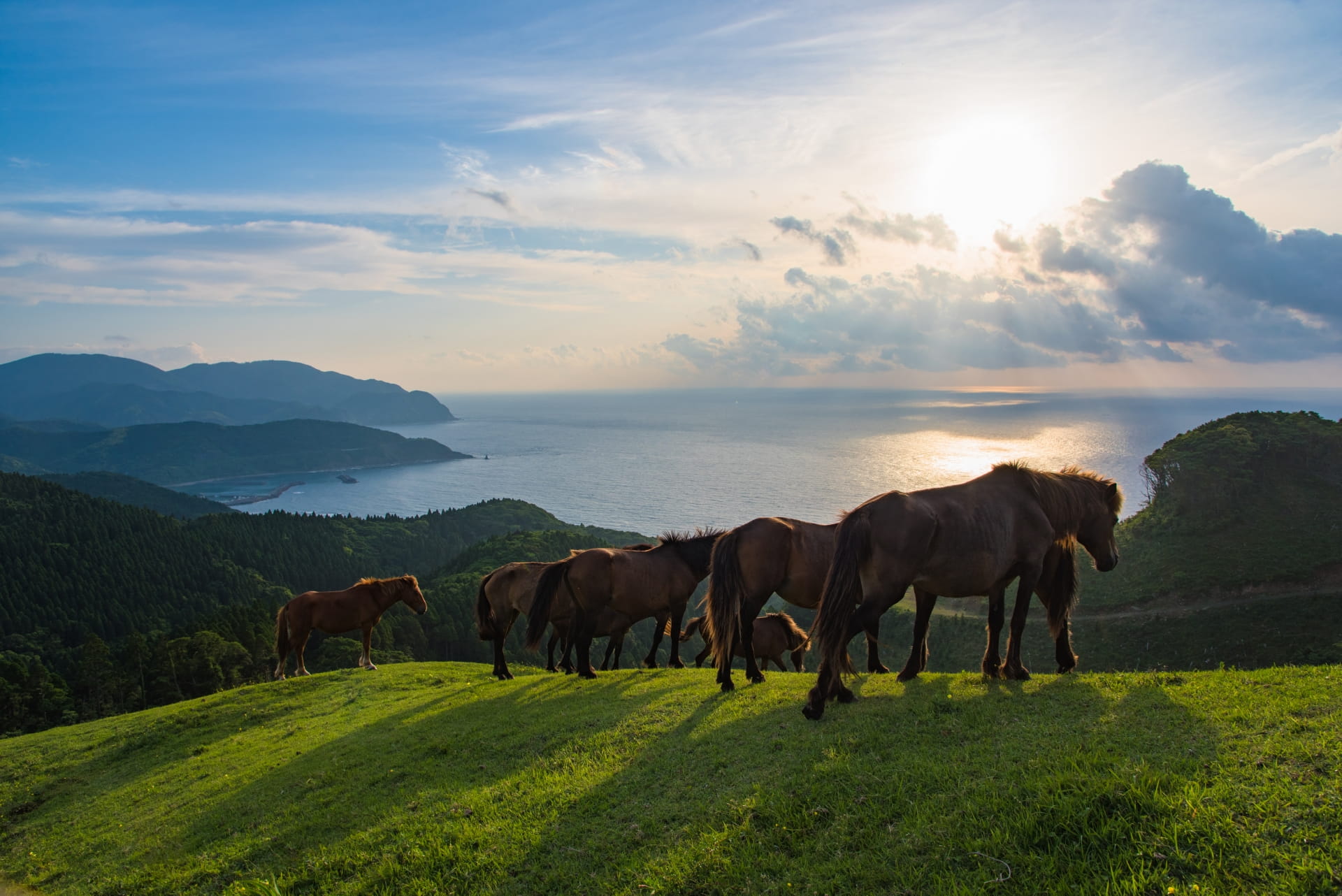
Miyazaki rewards travelers who take it seriously — surfers, mythology lovers, food enthusiasts, and families looking for a slower side of Japan. The honest summary of how to get there is simple: the less time you spend in transit, the more time you keep for the destination itself.
Travelers exploring more of Kyushu (or even Okinawa) before or after Miyazaki can also look at our guides to Southern Kyushu, Warm Places in Japan, and our Family Travel Guide when planning a broader southern Japan itinerary.
Find flights to Miyazaki
Fly from Tokyo to Miyazaki and arrive just minutes from the city center — one of Kyushu’s most convenient airport-to-downtown journeys, with easy access to beaches, mythology sites, and local food culture.
Search flights to Miyazaki
▽Related Articles▽
Written by
Born and raised in Costa Rica, I started living in Tokyo from college. I love traveling within Japan & around the world.
Since I wasn’t born in Japan, I know the cultural impact that you can get when visiting Japan for the first time and what you might be worried about before your trip.
And I’ve lived long enough to somewhat understand the nuances of the Japanese culture that make this country such an attractive place to visit.
Hopefully I can provide to you both the information you’re looking for and the information you didn’t know you needed to know.
AloJapan.com