
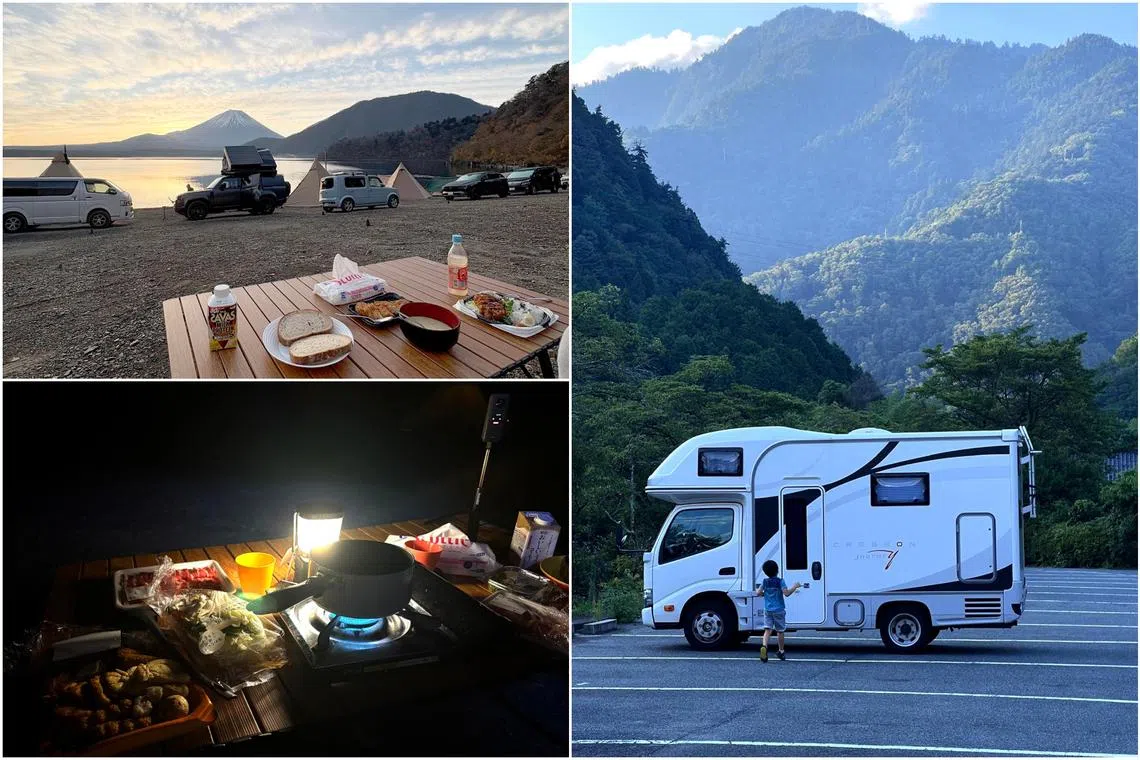
For Singapore travellers who have made multiple visits to Japan, campervan journeys offer an alternative experience: slow travel along empty roads bookended by grazing cattle and lakes that reflect images of mountains at dawn.
Infrastructure such as a growing network of recreational vehicle (RV) parks, rest stops and designated camping facilities make Japan one of Asia’s more campervan-friendly destinations.
Singaporean editor Esther Tay, 44, travelled from Osaka to Tokyo with her husband and three sons aged 14, 10 and five in August 2025. They included a three-night campervan leg in their trip, which lasted about two weeks.
“Our children love camping and road trips, so the campervan experience was something they wanted to do while on holiday,” she says.
They paid around $226 a night for the Toyota Camroad Bunk Bed campervan from Japan Campers, excluding fuel and tolls – around half the price of a night in a Tokyo hotel that could house the whole family, estimates Tay.
“It was cost-saving and flexible, and we were able to access areas that would have been harder to reach on public transport,” she adds.
Their route took them through Uji, Gujo Hachiman, Fujinomiya and Tokyo.
“There was not much pressure, schedule-wise,” she says. “There was input from everyone as the kids were excited by the whole experience and felt empowered to help plan. It also reinforced independence, within limits.”
“For instance, the two older boys were allowed to go to the toilet (we didn’t have a toilet in our campervan) at the michi-no-eki if they needed to at night. And they did, choosing to wake each other up to go together,” she says.
Michi-no-eki are government-designated rest facilities found along Japanese highways that serve as cultural hubs, rest areas and local markets.
Younger travellers are drawn by similar freedom.
Sabrina Ng, 27, a Singaporean data scientist who drove from Tokyo to Mount Fuji with her boyfriend in 2025, says: “We went camping in islands around Singapore before and we enjoyed the experience, except that the weather was really hot. So, we figured since we were making a trip to Japan while the weather was cool, it would be nice.”
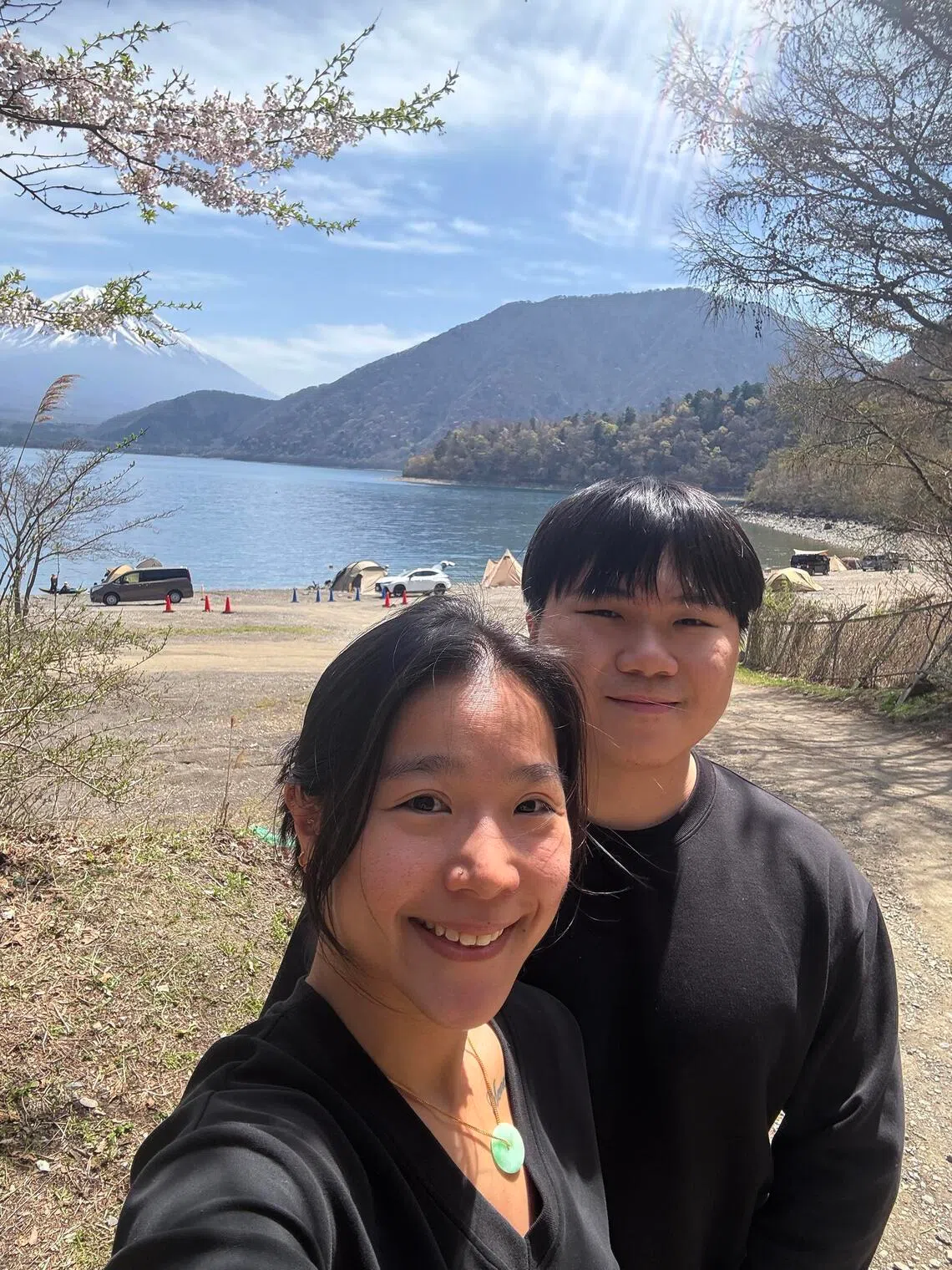
Singaporean data scientist Sabrina Ng drove from Tokyo to Mount Fuji with her boyfriend in 2025.
PHOTO: COURTESY OF SABRINA NG
The couple rented an ACE-S campervan produced by AtoZ from RV Japan and paid 24,200 yen (S$195) a day, excluding tolls, fuel and parking.
“It was our first campervan trip, and renting was a little difficult because vans book up fast,” she says. “But once we got on the road, driving was easy. Japan has so many signs. It felt familiar, like driving in Singapore.”
Here are five tips on campervan travel and etiquette in Japan.
Campervanning is ideal for visiting small or lesser-known spots with minimal public transport options.
For instance, riverside town Gujo Hachiman, known for koi-filled canals and the Gujo Odori summer festival from mid-July to early September, was a highlight for Tay. While the town is accessible by public transport, getting there typically requires a bus or multiple train transfers that run infrequently.
She also recommends staying in a campervan in towns near Mount Fuji, such as Fujinomiya or Kawaguchiko. These are usually quite full with international travellers and domestic tourists out to climb, see or experience the mountain, which drives up accommodation prices.

Singaporean editor Esther Tay paid around $226 a night for a Toyota Camroad Bunk Bed campervan, excluding fuel and tolls.
PHOTO: ESTHER TAY
Campervan rates typically range from 15,000 yen to 25,000 yen a day, depending on vehicle size and season. Most come equipped with GPS, kitchenware and bedding. Book at least two to three months ahead for peak periods such as summer (July to August) and autumn foliage season (October).
Reputable companies include Japan RV Rental, Ohana, Nomad Car Rental, Camping Lines Hokkaido and Do Camper. English support is fairly common among these tourist-facing operators, particularly for briefings and paperwork, though fluency can vary.
With smaller local outfits, expect more guesswork. Google Translate will get you through forms and basic instructions, but it is worth requesting English manuals or vehicle walkthrough videos in advance, especially for vehicle systems and safety details.
Singaporean drivers can use a Class 3 or 3A licence with an International Driving Permit (1949 Geneva Convention), obtainable from the Automobile Association of Singapore before departure. This covers most compact and mid-sized campervans, though larger motorhomes may require a different licence.
Public baths and campsites offer well-maintained shower facilities. Ng says there are petrol stations with “suitable parking, toilets and convenience stores” along most routes, which sell toiletries such as toothpaste, soap and basic skincare products.
“Our campsite had toilets and showers, but the weather was too cold to shower, so body wipes came in handy,” she adds. “Sleeping was fairly comfortable, but there were no pillows, so we used the seat headrests instead.”
She recommends taking along body wipes, a portable charger and pillows, and packing essentials in one bag, as the campervan can be cramped.
Tay says using the toilet and shared facilities to brush one’s teeth takes some getting used to. “It’s possible to do these in your campervan, but it is quite cramped compared with using public facilities,” she adds.
Fuel and tolls in Hokkaido can range between 4,000 yen and 8,000 yen daily. Campsites and michi-no-eki parking fees range from free to 1,500 yen a night.
Foreign visitors should look into regional Expressway Passes, which offer unlimited use of expressways in a given area for a flat fee. The Hokkaido Expressway Pass (HEP), for example, covers all of Hokkaido’s expressways from $62 for four days to $124 for eight days (for standard passenger vehicles).
Passes are purchased through your rental car company, which will provide an Electronic Toll Collection card that lets you pass through tollgates without stopping. Note that the nationwide Japan Expressway Pass has been discontinued and only regional passes are available.
For finding campsites and checking their amenities, useful apps include RV Park MAP and Michi-no-Eki Navi. Google Maps is indispensable for route planning and locating nearby onsens, petrol stations and rest stops. Japan Campervan Essentials Map is a community-compiled list of campsites, hot springs and points of interest maintained by van-lifers.
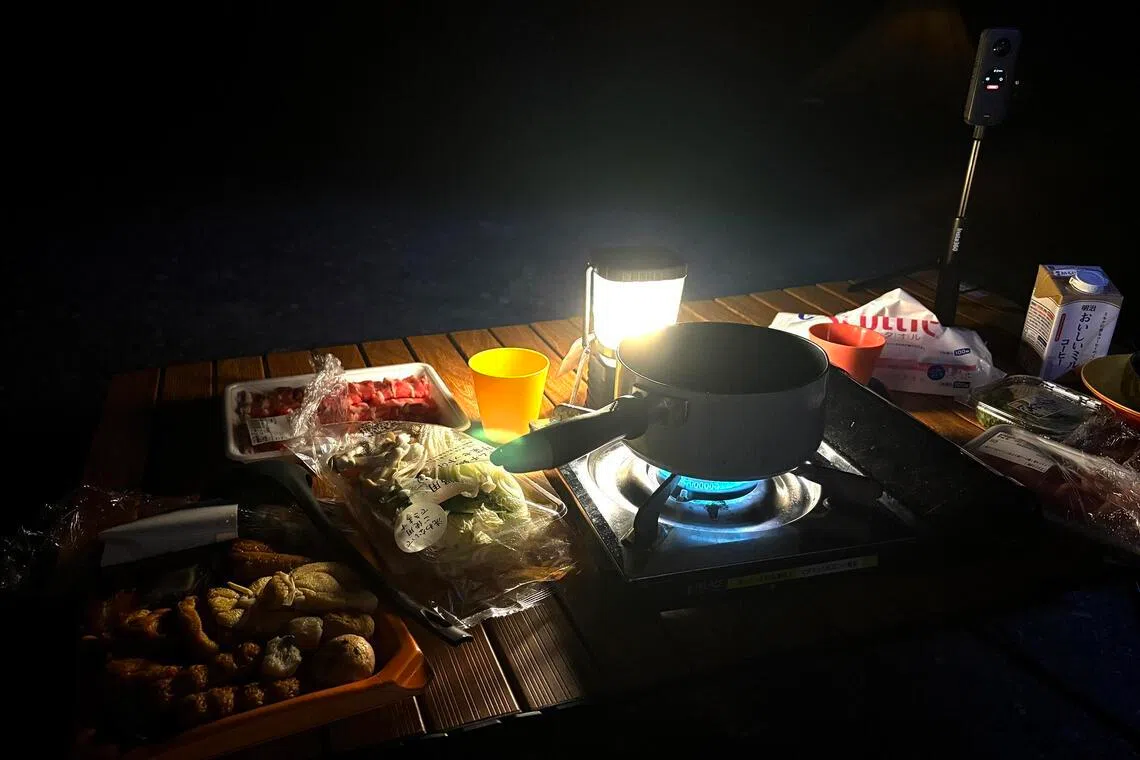
Buy food at supermarkets or michi-no-eki, which are government-designated rest facilities found along Japanese highways.
PHOTO: SABRINA NG
As for food, michi-no-eki are excellent for picking up fresh local produce, snacks and regional specialities at reasonable prices. Hokkaido’s stations are particularly well-stocked with dairy products, seafood and seasonal vegetables. For cooking staples such as rice, noodles and pantry items, supermarkets offer better variety and value.
Drivers in Japan are usually respectful, and campsites are orderly and clean. At campsites, people obey rules on designated parking, says Ng.
Booking systems vary. Larger, more popular sites often take reservations online via local tourism websites or Japanese booking platforms, especially in peak seasons.
Others operate on a first-come, first-served basis, where you drive in, pick a designated lot and check in at a small office or booth if there are staff on site. More low-key spots, particularly in rural areas, run on an honesty system with a drop box for fees.
“Michi-no-ekis and reviews of them can be found easily on Google Maps. Type in ‘michi’ or ‘rest station’,” Tay says.
Avoid running your engine for long periods when parked overnight, whether for heating or cooling, as it can disturb other guests and waste fuel. At michi-no-eki, overnight parking in your vehicle is considered “resting” and may be tolerated, but setting up tents or chairs outside your van is not.
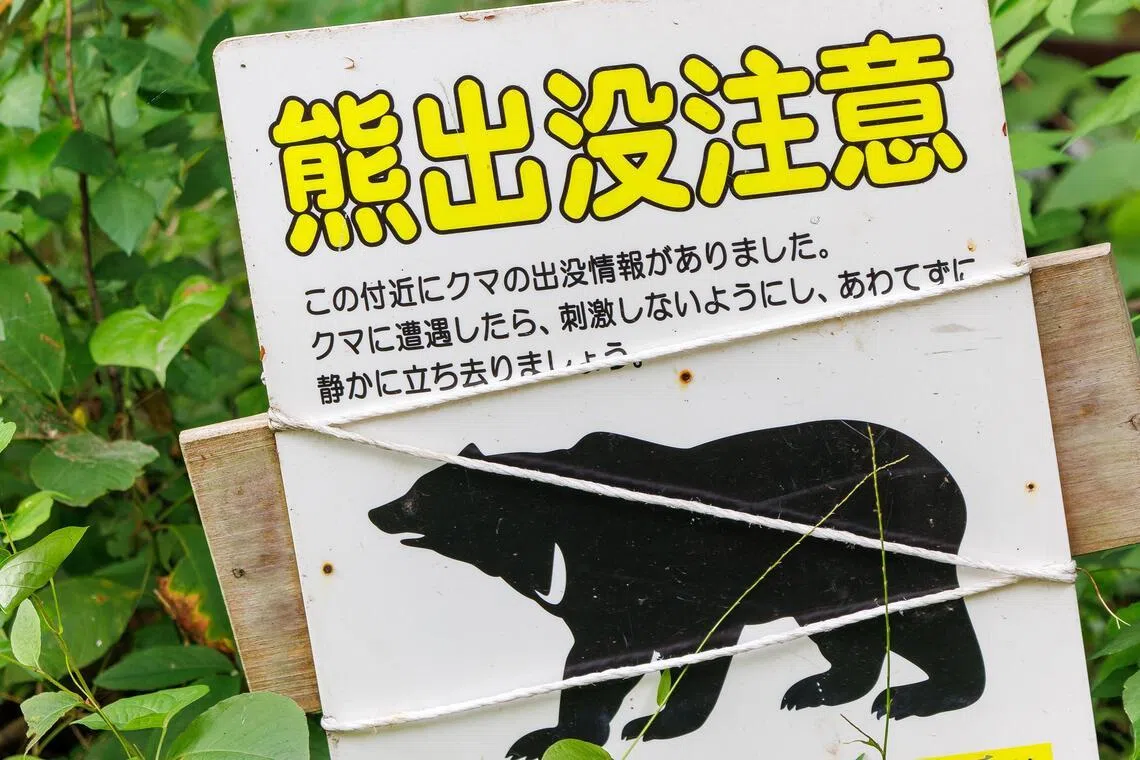
Store food in your vehicle, as brown bear sightings and attacks in Japan have been on the rise in recent years.
PHOTO: ADOBE STOCK
In Hokkaido, store all food securely inside your vehicle at all times. Brown bear sightings and attacks have been on the rise in recent years across the island, and leaving food accessible outside your campervan, even briefly, can attract wildlife.
If hiking in bear country, carry a bear bell and do not venture out alone on remote trails.
Take note of the country’s waste-sorting system. The main categories are burnable trash (food scraps, paper, cloth), non-burnable trash (ceramics, glass, hard plastics), and recyclables (PET bottles, aluminium cans, cardboard). Rules vary slightly by municipality, but the principles are consistent.
Michi-no-eki and convenience stores generally have designated bins for PET bottles and cans, and most campgrounds charge a small fee for general waste disposal. When in doubt, take your trash with you until you find a clearly labelled bin or campsite facility.
AloJapan.com