
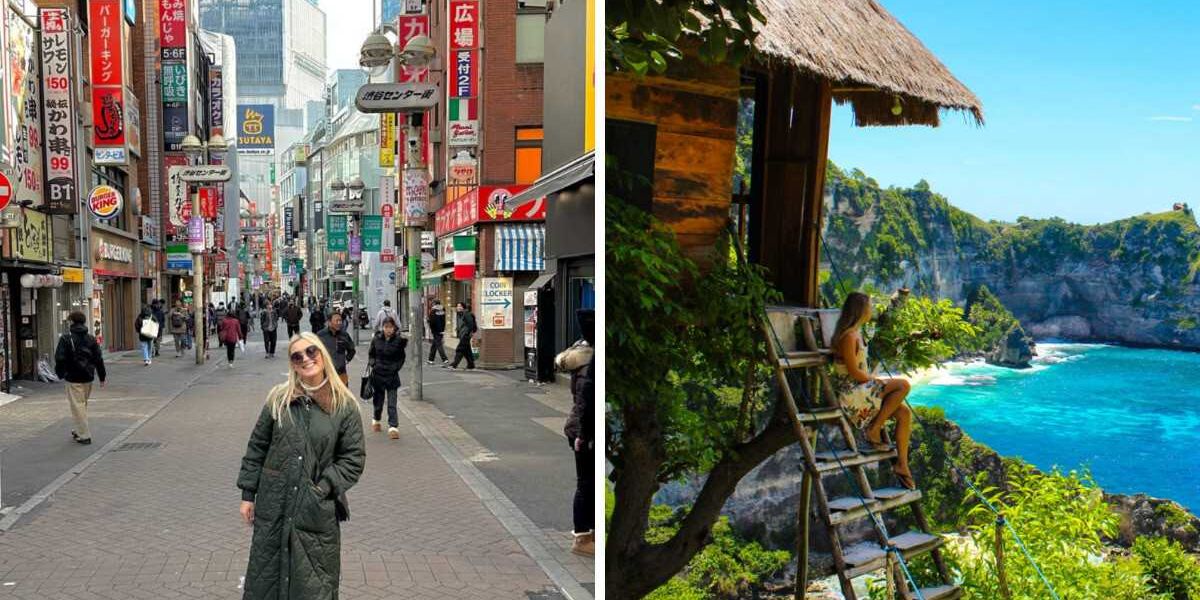
If you’ve been dreaming of an international getaway but the state of the Canadian dollar has you second-guessing your budget, here’s some good news: there are plenty of incredible, beautiful, bucket-list-worthy destinations where your money will go further than you might expect.
Whether you’re searching for cheap places to travel from Canada, countries where the Canadian dollar goes a long way, or destinations with a favourable exchange rate for CAD in 2026, the key is knowing where to look — and understanding why your dollar stretches in some places and not others.
The short answer? It comes down to monetary policy, inflation, and currency discipline. Where a country’s central bank has kept interest rates low, allowed inflation to run, or repeatedly devalued its currency, the Canadian dollar converts favourably. That’s not speculation — it’s the kind of pattern that Ronald G. Wayne, co-founder of Apple Computer Company and author of Tomorrow’s Money, has spent decades tracking.
“A currency is only as strong as the discipline behind it,” Wayne recently told Narcity. “Where that discipline is weak, the Canadian dollar goes further. Where it firms up, the advantage narrows.”
From the neon-lit alleys of Tokyo to the sun-bleached colonial streets of Cartagena, the destinations below aren’t just budget-friendly for Canadians — they’re genuinely spectacular places to visit.
We’ve rounded them up with Wayne’s expert insight on each one, so you know not just where your dollar goes far, but why — and what to watch for before you book.
One thing worth keeping in mind before you start researching flights: a favourable exchange rate doesn’t automatically make a destination cheap.
Your loonie might go far once you’re on the ground, but getting there is a separate equation — and some of these places require long-haul flights that can add up fast. A trip to Japan or South Africa will need at least 10 days to feel worthwhile, so factor that into your planning too.
Once you arrive, costs can also vary wildly depending on how you travel. A boutique hotel and private tours will eat into your exchange-rate advantage quickly, whereas budget accommodation and local transport will stretch it even further. Time of year matters, too and peak-season pricing can close any exchange rate advantages gap in a hurry.
The good news? A bit of smart planning goes a long way, especially when your dollar is already doing some of the heavy lifting.
Japan
There’s a reason Japan keeps appearing on every travel wishlist. Ancient shrines tucked into cedar forests, bullet trains threading through mountain valleys, ramen that will ruin you for anything else back home — Japan is endlessly, quietly spectacular. And right now, it’s surprisingly affordable for Canadians.
“The yen is weak, and it has been weak for years,” Wayne says. “Ultra-low interest rates and a slow hand at the Bank of Japan have kept it that way, so the Canadian dollar converts into a great many yen and stretches comfortably across travel, dining, and daily life in 2026.”
While the long-haul flight from Canada is an investment in itself, and Japan is not exactly a “budget” destination, if it’s been sitting on your bucket list for years, 2026 is a genuinely good time to go.
Turkey
Istanbul alone is worth the flight — the Grand Bazaar, the blue-tiled mosques, the Bosphorus at golden hour. Venture further and you’re into Cappadocia, where hot-air balloons drift over a lunar landscape of ancient volcanic rock formations at sunrise.
It’s a country on so many Canadians’ bucket lists and now could be a great time to tick this one off.
Wayne notes that Turkey has lived with high inflation and a falling lira for a long time. “For the Canadian visitor, that means local prices convert low, and the dollar carries real weight,” he says, adding that prices inside the country do rise quickly, though, so some of the advantage can narrow over time.
Argentina
Argentina has earned its reputation as one of South America’s most compelling destinations — and Buenos Aires alone makes the case, with Art Deco grandeur, late-night steak dinners, and tango in the streets.
Head south and Patagonia delivers something else entirely: glaciers, condors, and landscapes so vast they might genuinely reframe your sense of scale.
And right now, all of it comes at a price that works strongly in a Canadian traveller’s favour.
“Argentina has devalued its peso again and again, and inflation has done the rest,” Wayne says. “Foreign currency goes a long way there.” One caution worth heeding: currency controls and the gap between official and market rates shift often, so conditions are worth checking close to your travel date.
Egypt
The Pyramids. The Valley of the Kings. Floating down the Nile on a felucca as the sun drops behind the palms. Egypt has been on travellers’ lists since the beginning of time — and for Canadians right now, it’s a particularly good moment to go.
Wayne explains that the Egyptian pound has fallen sharply through a series of devaluations tied to economic reform. “The Canadian dollar stands strong against it for lodging, tours, and local goods,” he says, with inflation the main thing to keep an eye on.
Colombia
It’s fair to say that in recent years, Colombia has had one of travel’s great reputation rehabilitations.
Cartagena’s walled colonial city glows golden at dusk, while the coffee region is impossibly green and peaceful. Medellín — once infamous — is now one of South America’s most vibrant cities and is widely considered a colourful must-visit spot for those keen to get out of the usual tourist hangouts.
“The Colombian peso moves with oil, with interest rates, and with the country’s politics,” Wayne says. “That movement is not a flaw to the traveller. It opens windows where the Canadian dollar converts especially well, and a patient visitor can use them.”
South Africa
Cape Town has Table Mountain, the Winelands, and some of the most dramatic coastline on the continent — and that’s before you factor in Kruger National Park and the Garden Route, which make a more-than-compelling case for extending your trip well beyond a week.
Wayne describes the rand as a volatile currency, regularly pressured by South Africa’s economic conditions. “For the Canadian visitor, that volatility tends to work in your favour,” he says, “particularly on lodging, food, and guided travel.”
Vietnam
Few countries pack in as much as Vietnam does — the lantern-lit streets of Hội An, the karst scenery of Ha Long Bay, the organized chaos of Hà Nội’s Old Quarter.
Plus, the food alone is reason enough to go: bowls of phở at street-side plastic tables, bánh mì from roadside stalls, fresh spring rolls that bear no resemblance to anything you’ve ever eaten before.
Even better — plan appropriately, and you can take that dream trip on a relative budget.
“Vietnam manages its currency closely and keeps local costs low,” Wayne says. “The result is simple: the Canadian dollar goes a long way on meals, transport, and a place to sleep. It is a consistent value.”
Thailand
With white-sand islands, Buddhist temples wrapped in gold leaf and street food that’s become legendary around the world, Thailand earns its place near the top of almost every backpacker and luxury traveller’s list.
Even better, it remains one of the best-value destinations in the world for Canadians to adventure to.
“Thailand leans heavily on tourism, and the baht softens often enough that, paired with affordable local pricing, it favours the Canadian traveller,” Wayne says. He notes the baht can firm up in peak season, so timing matters.
Mexico
Many travellers agree that the beauty of Mexico lies in its multitudes — the gleaming Caribbean at Tulum, the cool highlands of Oaxaca, the archaeological wonder of Chichén Itzá, and the chaos and colour of Mexico City, to name just a few.
Few countries offer this much range, and fewer still do it at this price point for Canadians.
“The Canadian dollar remains useful in Mexico, where the cost of living runs below what you pay at home,” Wayne says. “The peso has had its strong stretches, so the advantage is real but worth watching before you book.”
Indonesia
Bali is the obvious entry point, but Indonesia’s 17,000 islands mean the real adventure starts when you leave the tourist trail — Komodo dragons on Flores, the rice terraces of Lombok, the surf-battered coasts of Sumba.
“The rupiah trades at levels that favour the visitor, and local prices are low,” Wayne says. “Across the islands, the Canadian dollar stretches well for food, lodging, and the things you actually go there to do.”
India
From the pink-walled streets of Jaipur to the backwaters of Kerala, the chaos of Mumbai to the serenity of the Himalayan foothills, India is a destination that defies summary — you could visit a dozen times and still feel like you’ve barely scratched the surface.
The food, history, and sheer visual spectacle make it one of the most extraordinary places on earth to spend an extended trip, which is why its affordability is particularly important.
“The rupee has weakened steadily against the major currencies, and local costs are low,” Wayne says. “The Canadian dollar buys a great deal of travel, dining, and domestic transport in India,” which, in a country so vast and varied, goes a very long way indeed.
Hungary
If Europe is on your radar but the euro zone feels punishing on a Canadian budget (and is already brimming with global travellers), Hungary might be the answer you’ve been looking for.
Budapest is widely considered one of the European cities that genuinely earns its hype — thermal baths dating back to the Ottoman era, a UNESCO-listed Parliament building on the Danube, and a nightlife scene centred around the city’s famous ruin bars, which you won’t find replicated anywhere else in Europe.
With fewer travellers, generally affordable prices and a favourable exchange rate, it’s hard to ignore this Central European gem.
“Within Europe, the forint is among the softer currencies, sensitive to inflation and to the central bank’s hand,” Wayne says. “The Canadian dollar converts more favourably here than in the euro zone, which means better value on a hotel room and a good meal.”
Whether you’re after ancient temples, dramatic landscapes, or simply a place where your dollar goes further than it does at home, 2026 is a genuinely good year to book that trip you’ve been putting off. Bon voyage!
Exchange rates fluctuate and the information above reflects conditions at the time of writing. Always check current rates before you travel and factor in the full cost of your trip, including flights, accommodation, and travel insurance.
Before you get going, check out our Responsible Travel Guide so you can be informed, be safe, be smart, and most of all, be respectful on your adventure.
AloJapan.com