
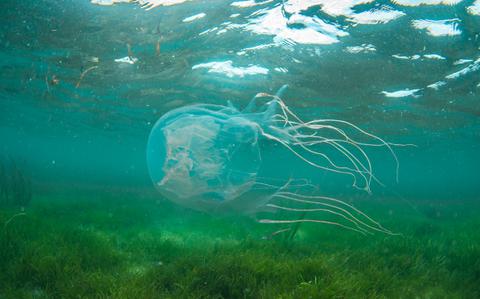
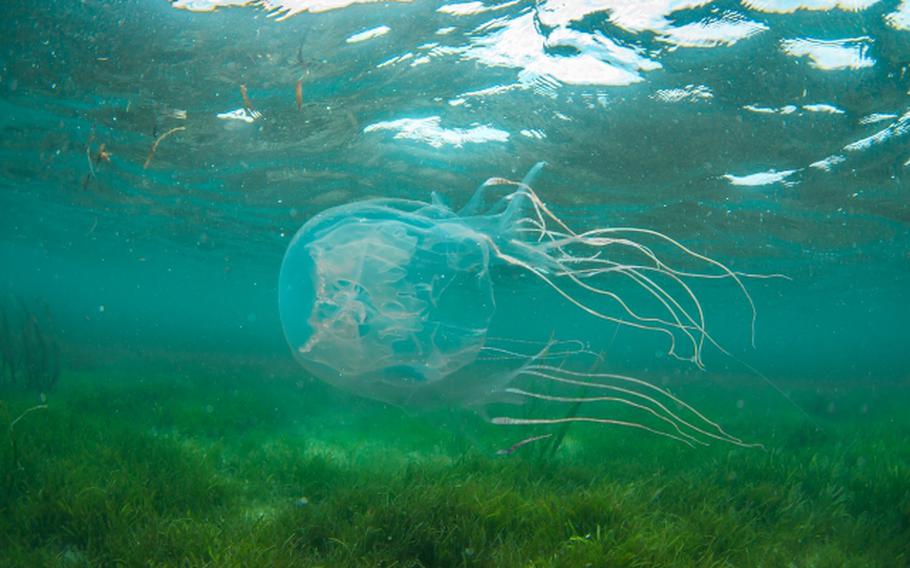
Habu Kurage (Jellyfish) (Photo courtesy of PhotoAC)
The Okinawa Prefectural Government issued a warning on June 1 for beachgoers to be on the lookout for box jellyfish, a.k.a. Habu Kurage (Jellyfish). This warning will be effective until Sept. 30.
According to the OPG, there were 81 cases where people were stung by the creature in 2025, accounting for 40.7% of incidents involving stings or bites by marine creatures.
As its moniker suggests, a sting by a box jellyfish causes severe pain and can lead to death. So, an attack by this marine creature should be avoided at all costs. But there are many chances of encountering one when you go to the beach, so the OPG has some steps to take if you are stung:
Get out of the water and seek help from others nearby without making any large or sudden movements.
Do not scratch the affected area. Pour vinegar liberally over the sting and cool the affected area using ice or cold water after removing any tentacles.
After applying first aid, seek medical help at a hospital or clinic.
In reference to the second step, there is something to be aware of. Although pouring vinegar is effective in making stingers left in human skin inactive and preventing them from releasing venomous substance, it has an adverse effect if it happens to be a different kind of jellyfish, such as Portuguese Man O’ War and Northern Sea Nettle, according to the Japan lifesaving Association.

Portuguese Man O’ War (Photo courtesy of PhotoAC)

jellyfish (Photo courtesy of PhotoAC)
If you do not have vinegar at hand, the OPG advises rinsing the stung skin with seawater. Using tap water and alcohol can worsen the condition.
A recent trend in accidents involving box jellyfish is that many tourists are becoming targets of the creature. The Ryukyu Broadcasting Corporation reported that 54.5% of those stung by marine creatures in Okinawa in 2023 were tourists and visitors from outside the prefecture. According to the Sankei Shimbun, this can be explained by the fact that while local Okinawans know how to avoid such incidents, tourists tend to hit the beach without taking proper precautions.
Whether you have lived in Okinawa for a while or have just begun your tour on the island, being prepared would be the best thing you could do to deal with the danger.
The local government advises to “expose as little skin as possible when swimming and stay inside the jellyfish netting’s safe zone when swimming at the beach.” It recommends bringing vinegar when going to the beach.
Be prepared and enjoy the water safely!
AloJapan.com