
The disruption has affected the airports most international visitors pass through, including Haneda, Narita, Chubu Centrair and Osaka’s Kansai International Airport, as well as regional services across Kyushu, Okinawa and western Japan. Earlier in the storm, All Nippon Airways cancelled flights to and from Naha, while Japan Airlines cancelled more than 100 flights to and from Kyushu and other areas, affecting thousands of passengers before the storm reached the Tokyo region.
Haneda Airport has warned that some flights to and from the airport have been cancelled because of Typhoon Jangmi and advised passengers to check with their airline directly. That is especially important for travellers connecting through Tokyo, Osaka or Nagoya, or taking domestic flights to Okinawa, Kyushu, Shikoku, Kansai, Chubu, Kanto or Tohoku.
Are trains and Shinkansen services affected?
Parts of Japan’s rail network have been delayed or suspended, including bullet train services, Tokyo-area commuter lines and regional routes in western Japan. JR Central warned that the Tokaido Shinkansen – the main high-speed line linking Tokyo, Nagoya, Kyoto and Osaka – could face sudden suspensions or bullet train cancellations in some sections from the evening of Tuesday, 2 June and throughout Wednesday, 3 June.
For travellers following Japan’s classic Tokyo-Kyoto-Osaka itinerary, that means checking service updates before leaving the hotel rather than assuming the Shinkansen – a rail network so famously punctual that delays are usually measured in seconds rather than hours – will be running as normal. Some bullet train services in Kyushu and western Japan have also experienced delays, while JR East said some rail services in the Tokyo area had been suspended and warned that further disruption could continue through the day.
Since the situation is so fast-moving, travellers using airport trains, commuter lines, limited express services or local routes around Tokyo, Yokohama, Shizuoka, Nagoya, Kyoto, Osaka and Wakayama are advised to check official railway apps and station boards before travelling.

Getty Images
Is it safe to travel to Tokyo right now?
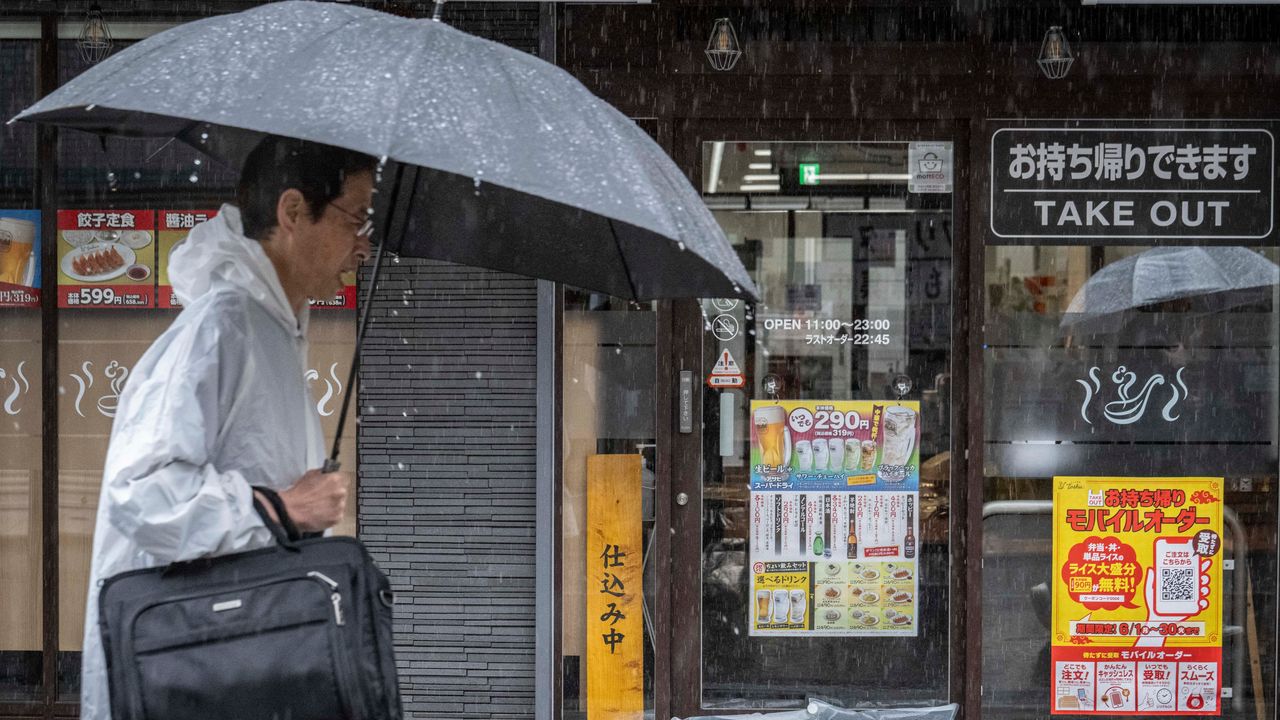
Tokyo is not under a blanket “do not travel” warning, but visitors should be cautious. For those already in the city, the safest option during the worst of the weather is to stay close to your hotel, avoid parks, rivers, waterfronts and exposed outdoor attractions, and keep plans local. Visitors are advised to avoid attempting day trips to river valleys, coastal towns or mountain areas immediately after heavy showers. Even once skies clear, landslides, fallen trees, damaged roads and swollen rivers can remain dangerous.
Is it safe to travel to Kyoto and Osaka right now?
Osaka sits close to Wakayama, where Jangmi made landfall, and parts of Kansai have experienced strong rain and transport disruption. Kyoto, while inland, has still been affected by rail delays, river levels and localised flooding, particularly around low-lying areas and routes near the Kamo River.
AloJapan.com