
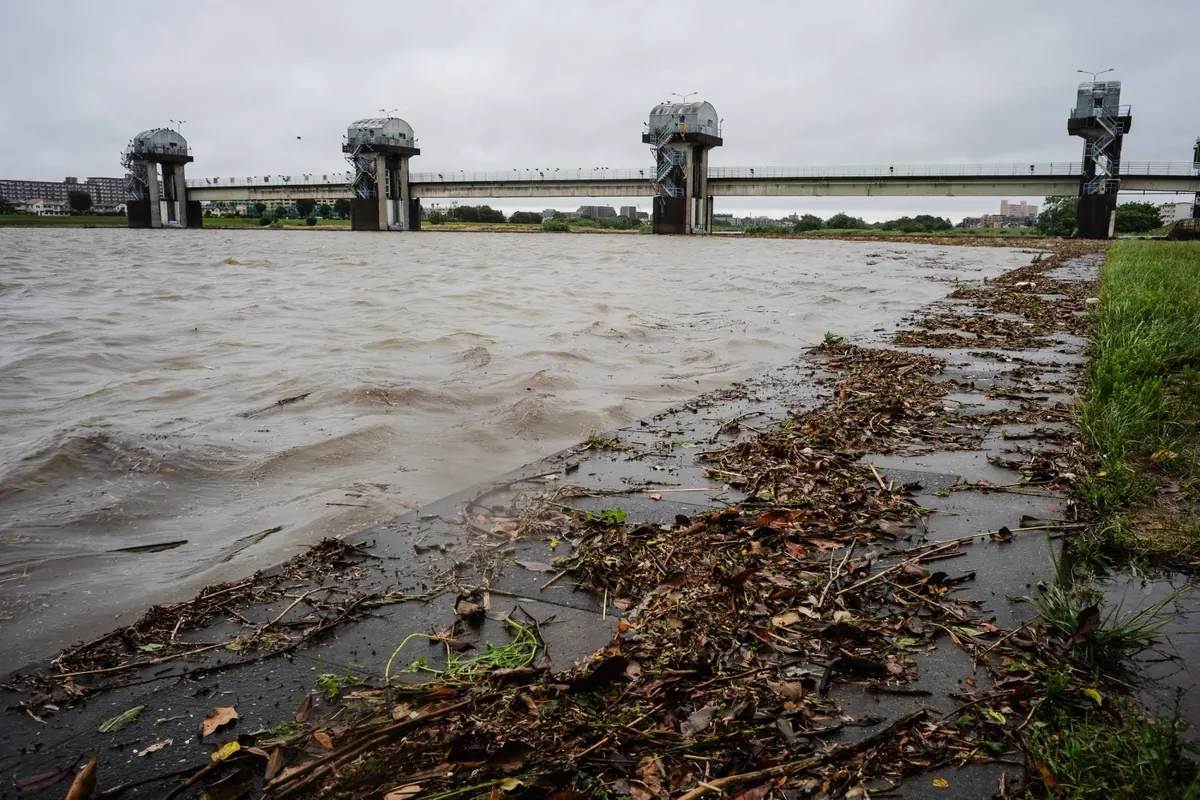
Tropical Storm Jangmi hit Honshu on Wednesday with heavy rain and strong winds, prompting flood alerts, damaging homes and disrupting transportation across Japan. It was the sixth named storm of the season and also affected power, water, rail, air and postal services.
 Tropical Storm Jangmi disrupts Japan travel
The Fire and Disaster Management Agency reported at least 23 storm-related injuries nationwide. It also said 57 houses were damaged across the country.
Tropical Storm Jangmi brings flood alerts across Honshu
Transport was badly affected in Tokyo and Kanagawa Prefecture. In Kawasaki’s Saiwai Ward, floodwater covered a road intersection, while water in some places reached 30 centimeters. NHK also reported temporary flooding near Kawasaki Station. In Tokyo’s Ota Ward, several meters of a national highway section were inundated.
Earlier on Wednesday, authorities issued Level 4 evacuation orders for areas in Tokyo, Kanagawa and Chiba prefectures. Those orders were lifted later in the afternoon.
A more severe alert followed in Wakayama Prefecture. On Wednesday morning, the Japan Meteorological Agency and Wakayama Prefecture issued a Level 5 special flood warning, the highest level, after flooding occurred along the Kozagawa River and some houses were inundated.
That warning was later downgraded to Level 2. Even then, officials continued to urge residents to monitor rising river levels and the risk of renewed flooding. A section of National Route 371, which runs along the Kozagawa River, also collapsed.
Storm position, rainfall forecast and weather risks
By 4 p.m., Jangmi was about 90 kilometers east-southeast of Choshi in Chiba Prefecture. It was moving east-northeast at 50 kilometers per hour and had a central pressure of 985 hectopascals. The storm had wind speeds of 25 meters per second, with maximum sustained winds of 35 meters per second, according to the Japan Meteorological Agency’s tropical cyclone information.
Further rainfall remained in the forecast. In the 24 hours through noon Thursday, up to 120 millimeters of rain was expected in the Kanto-Koshin and Tohoku regions.
The weather agency had urged people to remain on strict alert through Wednesday because of landslides and high waves with swells. It also warned of violent winds, rising river levels and flooding. High waves were expected to remain a concern in eastern Japan and Tohoku through Thursday.
Jangmi transportation disruptions hit rail and air travel
Jangmi transportation disruptions spread through rail and air networks on Wednesday. Trains in the Tokyo metropolitan area were canceled or delayed, while airlines canceled hundreds of flights, including services to and from Haneda Airport. Postal services were also suspended in Tokyo and 13 other prefectures.
Tokyo Electric Power Co. Holdings said more than 12,000 homes in the Kanto-Koshin region were without power as of Wednesday evening. The Tokyo Metropolitan Government also reported that 1,800 households in Ome had lost water services. Restoring supply there could take several days.
East Japan Railway Co. suspended several lines from the start of service. Most operations resumed in the afternoon, while some were scheduled to restart in the evening. Strong winds left tree branches entangled in overhead wires on some rail lines, including the Hachiko Line between Haijima and Komagawa stations. JR East’s official train status information covers Kanto-area rail services.
Several lines stayed suspended for the entire day as the storm moved through the area. Limited express services in the Kanto area were also heavily affected, with a number of trains suspended from the first departures of the day.
Flight cancellations and wider disruption
Airlines also faced large-scale disruption as the typhoon affected operations. According to NHK, major Japanese carriers canceled about 760 domestic flights on Wednesday, along with more than 90 international flights.
Domestic cancellations included 292 flights by Japan Airlines and 232 by All Nippon Airways. Skymark canceled 70 flights, Solaseed Air 37, Peach Aviation 32, Jetstar Japan 31, Air Do 28 and StarFlyer 22.
Japan Transocean Air canceled five domestic flights. Fuji Dream Airlines and IBEX Airlines each canceled four, while Spring Japan canceled two. On international routes, ANA canceled 55 flights and JAL canceled 37.
The storm left Japan facing flood damage, transport disruption and service outages at the same time, with residents and travelers affected by rail, aviation, power and water problems.
AloJapan.com