

While most global landscaping trends focus on vibrant blooms or manicured lawns, Japan has championed a much subtler botanical wonder: koke, or the humble moss. The country’s hot, high-humidity summers create an ideal ecosystem for over 2,500 distinct moss species to thrive, turning forest floors and temple grounds into lush, dewy green carpets.
This deep appreciation stems from the traditional philosophy of wabi-sabi — the art of finding pristine beauty in imperfection, humility and the gentle passage of time. From a rise in self-proclaimed “moss girls” to moss walking tours through primeval forests, seeing these versatile, miniature ecosystems have become a modern symbol of Japan’s ancient values, appreciated through the lens of eco-tourism.
Whether you’re looking for meticulously landscaped temple grounds or wild, untamed hiking trails, this guide highlights the absolute best places to experience Japan’s spectacular green wonders.
Best Moss Gardens To Visit in Japan
For those wishing to see moss cultivated as a high art form, Japan’s traditional landscaped gardens offer a breathtaking, manicured look at the plant.

Saihoji: The Famous “Kokedera” Moss Temple — Kyoto
Located in western Kyoto, Saihoji is a breathtaking UNESCO World Heritage site carpeted in over 120 varieties of lush moss. Originally designed by the legendary Zen monk Muso Soseki in the 14th century, the garden maintains a deeply serene and sacred atmosphere by requiring all visitors to participate in a brief Buddhist activity, such as chanting or sutra copying, before walking the grounds. Because of its immense popularity and strict conservation efforts, visits are strictly reservation-only and must be booked well in advance through their official website, with assigned entry slots typically scheduled for morning hours.
Location : Kyoto City, Kyoto Prefecture. Accessible via the Kyoto City Bus (Route 73) or a 20-minute walk from Matsuo-taisha Station (Hankyu Arashiyama Line).
Admission price: ¥4000 and up (depending on the seasonal program).
Reservation requirements: Strictly mandatory. Reservations must be secured weeks or months in advance via their official website interface. Walk-ins are entirely forbidden.
Hours and Seasonal closures: Generally open for specific morning time slots. The temple closes entirely to the public for maintenance from mid-January through February each year.
Sanzenin Temple (Yusei-en Garden) — Ohara, Kyoto
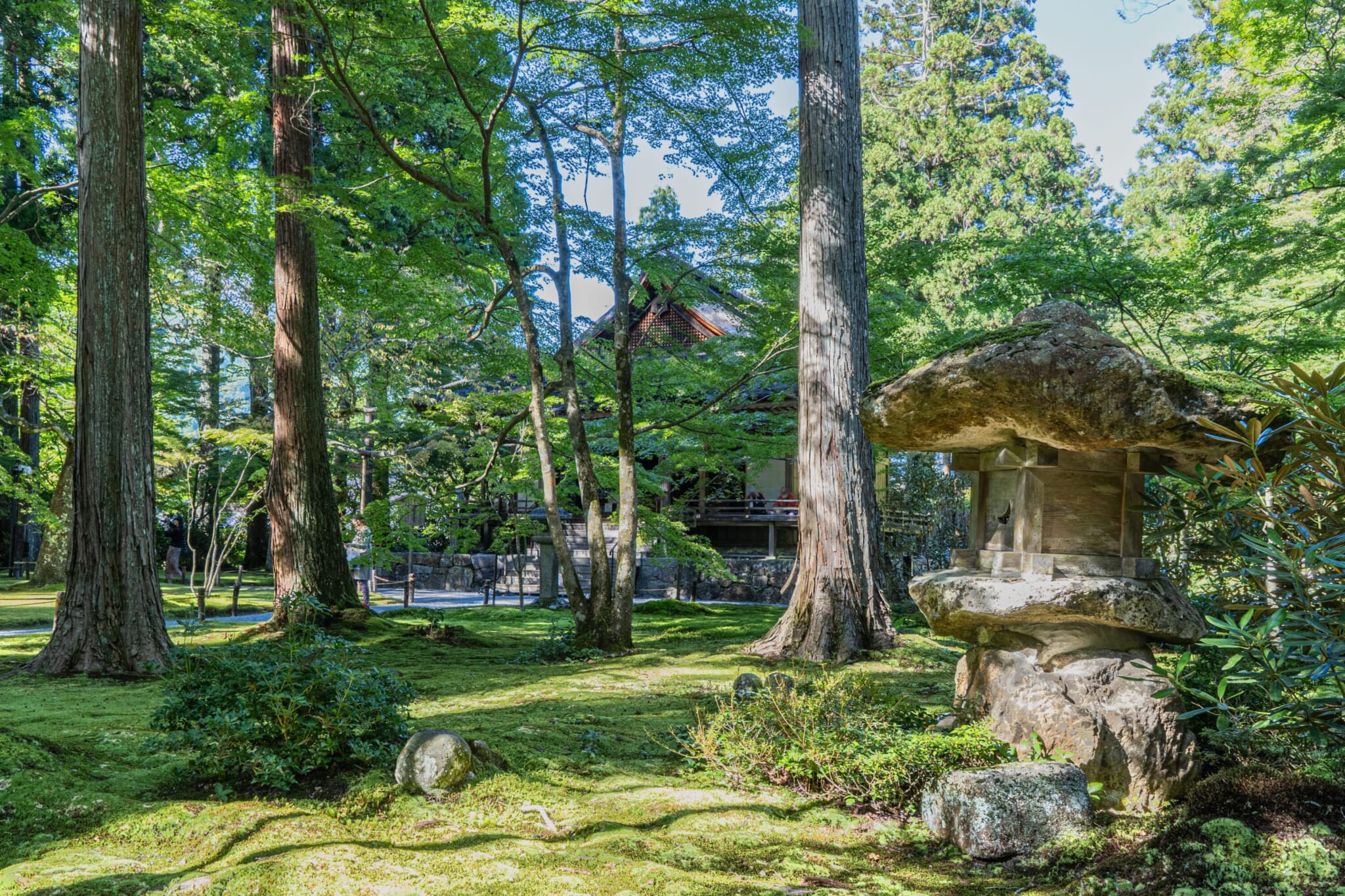
Situated in a rural, mountainous town north of Kyoto, Sanzenin Temple features the stunning Yusei-en Garden, where a vast expanse of bright green moss thrives beneath the shade of tall cedar trees. The cooler mountain climate allows the moss to stay extraordinarily vibrant year-round, making it a paradise for photographers. The garden is open daily and is best known for its whimsical, moss-covered jizo (stone guardian) statues that appear to smile directly out from the vibrant green floor.
Location: Ohara, Kyoto Prefecture. Accessible via Kyoto Bus (Route 17 or 19) from Kyoto Station or Kokusaikaikan Station to the Ohara bus stop, followed by a 10-minute walk.
Admission Price: ¥700
Reservation Requirements: No reservations required.
Hours & Seasonal Closures: Open daily year-round. 8:30 a.m. to 5:00 p.m. (March to December) and 9:00 a.m. to 4:30 p.m. (December to February). No seasonal closures.

Kenroku-en Garden — Kanazawa
Regarded across the country as one of Japan’s “Three Great Gardens,” Kenroku-en is a flawless example of an Edo-period strolling garden that showcases how moss seamlessly complements winding streams and historic stone lanterns. While the site is globally famous for its sweeping landscapes and structural design, the garden is also home to ancient tree roots that are completely enveloped in thick, velvety moss. The park is open daily, with early morning free entry options available for travelers who want to beat the crowds.
Location: Kanazawa City, Ishikawa Prefecture. Easily accessible via the Kanazawa Loop Bus from Kanazawa Station to the Kenrokuen-shita bus stop.
Admission Price: ¥320 (Free entry during special early morning hours).
Reservation Requirements: No reservations required.
Hours & Seasonal Closures: Open daily 365 days a year. 7:00 a.m. to 6:00 p.m. (March to mid-October) and 8:00 a.m. to 5:00 p.m. (mid-October to February). No seasonal closures.

Tofukuji Temple (Hojo Gardens) — Kyoto
Conveniently located in southeastern Kyoto, Tofukuji Temple offers a strikingly modern twist on the classic Japanese moss garden. Designed by the celebrated landscape architect Mirei Shigemori in 1939, the Western Garden features a geometric checkerboard pattern made of alternating squares of green moss and cut stone. Open daily, this garden is an excellent display of how nature can work beautifully with modern design principles.
Location: Kyoto City, Kyoto Prefecture. A 10-minute walk from Tofukuji Station (JR Nara Line or Keihan Main Line).
Admission Price: ¥500 for the Hojo Gardens (separate fee for the famous Tsutenkyo Bridge).
Reservation Requirements: No reservations required.
Hours & Seasonal Closures: Open daily year-round. 9:00 a.m. to 4:30 p.m. (April to October), 8:30 a.m. to 4:30 p.m. (November to early December), and 9:00 a.m. to 4:00 p.m. (early December to late March). No seasonal closures.
Mystical Moss Temples and Shrines in Japan
Away from the manicured gardens, some of Japan’s most sacred religious sites have been naturally reclaimed by moss over centuries.

Heisenji Hakusan Shrine — Fukui
Founded in 717 by the monk Taicho, Heisenji Hakusan Shrine was once a massive, politically powerful temple complex before it was burned down during 16th-century uprisings and later adapted into a Shinto shrine. Today, it’s nicknamed the “Moss Shrine” because its vast 20,000-square-meter precinct is entirely blanketed in a thick, velvety green carpet — over 25 species in the shrine and more than 200 in the surrounding forest. The ancient stone-paved pathways and towering cedar trees are completely integrated into the mossy landscape, and visiting on a rainy day heightens the radiant green tones to a striking, otherworldly effect.
Location: Katsuyama City, Fukui Prefecture. Take the Echizen Railway to Katsuyama Station, then a 15-minute community bus ride to the Heisenji Jinja-mae stop.
Admission Price: Free (The adjacent historical museum, Hakusan Heisenji Historical Exploration Center, charges a small fee).
Reservation Requirements: No reservations required.
Hours & Seasonal Closures: Grounds are open 24/7 year-round. Note that heavy snow in January and February can deeply bury the moss, making spring through autumn the ideal visiting window.

Courtesy of e-yuzawa.gr.jp
Ime Shrine — Niigata
In the snow country of Ojiya in Niigata Prefecture, the ancient, quiet Ime Shrine offers a local, intimate look into the passage of time. Generally free from heavy tourist crowds, the weathered stone stairs, lanterns and foundation pillars here are heavily blanketed in wild, native mosses. It is a spectacular off-the-beaten-path destination celebrated for its rare and varied specimen of moss.
Location: Ojiya City, Niigata Prefecture. Best reached via rental car from Ojiya Station (JR Joetsu Line) or via local taxi.
Admission Price: Free.
Reservation Requirements: No reservations required.
Hours & Seasonal Closures: Grounds open 24/7. Winter snow heavily masks the grounds from late December through March, so a spring-to-autumn trip is highly recommended to view the moss.

Hakone Shrine — Kanagawa
While Hakone Shrine is globally famous for its iconic red torii gate that floats photographically on the waters of Lake Ashi, the inland approach to the shrine offers an entirely different, mystical experience. The winding path leads visitors through a dense, quiet forest where ancient stone steps and massive retaining walls have been completely swallowed by deep green moss. Walking through this corridor evokes the feeling of stepping into a historical fairy tale, illustrating the Japanese cultural desire to coexist with the natural world.
Location: Hakone Town, Kanagawa Prefecture. Accessible via the Hakone Tozan Bus from Hakone-Yumoto Station to the Motohakone-ko bus stop, followed by a 10-minute walk along the lake.
Admission Price: Free.
Reservation Requirements: No reservations required.
Hours & Seasonal Closures: Open daily 24/7 year-round (Shrine treasure house has independent daytime hours). No seasonal closures.

Giouji Temple — Kyoto
Giouji Temple is a small, secluded nunnery tucked away in Kyoto’s popular Arashiyama district, famously known as a peaceful sub-temple of moss. The grounds feature an intensely dense, emerald-green moss garden that completely surrounds a simple, rustic thatched-roof hut. Profoundly quiet and melancholic, Giouji is immortalized in the classical The Tale of the Heike as a historic place of tragic romance, making for a thoughtful retreat, away from the bustling bamboo groves nearby.
Location: Arashiyama, Kyoto Prefecture. A 20-to-25-minute walk from Saga-Arashiyama Station (JR San-in Line) or Arashiyama Station (Henkyu Line).
Admission Price: 300 yen (A discounted combination ticket with nearby Daikaku-ji is also available).
Reservation Requirements: No reservations required.
Hours & Seasonal Closures: Open daily year-round from 9:00 a.m. to 5:00 p.m. (Last entry at 4:30 p.m.). No seasonal closures.
Best Moss Forests in Japan for Hiking
For the wild at heart, Japan’s forests offer a chance to witness moss dominating entire ecosystems, draping mountainsides in a living, glowing canopy.

Koke no Mori (The Moss Forest) — Nagano
Situated in the Northern Yatsugatake mountain range surrounding Lake Shirakoma, Koke no Mori is a subalpine coniferous forest that serves as, quite literally, a kingdom for bryophytes, playing host to roughly 500 distinct moss varieties. This is the absolute premier destination in Japan for organized moss walking tours, where passionate guides lead hikers through the woods. Equipped with magnifying glasses, visitors can closely inspect the intricate, jungle-like structures of the mini-fauna thriving across the forest floor and sprawling over decaying logs.
Location: Chino/Sakuho area, Nagano Prefecture. Accessible via the alpico bus from Chino Station to the Shirakoma-ike-iriguchi bus stop (operates primarily from late spring to autumn), followed by a short hike.
Admission Price: Free to enter the forest trails; guided moss walking tours vary by provider (typically ¥3,000 to ¥6,000).
Reservation Requirements: No reservations required for solo hiking. Guided moss tours require advance booking through local ecotourism outfits or the Yatsugatake mountain huts.
Hours & Seasonal Closures: The mountain trails are technically open 24/7, but standard access public transit and mountain huts close or scale back significantly from November to April due to heavy subalpine snow.

Yakushima Island — Kagoshima
Yakushima Island is a remote, subtropical paradise, widely associated with influencing Hayao Miyazaki’s iconic anime film Princess Mononoke. The island’s Shiratani Unsuikyo Ravine experiences relentless rain and high humidity, which allows moss to completely cover the trees, boulders and valley floors. It wraps the entire forest in a luminous green fur, creating an ethereal landscape from another era.
Location: Yakushima Island, Kagoshima Prefecture. Reachable via flight or high-speed ferry from Kagoshima City, followed by a local island bus to the Shiratani Unsuikyo trail head.
Admission Price: ¥800 forest cooperation donation fee at the trailhead entry.
Reservation Requirements: No reservations required.
Hours & Seasonal Closures: Open daily 24/7 year-round. However, mountain roads and trails can temporarily close due to heavy rainfall, typhoons or occasional winter mountain snow.
Oirase Mountain Stream — Aomori
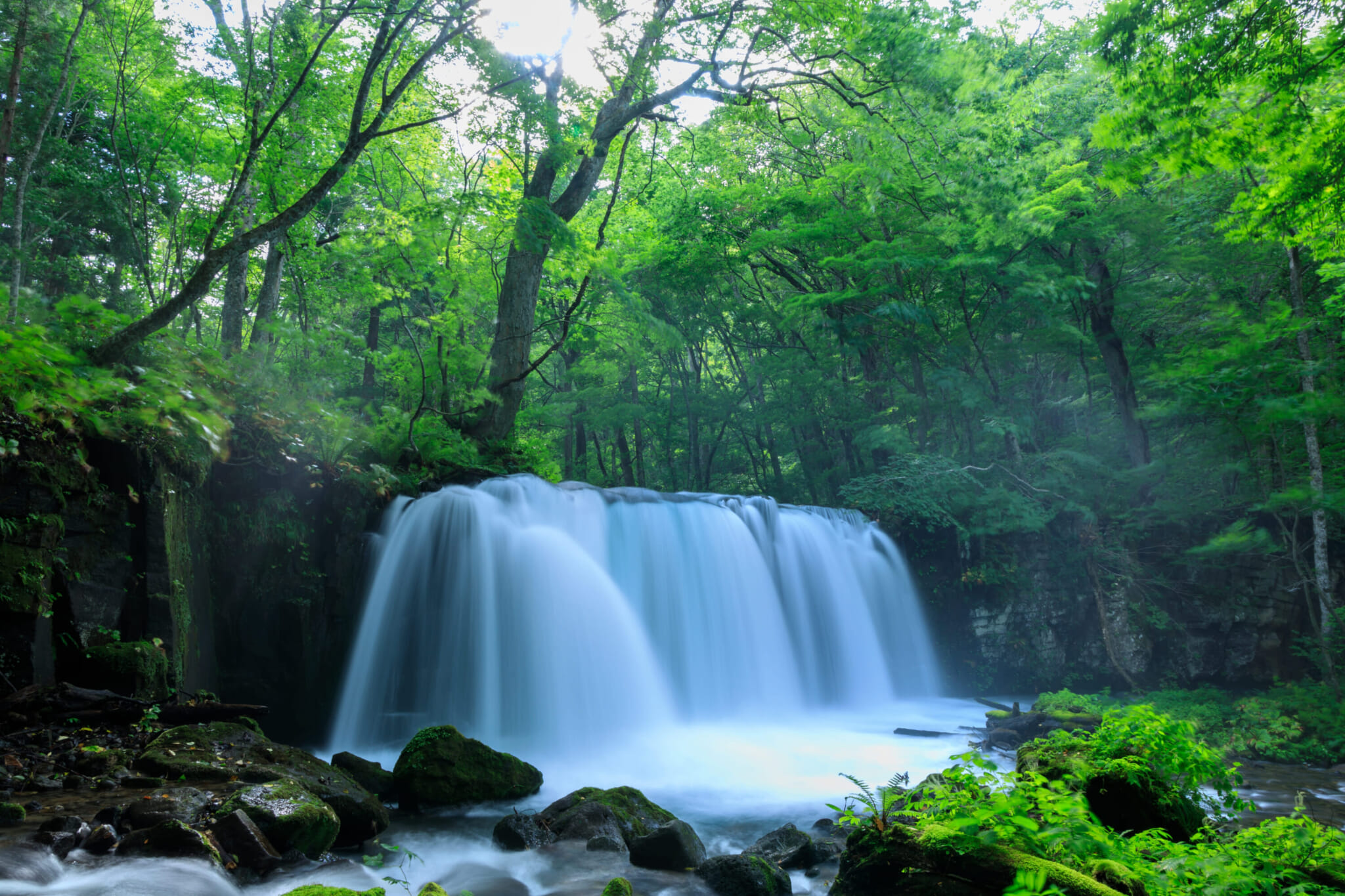
Located in the far north of Japan’s main island, the Oirase Mountain Stream is a picturesque river valley where moss thrives directly on the rocks sitting in the middle of the rushing rapids. The constant, heavy mist and running water create an ideal, humid habitat for diverse plant species. This unique environment turns every fallen log and river boulder into a complex, self-sustaining miniature ecosystem that shifts beautifully in color across the changing seasons.
Location: Towada City, Aomori Prefecture. Accessible via the JR Bus Mizuumi-go from Aomori Station or Hachinohe Station directly to various stops along the Oirase Stream trail.
Admission Price: Free.
Reservation Requirements: No reservations required.
Hours & Seasonal Closures: Open daily 24/7 year-round. Note that public buses reduce schedules or stop running completely in deep winter (November to mid-April), when the stream freezes over.

Best Time To See Moss in Japan
Timing your trip is everything if you want to experience Japan’s moss kingdoms at their peak performance. While moss is an evergreen plant, its color and plumpness shift with the seasons.
Rainy Season (June to July) — The Absolute Peak
If you want to see moss at its absolute most spectacular, you should plan your trip during tsuyu (Japan’s rainy season), which typically runs from early June to mid-July. The near-constant daily precipitation and heavy humidity make the moss expand like a sponge, taking on an incredibly rich, luminous neon-green hue.
Summer (August) — Lush but Humid
Following the rainy season, August keeps the moss looking thick and lush, especially in shaded temple gardens and higher-altitude forests. The visual effect of bright green moss offers a psychologically cooling escape from Japan’s intense summer heat. However, low-lying city moss can begin to dry out if a heatwave strikes without rain.
Autumn (September to November) — The Color Contrast
Autumn offers a uniquely poetic way to view moss. As the maple trees change color, bright red and orange leaves drop onto the deep green moss carpets below, creating a breathtaking color contrast that is highly celebrated in Japanese photography and poetry. The weather is also comfortable for hiking through wild moss forests.
Winter and Spring (December to May) — Dormancy and Snow
During winter, low-altitude moss becomes dormant, turning a darker, earthier olive-green or brown. In mountainous regions, the moss is completely buried under heavy blankets of snow until spring. While beautiful in its own right, you won’t be able to see the plant itself until the snow melts in April or May.
Related Posts
Updated On June 2, 2026
AloJapan.com