
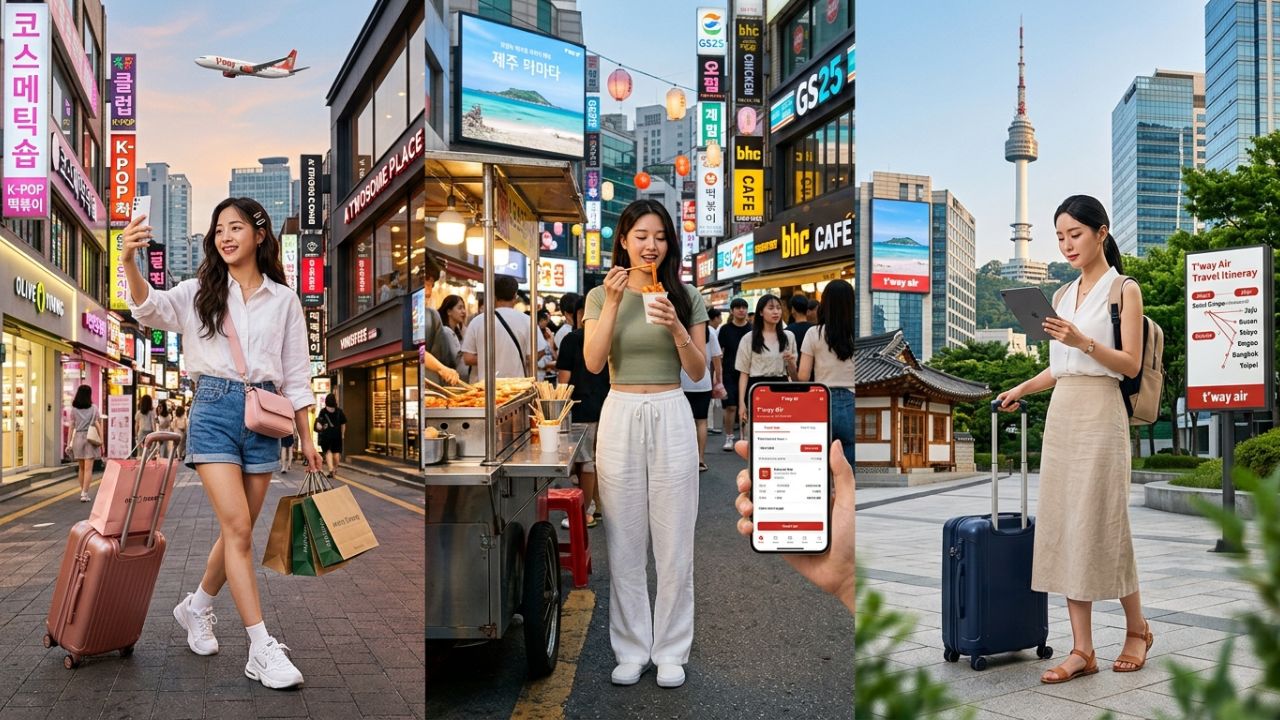
East Asian travel corridors are undergoing a monumental capacity surge as South Korean budget carrier T’way Air announces an extensive route expansion connecting seven major Japanese cities with five key South Korean entry points for the 2026 summer holiday season. Featuring aggressive promotional discounts, generous regional travel coupon programs, and highly flexible reservation options, this new network layout is strategically designed to help millions of summer holidaymakers bypass standard seasonal airport disruptions and unexpected flight cancellations that typically cause widespread travel chaos across regional hubs. The massive expansion marks a historic milestone in East Asian airline news and point-to-point aviation updates.
By introducing direct connections to several secondary hubs and scenic coastal resort destinations across the peninsula, the carrier makes round-trip travel highly affordable and convenient. Travelers can now seamlessly plan extensive cross-border itineraries from multiple Japanese departure points into diverse Korean urban ecosystems without the high expenses and transit delays associated with legacy airline operations.
Context: South Korea’s Cultural and Tourism Appeal
South Korea stands out as a highly mesmerizing travel destination that masterfully blends centuries-old imperial history with hyper-modern urban lifestyle trends. From the neon-lit streets of major metropolitan centers like Seoul to the peaceful mountain temples tucked away in scenic provincial territories, the East Asian peninsula offers an incredibly diverse and rewarding playground for international explorers. Tourism infrastructure throughout the country continues to expand rapidly to welcome waves of regional holidaymakers seeking immersive cultural experiences, exceptional culinary journeys, and world-class entertainment spectacles. As seasonal vacation planning intensifies across neighboring countries, accessibility becomes the absolute key driver for sustained international visitor growth.
To check promotional schedules, search seasonal ticket discounts, and review terms, passengers can visit the official T’way Air booking system. For general entry guidelines, visa regulations, and passenger terminal services, the Seoul Incheon International Airport terminal portal provides comprehensive, up-to-date information for international arrivals.
Route Launches: T’way Air Connects Seven Japanese Cities to Five Korean Gateways
By utilizing its high-capacity narrowbody fleet, T’way Air is dramatically expanding cross-border accessibility between Japan and South Korea. Rather than limiting travelers to traditional capital-to-capital flights, the carrier’s network map establishes direct connections between seven distinct Japanese hubs and five crucial South Korean entry points:
Seoul Incheon (ICN) & Gimpo (GMP): Leading capital gateways offering instant access to palaces and trendy shopping districts.
Cheongju (CJJ): Serving as a rapidly growing central hub with convenient access to pristine national parks and rural heritage sites.
Daegu (TAE): Providing a direct pathway to historic inland markets, traditional herbal medicine hubs, and textile industries.
Busan (PUS): Unlocking immediate access to massive public beaches, cliffside temples, and coastal seafood markets.
Jeju Island (CJU): Connecting holidaymakers directly to South Korea’s spectacular volcanic landscapes and sub-tropical coastal getaways.
This multi-gateway network provides excellent operational flexibility, enabling travelers to enter through one region (such as the southern coast of Busan) and depart from another (such as the capital city of Seoul) without returning to their initial entry point.
Flight Frequencies and Operational Metrics
To help international vacationers plan multi-city summer itineraries, the following table summarizes T’way Air’s scheduled Japan-Korea route metrics and transit connections:
Korean Gateway Hub
Japanese Connecting Hubs
Core Tourism Focus
Special Promotional Features
Route Availability
Seoul (ICN / GMP)
7 major Japanese cities
Palace tours, urban fashion, Yeonnam-dong cafés
Flexible rebooking, discount codes
Daily seasonal flights
Cheongju (CJJ)
Selected regional cities
National parks, rural heritage, cultural landmarks
Generous regional travel coupons
Multiple weekly departures
Daegu (TAE)
Selected regional cities
Historic medicine markets, textile districts
Discounted round-trip pricing
Multiple weekly departures
Busan (PUS)
Selected regional cities
Public beaches, Waterbomb festival, rock music
Combined flight-and-hotel coupons
Daily peak summer flights
Jeju Island (CJU)
Selected regional cities
Volcanic hikes, sub-tropical coastal getaways
Generous baggage allowance
Multiple weekly departures
Tactical Benefits: Generous Coupons and Flexible Booking Conditions
To capture dominant market share on these highly competitive regional sectors, T’way Air has introduced a comprehensive set of consumer incentives. Travelers can benefit from massive promotional discounts, a generous regional coupon program that offers immediate reductions on local accommodation and ground transport, and exceptionally flexible booking conditions. This strategic flexibility allows holidaymakers to modify their travel dates easily if their plans change, eliminating the anxiety of costly penalties during the busy summer travel period.
By pairing cheap flights with discounted local tourism services, the budget carrier stimulates demand among younger travel demographics who heavily prioritize budget-friendly and experiential vacation planning.
Passenger Impact: Immersive Cultural and Festival Tourism Opportunities
This transport expansion arrives at a perfect time, coinciding directly with the arrival of highly anticipated summer music festivals and spectacular autumn foliage transitions. In Seoul, cultural purists can participate in the famous Changdeokgung Palace Moonlight Tour, which beautifully illuminates the ancient grounds and royal secret gardens under the night sky.
In Busan, the thrilling Waterbomb Festival brings massive crowds and world-class musical performances during the peak heat of July and August. As the summer heat gives way to cooler autumn breezes, the coastal metropolis of Busan transforms into a global cinematic epicenter, hosting its highly acclaimed Busan International Film Festival alongside a massive, energetic outdoor Rock Festival that attracts thousands of global cinephiles and music fans alike.
What This Means for Travelers: Actionable Advice
To successfully navigate these new regional flight offerings, travelers should adhere to these expert steps:
Check Flight Schedules Early: Review seasonal schedules and promotional discount options directly on the official T’way Air booking system.
Confirm Entry and Transit Guidelines: Verify current travel documents and South Korea K-ETA registration requirements through the Seoul Incheon terminal portal.
Leverage the Coupon Program: Download T’way Air’s regional travel coupons before completing your transaction to maximize savings on hotels and ground transit.
Create Multi-Gateway Itineraries: Plan your trip by flying into one gateway (e.g., Busan) and departing from another (e.g., Seoul) to explore secondary markets without backtracking.
FAQ: T’way Air Japan-Korea Flights 2026
Which Japanese cities are connected by T’way Air to South Korea?
T’way Air connects seven major Japanese urban hubs with five distinct entry points across the South Korean peninsula.
Can passengers change their travel dates without heavy penalties?
Yes, the carrier is offering highly flexible booking conditions that allow passengers to adjust their itineraries easily.
Are there direct flights to secondary destinations like Daegu or Jeju?
Yes, T’way Air’s network includes direct flights to Cheongju, Daegu, Busan, and Jeju Island alongside capital flights to Seoul.
Bigger Picture: Low-Cost Carriers Fueling East Asian Tourism Networks
The massive expansion of T’way Air’s route network showcases the vital role that low-cost carriers (LCCs) play in driving regional economic development. By providing direct, affordable connections to secondary coastal hubs and volcanic island escapes, airlines actively stimulate local hotel, retail, and food-and-beverage ecosystems outside capital regions. This distributed capacity model not only prevents overcrowding at primary airports but also supports a more sustainable, long-term approach to global tourism expansion, helping local communities capture higher-value travelers.
Key Takeaways
Network Expansion: T’way Air connects seven Japanese cities with five major entry points in South Korea for Summer 2026.
Summer & Autumn Peak: The routes align with peak festival seasons, including the Waterbomb Festival and Changdeokgung Palace Moonlight Tour.
Affordable Fares: Low-cost point-to-point flights are paired with substantial promotional discounts and regional coupons.
Five Core Gateways: Flights link directly to Seoul, Cheongju, Daegu, Busan, and Jeju volcanic island.
Flexible Rebooking: Flexible booking terms protect passengers from flight disruption costs.
Related Travel Guides
Qatar Airways Resumes Nonstop Doha Flights to Helsinki and Tokyo Haneda to Safeguard Passengers from Transit Travel Chaos
Dan Air Launches Massive Middle East and Caucasus Route Expansion from Bucharest Connecting Amman, Tbilisi, Yerevan, and Aleppo
T’way Air Japan-Korea Summer Flight Promotions and Route Expansion Trends: What Travelers Can Expect on Reddit in 2026
Disclaimer: Promotional flight schedules, discount coupons, and gateway operations are subject to bilateral aviation agreements and regulatory approvals. Travelers are advised to consult T’way Air directly for real-time fares and terms.
AloJapan.com