
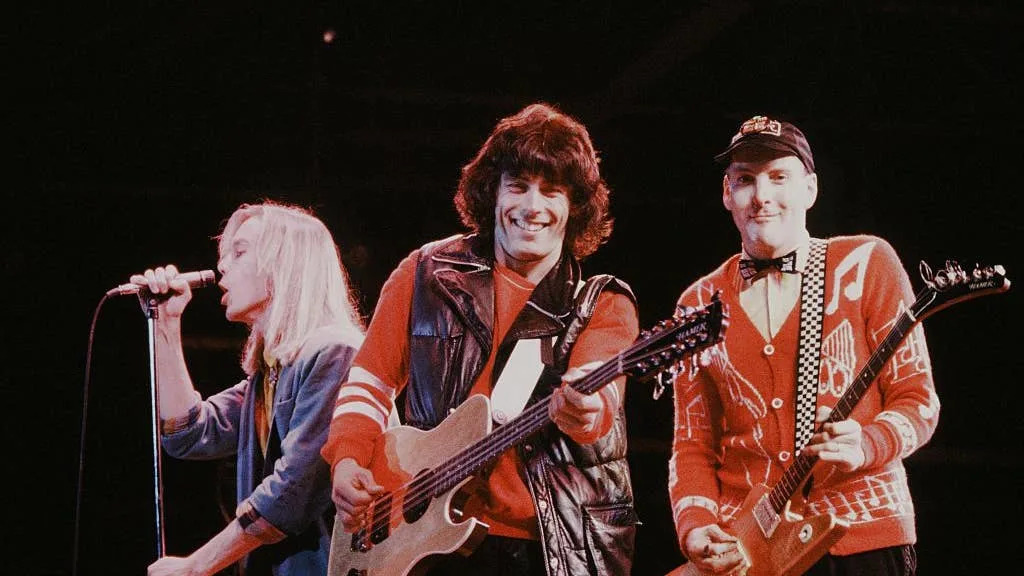
Cheap Trick at Budokan is not only considered one of the best live albums ever released, it broke the band in America.
Prior to the release of the album in 1979, Cheap Trick was a Chicago quartet that was having trouble gaining traction in America, though they were big in Japan. That was until At Budokan began receiving airplay in U.S. after it was initially released in Japan in 1978. After 30,000 copies of the album sold in the U.S. as Japanese imports, Cheap Trick’s American label, Epic, decided to issue the album in the U.S.
🎬 SIGN UP for Parade’s Daily newsletter to get the latest pop culture news & celebrity interviews delivered right to your inbox 🎬
As a result, the live version of “I Want You to Want Me” became a big hit, reaching No. 7 on Billboard’s Hot 100. The studio version of the song, included on the band’s second album, 1977’s In Color, failed to chart. The band’s live cover of Fats Domino’s “Ain’t That a Shame” also broke into the top 40 of the Hot 100, with At Budokan going on to sell more than 5 million copies worldwide, paving the way for Cheap Trick’s long and illustrious career.
Still, there’s one thing about Cheap Trick at Budokan that doesn’t ring true and wasn’t revealed until decades after the album’s release.
It wasn’t recorded at Budokan.
The Real Story Behind ‘Cheap Trick at Budokan’
Months before his death on May 11, 2026, at the age of 80, producer Jack Douglas revealed the story behind the album when he appeared as a guest on The Magnificent Otherspodcast with host, Smashing Pumpkins frontman Billy Corgan.
“So Budokan’s not Budokan,” Douglas revealed. “It’s Osaka.”
Despite the album’s title, a quick glance of the liner notes of the original album say only it was “recorded in Japan, April 1978.” Douglas and mixing engineer Jay Messina were asked to prepare the recordings from Nippon Budokan for release but found it impossible.
“They sent me the tapes, and Jay and I, we listened to everything. Budokan sounded terrible,” Douglas revealed. “It was just so poorly recorded. I don’t know, like the mics were off, they were pointed the wrong direction, there was a little bit of drums, very little, not much, no bass drum.”
In order to put together a proper live album, Douglas turned to recordings from another show in Japan. “We went to Osaka, it was better. It was the best performance,” he explained.
Cheap Trick at Budokan is still considered a classic. The album was ranked No. 13 on Rolling Stone’s 2015 list of the “50 Greatest Lives Albums of All Time” and has been re-released on special anniversary reissues, including a 30th anniversary set, with a DVD, that required additional magic from Douglas. “[Cheap Trick guitarist] Rick [Nielsen] calls me up,” Douglas told Corgan. “He goes, ‘We have the film from Budokan. We’re going to do a 5.1 [mix]. I want you guys to mix a 5.1 version of it. And I said, ‘You have the film from Budokan?’ He goes, ‘Yeah, just use like kind of the same mix maybe as…’ I said, ‘But that mix is Osaka, remember?’”“So now Jay and I go to work on this thing, and thank God for Pro Tools, there was a cut-and-paste job,” Douglas explained. “You would not believe because when there was a close-up on Rick or his hands or Robin [Zander] singing, that was Budokan. When I was a wide shot, it was Osaka. And it was just… It was a labor of love. I loved doing it.”
This story was originally published by Parade on May 14, 2026, where it first appeared in the News section. Add Parade as a Preferred Source by clicking here.
AloJapan.com