
Hello, and welcome back to Metagame Mentor, your weekly guide to the top decks and latest Constructed developments on the path to the Pro Tour. This past weekend featured two premier Standard tournaments—Magic Spotlight: Secrets in London and the Regional Championship for Japan and South Korea—where players competed for prize money, promo cards, and Pro Tour invitations. Across both events, the continued evolution and remarkable diversity of Standard were on full display.
The most-played Standard decks were Izzet Prowess and Selesnya Landfall, which comprised nearly one-third of the combined field. Yet only a single traditional Izzet Prowess list reached the Top 8, and Selesnya Landfall failed to bring a single pilot into the elimination rounds. Instead, the spotlight fell on inventive decks, unexpected innovations, and surprising champions.
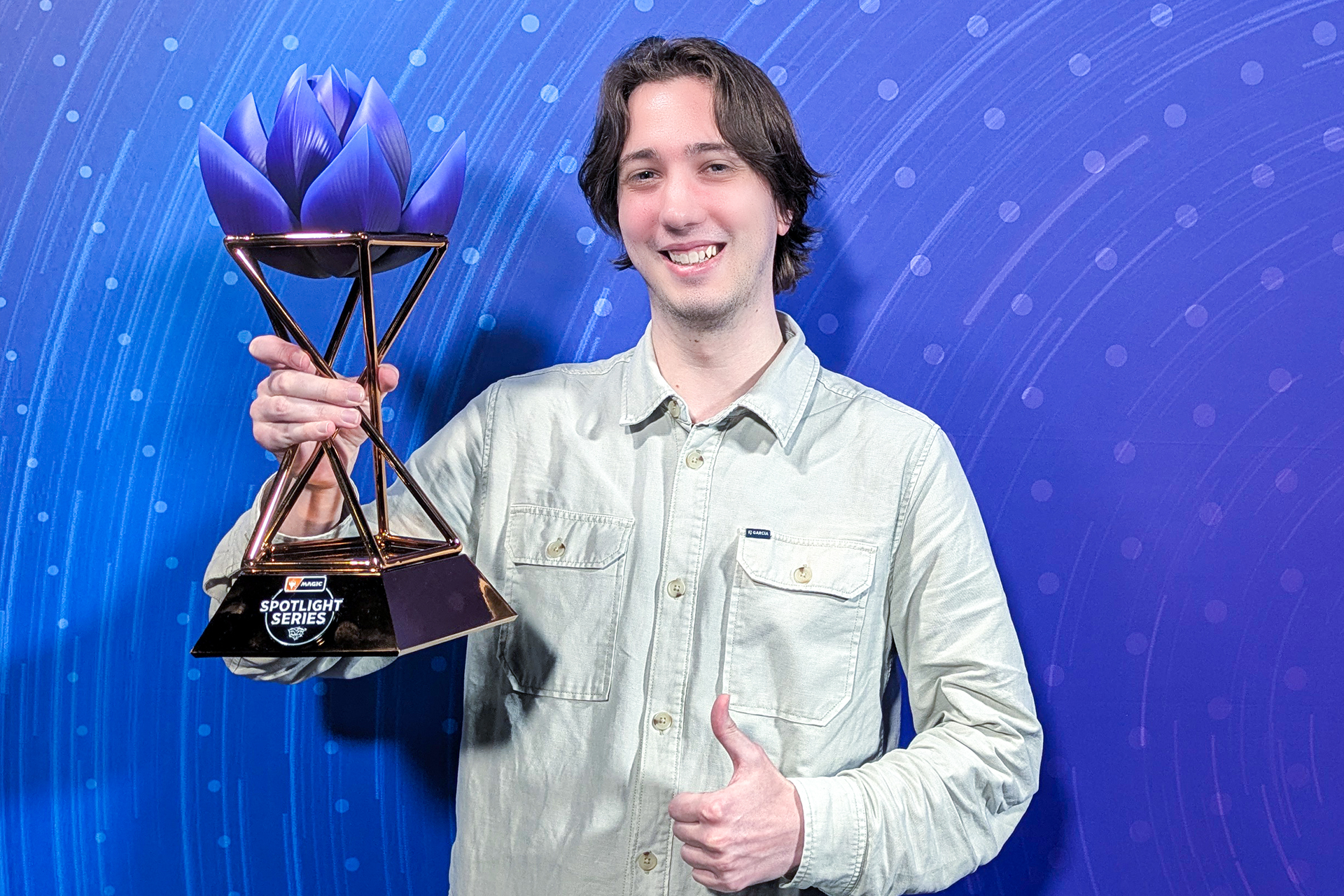

Koen de Vos claimed the Spotlight Series trophy in London with Azorius Momo, while Keiichiro Matsumoto triumphed in Tokyo with Four-Color Control. In this article, I’ll take a closer look at their decks and other breakout Standard decks from these events, none of which rely on Stormchaser’s Talent or Badgermole Cub.
Standard, the rotating 60-card format that currently allows expansion sets from Wilds of Eldraine forward, is one of Magic’s premier competitive formats. Across Magic Spotlight: Secrets in London and the Regional Championship for Japan and South Korea, also known as the Champions Cup Final, a total of 957 Standard decklists were available for analysis. After setting archetype names based on each deck’s contents, I compiled the overall metagame share and match win rates for each archetype (excluding mirror matches, byes, and draws).
In this table, each archetype name hyperlinks to a top-performing decklist that closely reflects its aggregate build. The “Other” category collects decks with one percent metagame share or less, including Boros Dragons, Dimir Midrange, Sultai Reanimator, Azorius Artifacts, Mono-White Momo, Dimir Deceit, Grixis Deceit, Boros Mobilize, Simic Omniscience, Mardu Discard, Temur Harmonizer, Izzet Fling, and more.
As indicated by the arrows in the table, the metagame had shifted compared to the one at Pro Tour Secrets of Strixhaven. Izzet Prowess, after posting a relatively middling performance at the Pro Tour, declined in metagame share, although it still stood as the single most-played archetype overall.
The total number of green decks remained relatively stable, but their composition changed dramatically. Selesnya Landfall, propelled by the breakout mirror match in the Pro Tour finals, surged forward to become the second most-played deck. Likewise, Selesnya Ouroboroid was broadly adopted by players and had one of the strongest win rates in the field. Traditional Mono-Green Landfall declined as players gravitated toward these newer and more refined builds.
Overall, two card packages continue to serve as the defining pillars of Standard: Llanowar Elves and Badgermole Cub, and Stormchaser’s Talent and Boomerang Basics. These pairs dominated the metagame at Pro Tour Secrets of Strixhaven. Although their grip on the format appears to be slowly loosening, they still accounted for approximately half the field combined across Magic Spotlight: Secrets in London and the Champions Cup Final.
Stormchaser’s Talent
At the Pro Tour, 34.5% of players registered at least one copy of Stormchaser’s Talent in their main deck or sideboard. This number dropped to 27.6% of the combined field at last weekend’s events. The card remains a universal staple in Izzet Prowess and appears in slightly over half of the Izzet Lessons decks and in a few fringe archetypes. However, it doesn’t see play in Izzet Spellementals. This past weekend, Stormchaser’s Talent players posted a collective 51.2% win rate.
Badgermole Cub [LerH8gGFQprXZ5n6Qbelh]
At the Pro Tour, 28% of players included at least one copy of Badgermole Cub in their main deck or sideboard. That number remained nearly unchanged, slipping only slightly to 27.6% of the combined field at last weekend’s events. The card is a near-universal staple in Landfall, Ouroboroid, and Rhythm decks across several color combinations. This past weekend, players with Badgermole Cub in their deck achieved a collective 51.7% win rate.
Even though Izzet Prowess and Selesnya Landfall were the most-played Standard decks last weekend, only a single traditional Izzet Prowess list reached the Top 8 of either tournament, while Selesnya Landfall failed to place a single copy into the elimination rounds.
Interestingly, Stormchaser’s Talent and Badgermole Cub still found success in other shells. For example, Badgermole Cub appeared in Nathan Goldberg’s Selesnya Rhythm deck from the Top 8 in London, while Junpei Nakamura used Badgermole Cub in Golgari Midrange to secure a Pro Tour invitation in Tokyo. Meanwhile, Alexandre MacIsaac, who won Magic Spotlight: Spider-Man in Baltimore last year with Callous Sell-Sword, once again flung his way to a Spotlight Series Top 8—now with an Izzet build that combined Callous Sell-Sword’s Adventure, pump spells, and Stormchaser’s Talent.
Nevertheless, most of the Pro Tour invitations this past weekend were claimed by unexpected decks that eschewed both Stormchaser’s Talent and Badgermole Cub altogether, suggesting that large portions of Standard remain unexplored and that offbeat builds can certainly find success. Let’s take a closer look at the breakout decks that earned, or narrowly missed, a Pro Tour invitation.
4 Momo, Friendly Flier
2 Erode
2 Aang, Swift Savior
2 Haliya, Guided by Light
4 Floodfarm Verge
4 Hallowed Fountain
2 Seam Rip
4 Springleaf Drum
2 Practiced Offense
4 Daydream
4 Multiversal Passage
2 Abandoned Air Temple
7 Plains
4 Sage of the Skies
4 Starfield Shepherd
2 Cosmogrand Zenith
2 Nurturing Pixie
1 Gran-Gran
4 Quantum Riddler
1 Disdainful Stroke
2 Seam Rip
2 Pyrrhic Strike
2 Hide on the Ceiling
2 No More Lies
2 Rest in Peace
1 Spell Pierce
3 Clarion Conqueror
Koen de Vos claimed the trophy at Magic Spotlight: Secrets with Azorius Momo. Before the tournament, he was uncertain about the deck, as the archetype had posted a disappointing performance at Pro Tour Secrets of Strixhaven. Nevertheless, it proved to be an excellent call for this past weekend’s metagame. Over the course of the event, de Vos faced ten different Izzet decks and defeated every single one of them.
Across all Azorius Momo pilots in London and Tokyo combined, the archetype posted a remarkable 16-7 record against Izzet Prowess, good for a 70% win rate in that matchup. With Izzet Prowess as the format’s most popular deck, that matchup alone makes Azorius Momo stand out. Additionally, as de Vos himself put it: “The most important thing is that it’s fun to play!”
After a turn-one Springleaf Drum, the deck is capable of a devastating turn two. Momo, Friendly Flier alongside Sage of the Skies is extremely strong against Izzet Prowess. Quantum Riddler, when paired with Daydream, offers another potent avenue of attack. Both duos advance your battlefield while helping to block Slickshot Show-Off.
One relatively new addition is Practiced Offense, which enables surprise lethal swings when the deck has established a wide board of evasive fliers. Tase Yuya, who reached the Top 8 of the Regional Championship in Japan with a similar list, also registered two copies of Practiced Offense, suggesting that the card is a worthwhile addition to the archetype.
1 Inti, Seneschal of the Sun
4 Concealed Courtyard
1 Erode
2 Inspiring Vantage
4 Iron-Shield Elf
3 Burst Lightning
4 Starting Town
4 Practiced Offense
1 Mountain
1 Multiversal Passage
4 Moonshadow
4 Hardened Academic
4 Marauding Mako
4 Sacred Foundry
1 Requiting Hex
4 Cool but Rude
1 Blazemire Verge
3 Tersa Lightshatter
4 Bloodghast
1 Carnage, Crimson Chaos
4 Blood Crypt
1 Godless Shrine
2 Strategic Betrayal
1 Seam Rip
1 Shoot the Sheriff
2 Pyroclasm
2 Case of the Crimson Pulse
3 Voice of Victory
4 Leyline of the Void
Stanley Franks was inspired by the results of Pro Tour Secrets of Strixhaven, where Mardu Discard posted an impressive 61% win rate in the Standard rounds. He picked up the deck for Magic Spotlight: Secrets in London; added more aggression through Inti, Seneschal of the Sun and Carnage, Crimson Chaos; and took the deck all the way to the finals. It was an undeniably impressive performance! Across all pilots in London and Tokyo, Mardu Discard recorded a 29-22 match record, translating to a 57% win rate, the highest among all archetypes with at least four players.
Most strikingly, Mardu Discard posted a perfect 9-0 record against Izzet Prowess across the two tournaments, standing completely undefeated against the format’s most-played deck. As Franks explained, lifelink is the crucial ingredient. For example, when you control Hardened Academic, you can discard Practiced Offense, cast it for its flashback cost to trigger Hardened Academic, and attack with a 4-power creature with double strike, flying, and lifelink. The result deals 8 damage and gains you 8 life, a massive 16-point swing. That compact interaction between just two cards is often enough to win a damage race.
1 Forest
1 Pyroclasm
2 Starting Town
3 Stomping Ground
1 Ill-Timed Explosion
2 Dreamroot Cascade
1 Breeding Pool
3 Into the Flood Maw
2 Winternight Stories
2 Multiversal Passage
4 Ashling, Rekindled
4 Kona, Rescue Beastie
4 Uthros, Titanic Godcore
3 Cavern of Souls
1 Spell Pierce
3 Marang River Regent
3 Stock Up
4 Omniscience
1 Spider-Sense
4 Kavaron, Memorial World
3 Spirebluff Canal
1 Steam Vents
4 Formidable Speaker
3 North Wind Avatar
1 Origin of Metalbending
1 Stormkeld Vanguard
1 Omni-Changeling
1 Ghost Vacuum
1 North Wind Avatar
1 Marang River Regent
1 Ill-Timed Explosion
1 Lost in the Maze
1 Abrade
1 Pyroclasm
2 Spider-Sense
1 Soul-Guide Lantern
1 Extinguisher Battleship
1 Voice of Victory
Powerful combo strategies exist in Standard as well. Temur Omniscience aims to play Kona, Rescue Beastie; tap it via Kavaron, Memorial World or Uthros, Titanic Godcore; and put Omniscience onto the battlefield for free. From there, the win condition is North Wind Avatar, letting you grab Marang River Regent from your sideboard, bounce North Wind Avatar, replay it, fetch Omni-Changeling, use it to copy Marang River Regent, and loop for infinite North Wind Avatar triggers and endless bounce.
A handful of Simic Omniscience players appeared at the Pro Tour, but the archetype didn’t excel. This past weekend, however, Weiyang Chen piloted the strategy to a 3rd-place finish at Magic Spotlight: Secrets, aided by a red splash. Ashling, Rekindled digs deeper toward combo pieces and lets you combo off as early as turn three. While Ashling is vulnerable to removal spells like Burst Lightning, it’s a poor target for Erode, leaving Temur Omniscience surprisingly well-positioned in the evolving Standard metagame.
5 Mountain
3 Rapturous Moment
4 Burst Lightning
4 Stormcarved Coast
4 Molten-Core Maestro
4 Colorstorm Stallion
4 Ashling’s Command
4 Sanar, Unfinished Genius
2 Island
1 Multiversal Passage
1 Into the Flood Maw
4 Stock Up
2 Prismari Charm
4 Riverpyre Verge
4 Tablet of Discovery
4 Steam Vents
4 Spirebluff Canal
1 Fire Magic
1 Improvisation Capstone
1 Disdainful Stroke
1 Wan Shi Tong, Librarian
2 Torpor Orb
1 Aetherize
2 Ghost Vacuum
2 Sear
2 Spell Pierce
1 Ral, Crackling Wit
1 Fire Magic
1 Improvisation Capstone
1 Broadside Barrage
At Pro Tour Secrets of Strixhaven, Team Sanctum of All unveiled an infinite combo involving Molten-Core Maestro and two copies of Sorceress’s Schemes, but that strategy ultimately fell flat. Meanwhile, over the past two weeks, Yann Alexandre Chouinard had been refining an entirely different build revolving around Molten-Core Maestro. Unimpressed by what he described as a “four-mana, do-nothing card,” he built a shell that allowed him to adapt to the texture of each game.
“I started with a mono-red deck, but that was really bad,” he explained. The deck only began to click once he added blue, with Sanar, Unfinished Genius emerging as the centerpiece. “Maestro makes red mana, and Sanar makes blue mana. That was the missing piece. And the more interactive you get, especially after sideboarding, the better Sanar gets. The Treasures are good to play around Spell Pierce.”
The resulting deck was capable of explosive, storm-like turns. With Molten-Core Maestro on the battlefield, Ashling’s Command can ramp you to six mana, allowing you to cast Rapturous Moment and trigger Opus again. From there, you deploy Sanar, Unfinished Genius; cast Wild Idea; find Improvisation Capstone; cast it using the mana generated by Molten-Core Maestro; and can frequently win on the spot. Chouinard’s deck earned him a Top 8 finish, showcasing a completely different take on the Izzet color pair: inventive, explosive, and refreshingly distinct. “I like to create decks,” he told me. “That’s why I play Magic.”
3 Aang, Swift Savior
4 South Pole Voyager
3 Allies at Last
4 Starting Town
4 Earth King’s Lieutenant
3 Katara, the Fearless
2 Hallowed Fountain
2 Floodfarm Verge
2 Temple Garden
4 Earth Kingdom Protectors
2 Aang, at the Crossroads
4 Breeding Pool
4 Earthen Ally
1 Boiling Rock Rioter
4 Great Divide Guide
4 Cavern of Souls
2 Mai, Scornful Striker
3 Celestial Reunion
1 Plains
4 Jasmine Dragon Tea Shop
1 Hakoda, Selfless Commander
2 Sheltered by Ghosts
1 Mai, Scornful Striker
1 Earth Kingdom Jailer
2 Boiling Rock Rioter
1 Scout for Survivors
1 Chomping Changeling
3 Spider-Sense
3 Winnowing
After Round 13 of Magic Spotlight: Secrets, Yann-Guillaume Jaccard sat alone atop the standings with Allies. Unfortunately, after losing two consecutive win-and-in matches, he ultimately finished in 9th place. It was a heartbreaking ending, but Jaccard still had something far more meaningful on the horizon. As he told me during Day One: “I’m going to be a father for the first time in a few weeks, and this is the last large Magic event I can play for a long while. That’s why I decided to play something fun and a little out there!”
As it turned out, Allies was not merely fun—it was genuinely competitive. His friend, Patrick Rossire, had already made a deep run with the deck at Magic Spotlight: The Avatar in Lyon, using Earth King’s Lieutenant to establish a blisteringly fast clock. Together, they believed the archetype was well-positioned for the current metagame.
Celestial Reunion proved to be an excellent new addition for consistency, while Mai, Scornful Striker punished Izzet decks for leaning too heavily on card-draw spells. Accordingly, Jaccard felt favored against Izzet Prowess, and he also benefited from the sheer surprise factor of the archetype. “Since literally everyone is reading your cards,” he explained, “they are making some mistakes in fundamental turns.” Even without a Top 8 appearance, Jaccard’s deep run with a rogue deck felt like a fitting sendoff before the next great adventure in his life begins.
2 Mistrise Village
1 Cori Mountain Monastery
1 Erode
1 Traumatic Critique
2 Shattered Sanctum
1 Stormcarved Coast
3 Inevitable Defeat
1 Pyroclasm
2 Flashback
4 Great Hall of the Biblioplex
1 Ill-Timed Explosion
3 Hallowed Fountain
4 Jeskai Revelation
1 Sundown Pass
2 Consult the Star Charts
2 No More Lies
2 Sear
1 Multiversal Passage
2 Lightning Helix
1 Day of Judgment
2 Sacred Foundry
1 Meticulous Archive
4 Stock Up
1 Plains
4 Steam Vents
4 Tablet of Discovery
1 Sunbillow Verge
2 Gloomlake Verge
1 Godless Shrine
2 Swallowed by Leviathan
1 Fire Magic
1 Ultima
1 Disdainful Stroke
2 High Noon
1 Wan Shi Tong, Librarian
1 Annul
2 Pyroclasm
2 Emeritus of Ideation
2 Rest in Peace
2 Flashfreeze
1 Erode
While proactive decks dazzled in London, a very different style of deck rose to prominence in Tokyo. Keiichiro Matsumoto emerged victorious at the Regional Championship with Four-Color Control, choosing the archetype largely because he simply enjoyed playing it. In a metagame filled with Otter tokens and Llanowar Elves, sweepers such as Pyroclasm, Fire Magic, and Day of Judgment are well-positioned. And thanks to Great Hall of the Biblioplex, supporting removal spells in as many as four colors is more than feasible.
In Four-Color Control, cards like Lightning Helix, Inevitable Defeat, and Traumatic Critique primarily function as interaction in the early game, helping stabilize the battlefield and exhaust the opponent’s resources. Once control has been established, those same spells transform into win conditions, steadily chipping away at the opponent’s life total. Multiple copies of Jeskai Revelation, whether through Flashback or card draw, usually close the game in short order. “Drawing Jeskai Revelation with Jeskai Revelation’s draw effect is the best,” Matsumoto said.
1 Cori Mountain Monastery
1 Mistrise Village
2 Three Steps Ahead
2 Thunder Magic
1 Abrade
1 Pyroclasm
2 Stormcarved Coast
1 Flashback
4 Great Hall of the Biblioplex
4 Consult the Star Charts
2 Hallowed Fountain
4 Jeskai Revelation
2 Sundown Pass
1 Mountain
2 Island
1 Sear
1 Twinmaw Stormbrood
2 Firebending Lesson
1 Into the Flood Maw
4 Stock Up
2 Slagstorm
4 Riverpyre Verge
4 Tablet of Discovery
4 Steam Vents
1 Spirebluff Canal
1 Essence Scatter
2 Broadside Barrage
1 Swallowed by Leviathan
2 Petrified Hamlet
1 Disdainful Stroke
1 Annul
1 Mathemagics
1 The Unagi of Kyoshi Island
2 Spell Pierce
1 Twinmaw Stormbrood
1 Abrade
2 Emeritus of Ideation
3 Flashfreeze
1 Petrified Hamlet
1 Broadside Barrage
The other finalist at the Regional Championship for Japan and South Korea, Toru Horie, piloted a similar control strategy, though with a greater emphasis on red and blue spells. There was no black splash for Inevitable Defeat, and none of his cards demanded white mana in the early turns. Instead, he relied on a mana base that could support Slagstorm and Three Steps Ahead, alongside a pair of Petrified Hamlets to stop Ba Sing Se. His inclusion of white mana was solely for Jeskai Revelation.
Despite their different interactive spells and lands, both finalists earned invitations to Magic World Championship 32 by relying on a remarkably similar core game plan. As Horie explained, Tablet of Discovery was a crucial new addition from Secrets of Strixhaven. It enables a turn-five Jeskai Revelation and can potentially produce two mana immediately, generating valuable card advantage in long games. “It changed the way we think about control decks.”
4 Sunderflock
5 Island
4 Eddymurk Crab
4 Opt
3 Get Out
3 Burst Lightning
4 Traumatic Critique
2 Stormcarved Coast
2 Impractical Joke
1 Multiversal Passage
1 Spell Snare
1 Sear
2 Spell Pierce
4 Hearth Elemental
4 Riverpyre Verge
4 Prismari Charm
4 Steam Vents
4 Spirebluff Canal
4 Sleight of Hand
1 Disdainful Stroke
1 Flashfreeze
1 Consult the Star Charts
2 Ashling, Rekindled
1 Gigastorm Titan
1 Stock Up
1 Cavern of Souls
2 Annul
1 Abrade
1 Ral, Crackling Wit
2 Emeritus of Ideation
1 Spell Snare
Alongside various control decks, two Izzet Spellementals lists reached the Top 8 of the Regional Championship in Japan and South Korea, played by some of the tournament’s most accomplished Pro Tour veterans. As Yoshihiko Ikawa said about his deck choice: “It’s strong against the top-tier meta decks that we anticipated.”
While the best Izzet Spellementals lists at Pro Tour Secrets of Strixhaven featured Flow State, both Top 8 builds in Tokyo opted for four copies of Traumatic Critique. The draw-and-discard spell is especially effective at stocking the graveyard for Eddymurk Crab and Hearth Elemental, and it proved its worth throughout the weekend. Ikawa also highlighted Emeritus of Ideation as an “ace creature after sideboarding.” When players bring in additional interaction, games inevitably become grindier, and graveyards are more likely to be exiled. In those situations, resilient threats like Emeritus of Ideation can decide an entire match.
London’s Magic Spotlight: Secrets and the Champions Cup Final reshaped the Standard metagame in several unexpected ways, as the tournaments belonged to a remarkably diverse collection of breakout strategies. Azorius Momo soared to victory in London, Four-Color Control triumphed in Tokyo, and inventive decks like Allies, Mardu Discard, and Izzet Opus all posted solid finishes. Even the familiar pillars of the format, Stormchaser’s Talent and Badgermole Cub, increasingly appeared in new and unconventional shells. Altogether, the results suggest that Standard remains far from solved, with innovation and metagame positioning mattering more than ever.
The ongoing cycle of Regional Championships features Standard, so the coming weeks promise to be a fascinating stretch of high-level Standard tournaments. Regional Championships let the top players in each region compete for cash prizes, exclusive promos, and coveted invitations to Pro Tour Magic: The Gathering® | Marvel Super Heroes and Magic World Championship 32. The remaining schedule (with links to the corresponding Melee event pages) is as follows:
This coming weekend, tune in to the live coverage and see which new Standard champions will be crowned!
SCG CON makes its way to Cincinnati THIS WEEKEND, featuring the Magic Regional Championship! 🏆
With 25 Last Chance Qualifiers on Friday, it’s not too late to play in the main event!⚔️
Make plans to join us at #SCGCINCINNATI! 🔻
🔗https://t.co/TjydyxrknR pic.twitter.com/xtsOc6IcAh
— Star City Games (@StarCityGames) May 11, 2026
World Champion? Pro Tour Champion? Regional Champion?
The journey begins this weekend! Last Chance Qualifiers available!https://t.co/kbVEGoDhxB#F2F #F2FTOUR #OTTAWA #MTG #mtgcommunity #mtgcommander pic.twitter.com/i8u1m4WTmS
— Face to Face Games (@FaceToFaceGames) May 11, 2026
AloJapan.com