
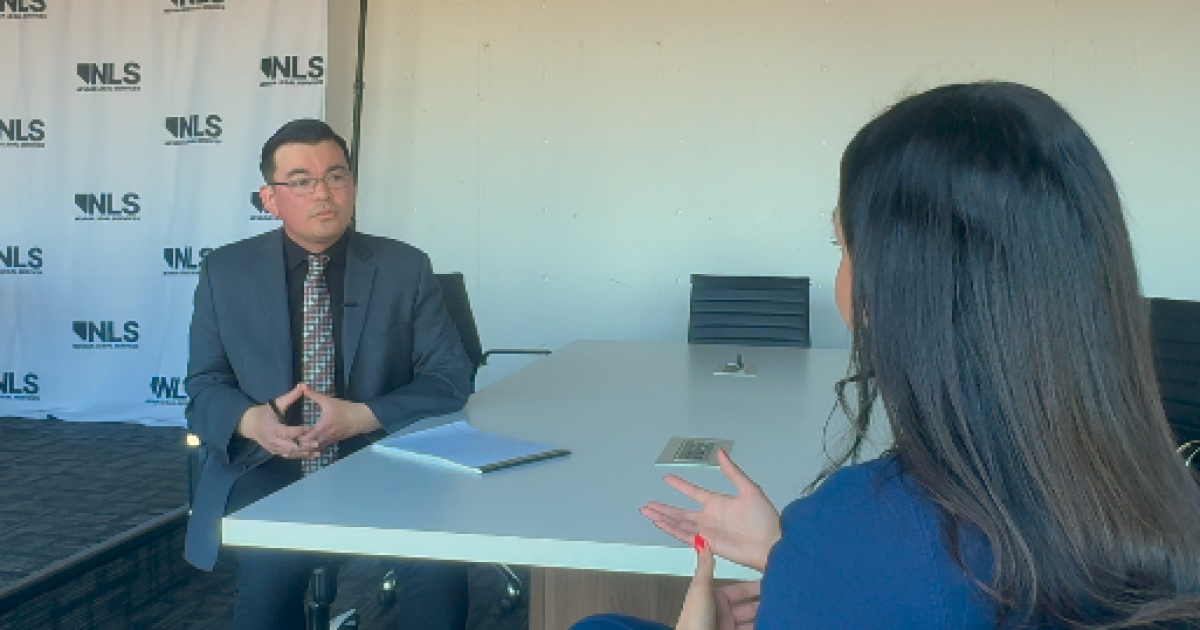
LAS VEGAS (KTNV) — This AANHPI Heritage Month, we’re celebrating Asian American, Native Hawaiian, and Pacific Islanders who make a difference in our community.
I’m highlighting one Nevadan who’s passionate about equal access to justice. As I discovered, that drive comes from a difficult chapter for Japanese Americans in our country’s history.
Nevada Legal Services leader’s passion for equal access to justice stems from Japanese internment
Alex Cherup is executive director of Nevada Legal Services, which provides free legal services for qualifying low-income Nevadans.
The organization’s mission “is to provide equal access to justice for all Nevada residents” — something his grandmother never got a chance to have when she and her family were thrown into Manzanar. It was one of ten American concentration camps where more than 100,000 Japanese Americans were relocated during World War II amid a wave of anti-Japanese sentiment following the Pearl Harbor attack.
Cherup grew up hearing his grandmother’s stories and seeing her old photos from that time — memories from Manzanar.
“Those stories were told as just part of the rhythm of growing up, and as I got older, I learned more and more about the realities and the truths of that particular experience for my family,” Cherup said.
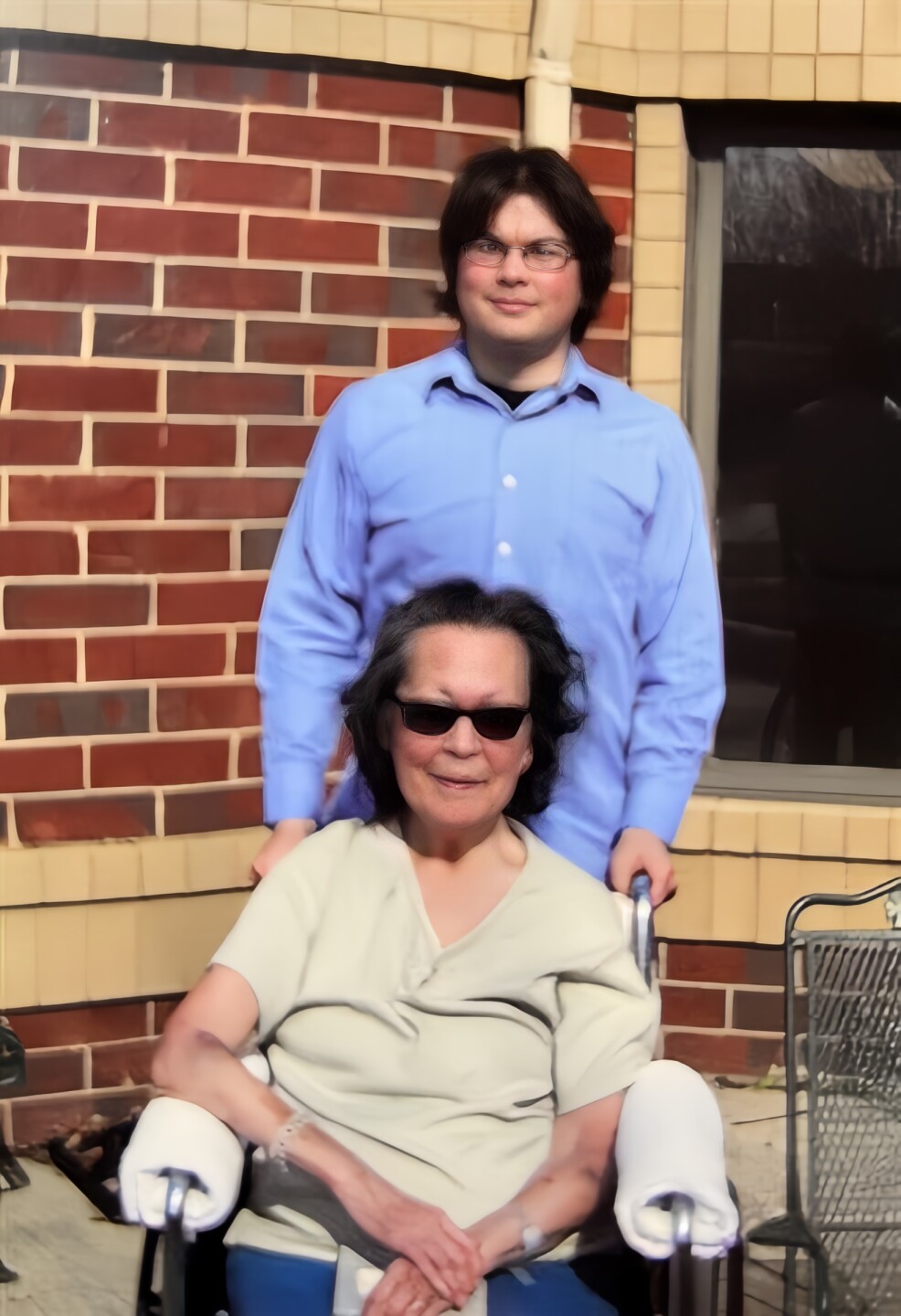
Alex Cherup
Alex Cherup and his grandmother.
He said his grandmother had just graduated high school in California when her family was forced to move. It was so abrupt, in fact, that her diploma had to be mailed to Manzanar.

Courtesy of the Bob and Masa (Ogawa) Nakayama Collection, Densho
Masa Ogawa’s graduation announcement that had to be mailed to the Manzanar War Relocation Center because she was relocated upon graduating from Thomas Jefferson High School.
“The standout moment for me in thinking about that history, about the injustice of the experience, was hearing directly my grandmother talk about the visceral images of seeing guards walking to and fro, of the guard towers, of the barracks she lived in,” Cherup said.
“Hearing about the fact that she was an American citizen and that there was barbed wire that surrounded her community as she grew up, that she lived in a barrack with her family and others without privacy, was the first connection with the fact that, ‘Hey, this is an incredible injustice.'”
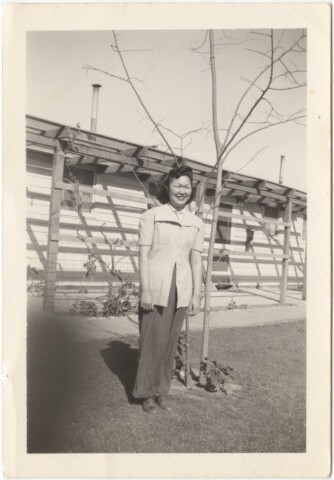
Courtesy of the Bob and Masa (Ogawa) Nakayama Collection, Densho
Masa Ogawa, Alex Cherup’s grandmother, at Manzanar.
His grandfather was also thrown into one of those camps — he was sent to Gila River War Relocation Center in Arizona. Cherup said one of the most difficult parts to reconcile is the fact that it was all solely based on who they were, not anything they’d done.
“It was a distinction based on race. So not only were there so many rights violations, every single possible rights violation you could imagine, but also the fact that it was distinctly because of the fact that our family was Japanese American,” Cherup said.
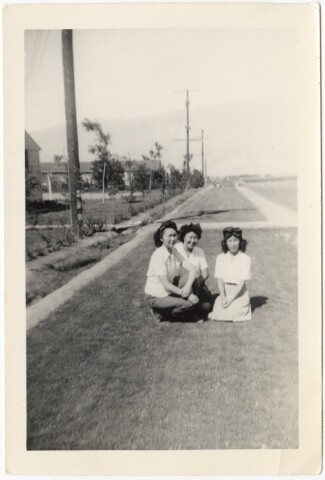
Courtesy of the Bob and Masa (Ogawa) Nakayama Collection, Densho
Masa Ogawa, Alex Cherup’s grandmother, with 2 friends in Manzanar.
He said as his grandmother, who’s since passed, got older, she talked more openly about the experience.
“My grandmother would say, ‘This should never happen. This should have never happened to anyone. This should never happen again,'” Cherup said.
His grandmother’s stories and photos from Manzanar brought the idea of justice — and injustice — into focus for him at a very young age. He said the injustices she and other Japanese Americans faced are so closely linked with the lack of access to justice. They were robbed of personal property and liberty, without legal recourse.
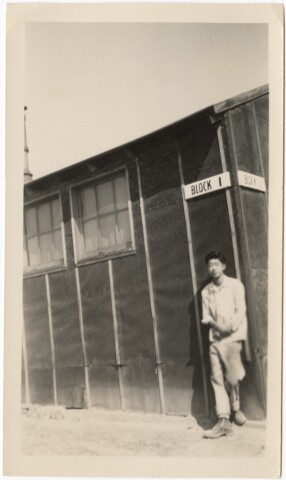
Courtesy of the Bob and Masa (Ogawa) Nakayama Collection, Densho
Man standing in front of barracks at Manzanar.
“I am here as a result of the resiliency of my family overcoming that injustice,” he said.
That’s what led him to the work he’s doing today with Nevada Legal Services, which supports the civil legal needs of low-income individuals in all Nevada counties — 11 of which are legal deserts, according to the American Bar Association. That means they have less than one attorney per 1,000 residents.
It’s the stories and struggles he heard about growing up that led him here.
“It’s a guiding force for my work every day,” he said.
He said it’s important to remember the dark chapter in American history that his grandmother and other Japanese Americans lived through.
“The understanding of history at its core is the key to having a full understanding of justice,” he said, adding that American history is full of examples of individuals experiencing injustice.
One way he keeps those stories at the forefront is through his work on the Board of Directors for the Nisei Student Relocation Commemorative Fund, a nonprofit that provides scholarships to underserved communities and promotes public awareness of Japanese American incarceration during World War II.
The nonprofit’s goal is to continue the efforts and vision of the National Japanese American Student Relocation Council, which worked during World War II to help resettle Japanese Americans from the concentration camps to colleges in the Midwest and the East Coast.
“My role, in my view, is to do whatever is possible every day I can to make sure other people don’t experience that injustice,” he went on to say.
He said keeping this issue top of mind helps him envision a better future — one without barracks and without barriers.
“A community that is based on fundamental principles of truth, justice, and fairness,” he said.
If you’re in need of legal help, click here to get in touch with Nevada Legal Services.
AloJapan.com