
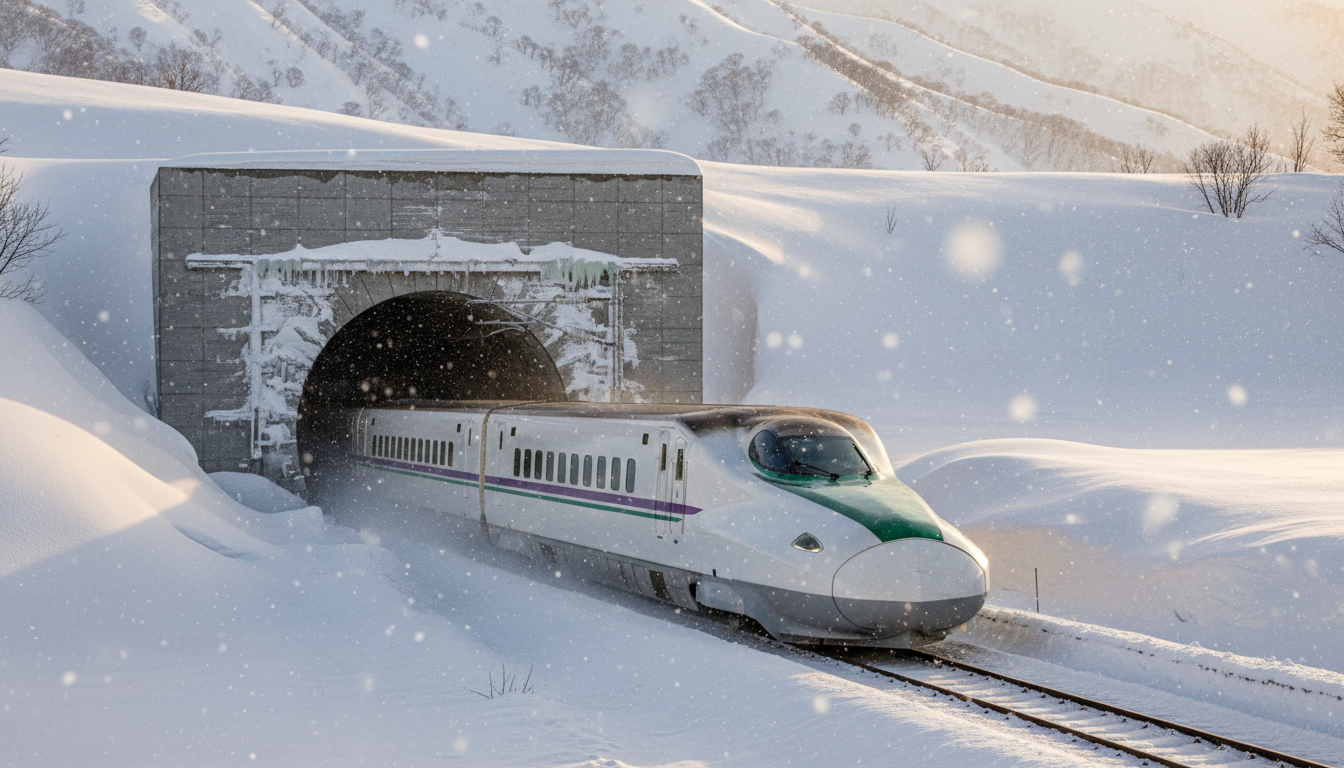
The Ministry of Finance of Japan confirmed in April that the 211.8-kilometer extension of the Hokkaido Shinkansen will require 76% of the route in tunnels and will only be completed in 2038 with the Toshima Tunnel of 32,675 meters as the largest land tunnel in the country.
The Hokkaido Shinkansen extension project connects Shin-Hakodate Hokuto to Sapporo, the capital of Japan’s northernmost island.
According to the Japan Railway Construction, Transport and Technology Agency (JRTT), the section will have 211.8 kilometers of double track.
According to JRTT data, 76% of the route will pass through tunnels dug under the central mountain range of Hokkaido.

According to the revised schedule in April 2026, the section is expected to open to commercial traffic only at the end of the fiscal year 2038.
Compared to the initial plan, which foresaw delivery by 2030, the delay is eight years due to the cost explosion.
On the other hand, the project will still deliver the largest land tunnel in Japan’s history.
The Hokkaido Shinkansen extension includes the Toshima Tunnel with 32,675 meters
Before the revision, the project foresaw two separate tunnels: Toshima and Murayama.
In July 2016, the JRTT decided to integrate the two into a single structure of 32,675 meters.
As a result, the Toshima Tunnel became larger than the famous Seikan submarine Tunnel, with 53,850 meters, in land extension.
According to the Japanese Tunnelling Association, this will be the largest mountain tunnel ever built in the archipelago.
Firstly, the project required six large tunnel boring machines working on simultaneous fronts.
Secondly, engineers had to cross geological fault zones in northern Honshu.
Total extension: 211.8 km between Shin-Hakodate Hokuto and Sapporo
Tunnels: 76% of the route, with six giant tunnel boring machines simultaneously
Toshima: 32,675 meters — largest land tunnel in Japan
Cost: 2.5 trillion yen (US$ 16.7 billion)
Delivery: end of fiscal year 2038 (eight years delay)
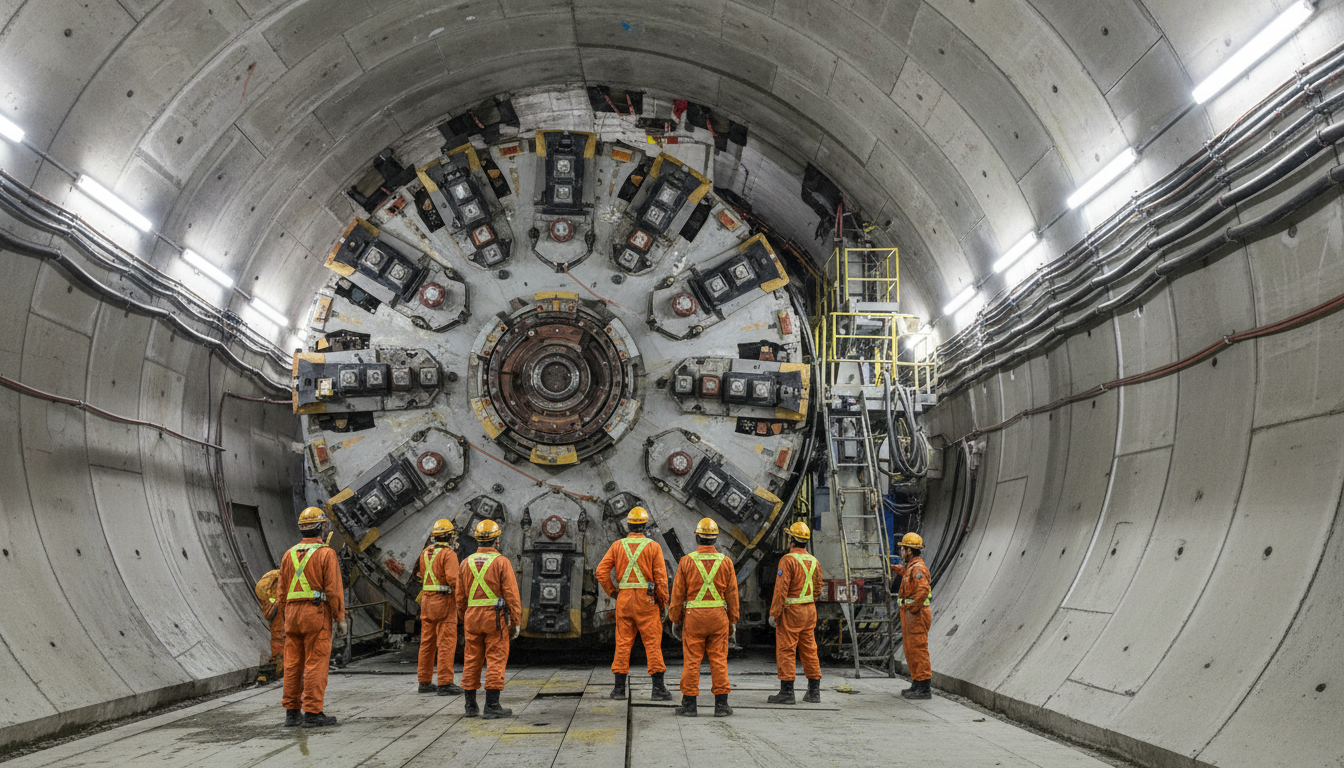 Giant tunnel boring machine advances under the mountains of Hokkaido to open the Toshima Tunnel (artistic representation).
The cost-benefit ratio of the Hokkaido Shinkansen extension fell to 0.6 and required extra subsidy
According to the Ministry of Finance analysis, the cost-benefit ratio of the project was recalculated to 0.6 in April 2026.
According to the official methodology, any new Shinkansen line needs a ratio of 1.0 or higher to receive approval.
In other words, the Hokkaido extension fell below the legally required minimum.
According to Ministry of Transport technicians, the project only continued because the central government decided to cover the deficit with an additional subsidy.
Therefore, the final estimated cost has already exceeded 2.5 trillion yen, equivalent to US$ 16.7 billion.
As reported by Railway Supply, there is growing pressure in the Japanese parliament for future extensions to be postponed until criteria are reviewed.
While Hokkaido digs 32 km of tunnel, the West-East Integration Railway in Brazil takes 23 years for 1,527 km
The Hokkaido Shinkansen extension began in 2012 and is expected to last just under 26 years in total.
In comparison, the Brazilian West-East Integration Railway (FIOL) was started in 2003 and remains without commercial operation in 2026.
Subsequently, Ferrogrão, which would connect Mato Grosso to Pará, has been stalled since the environmental licensing in 2010.
In fact, Brazil has 35,000 kilometers of active railway network, but most of it is still narrow gauge and low speed.
On the other hand, Japan has operated 3,041 kilometers of high-speed Shinkansen since 1964.
According to the Ministry of Transport of Brazil, the national railway sector needs R$ 197 billion in investments by 2035.
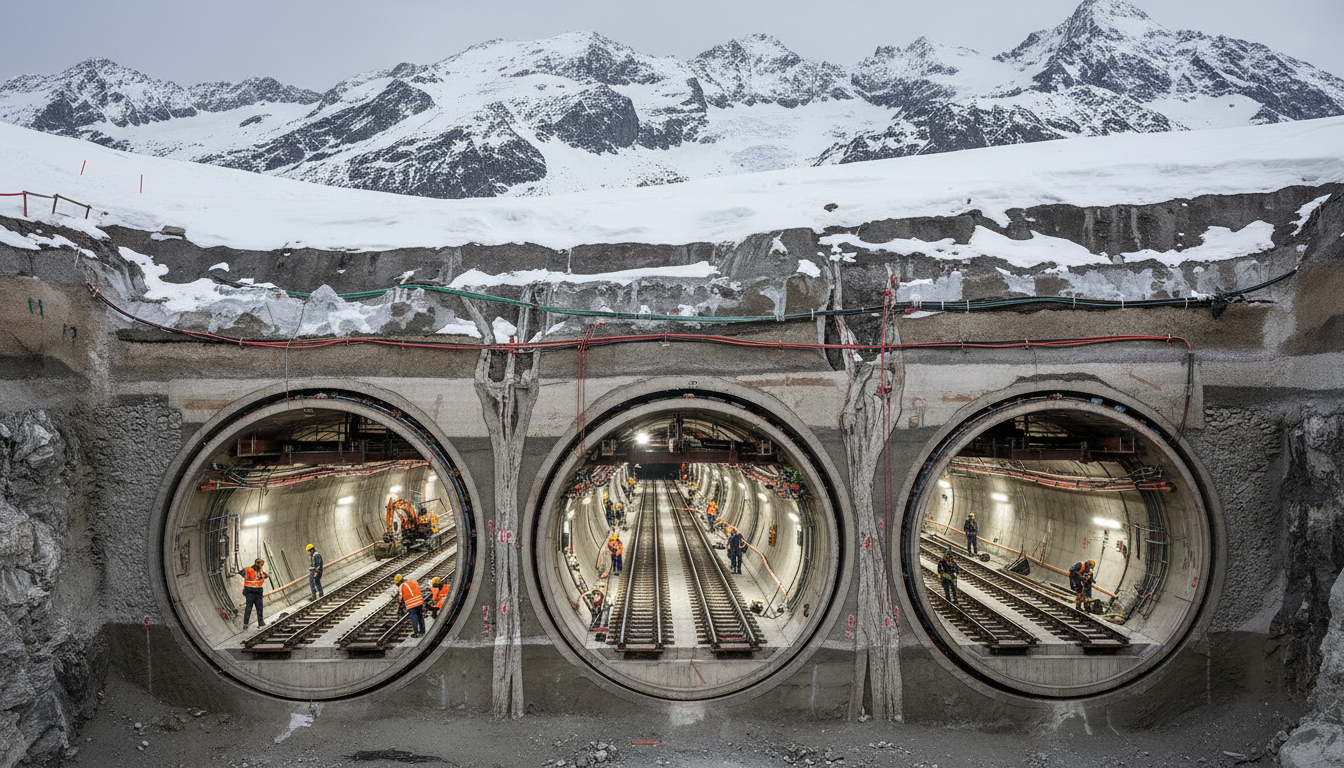 Visual scheme of the tunnel network that will comprise 76% of the 211.8 km route to Sapporo (artistic representation).
Sapporo and the dream of the Olympic capital that lost the 2030 Games to Salt Lake City
The city of Sapporo has 1.96 million inhabitants and is the fifth largest in Japan.
In 2022, Sapporo had submitted a bid for the 2030 Winter Olympics.
In July 2024, the International Olympic Committee chose Salt Lake City as the host.
According to the Japan Olympic Committee, the Olympic defeat weakened the financial argument for the accelerated completion of the Shinkansen.
As reported by JR Hokkaido, the operating company still estimates gaining 2 million passengers/year on the new line.
Similarly, Japanese domestic tourism is expected to absorb much of the initial demand.
The impact on fuel transport and energy consumption of the new route
The line will replace part of the Tokyo-Sapporo air travel, currently made with 47 daily flights.
According to the Japanese Institute of Energy Economics, the replacement could reduce 380,000 tons of CO2 per year.
Compared to the airplane, the Shinkansen emits 18% of the CO2 per passenger-kilometer.
Subsequently, the electrical infrastructure will need to absorb an additional demand of 410 GWh annually.
According to the Tokyo Electric Power Company, the northern grid will need modernization to support the peak.
In other words, the project directly affects Japan’s energy, natural gas, and thermal generation market.
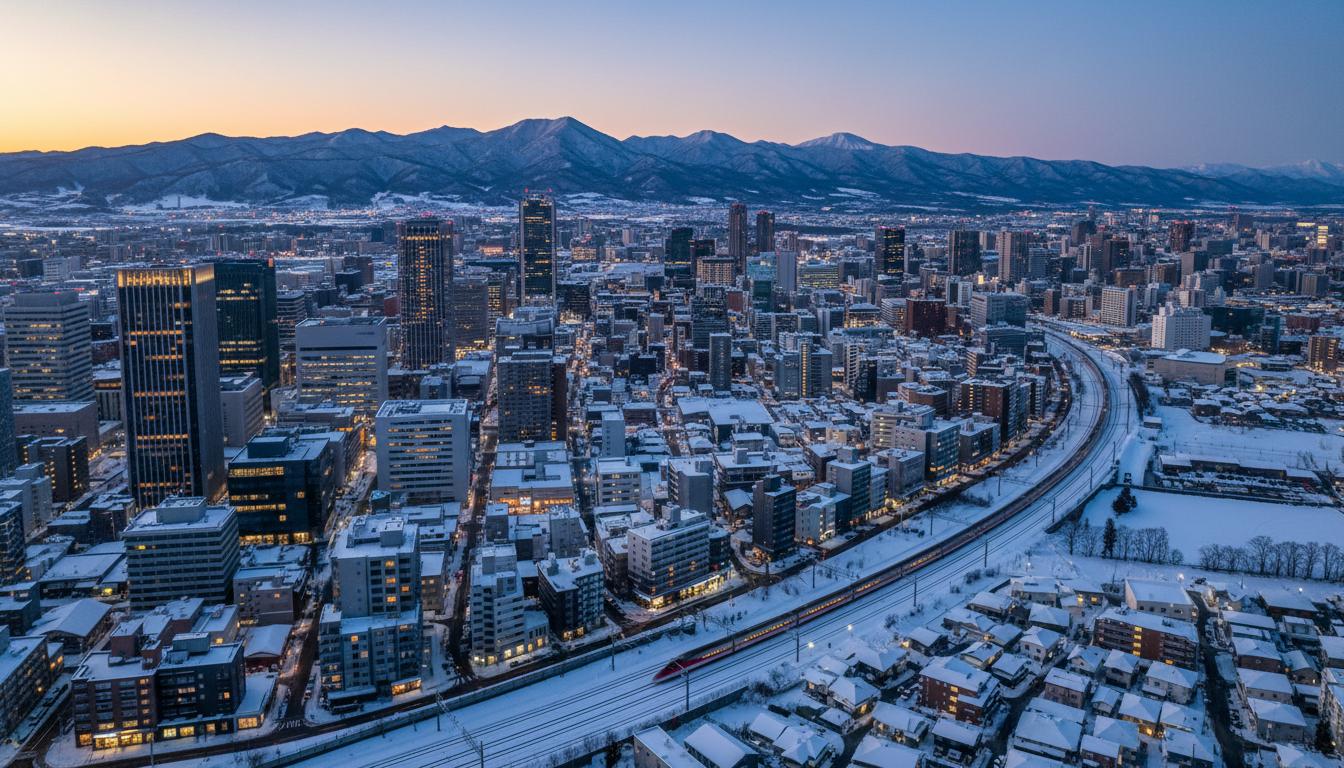 Sapporo, the capital of Hokkaido, awaits the arrival of the new high-speed line (artistic representation).
The CPG collection covers comparisons between Brazil and Asia in the railway sector
The CPG recently published about the advancement of China’s mega railway tunnels, in the site’s collection.
Subsequently, the site also published an analysis on railway integration in Brazil, focusing on FIOL and Ferrogrão.
In other words, the comparison between Hokkaido and Brazilian projects is already part of the editorial agenda.
On the other hand, some point out that the Japanese model is not replicable in Brazil due to the difference in population density.
Next steps for JRTT and the 2027-2030 window for final route review
Firstly, the JRTT will complete the remaining 38 km of tunnels of the Toshima Tunnel by 2030.
Next, the installation of tracks and the ATC signaling system will begin.
Finally, operational tests are expected to run between 2036 and 2038, according to the official schedule.
However, some question whether the additional budget will hold up until full delivery.
Nonetheless, the JRTT argues that the project is strategic. Still, the cost-benefit ratio below 1.0 will return to the table in 2028.
AloJapan.com