
Located along the coast of Miyagi Prefecture in northern Japan, Matsushima has held a special place in the hearts of locals for centuries. Counted among the Nihon Sankei (The Three Scenic Views of Japan), alongside Amanohashidate and Itsukushima Shrine, it’s a landscape often admired, often spoken of, almost drifting somewhere between reality and legend. And yet, for many foreign travelers, it remains surprisingly unknown.
Matsushima carries a quiet wabisabi charm — nothing feels polished or forced. Even the famous Edo-period poet Matsuo Basho, in “The Narrow Road to the Deep North” (Oku no Hosomichi), struggled to fully describe its beauty, choosing instead to leave much of it implied rather than explained
Just under an hour from Sendai, Matsushima makes for an easy day trip. Still, its slower pace rewards staying longer. Here is a small attempt to see it for myself and understand what has kept this place close to people for so long.
A Slow Journey North
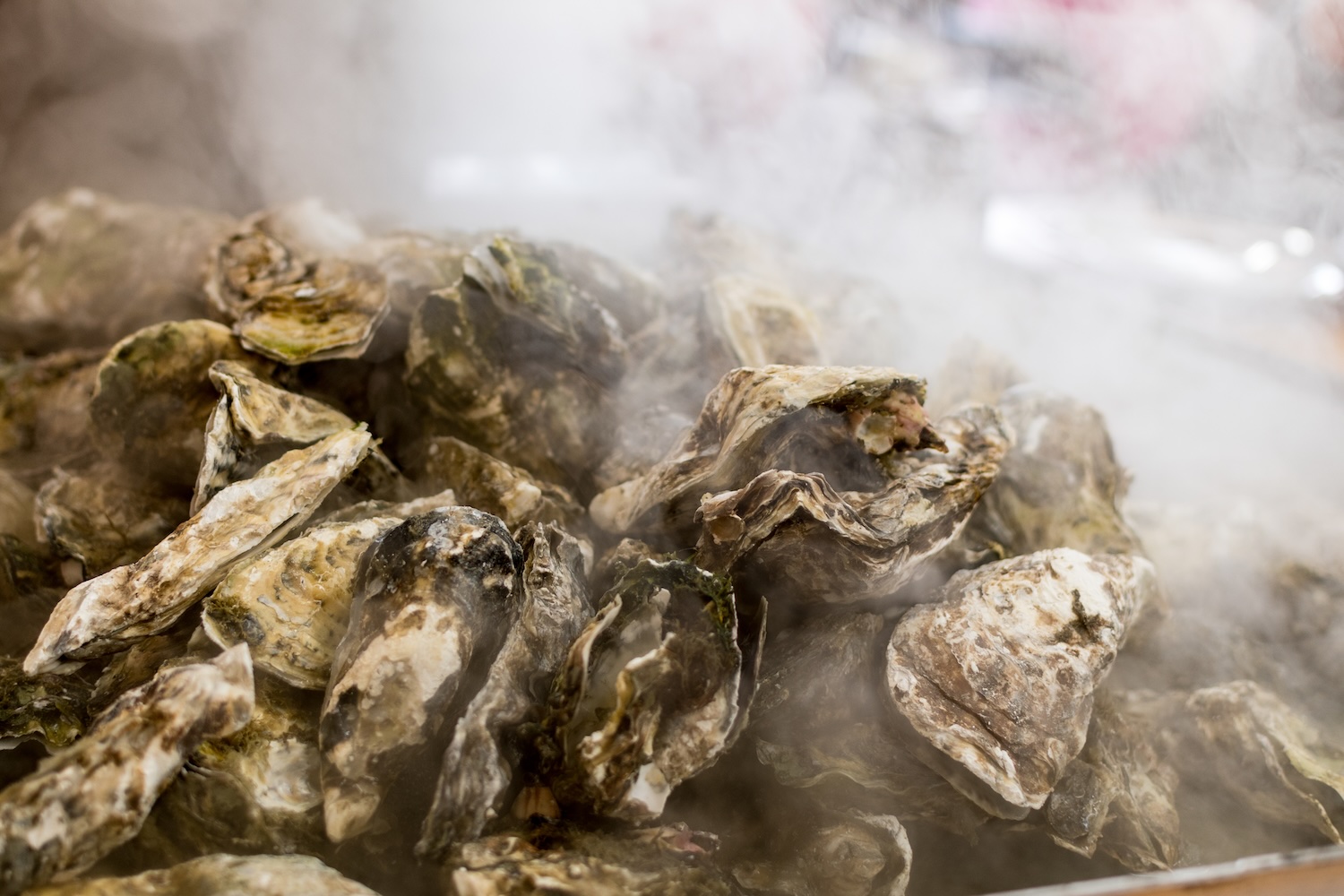
Matsushima is famous for its views and oysters.
I left Tokyo on a clear, cold morning in early March. The shinkansen carried me quickly, almost too quickly, toward Sendai. But from there the rhythm shifted. I took a local train on the Sensei line. It moved at a leisurely pace, as the beautiful view of the coast slowly receded from its large windows. Then, finally, I reached Matsushima Kaigan station.
Right outside the station, I went into a cafe. Not just for the coffee, but also because cafes in Japan feel like part of the journey. From the second floor, the deep blue bay stretched out in front of me. The water wasn’t as still as it first seemed. The wind brushed across it, breaking the surface into small shifting patterns. Pine-covered islands stood scattered in the distance.
I ended up staying longer than I meant to. Watching, without really thinking about time. The cafe stopped feeling like a quick pause; it felt like the beginning of Matsushima itself.
Following the Coastline
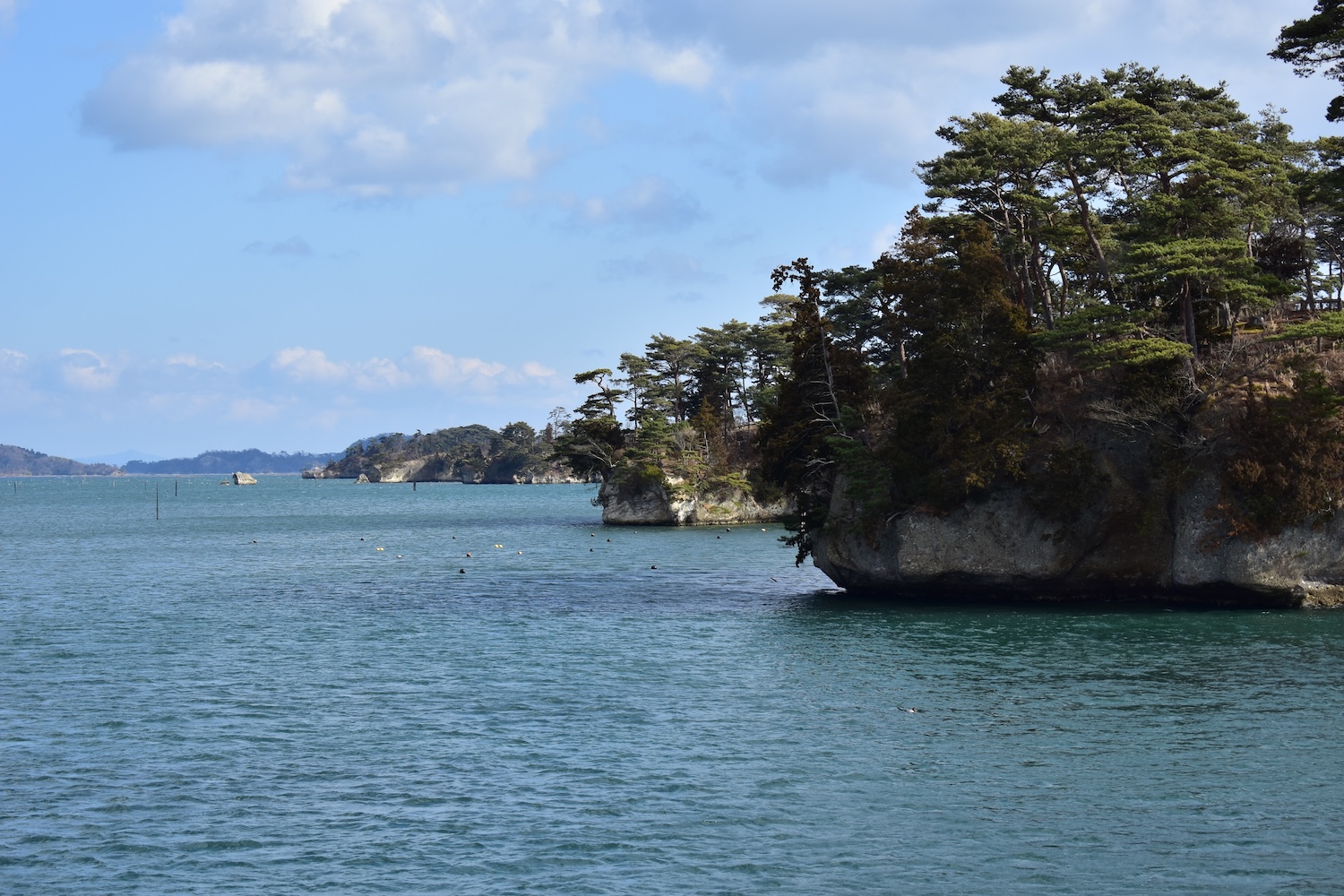
Scattered islets across the bay
I started on foot. Matsushima is best understood slowly — sanpo (a gentle walk), not sightseeing in a rush.
The coastline led me toward Oshima Island, reached by a simple red bridge. It’s a small place, but its past runs deep. For centuries, this place has been a site of pilgrimage for spiritual retreats. It is said that a monk named Kenbutsu spent years in seclusion at the ruins of Kenbutsudo, studying sutras (Buddhist scriptures), and that his story gradually became a legend. It is also said that an emperor, upon hearing of his bravery and dedication, sent a gift of a thousand pine saplings. Thus, the place became known as Matsushima (Pine Islands).
From there, I walked toward the Matsushima island tour boat pier and boarded a sightseeing boat. Tickets are easy to sort out on the spot, or you can reserve them in advance. I picked a simple round-trip, no reservation, just the next departure and a paper ticket in hand.
The boat moved gently through the bay, weaving past islets shaped by time and tide. Over 200 of them, each slightly different. Some sharp, some rounded, all crowned with wind-shaped pines.
The 2011 tsunami reached this coast, but Matsushima did not suffer the same level of damage as many other places. Some edges of the smaller islands have worn down. A few trees are gone, and parts of the shoreline have changed. But the scattered islets across the bay helped break the force of the waves, softening their impact before they reached the land.
Temples, Bridges and the Sea
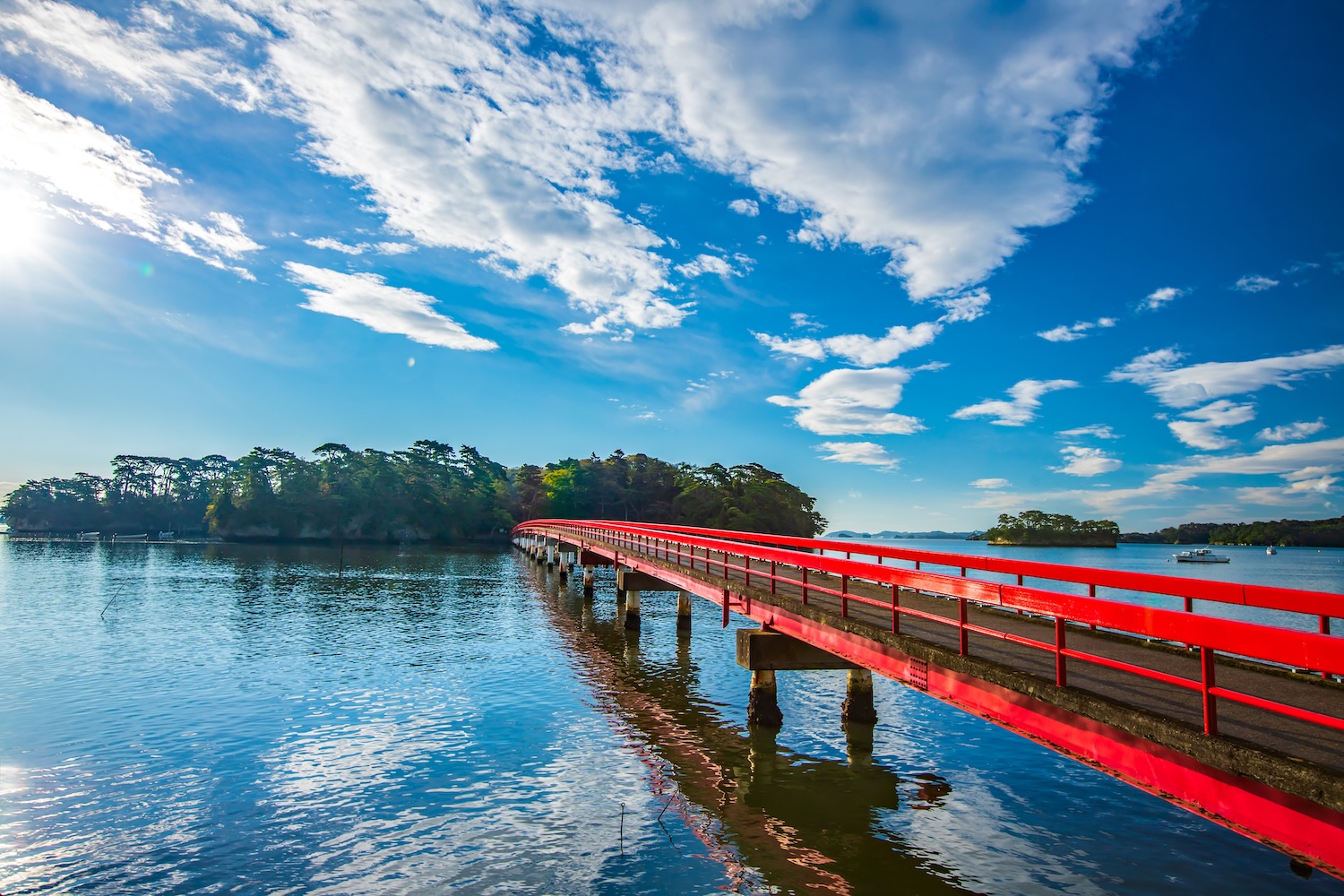
Fukuura Bridge
Click here to read more.
External Link
https://gaijinpot.com/
© GaijinPot
AloJapan.com