
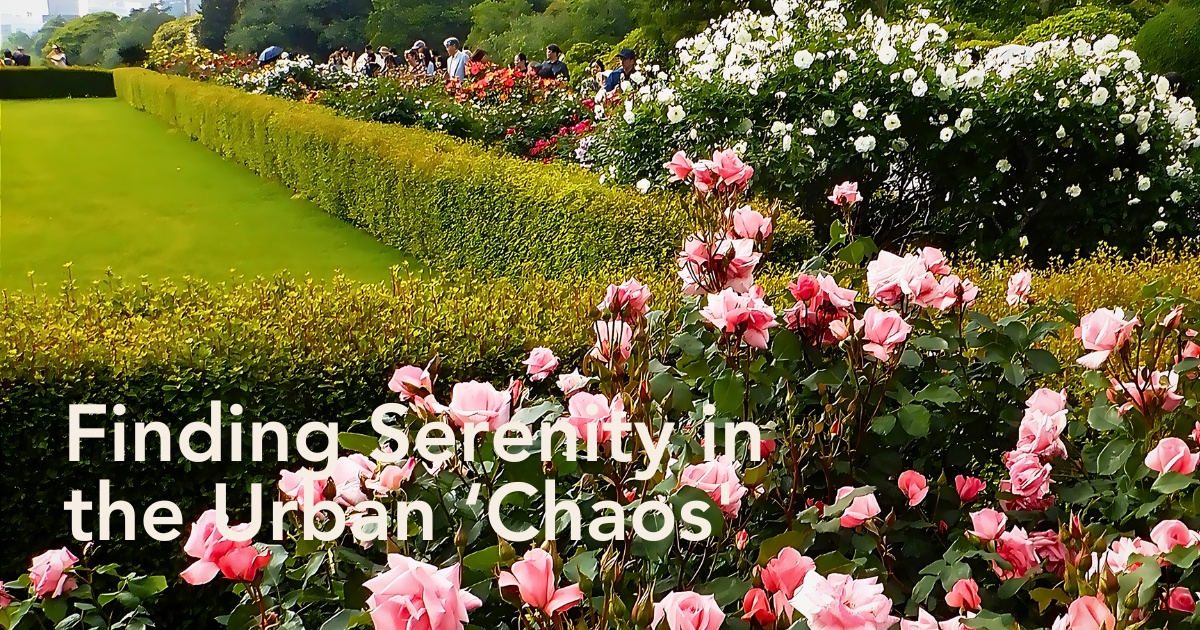
Tokyo is a city full of electric energy, dense crowds, and relentless motion. It is one of the world’s fastest and, perhaps, most relentlessly stimulating cities to be in. Some even term it a city of ‘organized chaos.’ But right within its busiest ward, 58.3-hectare Shinjuku Gyoen National Garden seemingly has a different rulebook.
This garden has carefully tended grounds, is home to more than 10,000 trees, and has a floral calendar that runs the full length of the year. There are Cherry blossoms of different varieties, wisterias on trellises, even rose beds, and other old trees, some of which were planted even before anyone currently alive was born.
A Garden With a Long Memory
Shinjuku Gyoen has been many things over its long life. It began as the residence of the Naito family during Japan’s Edo period, then became an agricultural research station in the Meiji era before being redesigned under the direction of French landscape architect Henri Martinet and completed in May 1906.
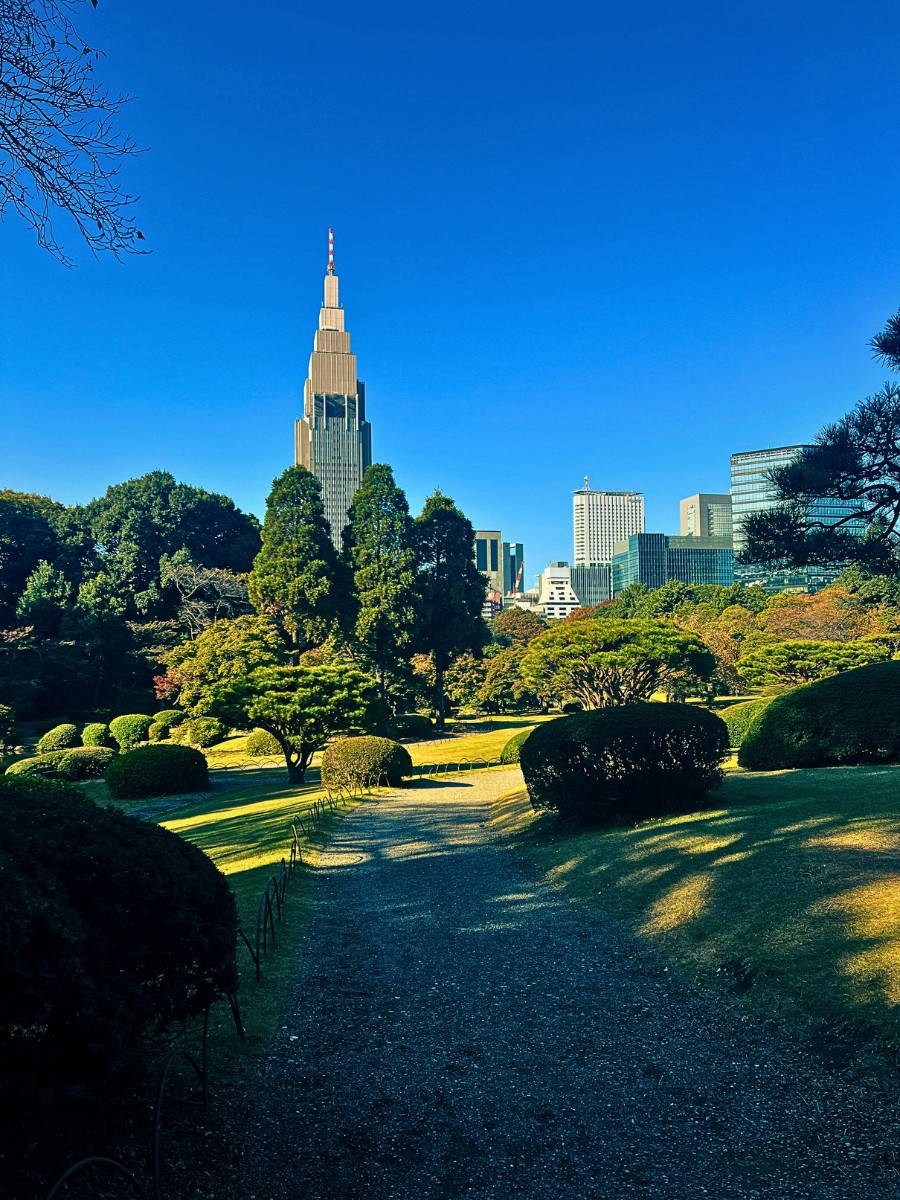
Shinjuku Gyoen National Garden with the Shinjuku skyline in the background. Photo by Nelemson Guevarra.
For decades, it was an Imperial garden, receiving dignitaries from around the world. But wartime air raids, especially in 1945, left it in ruins, nearly totally obliterating the garden’s infrastructure, including its greenhouses. In 1947, a cabinet meeting designated it a symbol of a peaceful nation, and it opened to the general public in 1949.
Today, it holds three distinct garden styles within its borders. It has a formal French section, a landscaped English section, and a traditional Japanese garden, all of which have distinct characters and atmosphere. Its greenhouse houses more than 1,700 plant types, and the overall effect is of a place sensibly tended for over a century, and it shows.
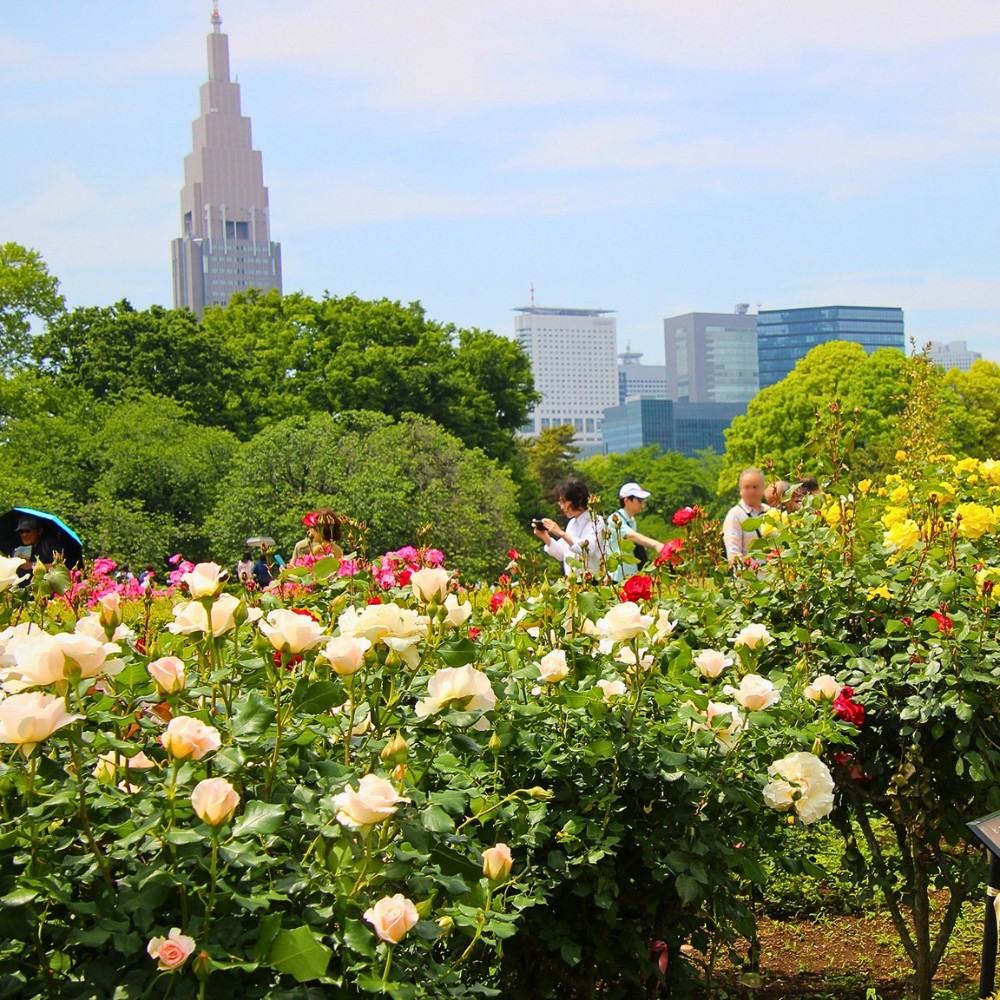
Roses are among the beloved flowers at the garden. Photo by @shinjukugyoen_info.
The Argument the Garden Makes for Flowers
Spring is, perhaps, the most beautiful time of year to be in this garden, mostly because of the profusion of flowers. Cherry blossoms get most of the attention, and fairly so. Shinjuku Gyoen holds more than 1,500 cherry trees across more than 70 varieties, giving it the longest sakura season in Tokyo.
Different varieties like Somei Yoshino, Yamazakura, and Yaezakura take turns to bloom, from late February through early/mid April. But the garden does not stop thereafter. By late April and into May, Azaleas take over. Clusters of them frame the Japanese and English landscape sections. Their intense blues, pinks, and reds set against the Shinjuku skyline give it an almost theatrical contrast.
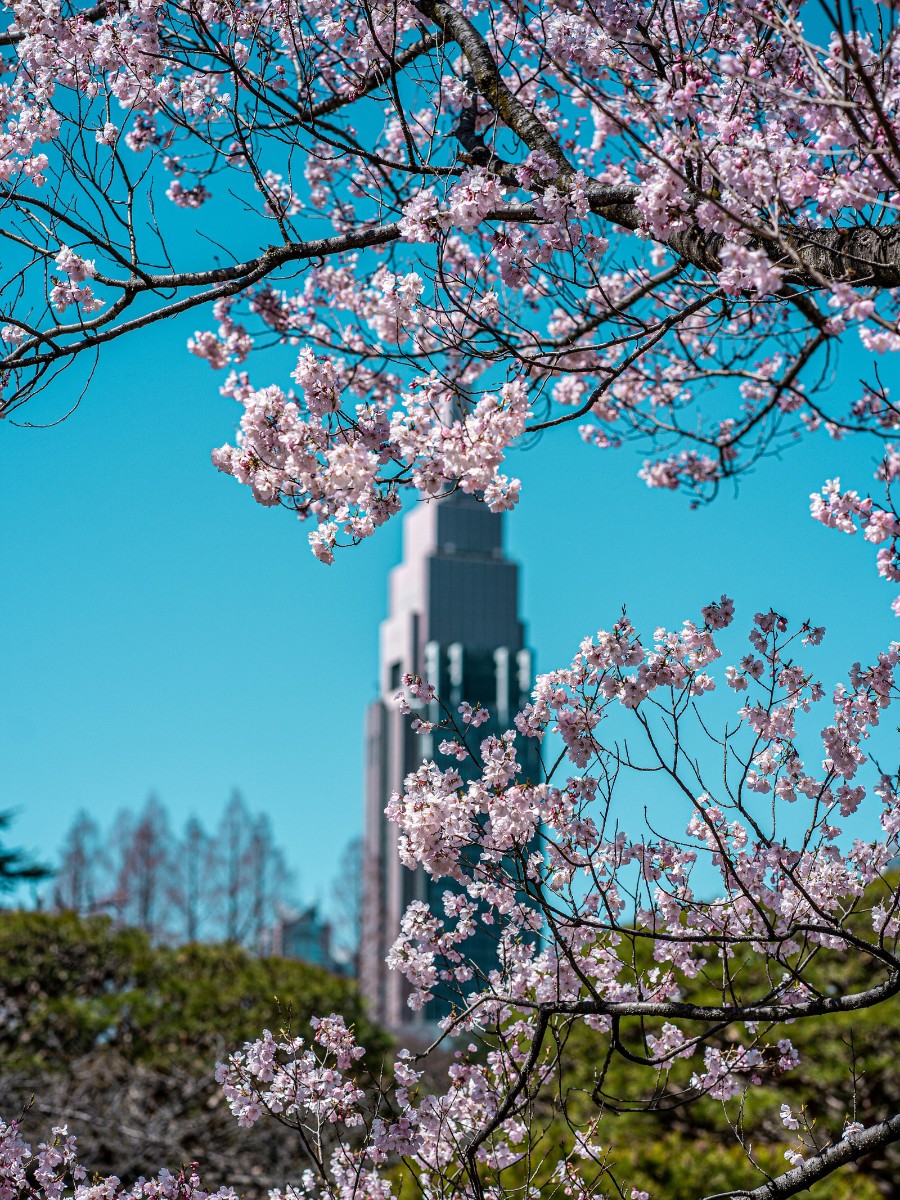
Sakura in bloom. Photo by Peter.
In early May, wisterias reach full expression, their cascading clusters trained over the constructed trellis. The rose garden in the French section, holding more than 500 roses, then peaks from early to late May and remains in flower well into July.
What this means practically is that a visit to Shinjuku Gyoen provides a tiered experience featuring Cherry blossoms, Azaleas at their height, wisteria at its most stately, roses just opening, Hydrangea, moss phlox (shibazakura), spider lilies, and cosmos, among others.
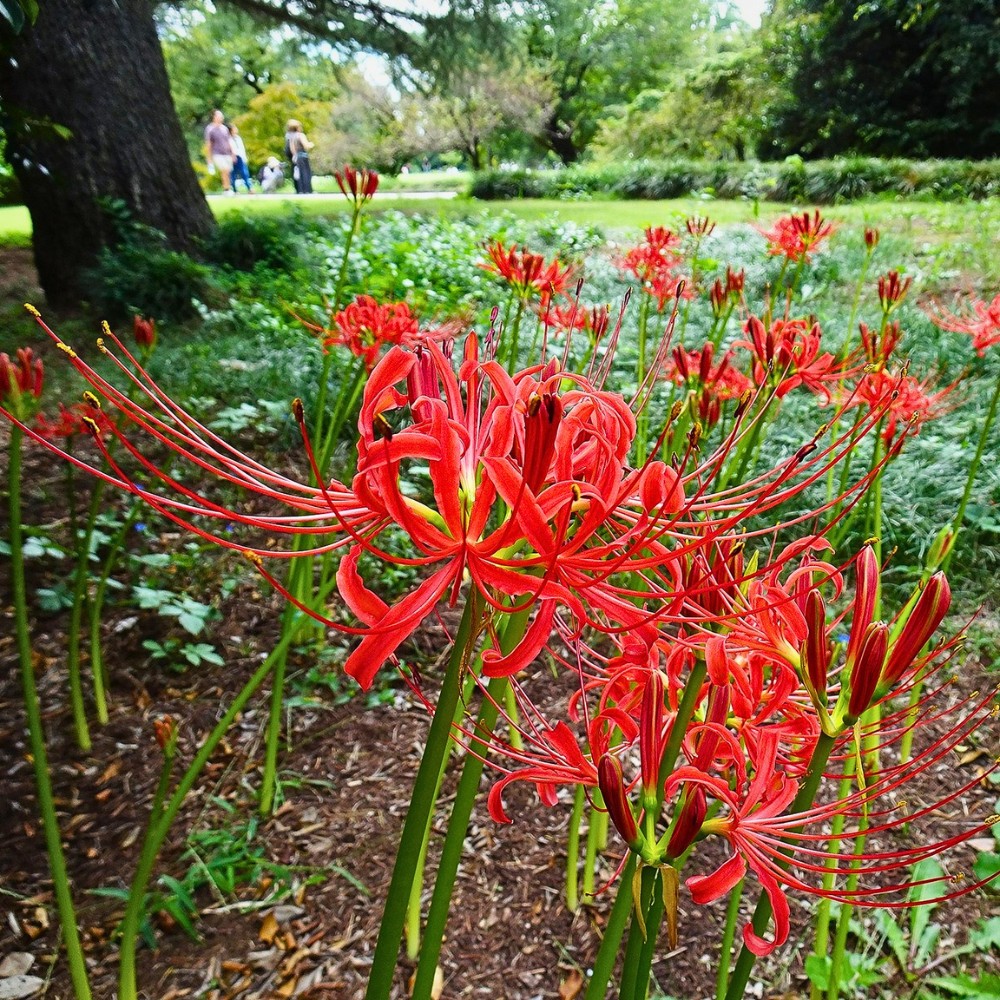
Red spider lilies. Photo by @shinjukugyoen_info.
What Flowers Do to the Brain
The connection between flowers and human well-being is much more than just sentimental. A study from the University of North Florida tracked women who received flower deliveries and found a significant reduction in their stress scores compared to a control group. Dr. Erin Largo-Wight, the lead researcher, noted that flowers reduce stress physiologically, not just emotionally, by lowering the production of cortisol, the hormone most closely associated with chronic stress.
Research published in a leading environmental psychology journal also found that just viewing a flower image was enough to bring down elevated blood pressure and cortisol levels after an acute stressor, with brain imaging showing reduced activity in the amygdala, the region most involved in fear and stress responses.
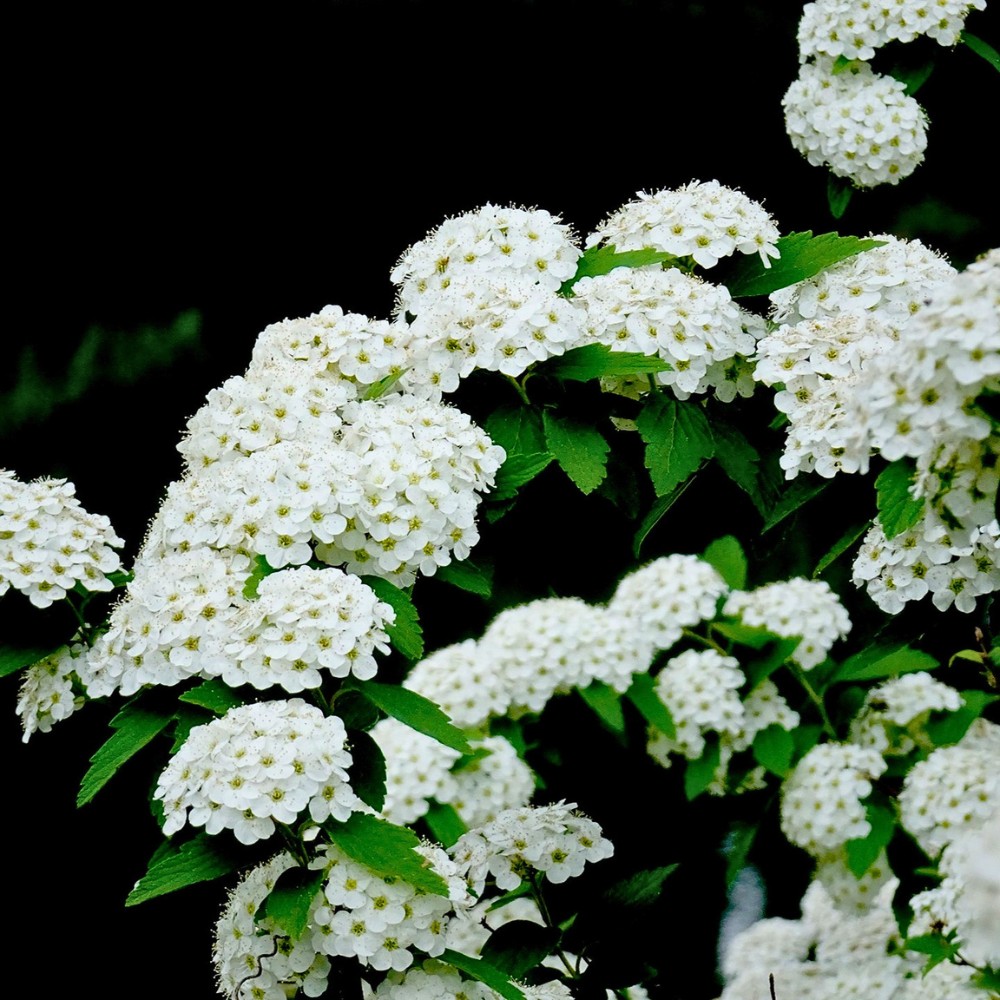
Reeves spirea. Photo by @shinjukugyoen_info.
A Rutgers University study found that receiving flowers produced immediate positive emotional responses in participants, with significant increases in life satisfaction. Separate research confirmed that flowers in hospital rooms reduced patients’ reported levels of pain, anxiety, and fatigue compared to rooms without them.
A Lesson on Slowing Down
The biophilia hypothesis holds that humans have a genetically rooted affinity for nature, developed over thousands of years of living within it. Human nervous systems did not evolve in offices or apartments, but in environments full of nature, color, fragrance, and seasonal change.
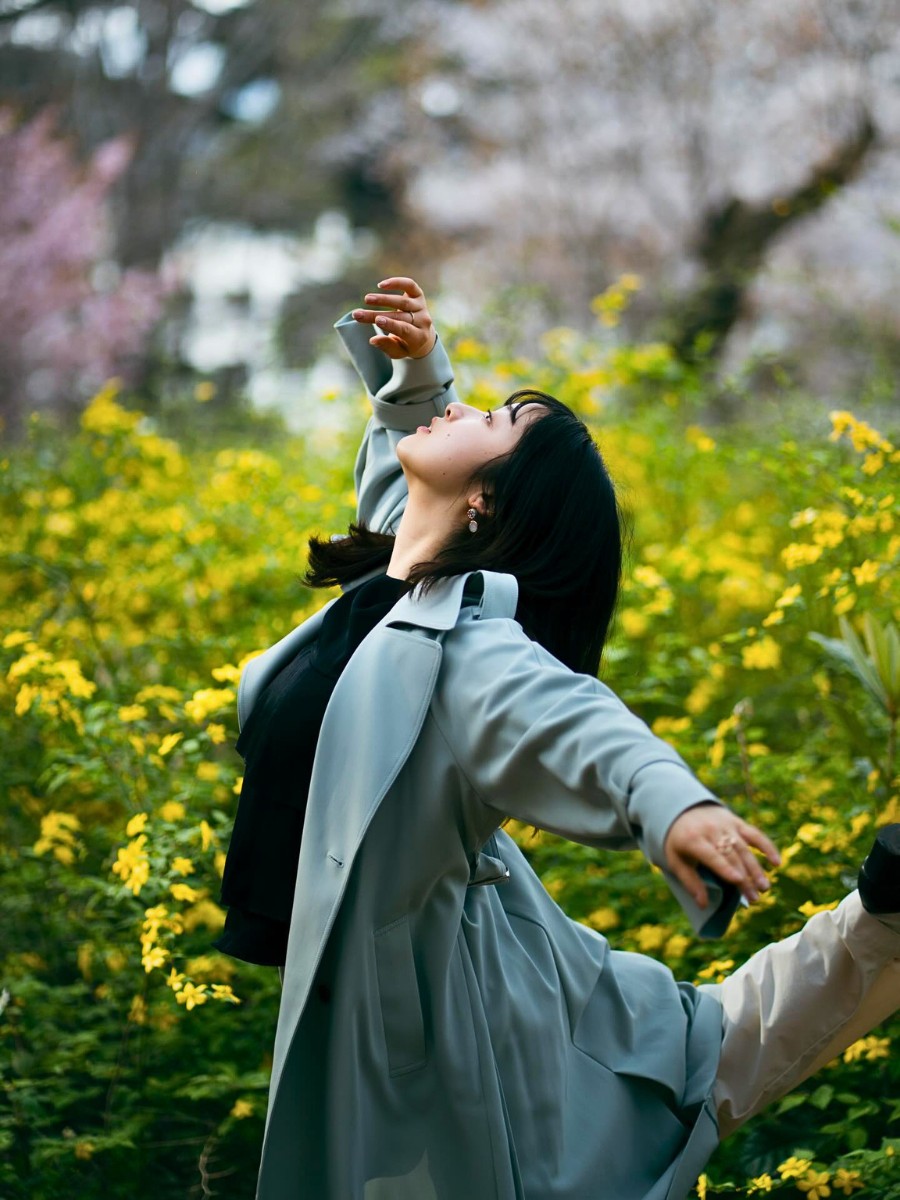
Photo by @portia_18
There is also an old Japanese concept, shinrin yoku, often translated as forest bathing, which describes the practice of spending quiet time in the presence of trees and plants, simply as exposure. The idea is that the body benefits from the contact itself, breathing air shaped by living things, and letting the eyes rest on natural forms.
Color psychology is also important. Azalea pinks and reds at Shinjuku Gyoen in late spring, soft purples of wisteria, and the varied palette of the rose garden, and others have distinct psychological effects. Research shows that bright yellows and pinks tend to evoke happiness and optimism, while softer hues, like lavender and pale blue, promote calm and ease.
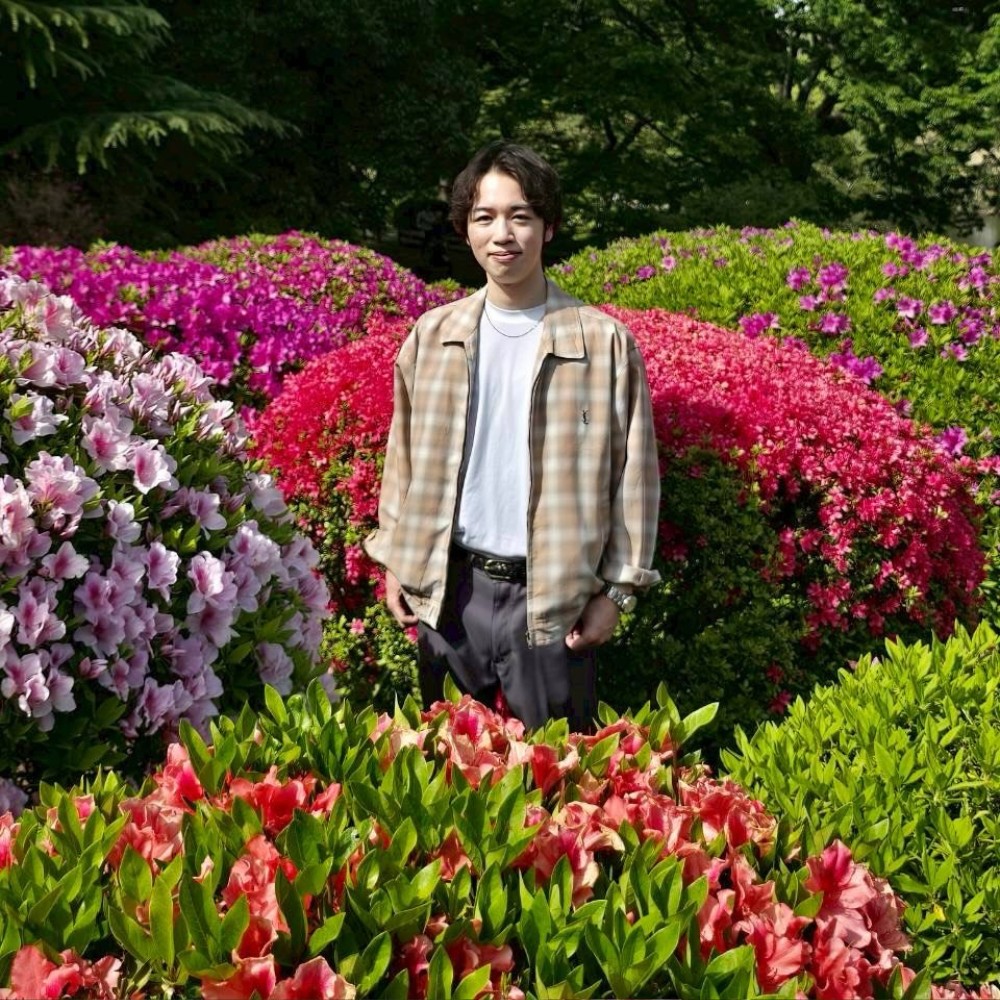
Photo by @taka_urban
The brain’s response to these colors involves specific neural pathways and the release of endorphins. Walking a garden that moves through these color registers provides a sustained, varied, and fully immersive experience. So when one steps away from concrete and into a garden, particularly one as fittingly composed as Shinjuku Gyoen, one is, in a sense, returning to a context that human bodies already know how to respond to.
Here, cortisol drops, the parasympathetic nervous system activates, and mental chatter that accumulates over a working day eases. All these effects are triggered by the aggregate effect of color, scent, natural form, and open space acting on a nervous system that was always designed to receive them.
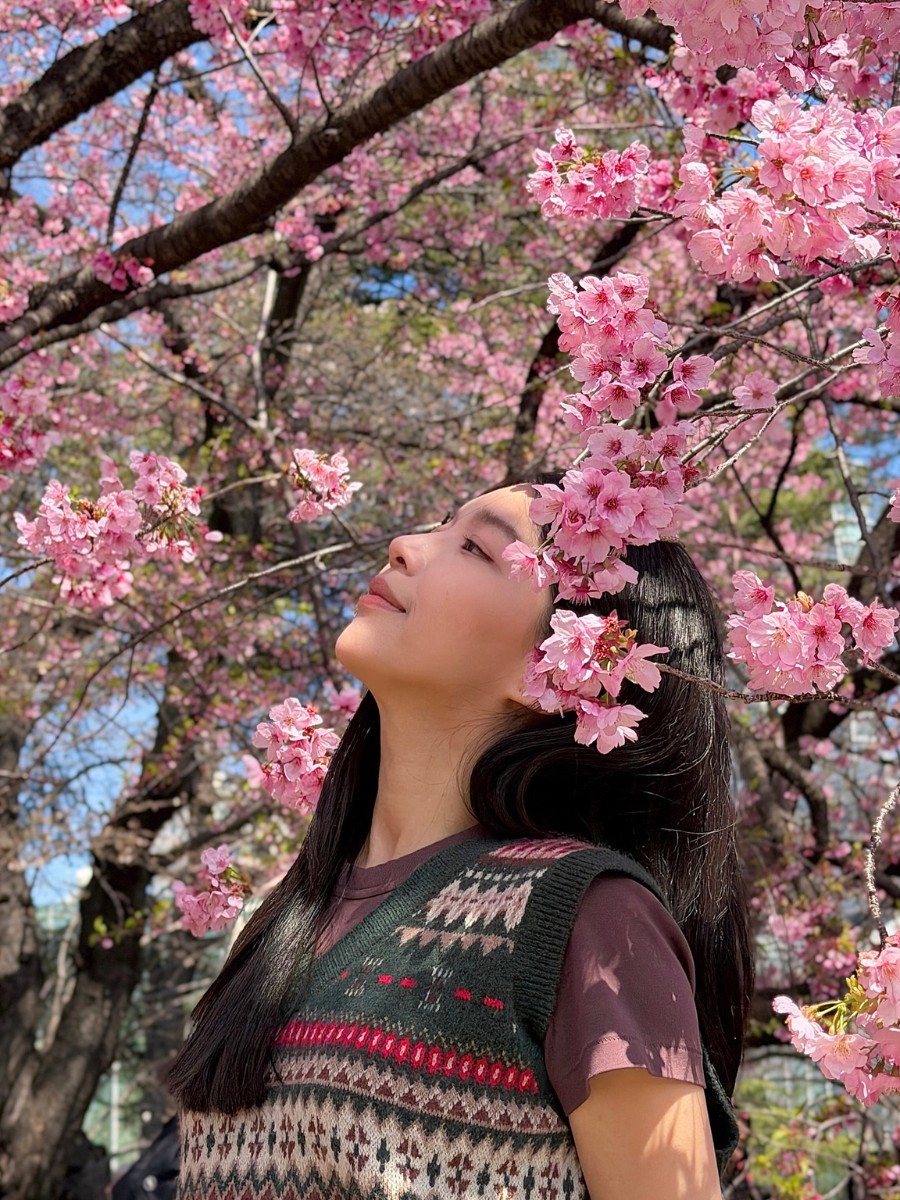
Photo by @monica261014
Studies on gardening have shown similar results, with participants who tend plants showing significantly lower salivary cortisol and reported better mood than control groups who spent the same time reading indoors. So, yes, while it sits in one of the busiest parts of one of the world’s busiest cities, Shinjuku Gyoen always has visitors describe the experience as serene.
Featured image by @monica261014. Header image by @shinjukugyoen_info.
AloJapan.com