
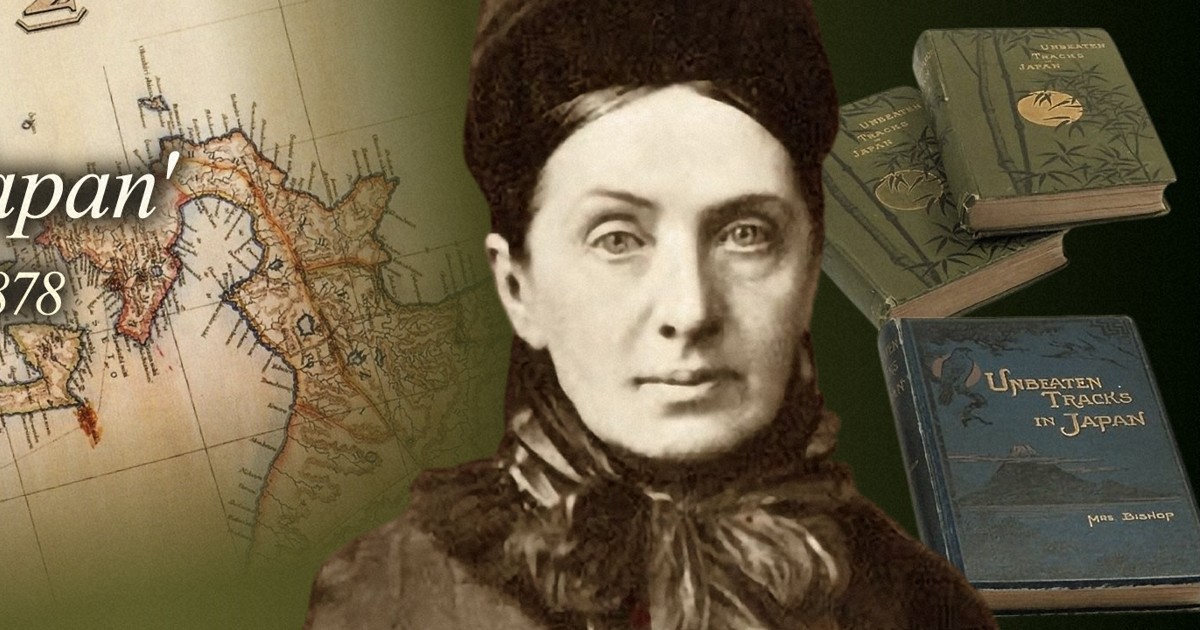
Nearly 150 years ago, a female traveler from Britain arrived in Japan. It was May 1878, the 11th year of the Meiji era. Only 24 years had passed since Japan opened to the West, and the Meiji government, having put an end to the Satsuma Rebellion just the previous year, was beginning full-scale efforts toward modernization.
The traveler’s name was Isabella Lucy Bird (1831-1904). Born in Boroughbridge in central England, Bird devoted her life to travel and produced detailed accounts of the many regions she visited around the world. During her first journey to Japan, she landed at Yokohama and spent approximately three months traveling north. Her route took her through Tokyo, Nikko, Aizu, and Niigata, then on to Yamagata, Akita and Aomori, before reaching the Ainu village of Biratori in Hokkaido.
At the time, modern transportation infrastructure had not yet been established, and travel — especially in mountainous areas — was little different from that of the Edo period. Bird’s journey was thus a true adventure through what was then a largely unknown Japan.
Her experiences were later published as “Unbeaten Tracks in Japan,” a work that remains an invaluable record of regional life in Japan during the early Meiji era.
Today, Japan welcomes as many as 42.7 million international visitors each year, according to figures for 2025. Drawn by curiosity about what was once seen as the “unknown nation” of Japan and a “mysterious land of the East,” many travelers enjoy their stays in this country.
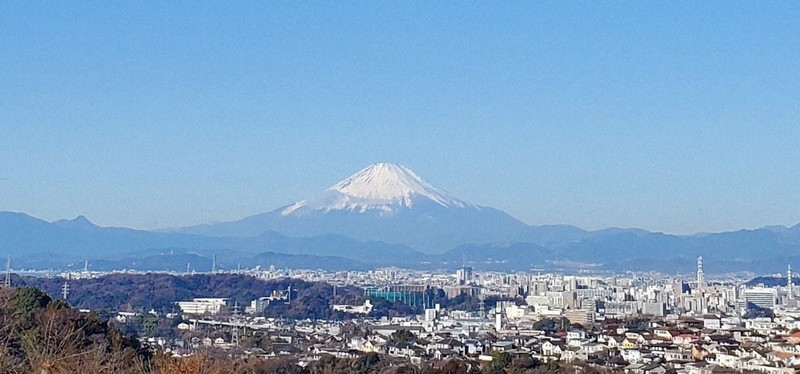
Mount Fuji as seen from Kamakura. While the surrounding townscape has changed over time, Mount Fuji itself has remained essentially unchanged. (Mainichi/Tadahiko Mori)
More than a century ago, Isabella Lucy Bird may have been regarded as a pioneer among such travelers. How did Japan appear through her eyes at that time? How are her journeys remembered in the places she visited? Using her surviving travel accounts from the book “Unbeaten Tracks in Japan” as guideposts, we look back at Japan as she experienced it, while also exploring what those places are like today.
After traveling from Britain via New York, San Francisco, and Shanghai, Isabella Bird first set eyes on Japan on May 20, 1878.
As her ship entered Tokyo Bay, it sailed toward Yokohama through islands covered in lush greenery. At that moment, rising beyond the clouds, she caught her first glimpse of Mount Fuji. Her magnificent travel narrative opens with this unforgettable scene.
ORIENTAL HOTEL, YOKOHAMA, May 21.
Eighteen days of unintermitted rolling over “desolate rainy seas” brought the “City of Tokio” early yesterday morning to Cape King, and by noon we were steaming up the Gulf of Yedo, quite near the shore. The day was soft and grey with a little faint blue sky, and, though the coast of Japan is much more prepossessing than most coasts, there were no startling surprises either of colour or form. Broken wooded ridges, deeply cleft, rise from the water’s edge, gray, deep-roofed villages cluster about the mouths of the ravines, and terraces of rice cultivation, bright with the greenness of English lawns, run up to a great height among dark masses of upland forest.
The populousness of the coast is very impressive, and the gulf everywhere was equally peopled with fishing-boats, of which we passed not only hundreds, but thousands, in five hours. The coast and sea were pale, and the boats were pale too, their hulls being unpainted wood, and their sails pure white duck. Now and then a high-sterned junk drifted by like a phantom galley, then we slackened speed to avoid exterminating a fleet of triangular- looking fishing-boats with white square sails, and so on through the grayness and dumbness hour after hour.
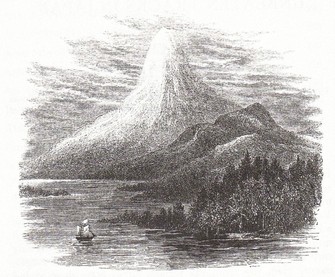
Isabella Bird’s earliest illustration of Mount Fuji. The mountain, as first depicted by Bird, seems to be presented in a highly stylized manner rather than as a strictly faithful representation.
For long I looked in vain for Fujisan, and failed to see it, though I heard ecstasies all over the deck, till, accidentally looking heavenwards instead of earthwards, I saw far above any possibility of height, as one would have thought, a huge, truncated cone of pure snow, 13,080 feet above the sea, from which it sweeps upwards in a glorious curve, very wan, against a very pale blue sky, with its base and the intervening country veiled in a pale grey mist. It was a wonderful vision, and shortly, as a vision, vanished. Except the cone of Tristan d’Acunha d’Acunha — also a cone of snow — I never saw a mountain rise in such lonely majesty, with nothing near or far to detract from its height and grandeur. No wonder that it is a sacred mountain, and so dear to the Japanese that their art is never weary of representing it. It was nearly fifty miles off when we first saw it.
Today Mount Fuji continues to rank among the main reasons international visitors come to Japan. Its sudden appearance through the clouds is a breathtaking sight that leaves many travelers speechless — and Isabella Bird was no exception.
However, the image of Mount Fuji she encountered at that moment seems to have been etched in her mind in a rather unusual form, perhaps due to the weather or her overwhelming excitement. As seen in the sketch she left behind, the mountain appears almost like a conical pillar thrust up from the earth. Interestingly, before leaving Japan after her six-month stay, Bird drew Mount Fuji again, this time as seen from the Tokaido side in December. This later sketch depicts the mountain in a form much closer to its actual appearance.
Many foreigners have been deeply moved by Mount Fuji, and Isabella Bird was clearly one of them.
But why did she decide to come to Japan in the first place?
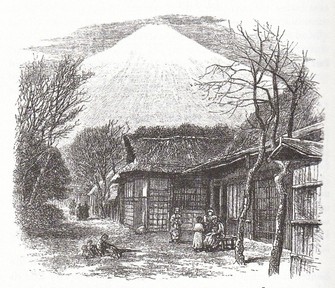
Mount Fuji drawn shortly before Isabella Bird’s departure from Japan. Sketched six months after her arrival, this depiction of Mount Fuji adheres more closely to the mountain’s natural form.
Although she had been frail since childhood, Bird was advised by her doctor to travel abroad as a form of medical treatment. She visited the United States and Canada, later compiling her experiences into a travel narrative. This marked the beginning of her life as a travel writer. The circumstances that set her on this path — and ultimately to Japan — are described at the opening of “Unbeaten Tracks in Japan.”
Having been recommended to leave home, in April 1878, in order to recruit my health by means which had proved serviceable before, I decided to visit Japan, attracted less by the reputed excellence of its climate than by the certainty that it possessed, in an especial degree, those sources of novel and sustained interest which conduce so essentially to the enjoyment and restoration of a solitary health-seeker. The climate disappointed me, but, though I found the country a study rather than a rapture, its interest exceeded my largest expectations.
Bird arrived in Japan in late May, and her three-month journey north through the Tohoku region took place almost entirely during the rainy season. It was far from an ideal time to travel on foot through mountainous terrain. Yet precisely because of the many hardships she endured, the unadorned, everyday scenes of Japan that she encountered in each region left a deep and lasting impression on her heart. And as she related in the preface, she felt her material was worth compiling into a book:
This is not a “Book on Japan,” but a narrative of travels in Japan, and an attempt to contribute something to the sum of knowledge of the present condition of the country, and it was not till I had travelled for some months in the interior of the main island and in Yezo that I decided that my materials were novel enough to render the contribution worth making. From Nikko northwards my route was altogether off the beaten track, and had never been traversed in its entirety by any European. I lived among the Japanese, and saw their mode of living, in regions unaffected by European contact. As a lady travelling alone, and the first European lady who had been seen in several districts through which my route lay, my experiences differed more or less widely from those of preceding travellers; and I am able to offer a fuller account of the aborigines of Yezo, obtained by actual acquaintance with them, than has hitherto been given. These are my chief reasons for offering this volume to the public.
At the time of her journey, Isabella Bird was 47 years old. Though no longer young, she brought with her a wealth of life experience. From this mature and objective perspective, she carefully observed Japan in the early years of the Meiji era and recorded her impressions with remarkable clarity and frankness.
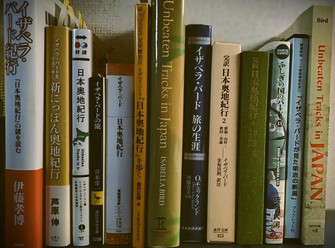
Numerous Isabella Bird books have been published, as seen in this photo. (Mainichi/Tadahiko Mori)
Her work stands as both a primary historical source of great value and a richly engaging account filled with the excitement of travel in a foreign land. Bird’s keen curiosity and perceptive gaze are qualities that resonate strongly with the interests of many international visitors to Japan today.
What, then, was Japan like as she saw it 150 years ago? Let us set out on a journey through time, guided by her eloquent words.
(By Tadahiko Mori, The Mainichi Staff Writer)
This Part 1 of an ongoing series. The next part will be published on May 23. All excerpts are taken from “Unbeaten Tracks in Japan” by Isabella L. Bird. Research cooperation provided by Professor Emeritus Kiyonori Kanasaka, Kyoto University.
AloJapan.com