

Geological difficulties have delayed the completion of the Hokkaido Shinkansen extension to Sapporo beyond 2030, while JR Hokkaido is considering the deployment of 160 to 200 km/h EMUs on its 1 067 mm network, as well as bus replacements for loss-making rural routes. Mike Bent investigates.
The legacy of the National Shinkansen Railway Development Act (left) is still influencing local railway proposals in the northern island of Hokkaido, despite the economic and demographic changes over the past half century.
Work on the Hokkaido Shinkansen extension to Sapporo has made steady progress, with 21 of the 39 tunnels now holed through. Five more are reportedly more than 90% bored, and another three are over 80%. However, three sections of tunnelling have encountered unexpected problems, and on May 8 2024 JRTT admitted that it would be impossible to complete the line by the end of FY2030 as envisaged.
Unstable geological conditions were encountered in the 3·9 km Minami – Uzura section of the long Oshima tunnel, leading to surface-level subsidence. Much of the spoil being extracted contained quantities of heavy metals, which had to be addressed, and work was reportedly running up to four years behind schedule. The Yotei tunnel was delayed when huge boulders more than 10 m in diameter damaged the TBM. It took 30 months excavating around the machine to remove these obstructions and replace the blades.

Click on top left corner for zooming options.
Work on the 26·2 km Sasson tunnel leading to Sapporo station was reported to be running 40 months behind schedule, mainly due to the need to find places to dump the excavated spoil.
Meanwhile, design of the elevated reinforced concrete structures has had to be revised to include strong rubber ‘sandwiches’ beneath the support pillars or foundations to minimise the impact of any shaking during an earthquake.
An earthquake in northeastern Tohoku on March 16 2022 caused extensive damage to the Tohoku Shinkansen at around 1 000 locations between Koriyama and Ichinoseki. In 60 cases structures had been damaged, notably cracking in the support pillars of the elevated concrete viaducts dating from the late 1970s or early 1980s.
Despite the tunnelling delays, preparations are being made to start tracklaying on a 15 km stretch of the new line near Oshamambe, where the trackbed is nearing completion. A first consignment of 28 150 m long rails was dispatched from Nippon Seitetsu’s Kyushu works near Kokura on April 18, and arrived in Oshamambe three days later. Around 400 of these long rails are to be delivered over the next three years.
Rural railway prospects
Meanwhile, JR Hokkaido is pondering the future of its local rail network, given that not one line on the island is profitable. Its FY2024 Revenues & Usage report published in May 2025 recorded an operating loss of ¥48·2bn. This was ¥1·7bn better than FY2023, thanks in part to a ¥8·2bn year-on-year increase in revenues to ¥156bn.
Deficits have fallen since the Covid-19 pandemic years, but costs have increased — partly as a result of the need to replace ageing infrastructure, and the need to remove snow following severe blizzards.
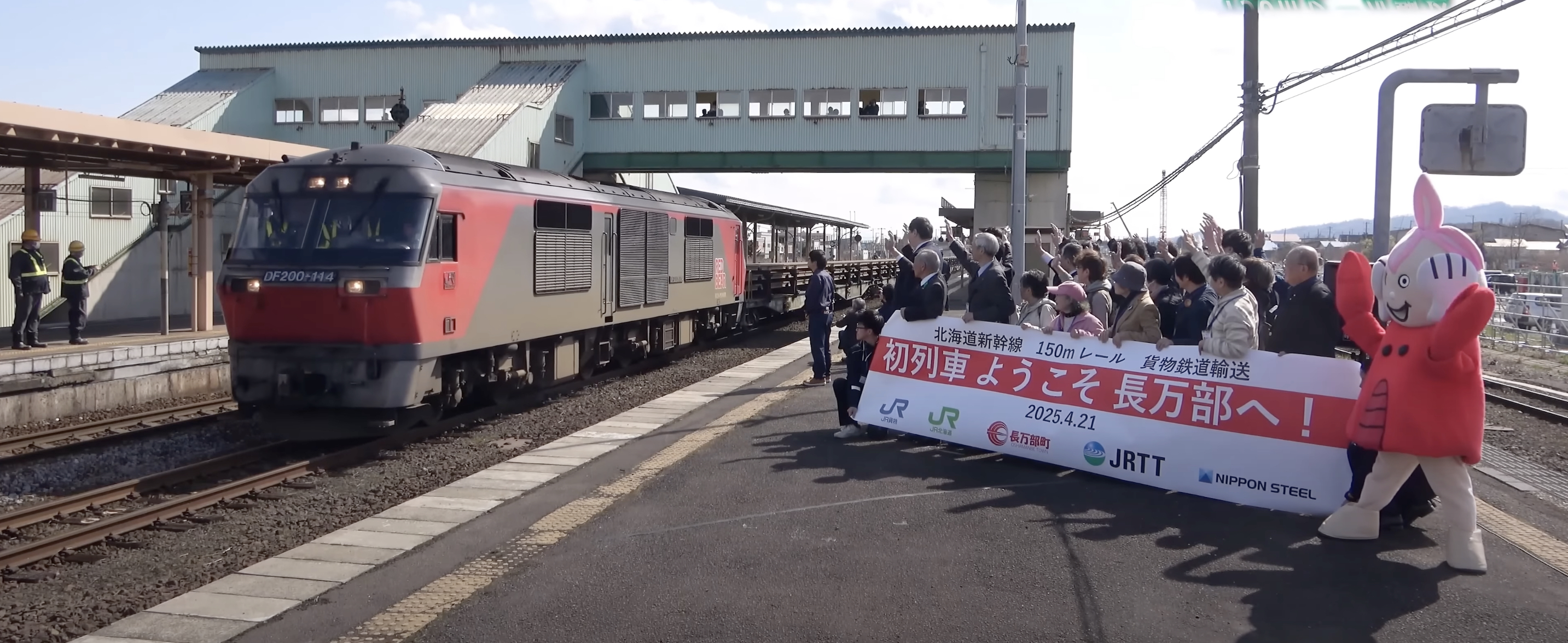
The Shinkansen extension to Sapporo will meet with the conventional line at Oshamambe station.
The operating ratio gives a better indicator of performance on each line than the deficit. In FY2023, JR Hokkaido’s Hakodate Main Line from Otaru to Sapporo and Iwamizawa, the Chitose Line from Sapporo to New Chitose Airport and Sapporo to Tobetsu had a combined deficit of around ¥3bn. But their combined revenue was ¥42·4bn, or 56% of all railway-generated earnings. The operating ratio for the Sapporo area was 107, suggesting that this suburban network could potentially break even.
Faster on the narrow gauge
JR Hokkaido seems wary of venturing into more high speed projects, and may even be regretting going ahead with the extension to Sapporo, given the island’s stark population decline and shrinking labour force. Plans to extend the high speed network to Asahikawa have been put on hold, and alternatives are being explored.
On August 8 the railway requested permission to procure new Limited Express EMUs; initial responses from selected manufacturers are expected by the end of November.
Hokkaido only has a few electrified lines, which do not form a coherent group. The Hokkaido Shinkansen uses 25 kV 50 Hz, while the 1 067 mm gauge lines are all wired at 20 kV 50 Hz:
Asahikawa – Sapporo;
Sapporo – Otaru;
Sapporo – New Chitose Airport – Tomakomai – Higashi-Muroran;
Kikonai – Hakodate and Shin-Hakodate-Hokuto.
Services are operated using Series 785, 789.0 and 789.1000 EMUs acquired between 2002 and 2007. The series 789s, which worked Aomori – Hakodate services prior to the opening of the Shinkansen in 2016, have a top speed of 140 km/h. The others are limited to 130 km/h.
JR Hokkaido is now looking to procure EMUs capable of between 160 and 200 km/h. These would be deployed on the Hakodate Main Line between Sapporo and Asahikawa, cutting the fastest journey times for the 136·8 km from 85 to 60 min. They would also be used on the 44 km Chitose Line, which is one of the best performing sections of the Hokkaido rail network in terms of ridership. Here the journey time between Sapporo and Minami-Chitosen, junction for the airport branch, would be cut from 33 to 25 min.
There are various challenges to increasing speeds. One is the number of level crossings, as both lines cross fairly flat terrain. The traditional approach in urban areas has been to raise the railway onto an elevated structure, but this is costly and disruptive. Such structures would be environmentally intrusive in rural areas. The cheapest option would be to replace the busiest crossings with road bridges, eliminate some, and equip the rest with full-width barriers and warning devices. Lineside signalling may also need modification to ensure adequate signal sighting, while the higher speeds could potentially require the installation of automatic train protection.
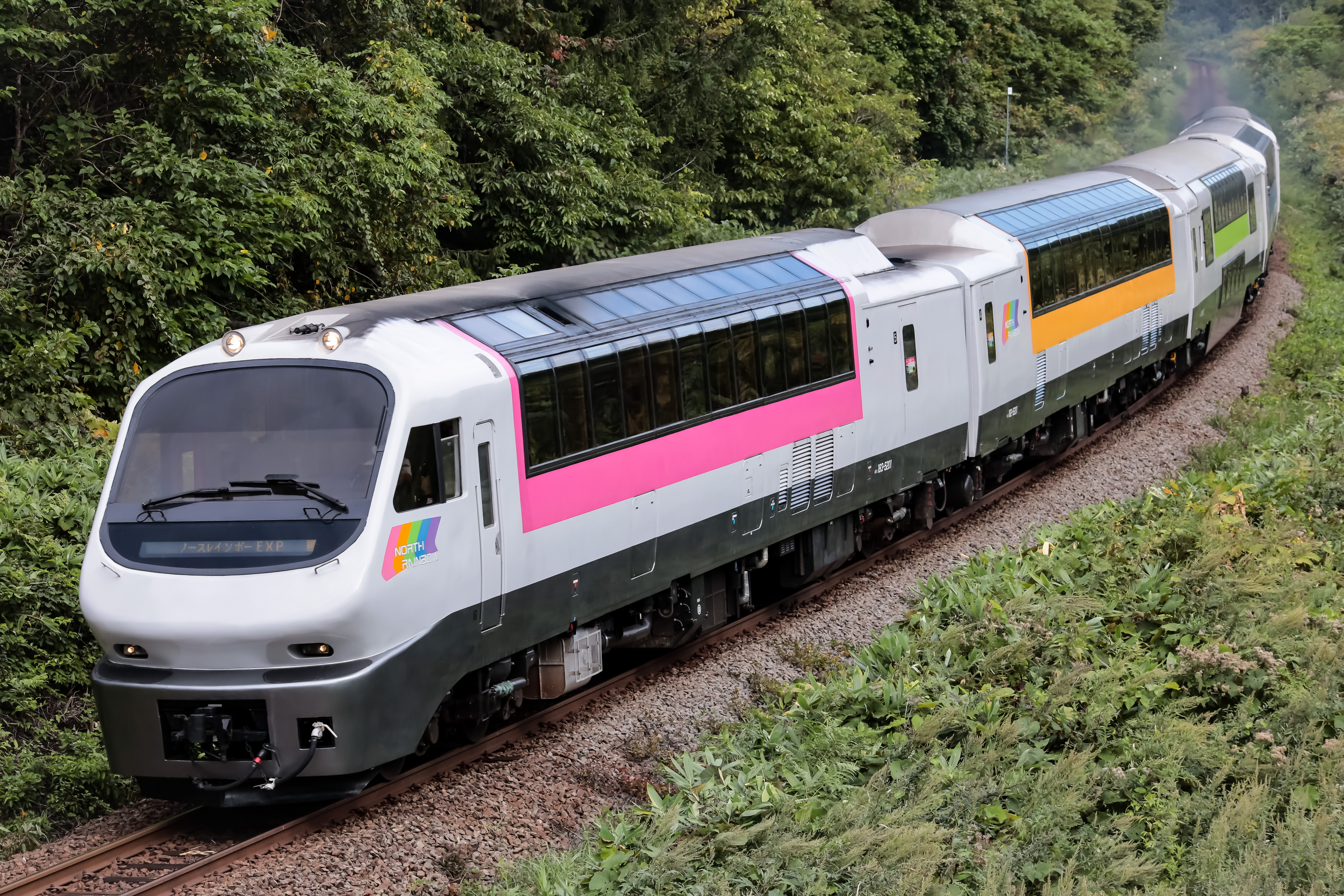
Operating a Niseko Limited Express service, a KiHa183.5200 DMU traverses the line between Shikaribetsu and Ginzan, north of Kutchan, one of the most remote sections of the Hakodate Main Line.
One glaring omission from the Hokkaido electrified network is the easily graded main line between Higashi-Muroran, Oshamambe and Shin-Hakodate-Hokuto, which could have been electrified and upgraded for 200 km/h at far lower cost than building the Hokkaido Shinkansen. It also serves some major population centres that will be bypassed by the new line.
Even if it proved too difficult to electrify between Shizukari and Higashi-Muroran, where there are long single track tunnels, a modern battery-electric multiple-unit could cover the 66·6 km section on battery, recharging elsewhere from the overhead and regenerated braking energy. Between Mori and Hakodate the more easily graded coastal route round the eastern flanks of the Komagatake volcano could be electrified, rather than the sinuous western line currently used by through passenger services.
Writing on the wall
The future looks bleak for the Otaru – Oshamambe section of the old main line, where the current proposals envisage the replacement of local trains by bus services, split into nine sections with different service frequencies (Table I).
Table I. Proposed replacement bus services on Hokkaido Main Line
Oshamambe – Kuromatsunai
Kuromatsunai – Rankoshi
Rankoshi – Niseko
Niseko – Kutchan
Kutchan – Ozawa
Ozawa – Shikaribetsu
Shikaribetsu – Niki
Niki – Yoichi
Yoichi – Otaru
Delegates attending the 17th Railway Measures Council conference in Shiribeshi to consider the impact of the Hokkaido Shinkansen on local services were told that more buses than trains would be required to handle the likely number of passengers, especially between Yoichi and Otaru, where there is still a substantial amount of commuting. However, current trends suggest that the population of Yoichi municipality could fall from 18 000 in 2020 to under 10 000 by 2050. The proportion of economically active inhabitants would also decline. A projected fall in the number of secondary school pupils would also reduce the demand for school travel by train or bus.
There is a possibility that the Shinkansen stations in Otaru and Kutchan might encourage a localised population increase, but this is far from guaranteed.
With more than 11 years to go before the new line is completed, concern has been growing that bus replacement on a like-for-like basis would be impossible, given a growing shortage of bus drivers in southwest Hokkaido. Local bus companies explained that it was becoming difficult to maintain current service levels, partly as a result of the demographic crisis, but also reflecting the unpopularity of such jobs among younger people.
Oshamambe is likely to become the main interchange for passengers travelling between Honshu and towns such as Muroran or Tomakomai, taking over from Shin-Hakodate-Hokuto. It will be interesting to see whether this has an impact on the local economy — there are two hotels and a tourist hostel adjacent to the current interchange, which may also relocate.
Hakodate options
Concern has been raised over the future of rail services between Oshamambe and Hakodate. In July 2019 it was estimated that the 147·6 km southern end of the Hakodate Main Line would require ¥2·5bn for infrastructure works over the next 20 years. This area has a sparse population, and average daily ridership fell by 46% from 5 492 in 1987 to 2 985 in 2023; it is projected to fall further to 1 737 in 2045. Local road improvements, increasing car ownership, rural depopulation and an ageing population are all factors. The operating deficit in FY 2023 was ¥6·7bn, resulting in an operating ratio of 268.
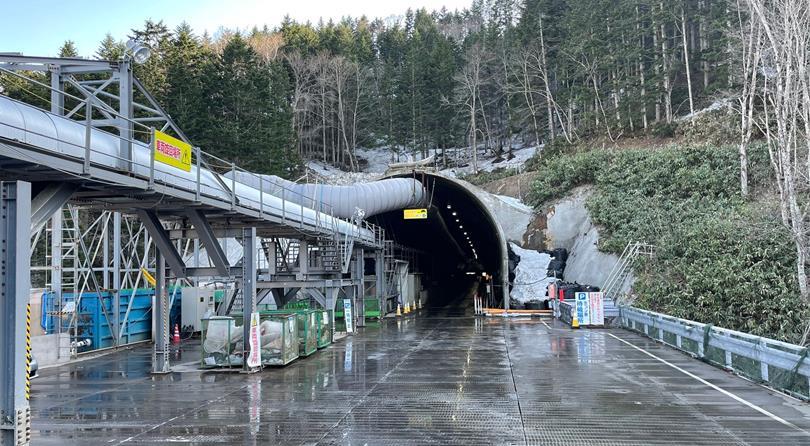
A side gallery provides access to the 4 615 m Onenai section of the 12 635 m Futatsumori tunnel, between Kutchan and Shin-Otaru.
One option being discussed would be for local passenger services to be taken over by the Donan Isaribi Tetsudo, which would be able to earn extra revenue from charging JR Freight for the use of its infrastructure (as already happens on the Seikan Tunnel line between Goryokaku and Kikonai). The Hakodate Main Line is currently used by an average of 50 freight trains per day. A similar model was adopted in 2004 for western Kyushu, where the Hisatsu Orenji Tetsudo took over the former Kagoshima Main Line between Yatsushiro and Sendai.
Three possible scenarios were studied, all assuming that JR Freight would be paying ¥4bn a year in track access charges. However, there are currently no freight trains using the section between Oshamambe and Otaru.
Maintaining passenger trains between Hakodate and Oshamambe would require an initial investment of ¥288·6bn. An operating deficit of ¥1·9bn would be incurred in the first year after the Shinkansen opened through to Sapporo, with the cumulative deficit reaching ¥94·4bn after 30 years.
Providing a replacement bus service would require an investment of ¥37·5bn, and incur a deficit of ¥350m in the first year, reaching ¥13bn after 30 years.
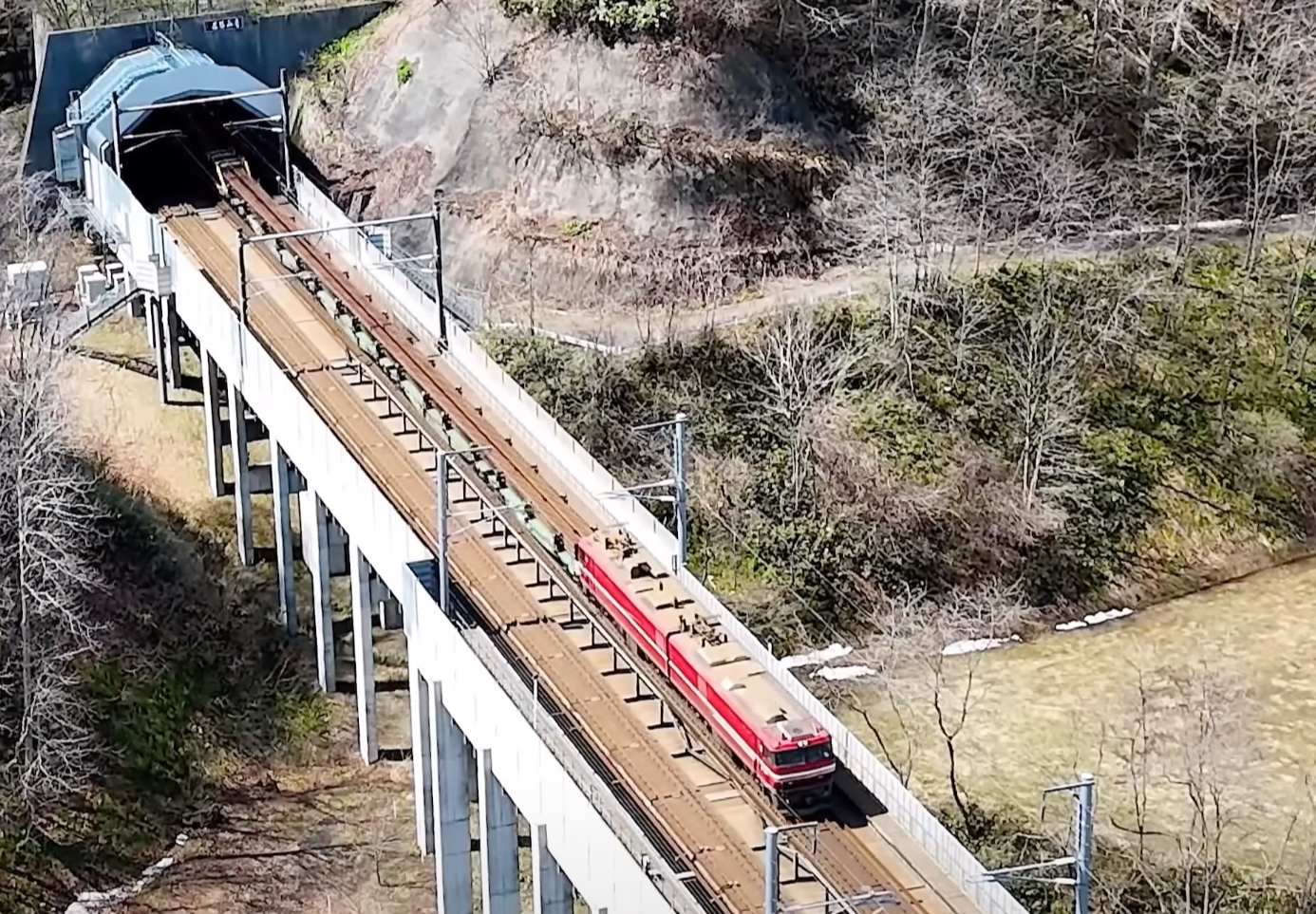
Hauled by a Class EH800-8 locomotive, the first long rail train emerges from the Hokkaido portal of the Seikan Tunnel, en route to Oshamambe.
Retaining passenger trains between Hakodate and Shin-Hakodate-Hokuto only would require an investment of ¥147·7bn. These would incur a deficit of ¥940m in the first year, resulting in a cumulative deficit of ¥48·4bn over the 30 years. These figures did not include the cost of providing replacement bus services between Shin-Hakodate-Hokuto and Oshamambe.
Rather surprisingly, consideration was also made of closing the line completely, even though this would mean having to move freight for north of Hakodate by road or sea. A definitive decision on the future of both rail freight and passenger services is expected by the end of April 2026. On September 3, MLITT said it was ‘necessary to ensure the functionality of the freight railway’.
Much has been written about the possibility of extending the 1 435 mm gauge tracks and 25 kV 50 Hz electrification from Shin-Hakodate-Hokuto to Hakodate to allow through Shinkansen services. At present the Hakodate Liner EMU shuttle provides 16 trains each way per day, taking between 15 and 22 min for the 17·9 km. Diverting Tokyo – Sapporo through services with a reversal in Hakodate would add at least 40 min to journey times, which seems unlikely to be justified.
This article first appeared in the December 2025 issue of Railway Gazette International
AloJapan.com