
Tokyo’s commitment to Morocco’s Atlantic axis
Diplomatic shift: Autonomy as a realistic path
A long-term commitment
Tokyo’s commitment to Morocco’s Atlantic axis
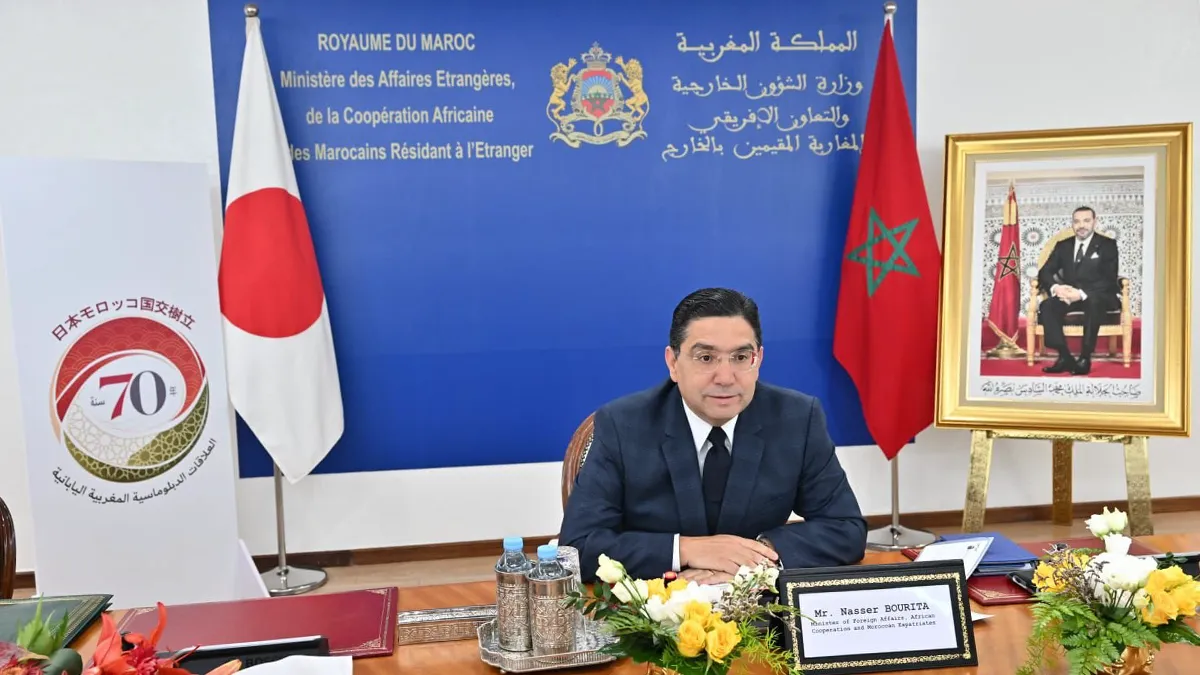
Japan has not confined itself to diplomatic pleasantries; it has set its sights on Morocco’s strategy to transform the Atlantic coast. This solid understanding has been sealed and made visible through the joint efforts of Morocco’s Minister of Foreign Affairs, Nasser Bourita, and his Japanese counterpart, Toshimitsu Motegi, who have led this historic bilateral rapprochement.
From Tokyo’s perspective, projects of the calibre of the Africa-Atlantic Gas Pipeline or the African Atlantic States Initiative are much more than mere engineering works. They are seen as real drivers of stability for a continent in urgent need of security and growth.
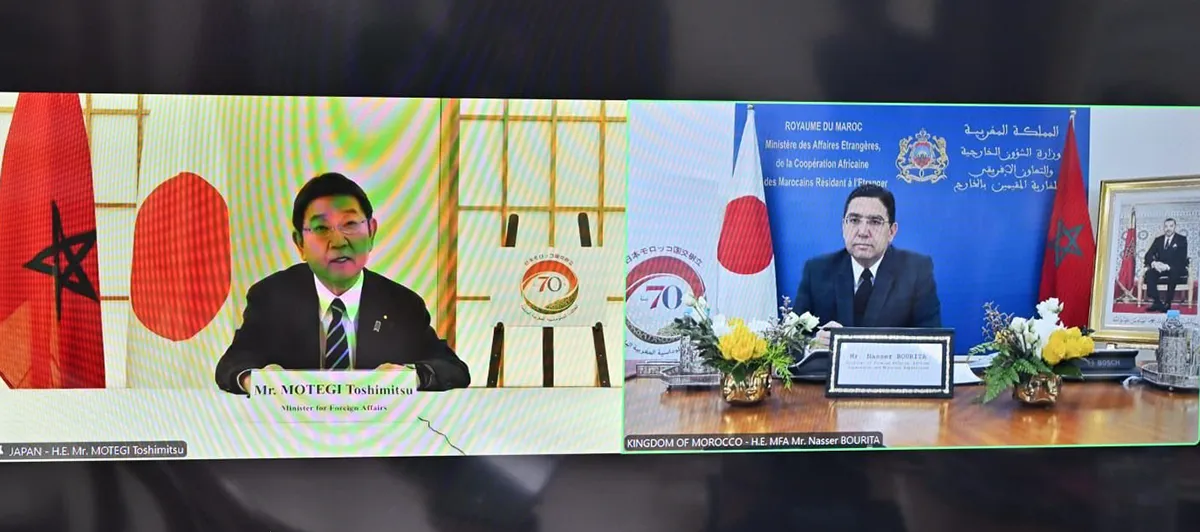
Nasser Bourita and Toshimitsu Motegi strengthen the strategic partnership between Morocco and Japan to mark its 70th anniversary – PHOTO/X/MAROC DIPLOMATIE
During their meetings, Minister Motegi sought to highlight these initiatives promoted by King Mohammed VI of Morocco, agreeing with Bourita that the continent’s development inevitably depends on “stable regional integration models”.
What is clear following Japan’s backing of Sahel-Southern Europe cooperation is that they no longer view Morocco merely as a distant friend, but as the necessary interlocutor and the logistical platform connecting Asia and Europe with the heart of Africa. For Japan, the political weight of the diplomacy led by Bourita in the region is now an unquestionable reality.
Diplomatic shift: Autonomy as a realistic path
One of the most notable aspects of this rapprochement is the Japanese stance on the Sahara conflict. During the bilateral working sessions, the Japanese government has welcomed UN Security Council Resolution 2797, which presents the autonomy initiative put forward by Morocco in 2007 as a viable, serious and credible solution.
In his talks with Nasser Bourita, Minister Toshimitsu Motegi made it clear that Tokyo “is willing to recalibrate its political and economic position, aligning itself with a vision that prioritises pragmatic solutions”.
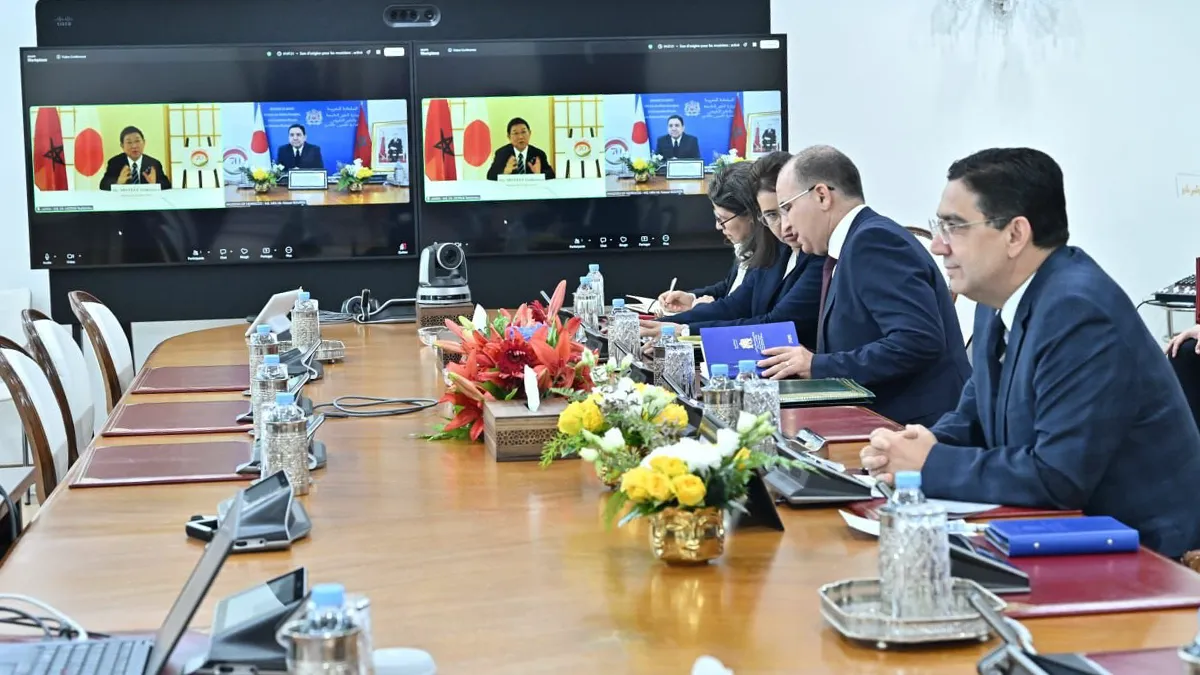
Online meeting between Bourita and Motegi to consolidate Japan’s support for Moroccan sovereignty – PHOTO/X/MAROC DIPLOMATIE
In this regard, Japan has emphasised the importance of the parties resuming negotiations without preconditions, recognising that the formula for autonomy under Moroccan sovereignty proposed by Rabat could be “the definitive foundation for a lasting peace accepted by the international community”.
Alongside the Atlantic agenda, Morocco reaffirmed its leadership in implementing the Marrakesh Pact at the International Migration Review Forum. The Director of Global Affairs, Ismail Chekkori, highlighted that Morocco not only chairs the Network of Leading Countries on Migration, but also applies a humanist approach to governance that includes migrants’ access to healthcare, education and employment, transforming migration into a driver of shared development.
This vision, aligned with the African Agenda on Migration championed by King Mohammed VI, underscores that border management and the protection of rights require indispensable international solidarity. For Morocco, this approach of “leading by example” strengthens its position vis-à-vis strategic partners such as Japan, demonstrating that it is a responsible and essential player in the stability of the Africa-Europe axis.
A long-term commitment
Far from being merely symbolic support, both have reaffirmed this new direction by signing a memorandum of cooperation for a strengthened partnership. With this step, Japan has confirmed that it will closely support this process, both in the political arena and through economic and industrial investment in the country.
With this move, the Asian country has decisively joined the group of nations that see the proposal for autonomy as the most solid path to ending the conflict, consolidating a personal and state-level alliance between Bourita and Motegi that defines a bilateral relationship that is more stable and dynamic than ever.
Bourita and Motegi agreed on a qualitative leap in their relationship, strengthening trilateral cooperation with Africa and promoting cultural and “people-to-people” exchanges. This new operational framework, which includes regular political consultations through a Joint Committee, seeks to consolidate the Rabat-Tokyo axis as a pillar of stability in the face of the global challenges of the 21st century.
In a symbolic gesture to mark this 70th anniversary and the approaching 2026 World Cup, both ministers exchanged their national team shirts bearing the number 70. Motegi took the opportunity to congratulate Morocco on co-hosting the 2030 World Cup, emphasising that this world-class sporting event will be a key showcase for attracting new investment from Japanese companies to the Kingdom, thereby strengthening an economic commitment that goes beyond the diplomatic sphere.
AloJapan.com