
JAPAN NEWS
Acrylic sheets transformed into commemorative items are a hit.
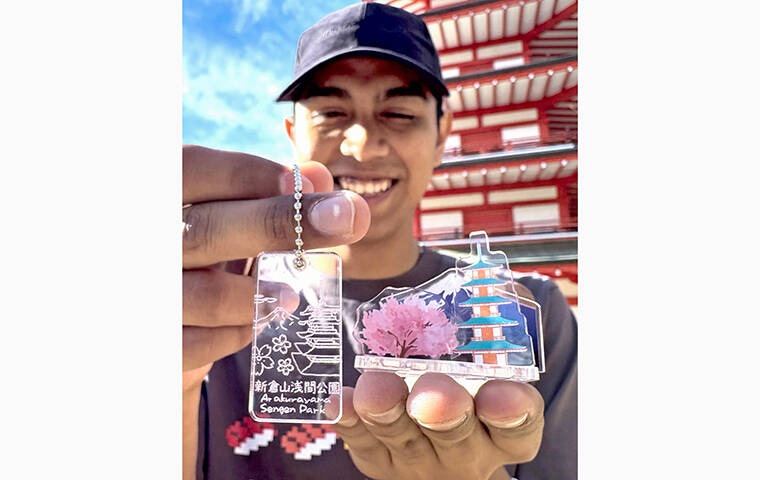
TOKYO >> Three capsule trinkets, including a key chain depicting Mount Fuji, are proving popular with visitors to Arakurayama Sengen Park in Fuji- yoshida, Yamanashi prefecture.
About 40,000 of the items, created for visitors as souvenirs, were sold in the three months since their release.
The trinkets are made with acrylic panels that were used during the COVID-19 pandemic. A portion of proceeds from the sales will be used to improve restrooms for visitors.
The park offers a grand view of the Chureito five-story pagoda with Mount Fuji in the background. Photos taken at the park have become well-known for their social media appeal, turning it into a tourist spot that attracts over a million visitors a year.
Visitors can buy the capsules from vending machines. Key chains depicting the pagoda with Mount Fuji cost 300 yen (about $1.90); good luck charm accessories, 400 yen; and 3D acrylic stands, 500 yen.
The vending machines were installed near the pagoda in October. The city originally expected annual sales of 15,000 units, but the figure reached 40,000 within three months. Sales in November and December each were 16,000 units.
Don’t miss out on what’s happening!
Stay in touch with breaking news, as it happens, conveniently in your email inbox. It’s FREE!
The items are recycled from protective acrylic partitions used during the pandemic. Aquarium manufacturer Spring Inc., based in Otsuki, Yamanashi prefecture, was commissioned by the city government to turn the panels into commemorative goods.
The company began to consider ways to recycle the partitions once the pandemic had eased. About 20,000 panels — about 20 tons — have been collected from across Japan.
The company has experience with the process. It recycled scrap materials from aquarium manufacturing into items such as photo frames.
For each capsule sold, the company donates 100 yen to the city of Fujiyoshida. The initiative not only reduces waste, it mitigates the impact on the environment. The municipal government plans to use the donations to tackle overtourism and pollution.
The area around the park was once a quiet residential neighborhood. But since it became a popular tourist spot, traffic congestion and littering have increased. Managing traffic, trash and restrooms cost about 100 million yen a year.
AloJapan.com