
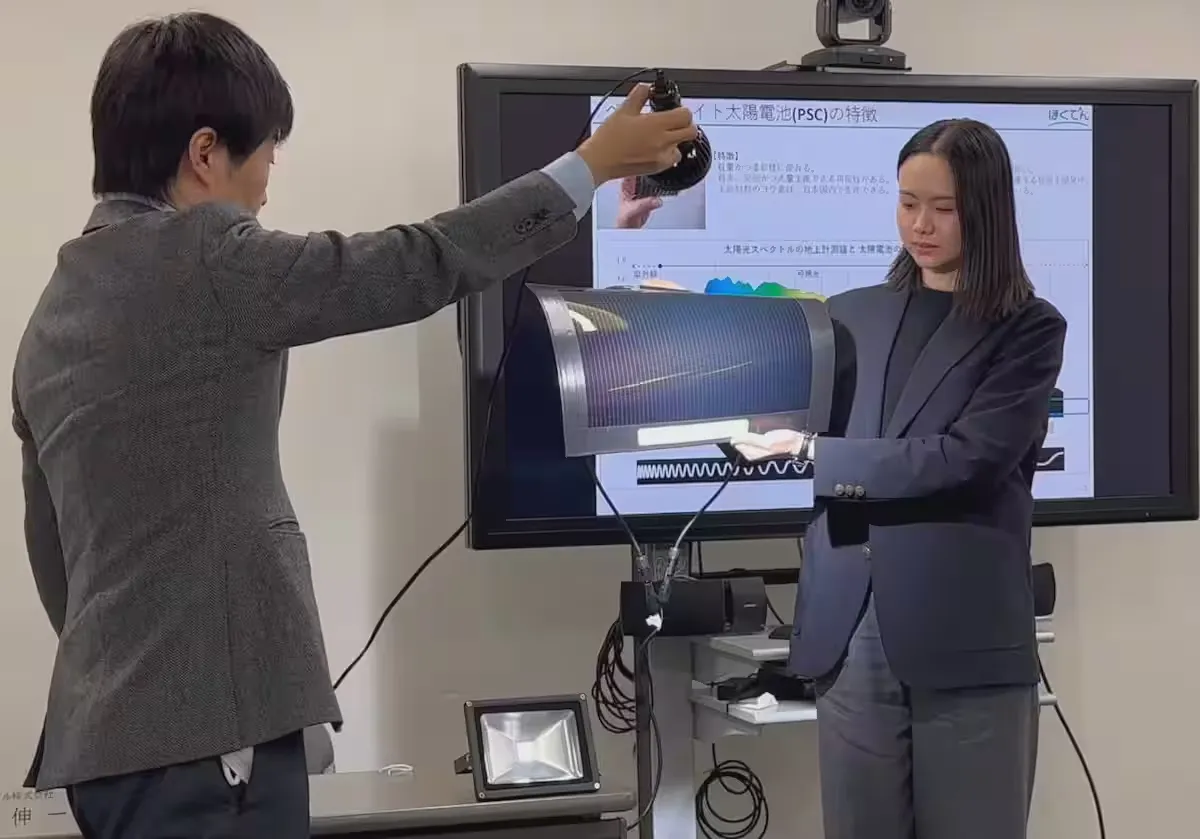
Pilot projects aimed at bringing perovskite solar cells (PSCs) to market are gaining momentum across Japan. Unlike conventional solar panels, these next-generation devices are thin, lightweight, and flexible, allowing for a much wider range of installation options.
PSCs use materials with a crystal structure similar to that of the mineral perovskite. The technology is closely associated with Japanese engineer Dr. Tsutomu Miyasaka, who is widely regarded as a key figure in their development.
Because they are thin and flexible, PSCs can be installed on walls, windows, and other surfaces where traditional panels are difficult to use. However, improving long-term stability and durability remains a major challenge to their widespread adoption.
From an energy security perspective, PSCs are also strategically important for Japan. Iodine, one of the key materials used in their production, is a resource for which the country is one of the world’s leading suppliers.
Cold Climate Testing in Hokkaido
One such pilot project began last August, led by Hokkaido Electric Power in partnership with Mitsubishi HC Capital and Enecoat Technologies. At a press briefing in February, a representative said the cells continued to generate electricity even at temperatures as low as −22°C—a notable milestone for solar use in cold climates.
In the trial, the cells were installed on the exterior walls and interior window surfaces of a model house at the utility’s research institute. By comparing daily weather data with power output, the team confirmed that the cells can generate electricity even in extreme cold, including from sunlight reflected off snow.
This is significant because conventional silicon panels often struggle in winter. Snow can block sunlight, reduce output, and place additional weight on structures. PSCs avoid many of these issues, and the institute says this was the first time such a test had been carried out in a snowy environment.
“They are flexible and lightweight, which opens up more installation options,” a project representative said, holding up a thin film used in the trial. “There are still challenges to address, but we plan to continue our research.”
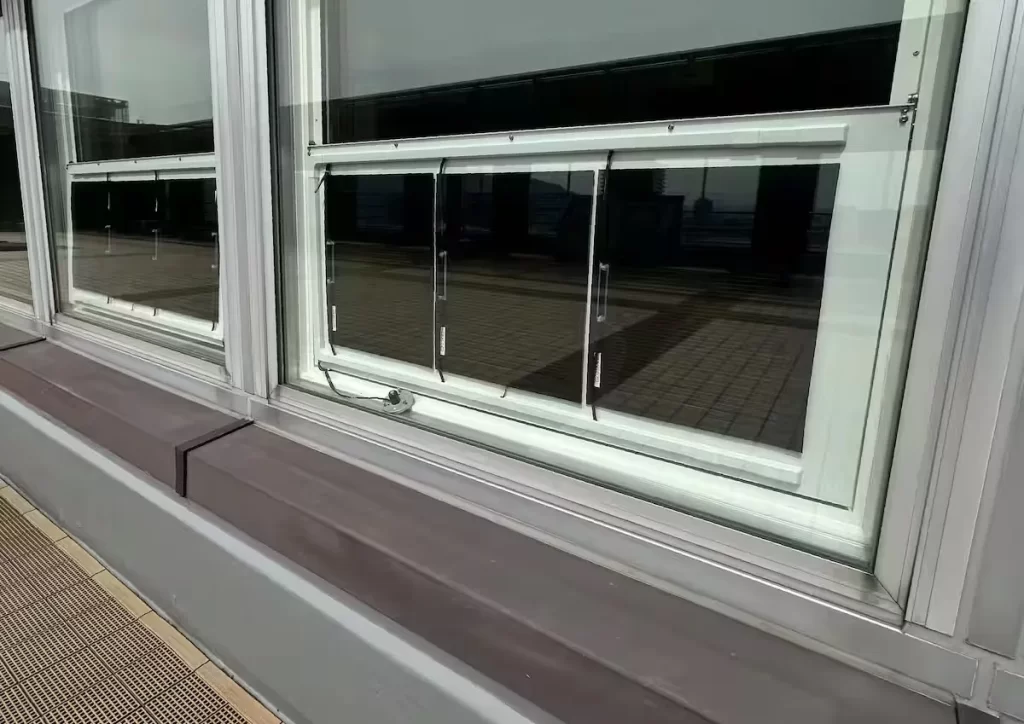 Perovskite solar cells have been installed in the windows as part of a pilot project at Sapporo City Hall, April 17, Chuo Ward, Sapporo. (©Sankei/Takahiro Sakamoto)
City Hall Project
Sapporo City is also testing perovskite solar cells as part of its push to cut greenhouse gas emissions by 55% from fiscal 2016 levels by fiscal 2030, and to reach net zero by 2050. The city is exploring new technologies to help meet these goals.
As part of that effort, a pilot project began in March at the city hall, where PSCs have been embedded into windows on the top floor. Over the coming year, the city will monitor how effectively the cells generate electricity in a real urban environment.
Running the demonstration at a highly visible public building is also meant to raise awareness of solar power and decarbonization. By making the technology easy to see, officials hope to encourage broader public interest.

Scaling Up and National Goals
Since last fiscal year, Sapporo has also been installing conventional solar panels at 10 elementary and junior high schools, gradually expanding the use of solar energy in public facilities. This existing setup could help smooth the transition to PSCs once the technology becomes commercially viable.
With more flexible installation options, perovskite cells could be especially well suited to dense urban areas. A city official said they hope the initiative will encourage more residents to think about decarbonization.
At the national level, Japan’s Seventh Strategic Energy Plan aims for renewables, including solar, to account for around 40–50% of total energy supply by fiscal 2040. PSCs are expected to play an important role in reaching that target, although challenges remain. Improving long-term durability and addressing the safe handling of lead used in some types of cells are key issues still to be resolved, and both the public and private sectors are continuing research to tackle them.
(Read the article in Japanese.)
Author: Takahiro Sakamoto, The Sankei Shimbun
Continue Reading
AloJapan.com