
Khaldon Azhari
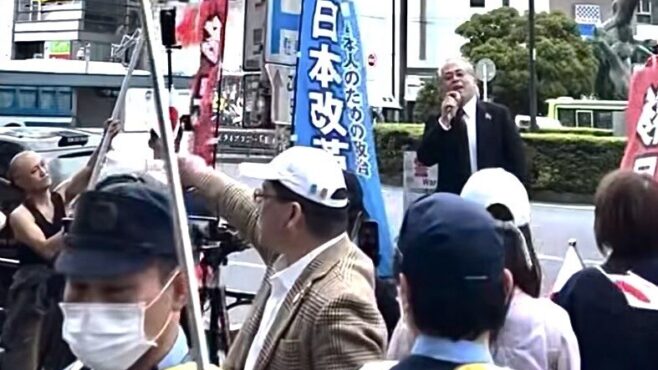
TOKYO: Anti-immigration protesters gathered at the East Exit of Ikebukuro Station on Monday to oppose the government’s plan to accept more foreign workers.
The rally was led by KUTSUZAWA Ryoji, leader of the Japan Reform Party and a former Toshima City assembly member, and by SUZUKI Nobuyuki, head of the Japan National Party.
Yachimata City assembly member FUJIWARA Chikako also took part, criticizing current immigration policies and calling for limits on the number of foreign residents.
Tensions increased at Ikebukuro Station as anti-immigration protesters confronted counterprotesters who advocated for an open society, accusing the protesters of racism and hate speech. Police monitored the situation as it escalated.
One protester brandished a defaced Kurdish flag, a provocative gesture aimed squarely at the Kurdish community in neighboring Saitama Prefecture, where tensions have already been running high.
Rally leaders intensified their speeches, singling out the Islamic faith as they demanded stricter controls on foreign residents.
They voiced outrage over public prayers taking place in streets and parks across Japan’s quieter, more remote corners, and portraying these acts as a direct challenge to Japanese social norms. Meanwhile, social media has amplified the rising tension, fueling heated debates online.
Although no crimes have been reported, the protests specifically target the Islamic faith, expressing opposition to the construction of new Muslim graveyards claiming they pollute groundwater. This issue has persisted for decades in Japan without resolution. Demonstrations have also recently opposed plans for building a new mosque in Fujisawa near Tokyo, although the number of mosques in Japan has increased over the years without similar protests.
Experts on Islam in Japan note that anti-foreign sentiment is not new, but the focus of these fringe groups has shifted. Over the past decade, they primarily targeted Korean communities with hate speech. With improved diplomatic relations between Japan and South Korea, these groups have turned their attention to Muslims in Japan. Experts believe this is likely a temporary trend and expect the hate groups shift focus again. They emphasize that these demonstrations are isolated incidents and do not reflect broader Japanese society, where tolerance is common.
The Ikebukuro demonstration concluded peacefully, with no injuries or arrests reported.
AloJapan.com