
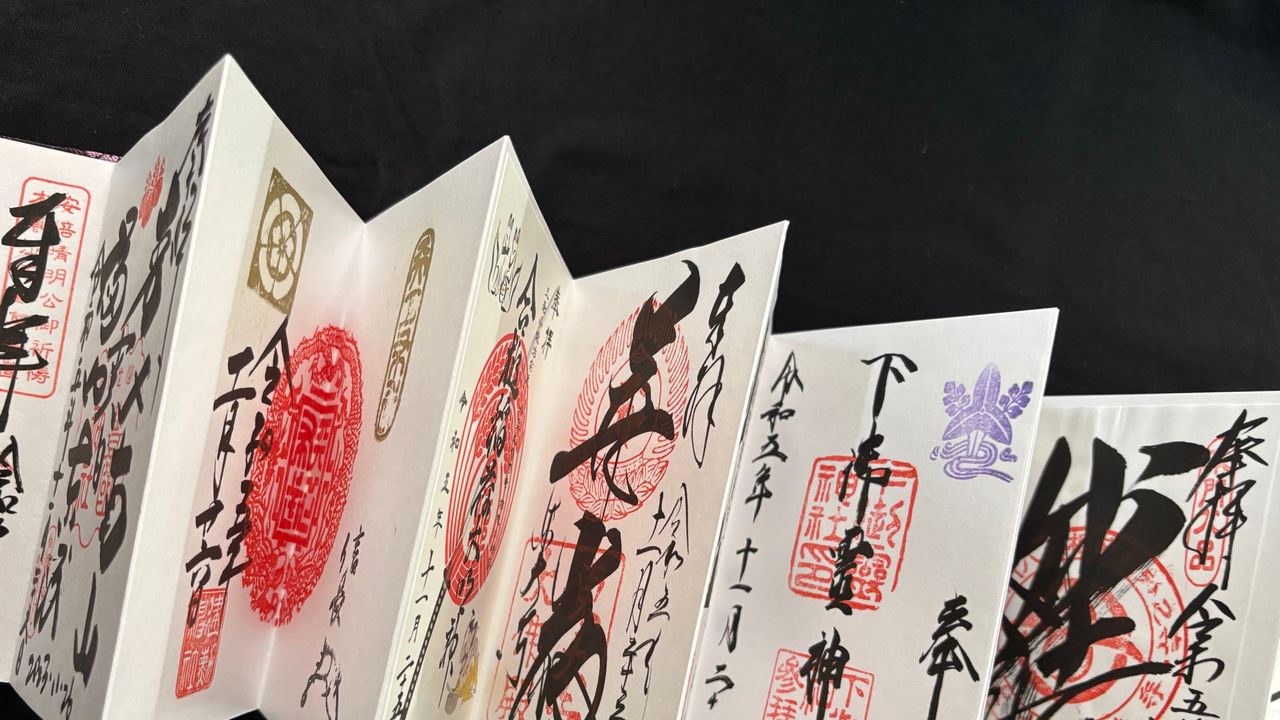
Many moons ago, as a young MBA student, I was on my way to Kyoto for a semester abroad after a weeklong stopover at Tokyo, a city I had grown to dislike while trying to check off a packed to-do list drawing the same surging crowds everywhere. It was a relief to instead leisurely wander through the quintessentially Kyoto machiya boutiques, Heian court life references, and racks of vintage silk kimonos at flea markets. The stipend from an internship I had completed earlier covered my basic expenses, leaving me with a decent sum from my savings to spend at my discretion. Instead of frequenting Issey Miyake and Vivienne Westwood or swapping my supermarket sushi for fancy omakase, like an international student meme come to life, I found myself drawn to a more unusual vice—collecting goshuin.

A goshuin from Kenkun Shrine in Kyoto, located on the top of Mt. Funaoka, with dragons stamped in a circular pattern
Tejashree Murugan
When you visit a Buddhist temple or a Shinto shrine in Japan, there is often a priest sitting behind a small counter just outside the main complex, brow furrowed in concentration as they stamp vermilion symbols and inscribe stylistic calligraphy. Devout pilgrims, ardent collectors, and curious tourists alike walk away with exquisite seals in accordion-fold notebooks. These intricate works of art are goshuin and they are received in books called goshuincho. Historically, they served as records of pilgrimage to the places they were obtained from. In more recent times, the collection of goshuin has acquired hobby-like connotations, with people across generations and geographies taking particular delight in travelling to locations that offer unique designs and sharing their collections on social media.
On Instagram, the hashtag #goshuin throws up more than 300K posts, hinting at its growing popularity. Many temples and shrines, like the Horin-ji Temple in Tokyo and the Ootori Taisha in Sakai, have leaned into this interest, offering more modern design options. Some are printed on coloured paper with intricate cutouts, drawings, and embroidery; there are seasonal limited editions with cherry blossoms or autumn leaves, as well as versions inspired by pop culture like the Tokyo Revengers goshuin issued by Numabukuro Hikawa Shrine in Tokyo, famous artworks like Ito Jakuchu’s paintings at Kyoto’s Hozoji Temple, and even historical figures like poets and samurai. Receiving them requires a small donation, between 300 to 2000 yen (Rs200-1000), depending on the complexity of the design and materials used. Goshuin spots now often have a variety that a visitor can choose from, or one can simply get them all.
The red illustrations on the goshuin are stamped using hand-carved seals representing the temple or shrine’s name, official emblem, and even motifs of things the location is known for. On top of the stamps, details like the date of receipt, enshrined deities, and words of prayer are carefully calligraphed using freshly ground black ink. Every place has its own distinct designs, but even if you receive goshuin from the same temple or shrine twice, they wouldn’t be alike because of the different dates and handwriting of the people creating them, making each piece truly unique.
AloJapan.com