
Photo by Emma Enebak
In December 2025, the Daily Mail published a headline with a startling statistic: “It is now cheaper to go to Disney World in Japan than in Florida.” Hyperbole? Maybe. But not entirely unfounded.
A recent survey by floridarentals.com found that the average family of four spent between $1,000 and $1,500 per day at Disney World Orlando last year. Meanwhile, the Japanese yen hit ¥159 per U.S. dollar in January, giving American travelers remarkable spending power. A one-day adult ticket to Tokyo Disney can cost the equivalent of roughly $50 to $60, and a satisfying on-site meal often lands in the $10 to $15 range. Suddenly, a 14-hour flight feels less extravagant—and more strategic.
Disney World aside, the once-lofty dream of exploring Japan is slowly becoming a more realistic option for many Americans. And it’s not a secret anymore. In 2024, Japan welcomed a record 36.9 million international visitors, surpassing its pre-pandemic peak, according to the Japan National Tourism Organization. And yet, you still tend to hear the familiar awe and incredulity from those who believe the trip to be a distant, almost mythic fantasy. Expectations, it seems, are still catching up to reality.
The reality is this: Last July, my best friend Maddie and I managed to eat, frolic, and temple hop our way through Tokyo, Osaka, and Kyoto for a little under $3,000 each. And while I do believe the life-altering experiences that await you in the ancient island country to be well worth a little splurge, we have personally tested—and wholeheartedly endorse—the art of exploring Japan on a budget. Now, all you have to do is book the flight.
The Breakdown
Average round-trip flight from Minneapolis to Tokyo? Between $770 and $930
Cheapest month to fly? April
Hotel prices per night? We split single bedrooms for around $60/night
Average meal? $7 to $15
Transportation? Around $7-$10/day on subways and buses; between $75 and $150 for bullet train tickets
Quick Tips
Get Your Suica Card
Consider the Suica Card your all-access pass to convenience in Japan. Not only does the prepaid card allow for seamless travel between trains, buses, and subways, but it doubles as a digital wallet at convenience stores and vending machines (yes, including Japan’s iconic 7-Elevens).
To streamline your arrival after a long international travel day, set up your Suica in advance. Download the Suica mobile app on your smartphone and follow the instructions to top up your digital balance. Then, add it to your Apple wallet for easy access. (The mobile app works best for iPhone users.)
Walking Shoe Supremacy
There’s a chance you will set a new step record during your time in Japan—our highest count nearly exceeded 30,000 in one day. This is largely because Japan, while boasting clean, safe, and highly efficient public transportation, considers walking its primary mode of travel. Even history points to this deep pedestrian culture, with Japan relying heavily on human-powered transport—such as hand-pulled rickshaws—rather than horse-drawn carriages, particularly in the dense urban areas of the Edo period.
And then there are the train stations—sprawling, multilevel labyrinths where winding, half-mile tunnels connect a majority of transit lines. It’s safe to say you should leave your heels at home. Even on a nice dinner night, you’re likely to log a mile or two before you reach the table.
Pack Your Patience
There’s really no way around it. You are going to wait in some formidable lines. Not only is Japan’s tourism booming, but social media—particularly TikTok—is doing its algorithmic work of catapulting obscure, once-local eateries into overnight, global popularity. Consider it part of the experience—but come prepared. Keep a refillable water bottle on hand in case the queue snakes out into the hot island sun.
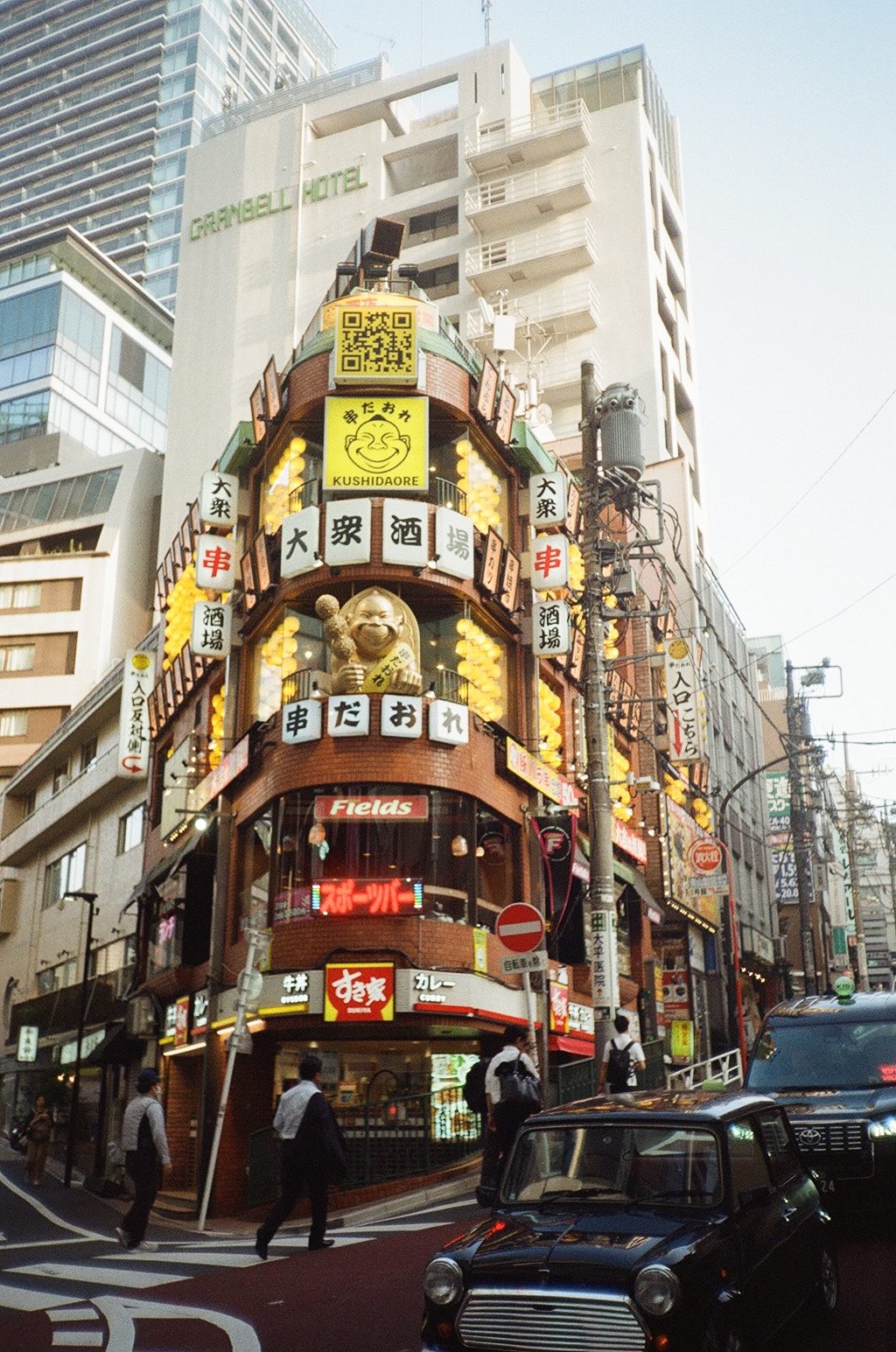
Photo by Emma Enebak
Tokyo
Shibuya Crossing | $0
Tokyo is the most populated city in the world—a fact Maddie and I were hardly privy to before stepping onto its carefully manicured streets. And yet, the monotonous chaos that tends to plague culture hubs like Times Square or Hollywood Boulevard has no place in Tokyo. The crowds, however large, are rhythmic, orderly, and respectful. Pedestrians loop through one another in congested, barely-there spaces as if it were all one giant, premeditated dance.
This dance comes to life in an almost hypnotic way at Shibuya Crossing—the busiest crosswalk in the world—which sees between 300,000 and 500,000 pedestrians daily. Situated at the pulsing heart of Shibuya’s neon-lit commercial district, a tidal wave of composed passersby ping-pong across this four-way intersection every three to five minutes, contained, orderly, and intentional—almost like a synchronous flock of birds.
After crossing it ourselves—a feeling akin to being a small speck of dust amid a giant, swirling cityscape—Maddie and I rode the elevator 46 floors to the top of Shibuya Scramble Square Tower, where we suddenly felt very large, towering above the crisscrossing crowds that had engulfed us moments ago. We sipped lychee martinis from our sky-high nook and admired Shibuya’s puzzling dichotomy of spectacle and serenity. I was sure in that instant that there was nothing else like it in the world.
Just one floor above us was Shibuya Sky, an open-air observation deck with panoramic views of the city. Maddie and I had considered getting tickets to the viewpoint (which run around $16/person) but neglected to realize they sell out 30 days in advance. But from where we sat on the 46th floor, staring out a floor-to-ceiling windows I didn’t see much reason to grab them anyway. If you’re on the fence, I recommend riding to the 46th floor instead—the views are unobstructed, and there is a jungle gym of restaurants, bars, and stores at your fingertips. Save the $16 or spend it on a few martinis. Both are rewarding options.
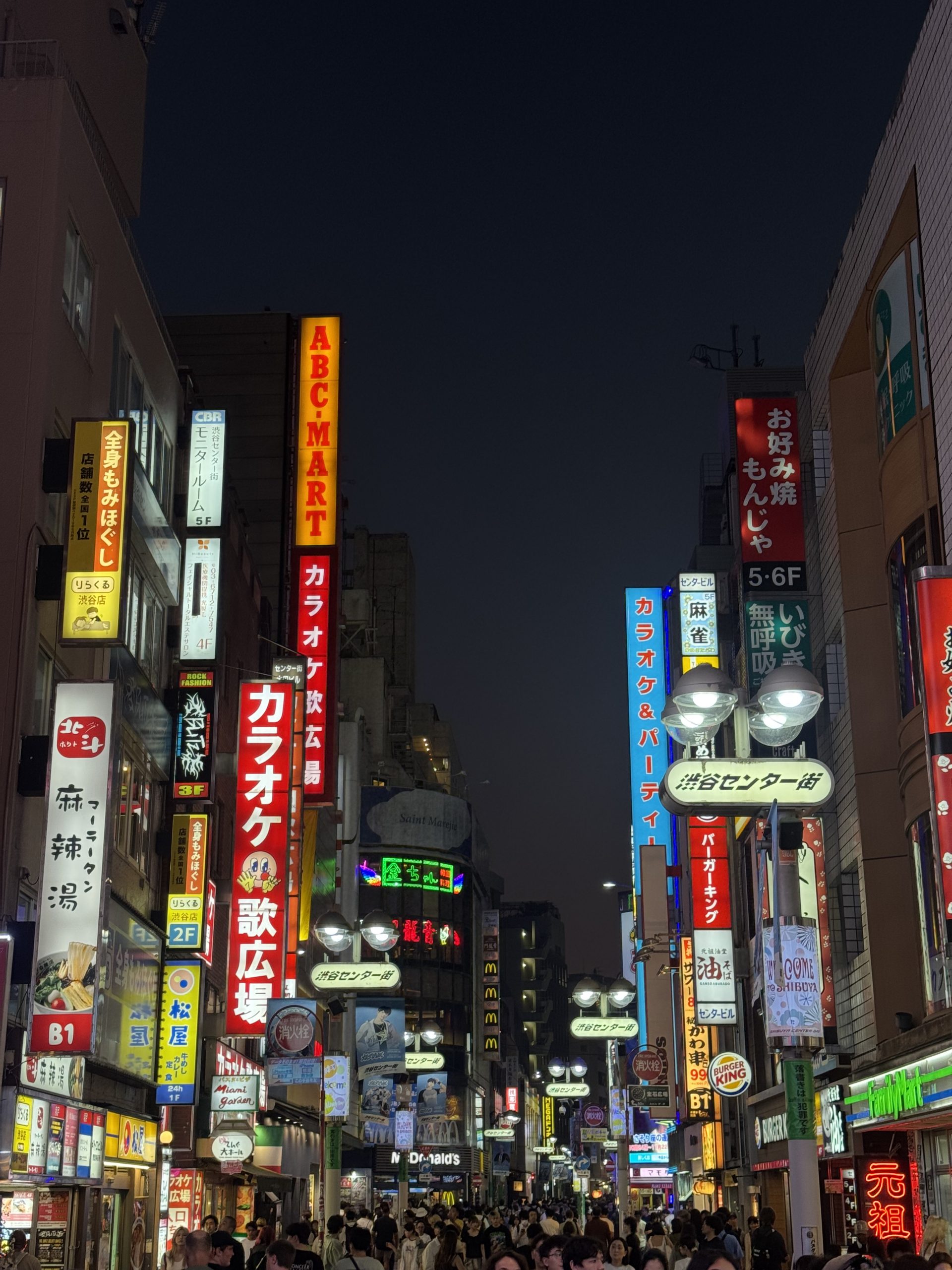
Photo by Emma Enebak
Sensō-ji Temple | $0
I was perched atop the steps of the oldest temple in Tokyo, surrounded by a steady hum of tourists and worshippers, and yet cloaked in a cloud of reverent silence. Next to me, a local woman approached Kannondo—the main offering hall of Sensō-ji—and performed a deep, unwavering bow before sprinkling an offering of yen into the donation box. It was my first encounter with an authentic display of Buddhist worship, and it felt emblematic of Japan’s deeply rooted sense of spirituality, which reveals itself even in the silent train cars, the rhythmic city streets, and the respectful bows of store clerks and waitstaff. It was profound to consider that Sensō-ji, over 1,400 years old, was one of the essential birthplaces of this national posture of spiritual discipline and social respect.
Sensō-ji sees over 30 million visitors annually, making it one of the most visited spiritual sites in the world. And there’s a reason. Its iconic red Kaminarimon Thunder Gate lantern and soaring, five-story pagoda are practically a postcard for the city of Tokyo, narrating the enduring legacy of its spiritual depth and architectural majesty. The best part? It costs $0 to wander its immense, ancient grounds, which are an undisputed highlight of Tokyo’s vast cultural attractions. Nearby, Nakamise-dori street unfolds like a sensory wonderland, offering an enticing arcade of flashing lights and wafting aromas. One of Tokyo’s oldest shopping streets, this 90-stall maze of Edo-period charms is easy to get lost in—from its sizzling, soy-drenched Mitarashi dango to its entrancing traditional crafts and onamori good luck charms. We made our way through the historic arcade holding clear umbrellas as the sky drizzled down on us, savoring $3 cones of matcha soft-serve and poring over magnificent handmade pottery as if we were in a world-class art institution—only here, the gallery was alive all around us.

Photo by Emma Enebak
Team Lab Planets | $24-$35
If Japan’s jarringly placid urban landscapes don’t already feel otherworldly to you, then a visit to one of its most popular cultural institutions—Team Lab Planets—is sure to transport you to another universe. The immersive digital art museum feels like a dizzying crossover between a virtual reality headset and a lucid dream, quite literally inviting you inside its all-encompassing, life-size art activations.
Split into three distinct areas—water, forest, and garden—the museum’s dynamic exhibits shift and change at the cues of human movement, ensuring that no two experiences are ever the same. I felt the singularity of this design as we weaved through the seven water installations, eventually wading into a room filled with shallow water, where flickering projections of koi fish danced around us. As we moved, so did the koi—spinning, flitting, and scattering with each splash of water and shift of presence.
The museum as a whole is a deeply meditative interpretation of art, in many ways reflecting the impermanence of time. I pondered this as a koi fish disintegrated into thousands of tiny flowers after brushing against my left leg, recalling the exhibit description etched onto the back wall: “Previous visual states can never be replicated, and will never reoccur.” It felt like an obvious allusion to a much larger shared reality—one that acknowledges, and chooses to savor, each distinct moment as it passes, transforms, and disappears.
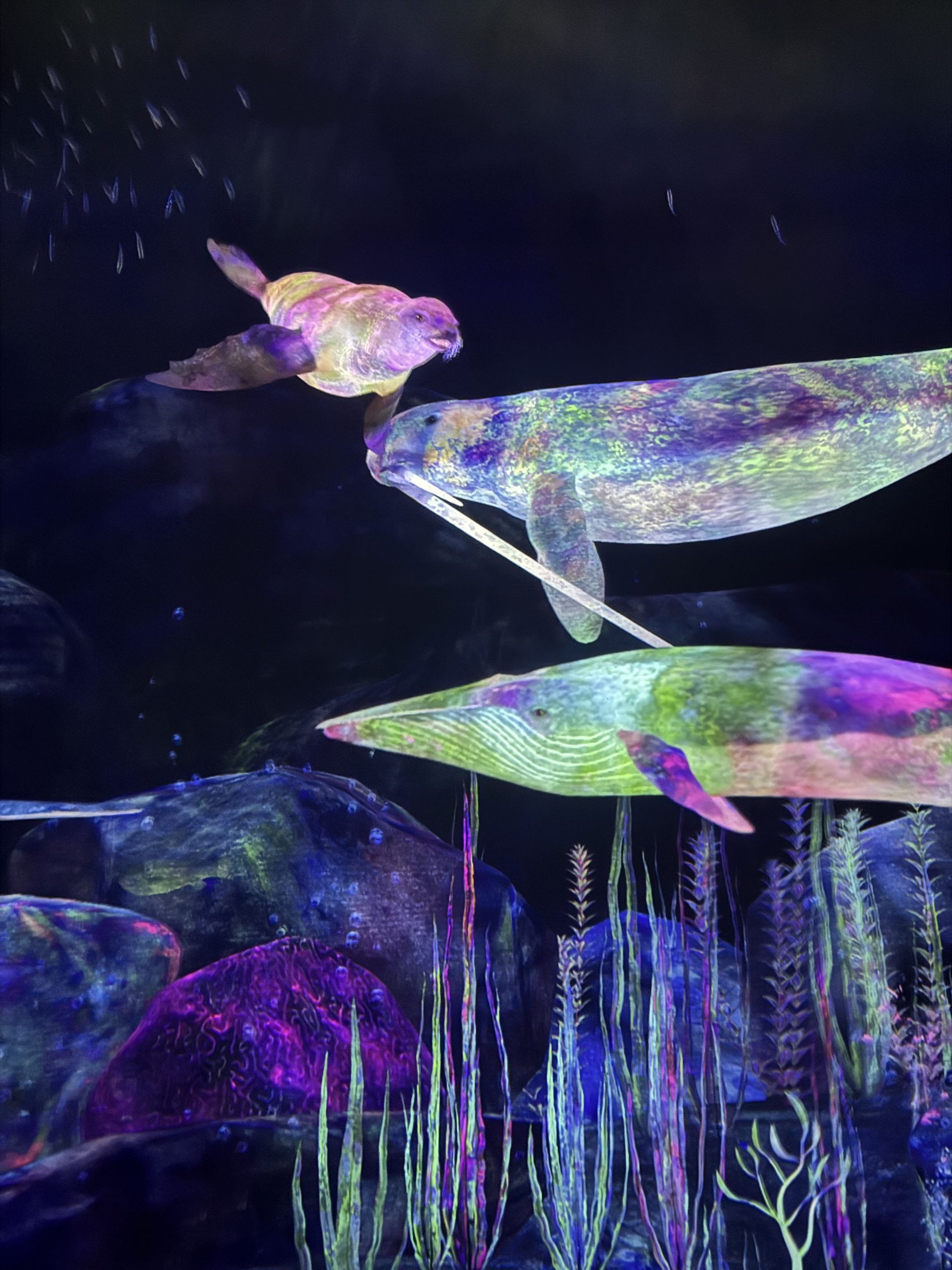
Photo by Emma Enebak
Recommended Splurge: Tsukiji Fish Market | $50-$60 (dependent)
You can most definitely throng your way through the intricate alleyways of Tsukiji Fish Market without spending a dime—reveling in the intoxicating sights, smells, and sounds that punctuate this street-food mecca of central Tokyo. But for this particular activity, I would recommend setting aside a few extra yen. The food just is that life altering. We started small: sweet and fluffy tamagoyaki, soft-serve matcha ice cream, fried salmon cheese balls, and melt-in-your-mouth strawberry Daifuku.
Then, the real pilgrimage began. We approached a line wrapping three zigzags back and assumed our position, poised to wait as long as necessary for one ultra-viral Japanese delicacy: fresh cuts of fatty tuna from Maguroya Kurogin, what many refer to as the best fresh fish in the world. We watched as the market chefs thinly sliced three different shades of the pink fish (from lean to medium-fatty to super-fatty), folding and shaping each piece with their hands almost like potters with clay. When our turn finally came, we drizzled the tuna in sweet soy before making our way down the color spectrum, pausing between bites to exchange wide-eyed glances. Buttery, delicate, and umami-rich, the tuna cuts dissolved in my mouth almost like air, delivering a quiet but irreversible revelation: Sushi will surely never be experienced in the same way again.
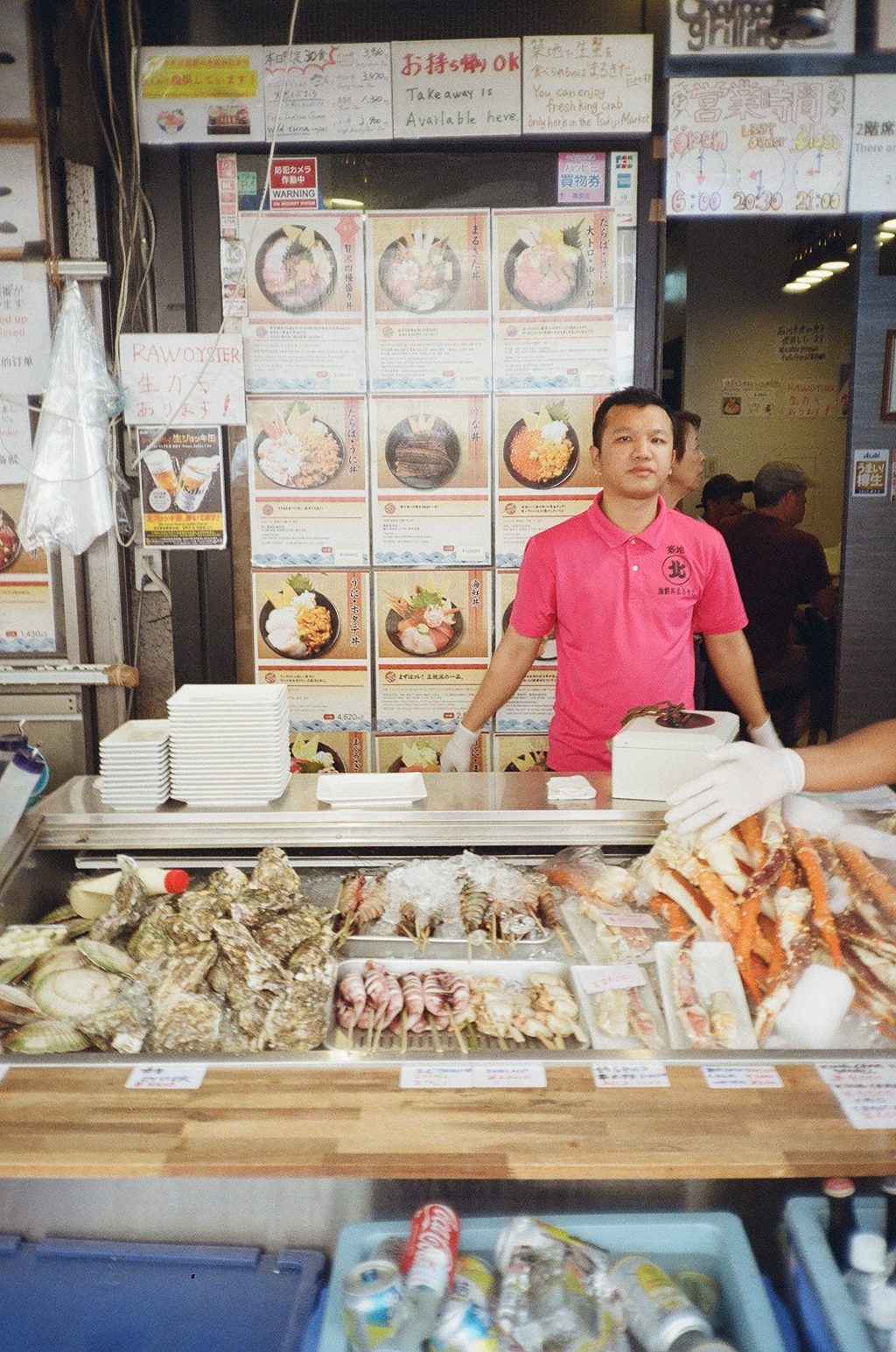
Photo by Emma Enebak
Kyoto
Shinkansen | $110-$150
Pro tip: If you take the Shinkansen bullet train from Tokyo to Kyoto during your stay, make sure to sit on the right side of the train. If you do, you’ll have a front-row seat to the arresting silhouette of Mount Fuji as it rises above the dissolving urban haze. Towering, idyllic, and altogether mesmerizing, we held our breaths as it passed, almost afraid to exhale in its presence.
A sight to behold, Mount Fuji is the tallest peak in Japan, the result of 100,000 years of volcanic activity that patiently sculpted its near-perfect triangular form—now a national icon of deep spiritual significance and enduring artistic inspiration. Unless you book a separate trip to its surrounding prefectures (an experience I’m now inclined to go back for), this transitory bullet train ride will comprise one of your nearest encounters with the natural marvel. While it’s easy to reserve tickets in advance, trains depart from Tokyo Station to Kyoto roughly every 10 minutes during peak hours, and should be easy to snag the morning of your departure.
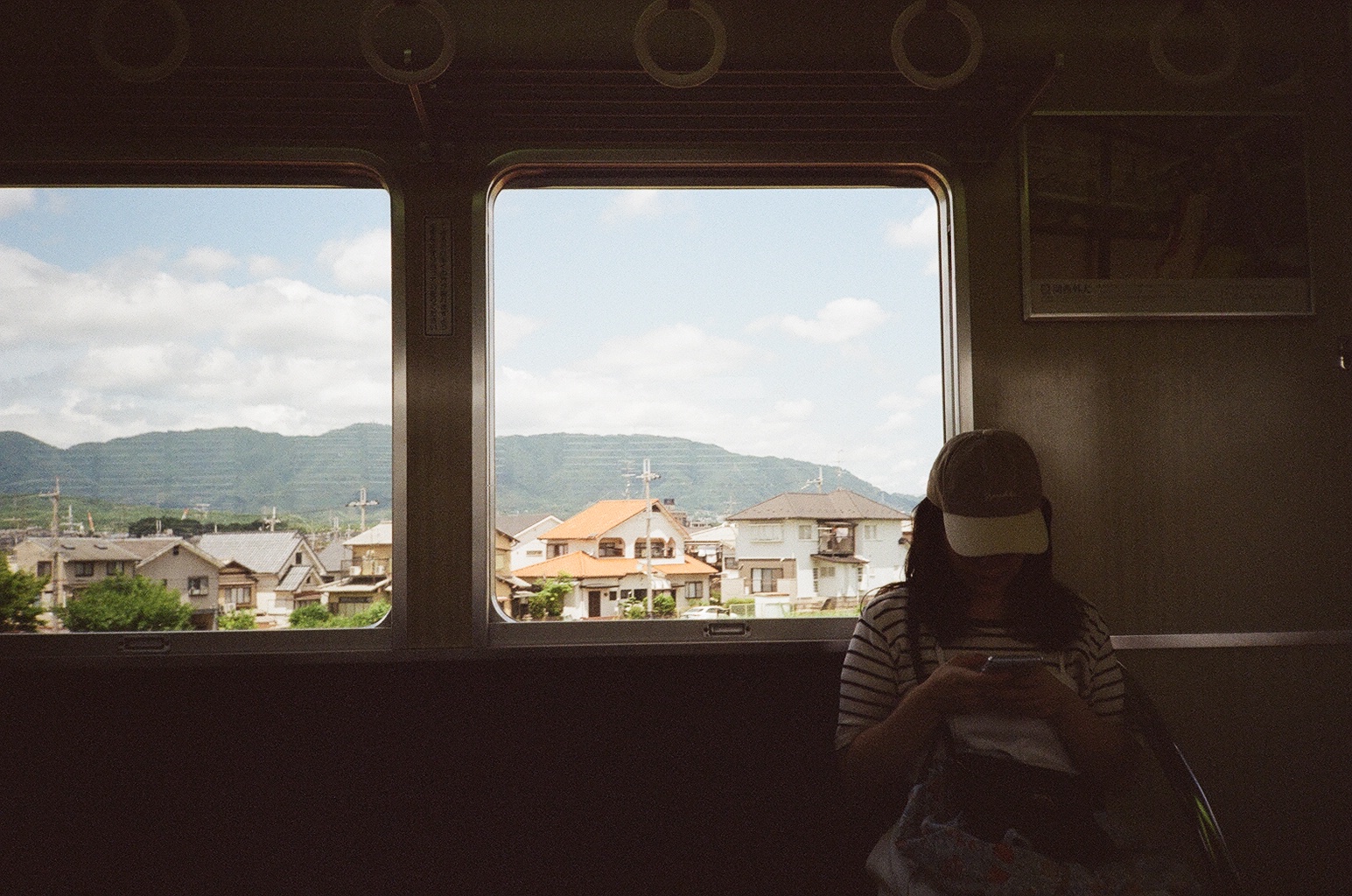
Photo by Emma Enebak
Must-Eat: Gyukatsu Motomura | $11-$20
The synchronized chorus of sizzling tonkatsu cuts on mini hot plates sets the tone for a dining experience that is distinctly Japanese—or, at its core, ceremonial. Japan’s deeply engrained culture of dining as ritual culminates at Gyukatsu Motomura, where the one single delicacy offered—breaded, deep-fried wagyu cutlets—still has patrons waiting in hour-long lines that spill out into the busy sidewalks. Why? It’s not only because of the high-quality, tender meat and accompanying meal sets complete with rice, miso soup, cabbage, and a trio of sauces. It’s because here, where personal hot plates line each window-facing table, the diners are not just customers—they are participants.
Our meal stretched out into a long, lingering meditation as we paused between each bite to sear, sizzle, and admire our handiwork, basking in the Japanese art of dining with intention. Our servers stopped by only to refill our overflowing sake boxes, or masu, with more spirit, a ceremonial outpouring that symbolizes generosity, abundance, and deep respect.
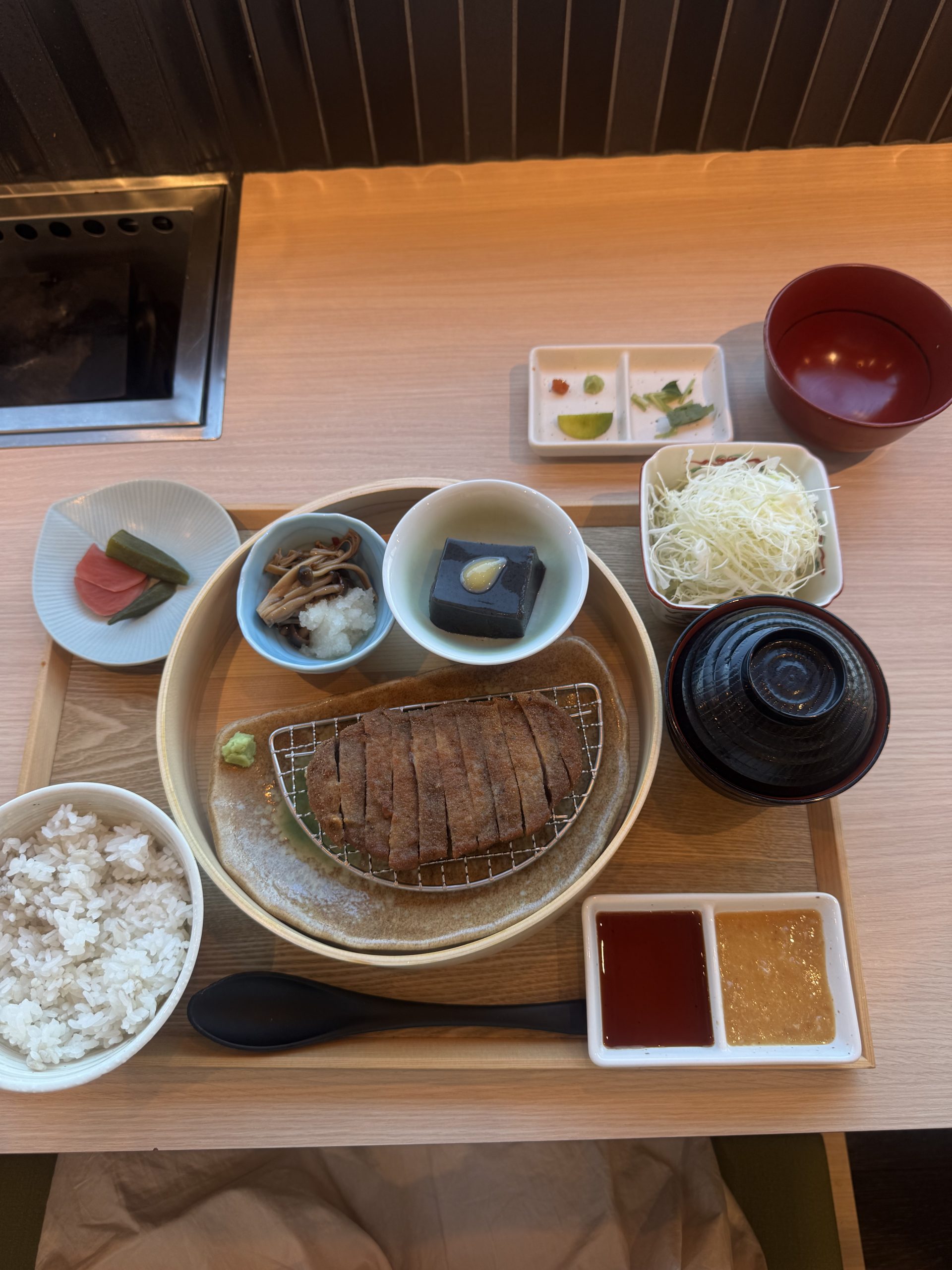
Photo by Emma Enebak
Arashiyama Monkey Park | $0 (excluding bus fare)
The rolling green hills and pristine, reflective rivers of Arashiyama lie less than an hour’s bus ride away from the center of Kyoto—or, if you’re feeling romantic, a 25-minute cruise along the nostalgic Sagano Scenic Railway (nicknamed the “Romantic Train.”) Home to the famed Arashiyama Bamboo Grove and the mountainous, free-roaming monkey park, the western district is worthy of occupying a full day of your itinerary—even if the end of it involves nothing more than dangling your legs over Togetsukyo Bridge, watching the Japanese sunset paint the hill-studded horizon.
When you arrive, a scenic 20-minute hike will bring you to the Monkey Park, perched atop Mount Arashiyama, where more than 120 native snow monkeys roam freely. Such an intimate encounter with undomesticated wildlife feels unparalleled—and at moments, a bit unnerving. While the monkeys are regularly fed by park staff and tourists, they are, for all intents and purposes, wild, and must be met with a calm, measured demeanor. Signs around the park caution visitors against touching, startling, or locking eyes with the animals, who meander across the park in wild, unpredictable clusters. Some, however, are braver than others—we often turned to find a monkey sitting less than a foot away from us, dissolving the invisible boundary between tourist and landscape. With a breathtaking view of Arashiyama’s winding river valley, it’s a truly surreal immersion into the mystical, untamed nature of Kyoto.
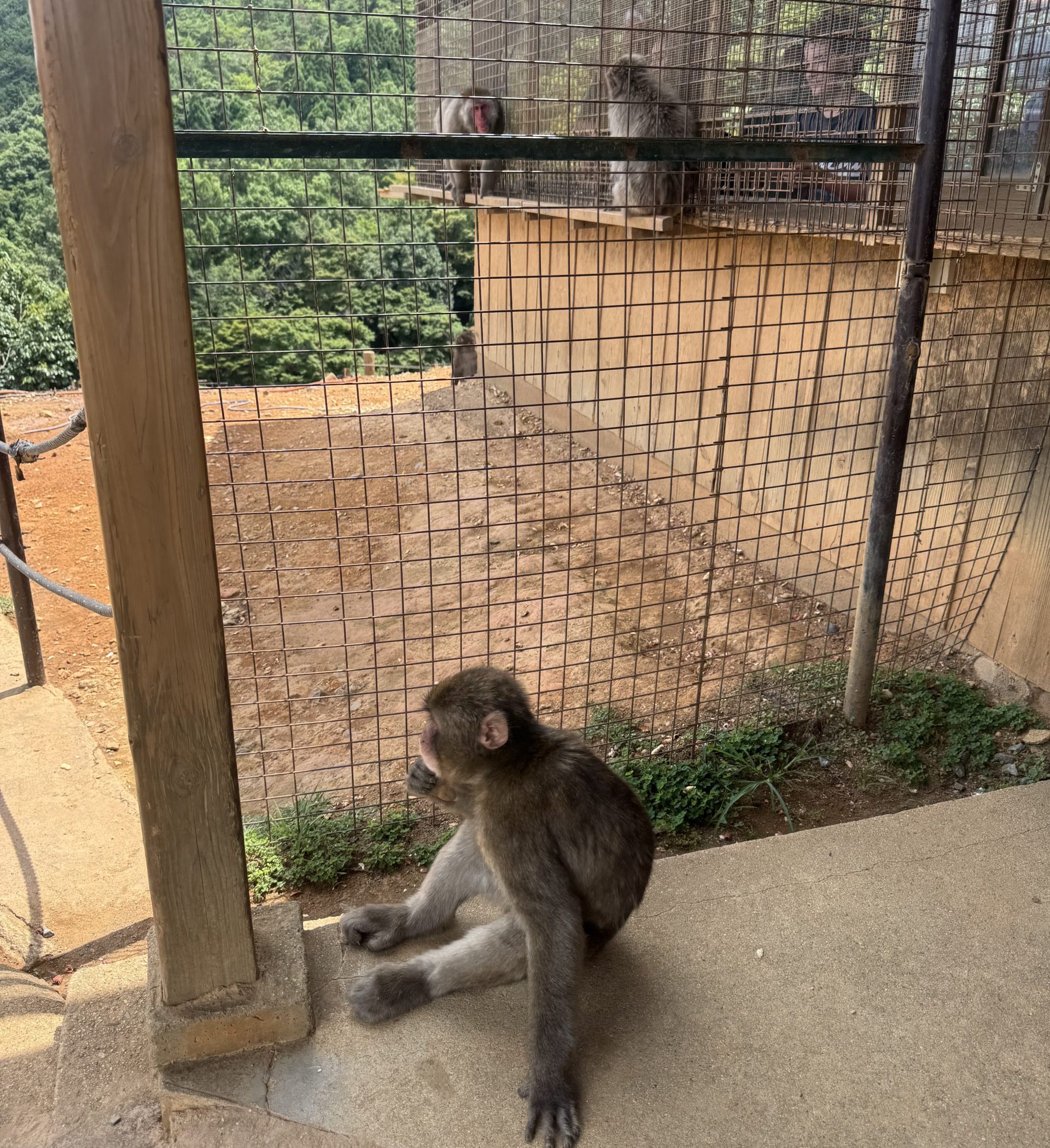
Photo by Emma Enebak
Park Hyatt Rooftop Bar | $17 (cover fee)
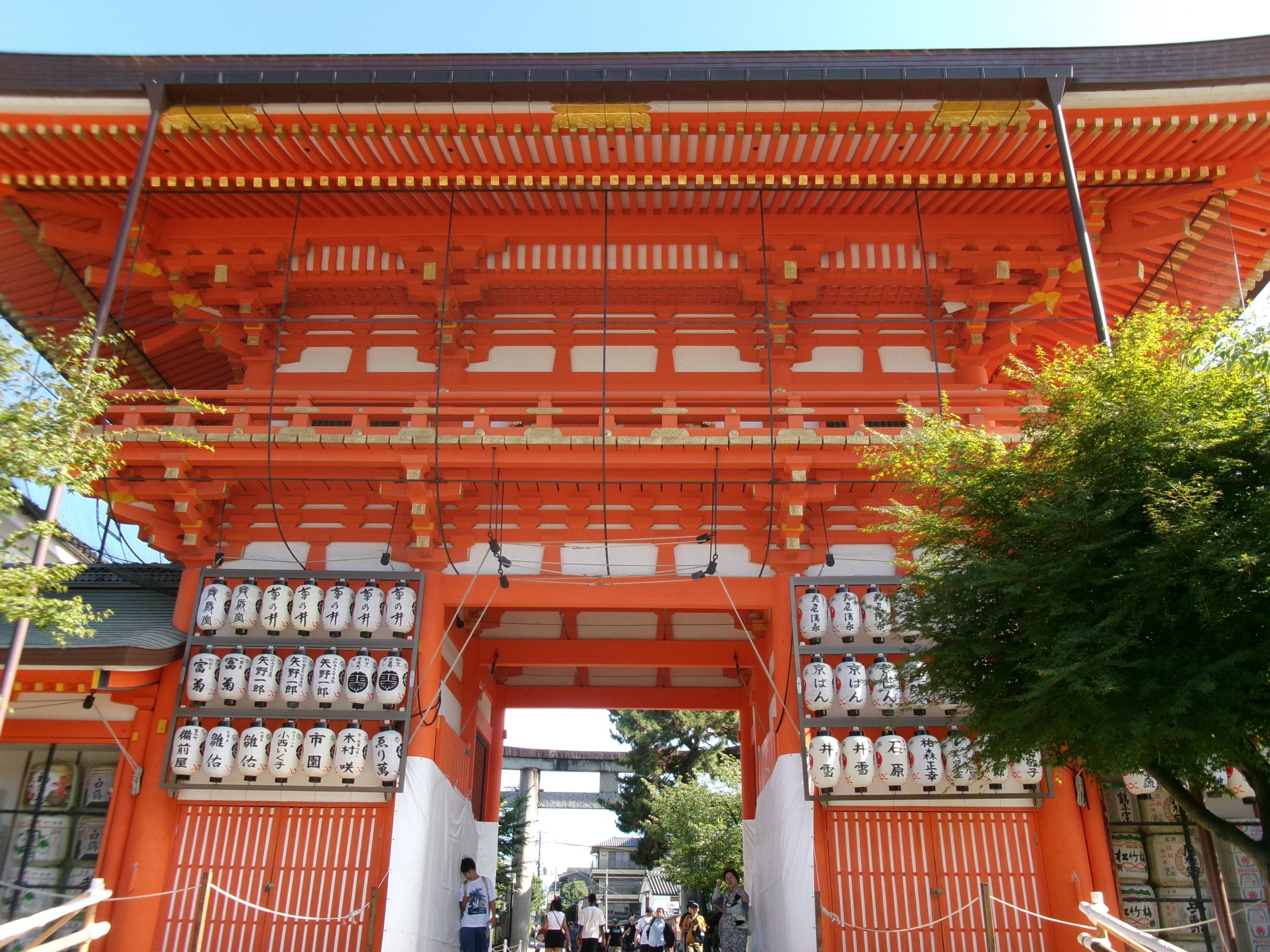
Seeing Yasaka Pagoda temple up close is a cultural wonder so thrilling and ethereal, it can leave you momentarily breathless. But seeing the five-story pagoda rise above the Higashiyama skyline from the terrace of an intimate, luxury rooftop bar? An almost surreal indulgence.
We arrived at the fourth-floor Kohaku Bar at its 4 p.m. opening, just as the sky was beginning to settle into a dreamy evening blush, bathing the intimate nook in honeyed light. The large rectangular bar top accommodates just 10 seats, situated perpendicular to the dramatic floor-to-ceiling windows that frame Higashiyama’s idyllic cityscape. I sipped on a complex concoction of sake, matcha, grapefruit juice, and egg white, watching as birds soared just inches above the ancient pagoda.
The Park Hyatt is now etched into my brain as a bucket-list stay, but it only took a small cover fee to experience a glimpse of its grandeur—a little dose of luxury to tack on to your budget-friendly Kyoto itinerary.
Recommended Splurge: Traditional Tea Ceremony | $60-$100
The click-clack of our wooden flip-flops on cobblestone was the only sound I could hear amid the serene morning streets of Gion—a historic district of Kyoto that still bears the soul of Japan’s old geisha culture. As we walked, I could almost imagine the same street 200 years ago, filled with merchants and human-powered carriages and red-lipped geisha slipping between curtain-covered teahouses. Maddie and I were wrapped in the same traditional garments made famous by these historic female entertainers, who were trained to exemplify the traditional arts and sacred rituals of Edo Japan. We were now moments away from experiencing one of these rituals—a tea ceremony led by a classically trained, English-speaking host—within the walls of a nostalgic, century-old teahouse.
As we ducked behind the curtain, it felt like we had entered a threshold to a new world—or perhaps a very old world. The walls echoed the rich cultural legacy of Edo Japan, a period defined by the rise of Samurai warriors, the grandeur of geisha entertainers, the invention of haiku poetry, and the nation’s centuries-long isolation from the rest of the world. It was the kind of scene I had only fantasized about in books and movies. And now I was both clothed in and surrounded by its meditative stillness.
In our pastel-colored kimonos and tightly knotted braids, we sat on the floor of a sun-bathed room next to two small bowls of matcha powder, observing in unhurried silence as our host flowed through a series of fluid, intentional movements that eventually produced a steaming cup of tea. We attempted in earnest to mirror her—whisking the herbal mixture until it bloomed into a frothy, deep green. The ritual offers a deeply revealing portrait of Japan’s ancient tea culture, now so ingrained into global consciousness that nearly every cafe with a coffee pot also offers some interpretation of matcha. But we had never seen it quite like this. Soothing, precise, and transportive, our host’s devotion was not merely a performance, but a living bridge between past and present—seamlessly lacing tradition into the rhythms of ordinary, everyday life.
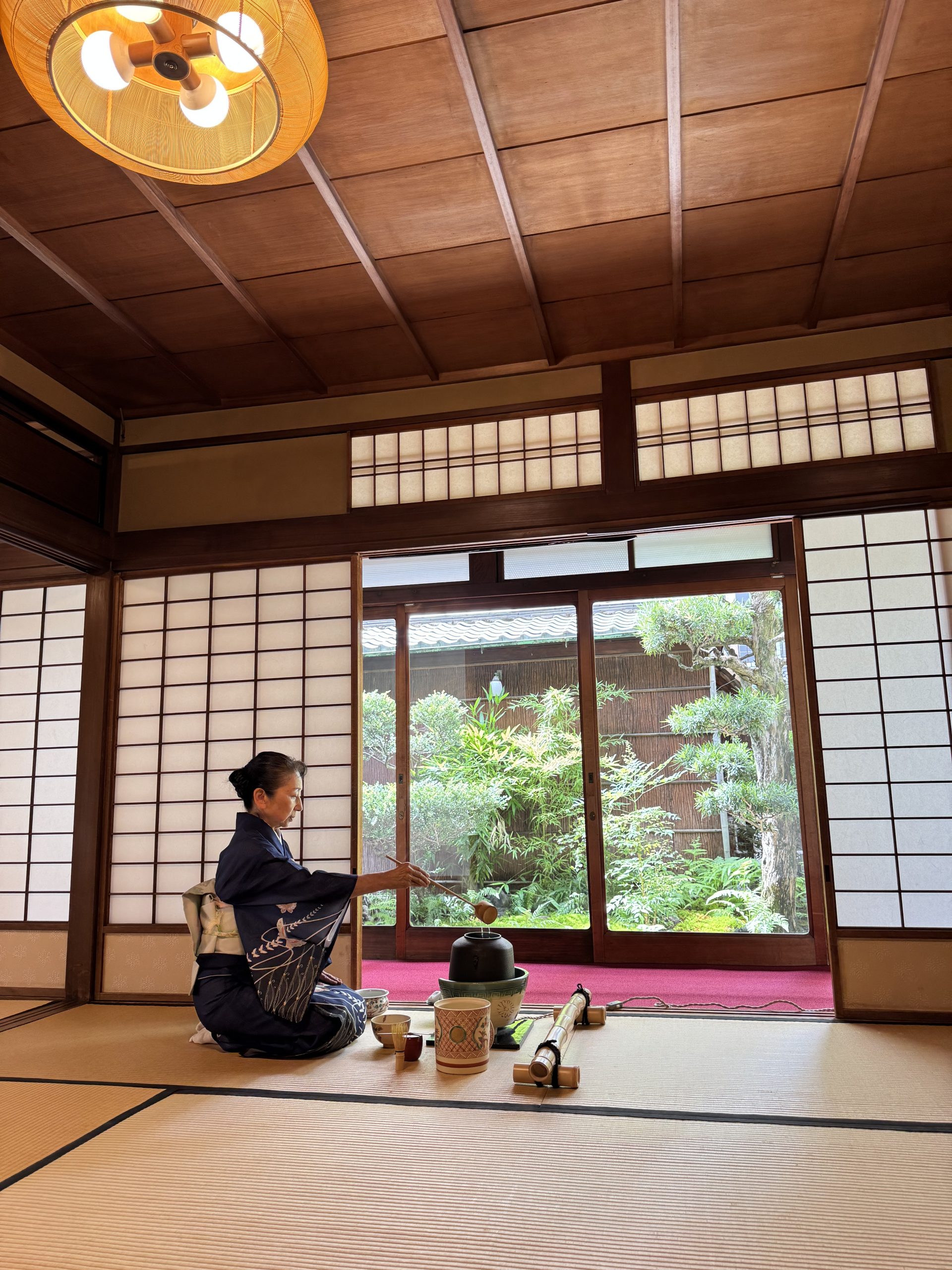
Photo by Emma Enebak
Osaka
Amerikamura | $0 (unless shopping)
If Kyoto is Tokyo’s older, wiser, and more centered grandparent, then Osaka is its cool, rebellious, and slightly unkempt kid sibling. An Australian traveler we met on our trip described the historic metropolis as “a bit dodgier” than the rest of Japan. And in a few ways, he is right. The streets are much less pristine and orderly, the style less neutral and conservative, and the rules a bit more bendable. It is unsurprising, then, that subtle nods to American culture are found around nearly every street corner. In fact, there is an entire neighborhood in Osaka called Amerikamura, or “America Village,” designed to reflect the edgy, unbridled nature of American youth culture—a point of enduring fascination when set against Japan’s tradition of hushed self-composure.
Wandering its streets feels a bit like combing the lesser-known, cooler nooks of Brooklyn, marred by an air of defiant singularity. Vintage shops spill onto nearly every block, their sidewalks punctuated by racks of baggy jeans, distressed jerseys, upcycled sportswear, and androgynous leather jackets. In between, street food vendors flip okonomiyaki on flat-top grills, red-and-white go-karts buzz through narrow alleyways, and clusters of young people gather in the square, filling the cityscape with the muffled bass of American hip-hop anthems.
As fashion lovers, we considered it our personal playground. We combed the hole-in-the-wall vintage haunts for hours, compiling a treasure trove of wholly unique knick-knacks and apparel that together cost less than a single T-shirt might back home. We only left as the sun began to sink below the skyline, grabbing two Diet Cokes from a nearby vending machine plastered in graffiti art that offered a smug but fitting greeting: “Welcome to Osaka; very fun Osaka.”
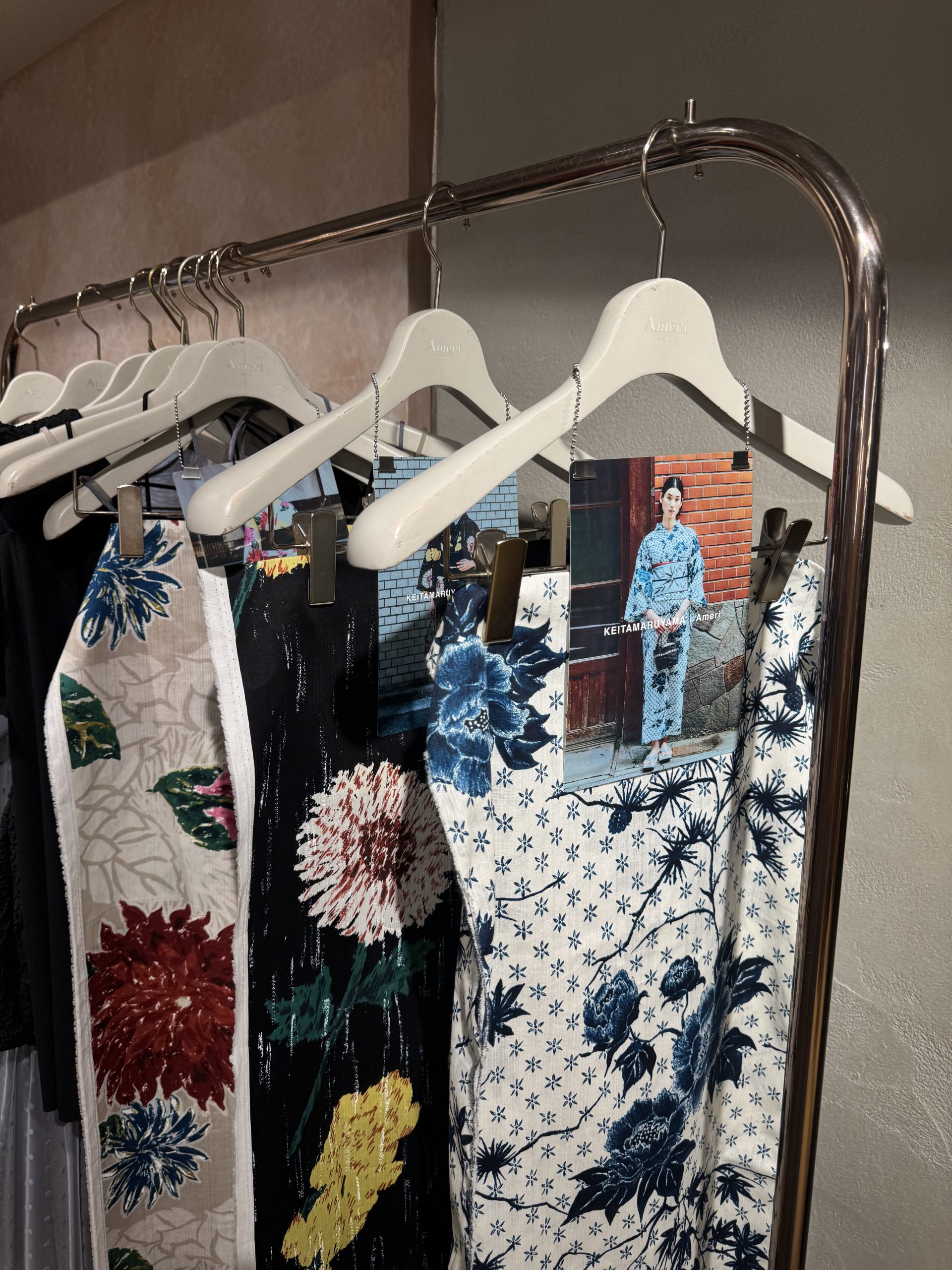
Photo by Emma Enebak
Dotonbori | $0-15 (dependent)
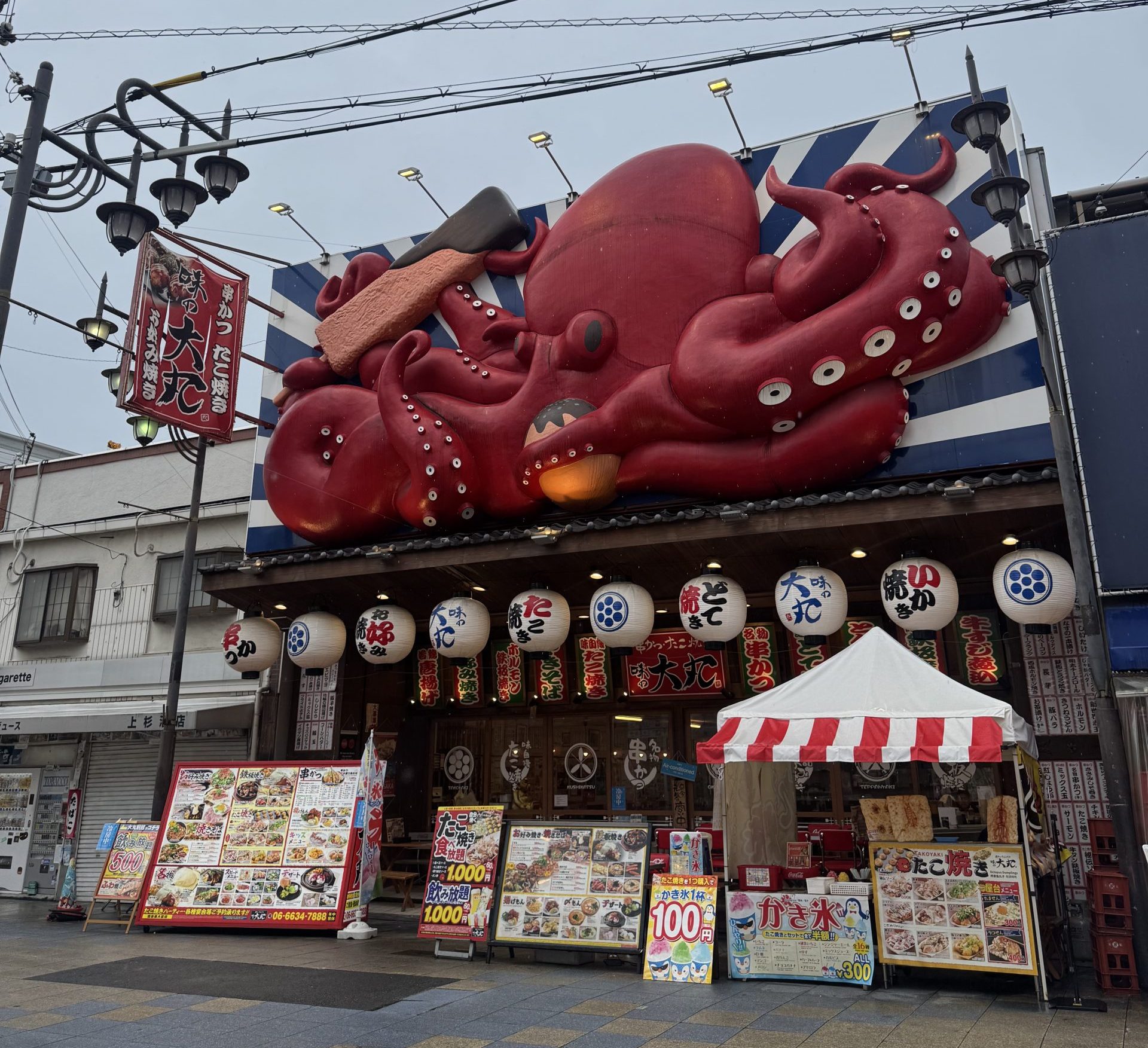
Although we were running on fumes by the final leg of our trip, it only took one step onto the neon-lit banks of Dotonbori to jolt us awake. Comically oversized food sculptures loomed over our heads, animated billboards flickered and pulsed, and three-seat street stalls pressed shoulder to shoulder along the glinting riverwalk, filling the air with the smells of sizzling batter and sweet soy. Above it all, the famous 65-foot Glico running man billboard towers in victory, overlooking the vast cacophony of colors and sounds. Dotonbori is the kind of place where intention dissolves, where you are pushed and pulled by an array of competing distractions amid the complex network of swirling aromas and enticing alleyways.
Our first distraction: the perpetually wafting smell of takoyaki—Osaka’s signature street food delicacy. You can’t come to Osaka—and certainly not the electric banks of Dotonbori—without trying these golden, batter-fried octopus balls, lacquered in creamy takoyaki sauce and showered with aonori flakes. We lined up behind a flashing octopus marquee along the river and watched as street chefs poured soy-laced batter into a cast-iron griddle pocked with dozens of ball-shaped molds. I shuddered ever so slightly as they tucked diced octopus tentacles into each bubbling pocket, the sight of it a bit too raw and visceral even for my adventurous palate. But still, we prevailed.
Maddie and I settled at a small riverside table, sipping from oversized, octopus-branded Diet Coke cups before hesitantly biting into our first takoyaki ball. A rush of molten batter filled my mouth before the fishiness hit, and I at first believed our batch to be undercooked. But this is just the infamous texture of takoyaki—soft, molten, and ooey-gooey—a taste treasured by locals, questioned by many tourists, but ultimately revered by most. I took it as a tangible metaphor for Osaka’s unapologetic uniqueness—edgy, surprising, and far more compelling once you stop trying to make sense of it all.
By Emma Enebak
Osaka Castle | $0 to walk castle grounds, $8 to enter
You can almost feel the presence of this regal Japanese marvel before it comes into view. Maddie and I were winding up the steady hill that leads to Osaka Castle at dusk, a prevailing sense of anticipation floating in the night air. We rounded another corner and, as if conjured from the darkness, its silhouette appeared—a glowing beacon cutting through the silent, star-strewn sky. A visit to this historic monument—encircled by towering, 100-ton stone walls and ancient, man-made moats—is a jarring contrast to the kinetic nightlife of central Osaka, where the prevailing neon lights offer little room for stillness.
Radiant and ornate, the castle was all but silent when we arrived, save two or three stragglers lingering in its after-dark glow. We sat on the nearest retaining wall and admired the view, as if in silent conversation with Osaka’s complicated, storied past.
Constructed in 1583 by Japanese feudal lord Toyoyomi Hideyoshi, the castle was designed as both a declaration of power and an indestructible military stronghold—unprecedented in both size and grandeur. Eventually, it became the source of fierce military and political struggle, destroyed and reconstructed three times before World War II, where its final structure managed to survive heavy bombing raids.
Today, it stands less as a fortress and more as a symbol of endurance, offering a portal into Osaka’s strained but resilient past, which still hums quietly beneath the pulse of its glistening, modernized city.
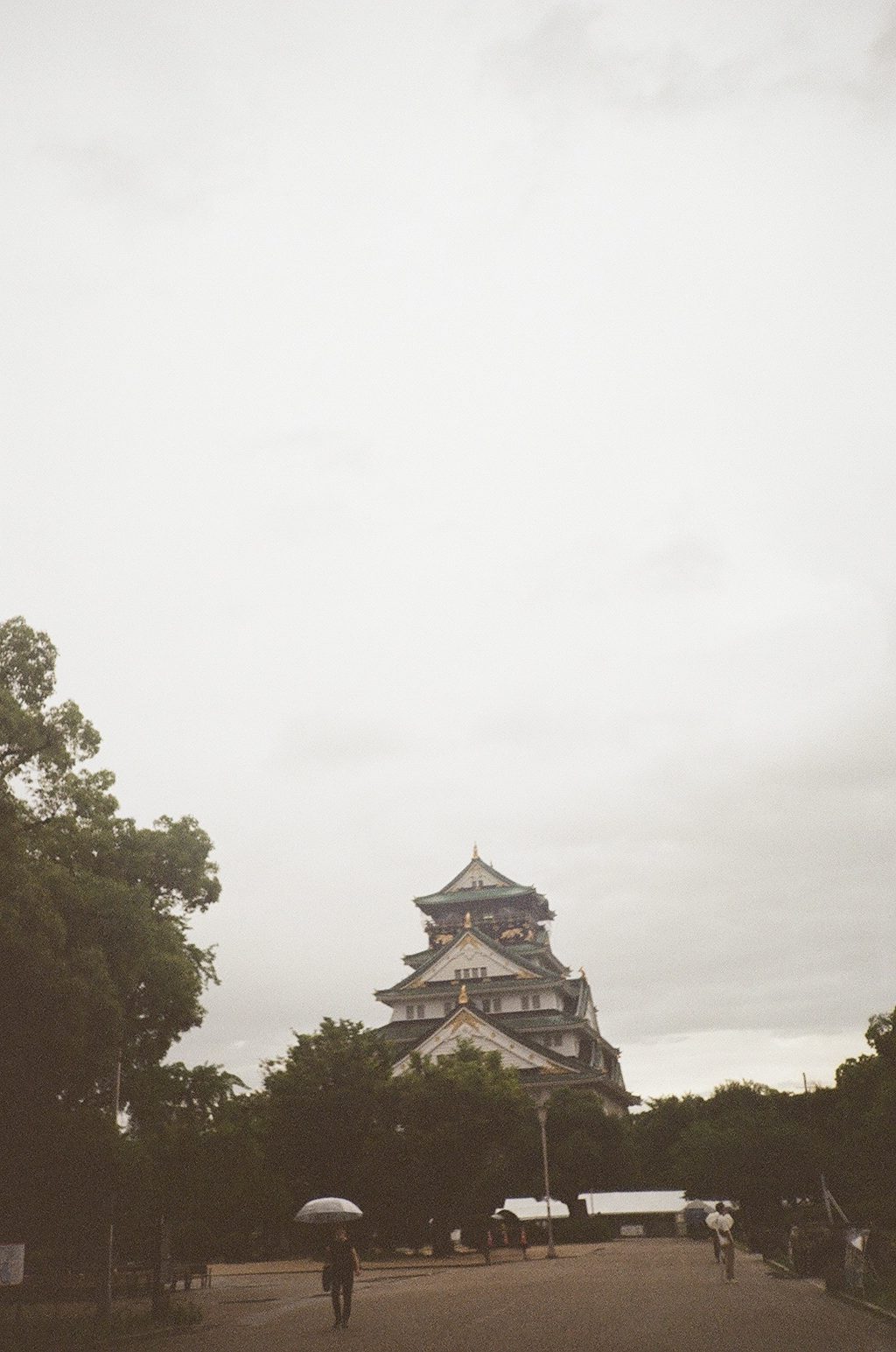
Photo by Emma Enebak
Matcha Madness
Japan’s signature bright-green matcha latte is now a hysteria worldwide—but there’s nowhere it tastes better than straight from the source. We spent considerable time (and yen) creating an official ranking of the very best matcha in Japan—so you don’t have to. Ranking are on a scale of 1 to 5, with 5 being the very best. It must be noted that a 1 in Japan is likely a 5 almost anywhere else.
Matcha Stand Maruni (Tokyo): 2
Hatoya (Tokyo, Kyoto): 3
Chadō (Osaka): 4
Maccha House (Kyoto, Tokyo, Osaka): 4
Ruru Shibuya (Tokyo): 4
Ourlog Coffee Roasters (Osaka): 5
The Matcha Tokyo (Tokyo): 5
Gokago (Kyoto): 5
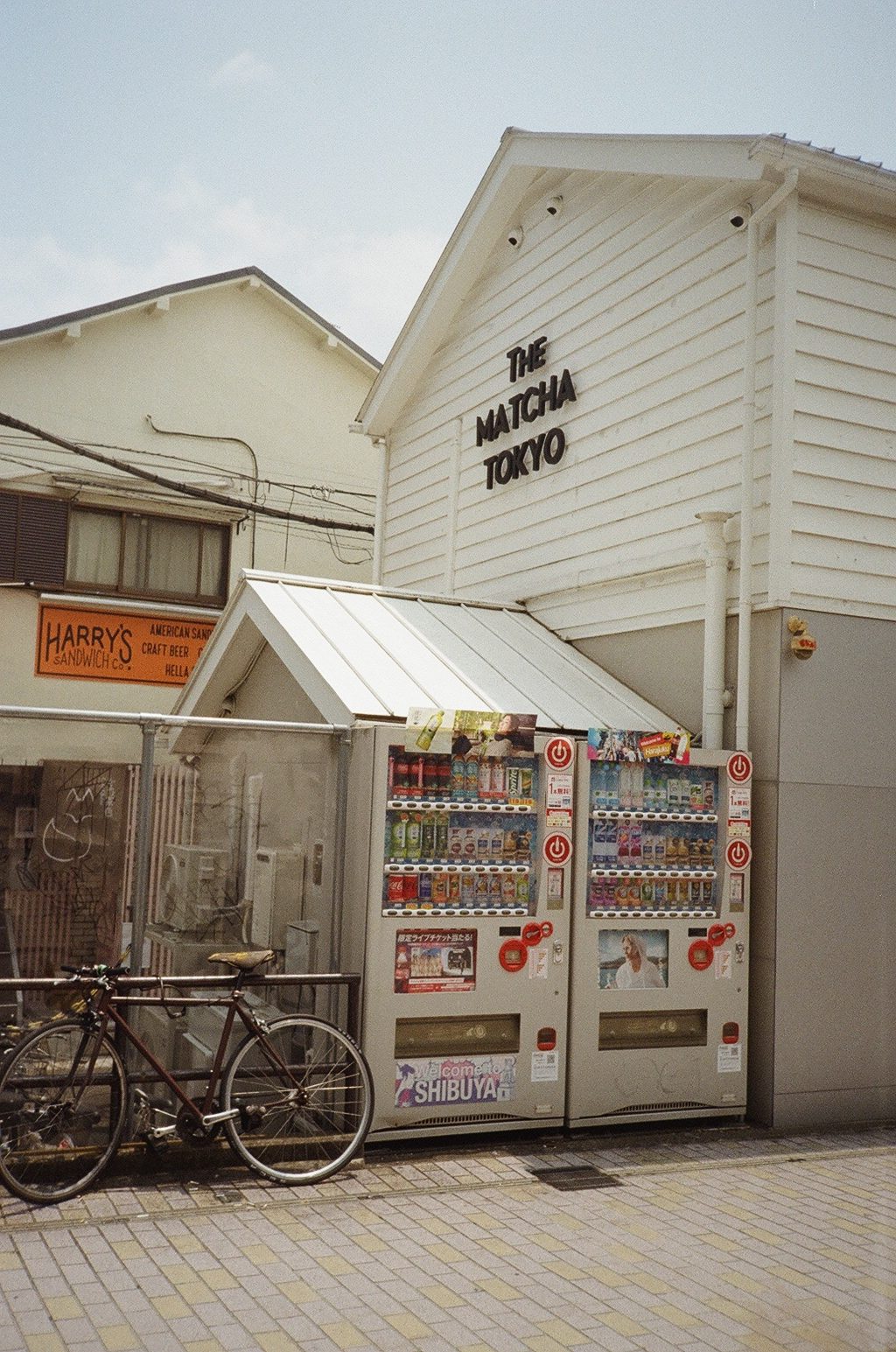
Photo by Emma Enebak
AloJapan.com