
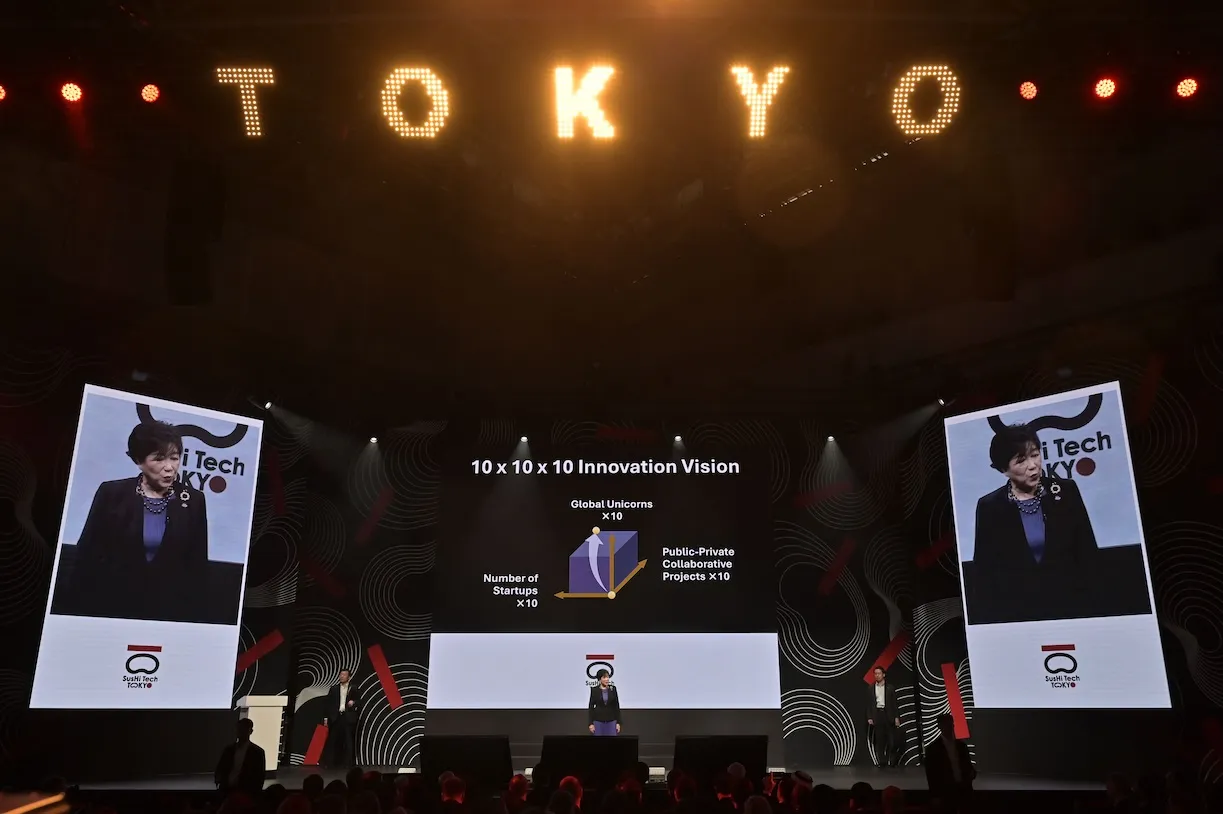
SusHi Tech Tokyo is one of Asia’s largest startup and innovation events, focused on building sustainable cities through technology. Hosted by the Tokyo Metropolitan Government, the 2026 edition opened on April 27, bringing together startups, investors, corporations, and government officials from around the world. This year’s event features more than 700 exhibiting startups and is expected to draw around 60,000 participants.
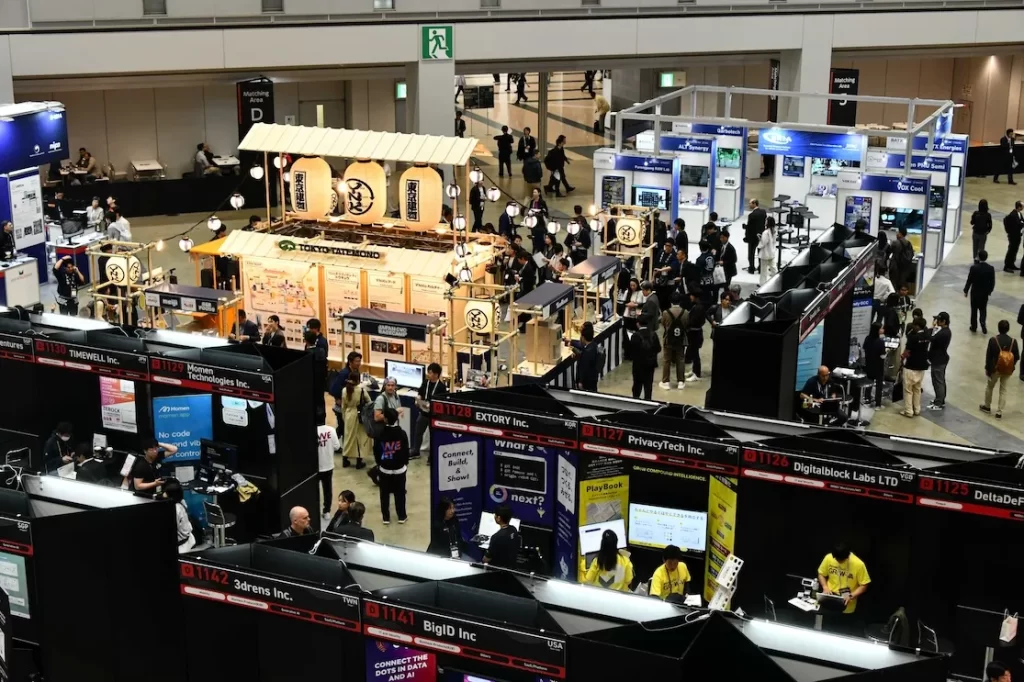 Over 700 startups are exhibiting at the three-day event. (©SusHi Tech Tokyo)
On its opening day, the event’s theme—Sustainable High City Tech Tokyo—took shape. Tokyo Governor Yuriko Koike framed the conference against a backdrop of what she called a time of “profound turbulence,” citing a volatile international landscape, increasingly frequent natural disasters, disruptions in energy and resource supplies, and the rapid acceleration of the AI revolution.
The message was clear: SusHi Tech is not a showcase of futuristic gadgets, but a practical attempt to imagine how cities can remain livable, resilient, and competitive in an era of constant disruption.
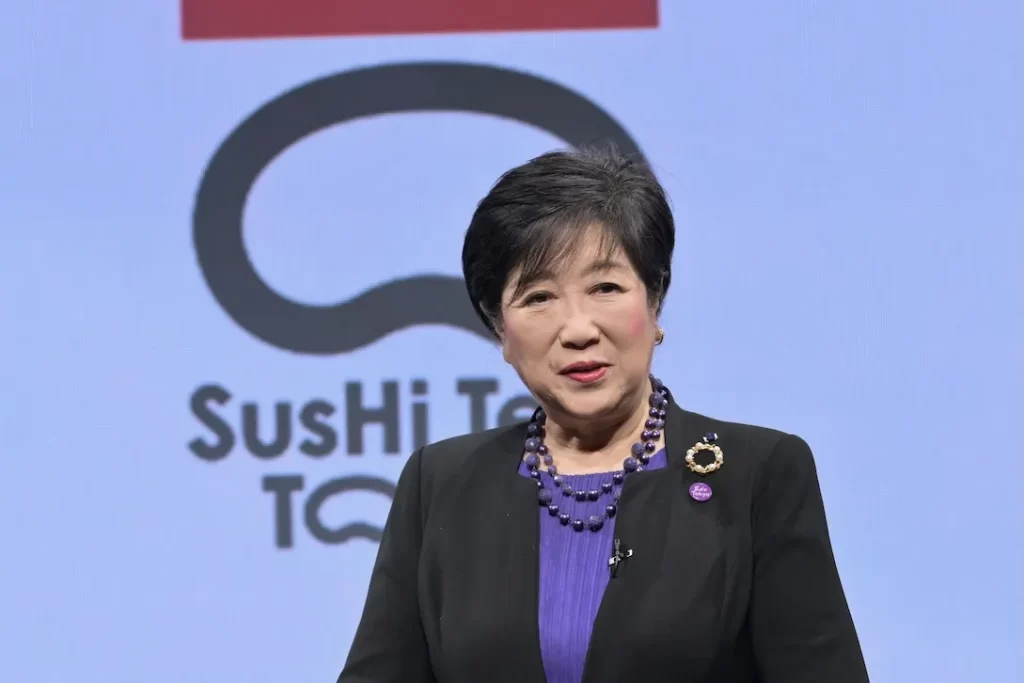 Tokyo Governor Yuriko Koike speaks on the opening day of SusHi Tech Tokyo 2026. (©SusHi Tech Tokyo)
Scaling Innovation Beyond Tokyo
Another major theme was scale—and the cooperation needed to achieve it. Koike pointed to Tokyo’s “10 by 10 by 10” goal: a tenfold increase in startups, unicorns, and public-private partnerships. The point was not simply to make Tokyo’s startup scene larger, but to make it capable of tackling problems too big for government, business, or cities to solve alone.
That was also the logic behind initiatives such as the Tokyo Startup Database and SusHi Tech Global, a support program designed to help promising startups expand overseas. The latter offers up to ¥200 million ($1.26 million) in growth funding per project.
The presence of representatives from Taiwan, Estonia, and other international partners reinforced the same message: sustainable cities cannot be built in isolation. They require capital, policy support, and cross-border collaboration.
G-NETS and Urban Resilience
The Global City Network for Sustainability, or G-NETS, formed the second major strand of the day, placing city governments at the center of resilience planning. Launched by Tokyo in 2022, the network brings together cities from around the world to share responses to climate and disaster risks.
This year’s G-NETS Leaders’ Summit convened 49 cities under the theme “A New Urban Future Built on Climate and Disaster Resilience.” The breadth of topics showed that resilience is not only about infrastructure. It also depends on how cities protect vulnerable residents, preserve social cohesion, and keep daily life functioning when shocks occur.
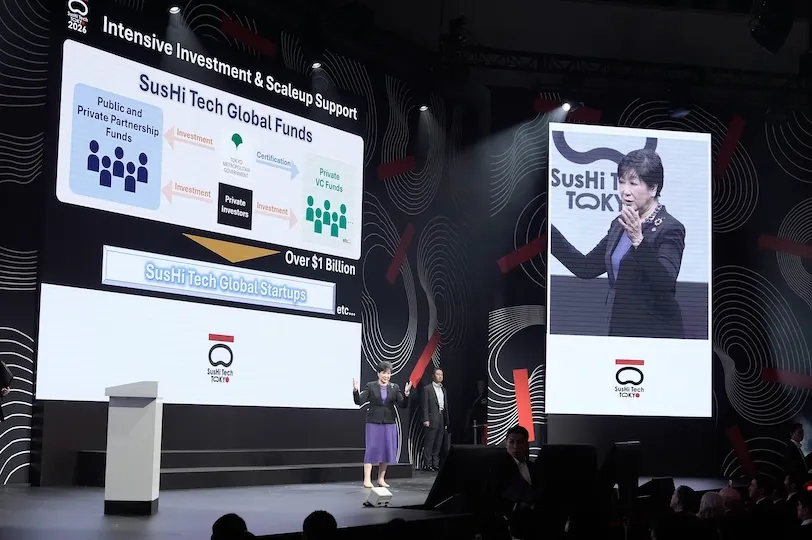 Tokyo Governor Yuriko Koike speaks on the opening day of SusHi Tech Tokyo 2026. (©SusHi Tech Tokyo)

Glasgow’s Lesson
That point came through clearly in remarks by Susan Aitken, leader of Glasgow City Council, whose city is confronting heavier rainfall and rising flood risk. “Scotland is a very green country, and we are a very green country because we are a very wet country,” she said, adding that Glasgow is “the wettest part of Scotland.”
But even for a city accustomed to rain, she warned, climate change is bringing “heavier rain and more and more monsoon-type rainfall events,” threatening hundreds of thousands of homes.
Aitken described Glasgow’s response as a long-term, collaborative effort. For around 20 years, the city has worked through the Metropolitan Glasgow Strategic Drainage Partnership, bringing together Scottish Water, the city council, environmental regulators, and other partners. The White Cart flood prevention project, she said, has protected communities where residents once found themselves “up to their waists in water.”
She also pointed to the Shield Hall tunnel, a major underground project that can store “up to 36 Olympic swimming pools’ worth of water” during storms before it is pumped back, cleaned, and recycled.
Rebuilding After Fire
Los Angeles brought a different disaster experience. Dilpreet Kaur Sidhu, deputy mayor of international affairs for Los Angeles, spoke about the January 2025 wildfires, which she described as “the worst wildfire in LA’s history and one of the most devastating disasters in California history.”
Driven by drought and Santa Ana winds exceeding 100 miles per hour, the fires burned from January 7 to 31, destroying almost 7,000 structures and devastating Pacific Palisades. “It was homes, it was businesses, it was schools,” Sidhu said. “It was an entire community.”
Sidhu emphasized that recovery required both emergency action and long-term rebuilding. Los Angeles issued emergency executive orders to speed debris removal, expedite permits and inspections, waive certain zoning regulations, and encourage more resilient rebuilding.
The city also set up a consolidated permit and inspection center so residents could work through rebuilding issues with multiple departments in one place. Longer term, Sidhu said, Los Angeles is focused on “upgrading grid resilience and infrastructure” and “improving wildfire preparedness of the workforce.”
Startups as Growth Engines
Prime Minister Sanae Takaichi also took the stage as a keynote speaker, supplying the national policy backdrop. “The realization of a strong economy requires excellent scientific and technological capability as its foundation,” she said, presenting startups as key actors in turning Japan’s research strengths into practical applications.
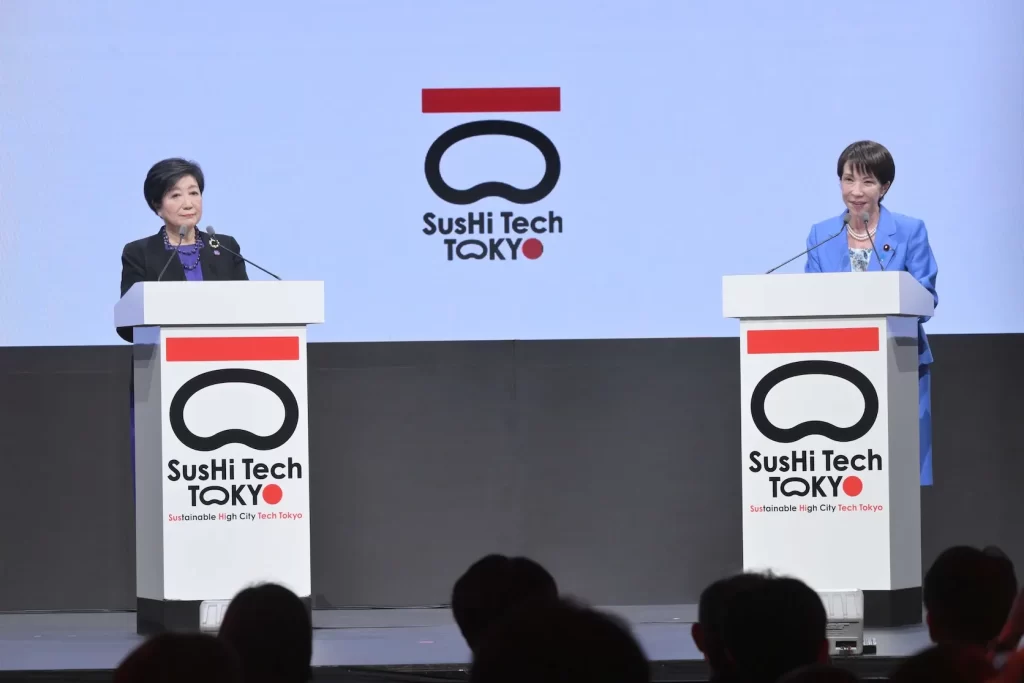 Tokyo Governor Yuriko Koike and Prime Minister Sanae Takaichi. (©SusHi Tech Tokyo)
Startups, she noted, already account for 4% of Japan’s nominal GDP, with their contribution growing by 32% over the past two years.
Her remarks centered on three pillars: “the scale-up of startups,” support for deep-tech startups, and the creation and development of regional startups. She also stressed the role of government demand, saying, “Government procurement—in other words, strengthening SBIR—is particularly important” for startup products and services.
If day one made the future city visible, the next two days will show how far Tokyo, its partners, and the startups gathered here can go in building it.
RELATED:
Author: Daniel Manning
Continue Reading
AloJapan.com