
Why book?
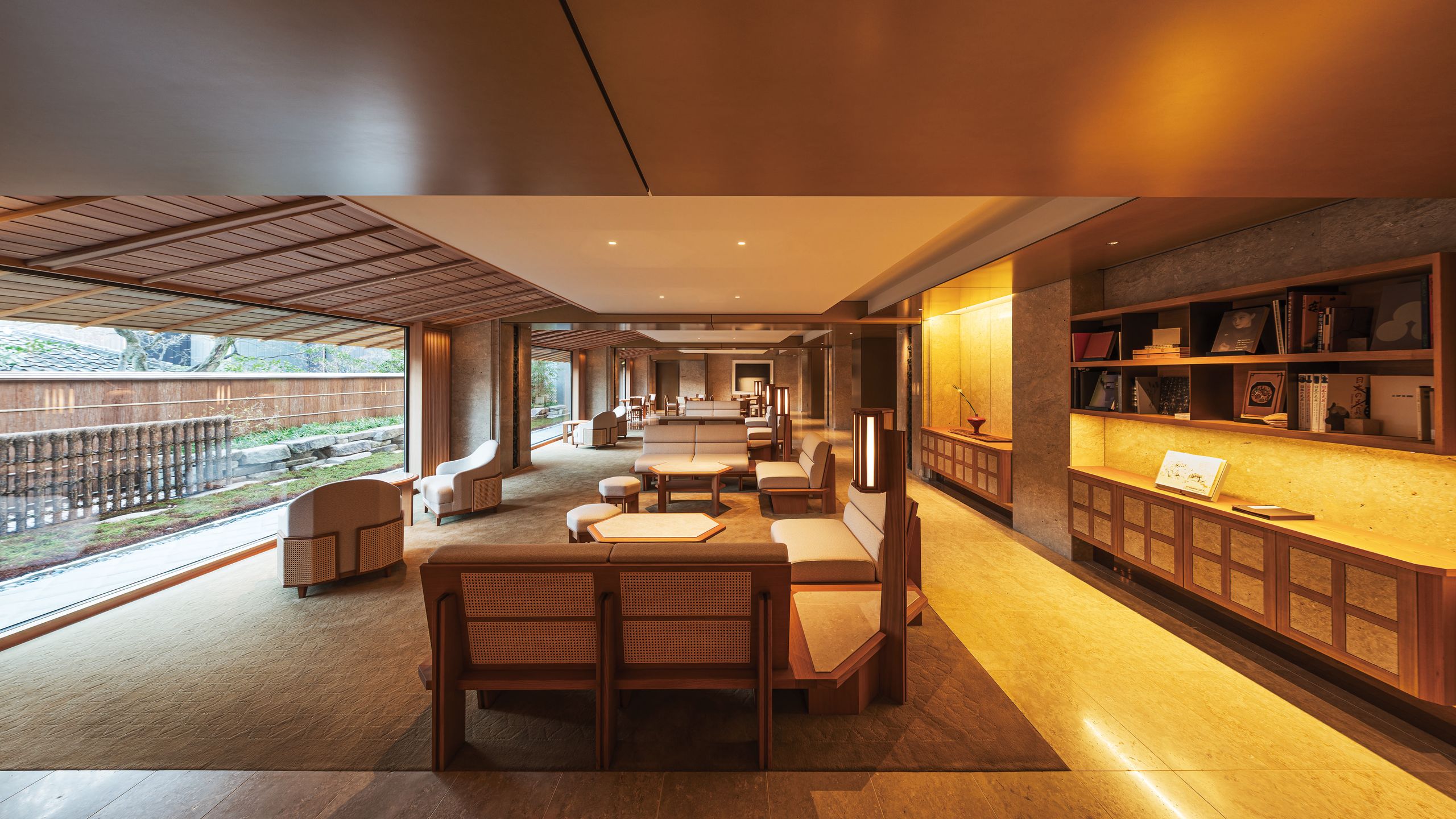
The subdued 55-room Imperial Hotel Kyoto, first built in 1936 as the Yasaka Kaikan theater, occupies a privileged corner of Kyoto’s historic—and by turns frustrating and mysterious—Gion district, famous for geiko, the Kyoto term for geisha. From the outside, the stacked tiers of blond brick with a series of split level overhanging roofs resembles the moody bathhouse in the Studio Ghibli classic Spirited Away, complete with a string of crimson paper lanterns hanging outside. But the interiors are more disciplined—materials used in the rebuild were meticulously chosen by architect Tomoyuki Sakakida of the Japanese design firm New Material Research Laboratory and meant to oxidize over time. Rare Japanese marble and precious stones like volcanic ōya and tamina are found throughout the common areas, alongside millennia-old Zelkova wood panels, a softly lit lobby with cream-colored rattan chairs overlooking a contemplative interior garden, and sublime artwork like the dreamy niwaki (sculpted pines) painting behind the concierge desk, a subtle nod to Japan’s Noh Theatre.
The spacious but cocoon-like rooms are bathed in wood tones. Some have tatami mats, meditation gazebos, or balconies; most overlook the grey-tiled rooftops and narrow machiya (or townhouse)-lined streets of Kyoto’s Gion district. Rooms here are the draw, and especially ideal for sipping a sake while watching the blue hour wash over the city or for catching the moonrise over the temple-studded Higashiyama mountains in the distance, a privilege afforded to few. Why? Because the property was given special permission to build here and to date, is the only structure in Gion allowed to be above the legal limit of 39 feet. Even the sixth-generation ryokans that have occupied this neighborhood for centuries don’t have this bird’s eye view. While other Imperial hotels draw business travelers, this property is designed specifically for leisure travelers and is a member of The Leading Hotels of the World.
Set the scene
The electric whoosh of automatic doors at the entrance, activated by room keys, act like a Shinto torii gate, marking the transition between two starkly different worlds—inside and outside the hotel. Or perhaps given the hotel’s thespian heritage, on stage and back stage. Inside, or back stage, English speaking staff were especially eager to help me and other guests (visiting media, design pilgrims from Japan, and curious global architects) navigate our way around the hotel’s vertical warren of spaces, which included the bar, lounge, gym, and restaurants, most occupying different floors. I was among the first guests to check in at the property during a rainy March stay. Umbrellas were swiftly offered and taken at the foyer entrance by smiling and uber-present porters, as was luggage or any trash you might be holding. Most guests inevitably gravitated to the serene main lobby called the Executive Lounge. There, comfortable creme-colored rattan chairs were placed for optimal privacy. Some overlooked a sliver of a private garden strewn with stones and moss. Like many lobbies in Japan, this is a liminal space to gather and prepare yourself, not a spot to camp out for more than an hour on your laptop. It’s a rare quiet pocket in Kyoto, so a place to enjoy the silence and stillness.
The backstory
Nearly five years in the making, it’s the first new Imperial property to open in three decades, joining Imperial Kamikochi in Japan’s Alps, the Osaka Imperial, and the iconic Tokyo property famously re-designed by Frank Lloyd Wright in 1923 (before being infamously demolished in 1968 for a reconstruction). It almost goes without saying that the Imperial Hotels prize architecture, and as such worked closely with architect Tomoyuki Sakakida and artist Hiroshi Sugimoto, his business partner and cofounder of their firm. While the latter’s artworks adorn the property’s walls, Sakakida sourced the materials from his own connections, tapping connections from friends, colleagues, secret independent sources, and using lesser known quarries and petrified woods other designers don’t have access to. This kind of material sourcing is an art form in Japan and the hotel is a showcase of his efforts. The construction was even handled by the Obayashi family, the same company who built the original structure nearly 90 years ago.
The rooms
Guest rooms are found in both the heritage section in the south and west parts of the building, and the newly built North Wing which has tatami-mat rooms. Neither is better and both feature a mixture of new and old elements that feel timeless and special. The new extension was designed to echo the district’s iconic machiya, wooden townhouses, and features dimpled naguri floors, bamboo screens, zelkova, chestnut and cherry wood touches. While all rooms are spacious and feature floor-to-ceiling windows, silk wallpaper, bedside lanterns and feel modern and Japanese. Throughout the property, the original building’s bones— beams, tiles, pillars, and window frames—were gently restored to show their age and patina, not conceal it. In some rooms, private balconies open onto the Gion Kobu Kaburenjo grounds. My spacious room in the heritage section had stained cedar headboards with gorgeous grain, a large comfortable sofa and heather grey carpets. Even with my two roller bags opened for a two month long Japan visit, I had plenty of room to move around.
Food and drink
There are two dining venues: Yasaka, the casual all day dining emphasizing wood fire and charcoal grilling, and ten person French omakase counter Ren (the one to book). It’s designed with Japanese quality standards, not for gaijin (or outsider) palates, to which many of the chain hotels in Kyoto are increasingly appealing. Ren’s coterie of cheerful toque-totting chefs spoil you with generous pours of Ruinart champagne or sake, followed by a parade of intricate, hyper-seasonal dishes: A dollop of butter in the perfect shape of a red strawberry, pockmarks and all, signaled Japan’s beloved ichigo (strawberry) season, and came with a fluffy and warm mugwort brioche; a chunk of tilefish was encased in a finely stitched latticework of yuzu and green zucchini; red clams were served piping hot on the half-shell in garlicky gremolata with a soldier of toast for soaping up any extra jus. Bell jars with grilled fish filled with smoke were lifted from plates by staff in balletic unison so that diners oohs and ahhhs are synced. Desserts are seasonal too, and come with a coffee or matcha with some seriously laser precision latte art. The sleek and tranquil bar feels temple-like with its sublime views and creative cocktail menu while a stunning open air rooftop lounge and bar is not to miss and lets you see beyond Kyoto’s famed three walls of surrounding mountains, with pagodas, temples, shrines and rich forests enveloping you.
My in-room Japanese breakfast was another highlight, with hjiki seaweed and red snow crab, stems of earthy burdock root, crunchy snow pea with yuzu, and buttery, roasted Greenland halibut. There’s also a pastry shop on-site.
The spa
The 57-foot-long underground pool is a treasure. It’s a composition of delicate moss-green tiles and 1.5 ton walls made of Shiraishijima Kitagi-ishi, a rare revered granite, sourced from the Kasaoka Islands in Okayama, with each cracked monolithic panel revealing raw, natural textures. A swim here mimics a swim in the wild. There’s a 24/7 gym, but the wet area of the spa, with ofuro tubs for soaking and sauna and steam rooms, had not yet opened
The neighborhood/area
Kyoto’s Gion is a famously difficult neighborhood to navigate. It’s sometimes overrun with wandering tourists yet its numerous members-only ochaya (boozy tea houses that serve as private clubs) are totally off limits to most, including many Japanese. So a hotel to help visitors navigate this clandestine world is a gift. The Imperial Kyoto is located directly off Gion’s main drag, the stone-paved Hanamikoji-dori, which can become over-touristed in some stretches. But many geiko and their protégée maiko (a young geiko in training) can also be seen scuttling along the back streets and alleys, many en route to their ochaya (workplaces) or to the active Gion Kōbu Kaburenjō theater, the city’s primary geiko theater adjacent to the property and where regular performances are held to a largely Japanese audience. In addition to wandering tourists, expect to see theater crew, set designers, actors, and matronly sensei in pastel kimonos and big, pinned up hairdos haunting the vicinity. A short walk from the hotel are the Higashiyama hills, with their numerous temples, shrines and parks, and the quieter banks of the Kamo River where you can escape Kyoto’s crowded narrow streets to get some air, or a cardio-session alongside local joggers. Make no mistake, this is a touristy area of Kyoto. Open your window and you might hear the melodies of shamisen and kouta trickle in from below, but you’re more likely to hear the sound of tourists’ rolling luggage. Fortunately, when windows are closed, you will hear nothing as the rooms are completely sound-proofed, transforming your room’s large window into a poetic silent movie. The property really comes alive at dusk, so stick around for it.
The service
The service is attentive but friendly and warm, with expert English spoken by every Japanese staff member I encountered. The concierge specializes in Kyoto’s cultural events, and can help access exclusive ochaya with an interpreter, score tickets to the theater, book dinner reservations, a huge help in Kyoto, or help arrange meetings with monks and priests at the city’s Shinto shrines and temples. They can also steer you away from peak tourist crowds. The team here will open many doors. Using them is not just a perk, but a way to deepen your experiences in Kyoto.
For families
The hotel offers four sets of connecting rooms, along with kids’ amenities and pool access for children. But the property is especially popular with honeymooners, design pilgrims, and culture-seeking couples and single travelers.
Accessibility
In accordance with Japan’s progressive rules for handicap accessibility, all floors are accessible with wide elevator access, lower level buttons reachable from wheelchairs, and wheelchair accessible bathrooms on the restaurant level. The hotel has one designated accessible guest room featuring lowered handles, an adjustable bed, and bathrooms rails. Like many hotels in Japan, the staff here are specifically trained to assist disabled guests, but calling ahead to notify the staff of your needs will go a long way to smoother experience.
Eco efforts
For eco effort, Architect Tomoyuki Sakakida preferred to use pre-existing materials, and tried to steer away from more extractive mining and quarrying methods.
Anything left to mention?
Because the hotel is so new, many taxi drivers may be unfamiliar with it. Use the GO app (Japan’s version of Uber) so that your address is automatically in the driver’s NavSys. Also, the convenience store is about a ten minute walk away, not across the street like it is from many hotels in Japan, so be sure to plan ahead for any ice cream and late night snacks on your way back to the hotel.
AloJapan.com