
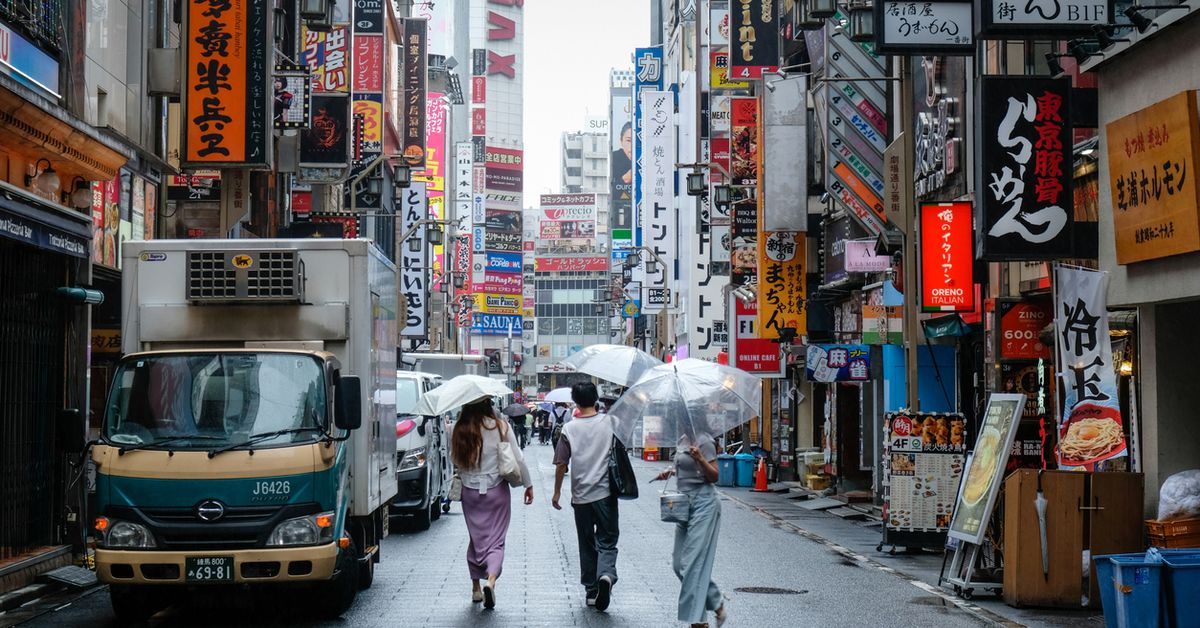
If you haven’t visited Japan in the last few years, chances are, you’re itching to go check it out for yourself.
Japan is currently one of the most-visited countries by Aussie holidaymakers, with over a million travellers heading there last year.
But before you plan a trip, there are a few things to know.
READ MORE: The world’s best airport for dining has been named
 Japan is a hot destination right now. (Getty)
In fact, when it comes to planning holidays, Omio reports that 39 per cent of people rely on word-of-mouth recommendations.
Turns out, that goes for learning about local customs as well.
READ MORE: Vital ID rule you need to check before travelling

The best places to visit in Japan – besides Tokyo, Kyoto and Osaka
And who knows a country better than someone who lived there?
Colton Carner, a 29-year-old Aussie who used to live in Japan, has shared some of his best Japan tips with nine.com.au, pointing out the biggest mistakes he’s seen tourists make while visiting.
READ MORE: All the airlines that are cutting flights and adding fuel surcharges
 Colton lived in Japan, so he knows all the local tricks. (Supplied)Don’t assume Japan is cashless
Despite its reputation for advanced technology, cash is still widely used in Japan, particularly outside major cities – so don’t rock up assuming you can rely on Apple Pay to get you by.
A practical tip is to withdraw cash locally from Seven Bank ATMs (commonly found in 7-Eleven stores) rather than exchanging money at airports. When prompted, always select to be charged in JPY (not AUD) so your bank processes the conversion rate.
 In small towns, you will need cash. (Getty)Don’t fly just because it’s cheaper
The Shinkansen (bullet train network) is often more expensive than budget flights, but can offer strong value when factoring in time, comfort and convenience.
When you travel by the bullet train, you avoid airport transfers, gain more legroom, and arrive directly into the city centre. Some routes, such as Tokyo-Osaka, also offer views of Mount Fuji on clear days.
You can use a platform like Omio to compare train and flight options in one place – that way you can see the most efficient route that’ll work for you.
 Japan has a network of high-speed trains. (Getty)Don’t forget to check the weather
Japan’s climate can significantly impact travel comfort. Summer in Tokyo and Kyoto can be extremely hot and humid, with Kyoto in particular feeling intense due to its basin geography.
Travellers visiting during peak summer may want to consider cooler regions such as Hokkaido or Kyushu, including cities like Sapporo, Fukuoka, Nagasaki and Kagoshima, which also work well for road trips.
Okinawa is another strong warm-weather alternative.
 Japan can get very hot. (Shutterstock)Don’t miss out on getting a transit card
Digital transit cards such as Suica or Pasmo can be used in a variety of places, including trains, buses, vending machines and convenience stores. It’s a super-handy thing to have, especially if you plan on relying on public transport for your trip.
You can also load them into your Apple Wallet before you land so you’re ready to go immediately.
Don’t rely only on trains
While Japan’s rail network is extensive, renting a car can be a useful way to access rural areas and coastal regions not as easily reached by train.
Some local rental providers are not listed on major international platforms, so it can be worth searching directly in-region for additional options.
 Get out and see more of the country. (Getty)Don’t miss out on seeing Japan from the sea
Japan also has an extensive ferry system, including overnight routes that can function as both transport and accommodation. These services are often booked directly with operators, so you might need to rely on translation tools to help you.
But it’s worth it! Routes such as Kagoshima to Naha offer a slower but more scenic way to travel between regions, and a chance to see a whole new side of the country.
 Travelling by ferry is a great way to see Japan. (Getty)Don’t cram in a million things
Build your itinerary around a few standout experiences, rather than trying to schedule in a ton of activities every day and feeling burnt out a few days in.
If you’re trying to narrow down your itinerary, focus on a couple of standout, “only in Japan” experiences.
One of my top picks is Fuji-Q Highland, an amusement park with stunning views near the base of Mount Fuji. It’s free to enter (you only pay per ride or for a pass), so it’s easy to add to a day trip.
Another favourite is Fushimi Inari Shrine in Kyoto at night – the crowds thin out and walking through the lantern-lit torii gates feels far more memorable.

The best places to see cherry blossoms outside of Japan
AloJapan.com