
NAGOYA – Traditional public bathhouses in Japan are in deep water as soaring energy costs triggered by the Middle East oil supply disruptions threaten to extinguish the fires of a fading tradition, with some of them forced to shorten their hours or even shut their doors for good.
Already struggling with a shrinking customer base and aging owners without successors, the oil price surge is dealing a fresh blow to “sento,” as the communal baths are known in Japanese, with regulated pricing making it difficult to pass on rising costs to customers.
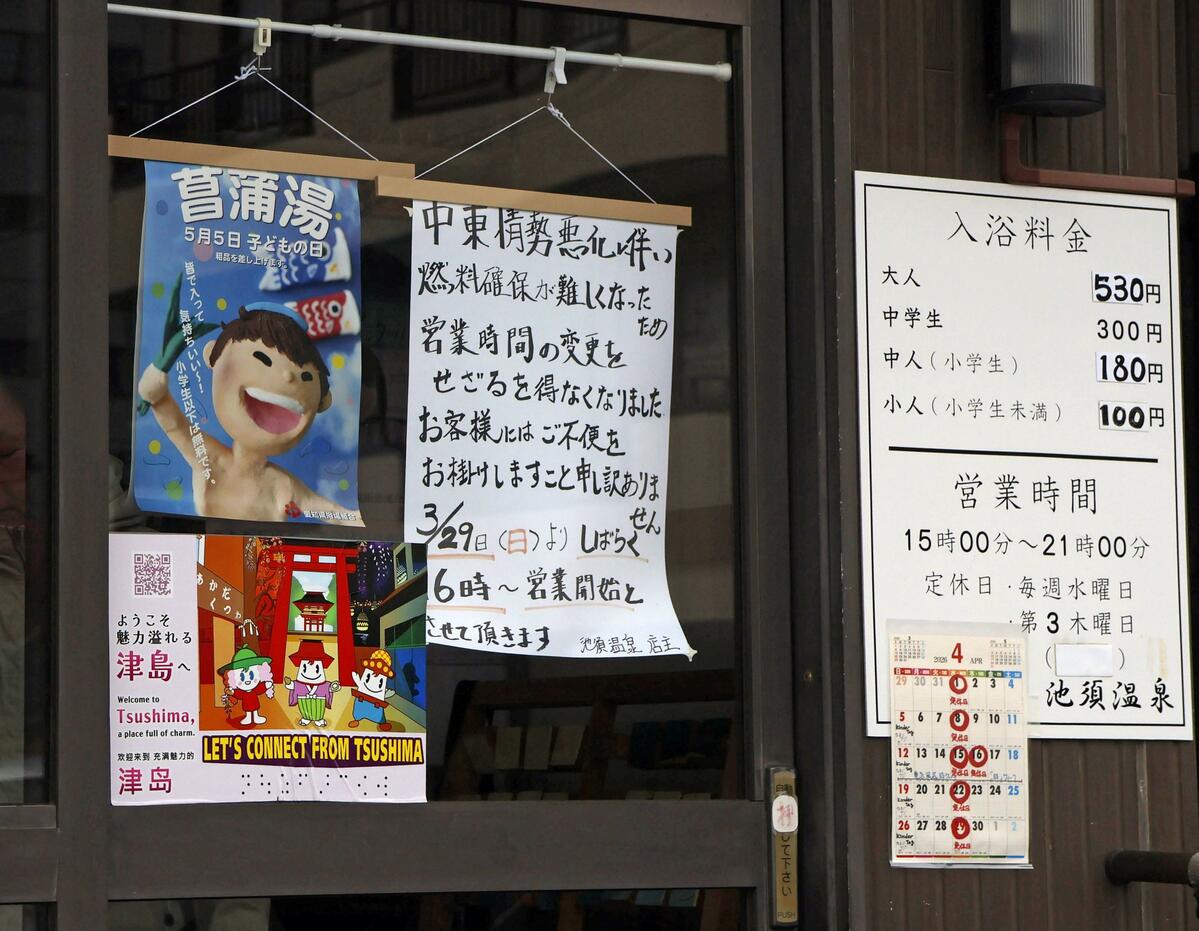
On a cool day in early April, customers were hurrying toward the bath at Ikesu Onsen, a family-run sento founded in 1919 in Tsushima in central Japan’s Aichi Prefecture.
The sento has long been a social hub of the neighborhood. Recently, however, it has been forced to delay its opening time by an hour since late March due to an unstable supply of fuel oil, with monthly delivery halved from about a ton, leading to a drop of around 10 customers per day.
“It’s a major blow,” said Atsuko Matsui, 57, who is involved in running the bathhouse. “If we are told (by the supplier) ‘this amount at this price,’ we have no choice but to accept it.”
Fuel supply in Japan has been disrupted by the Middle East crisis sparked by the U.S.-Israeli attacks on Iran, which has affected tanker traffic through the Strait of Hormuz and driven up global oil prices.
The impact is being felt across the country. In the northeastern city of Aomori, Katsuragi Onsen has decided to close at the end of May as fuel costs add to the burden of maintaining the aging sento’s facilities.
“Prices for fuel oil are rising every week and show no signs of stabilizing,” said Masayoshi Yamaguchi, 57, head of the bathhouse. “We have plenty of customers, but at this rate, we simply cannot keep our heads above water.”
About 30 percent of sento in Japan use fuel oil boilers, according to the Japan National Sento Association. The number of bathhouses has already fallen to about a twelfth of its peak nearly 60 years ago, the association’s tally shows.
In Japan, sento fees are capped by prefectural governors under anti-inflation controls introduced soon after World War II, leaving operators with little room to adjust prices.
AloJapan.com